
Sleeping in the back of a Tiguan
/
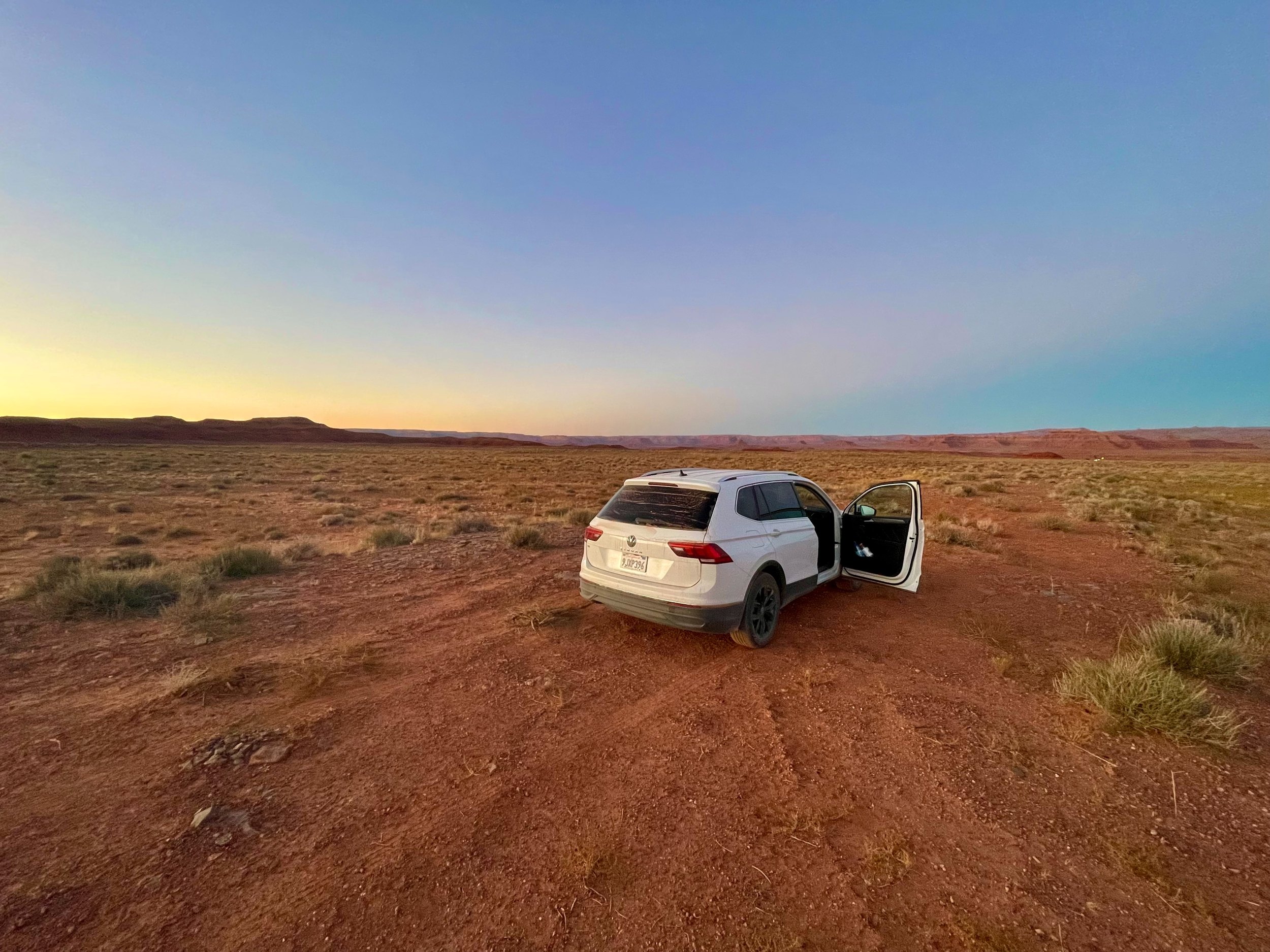
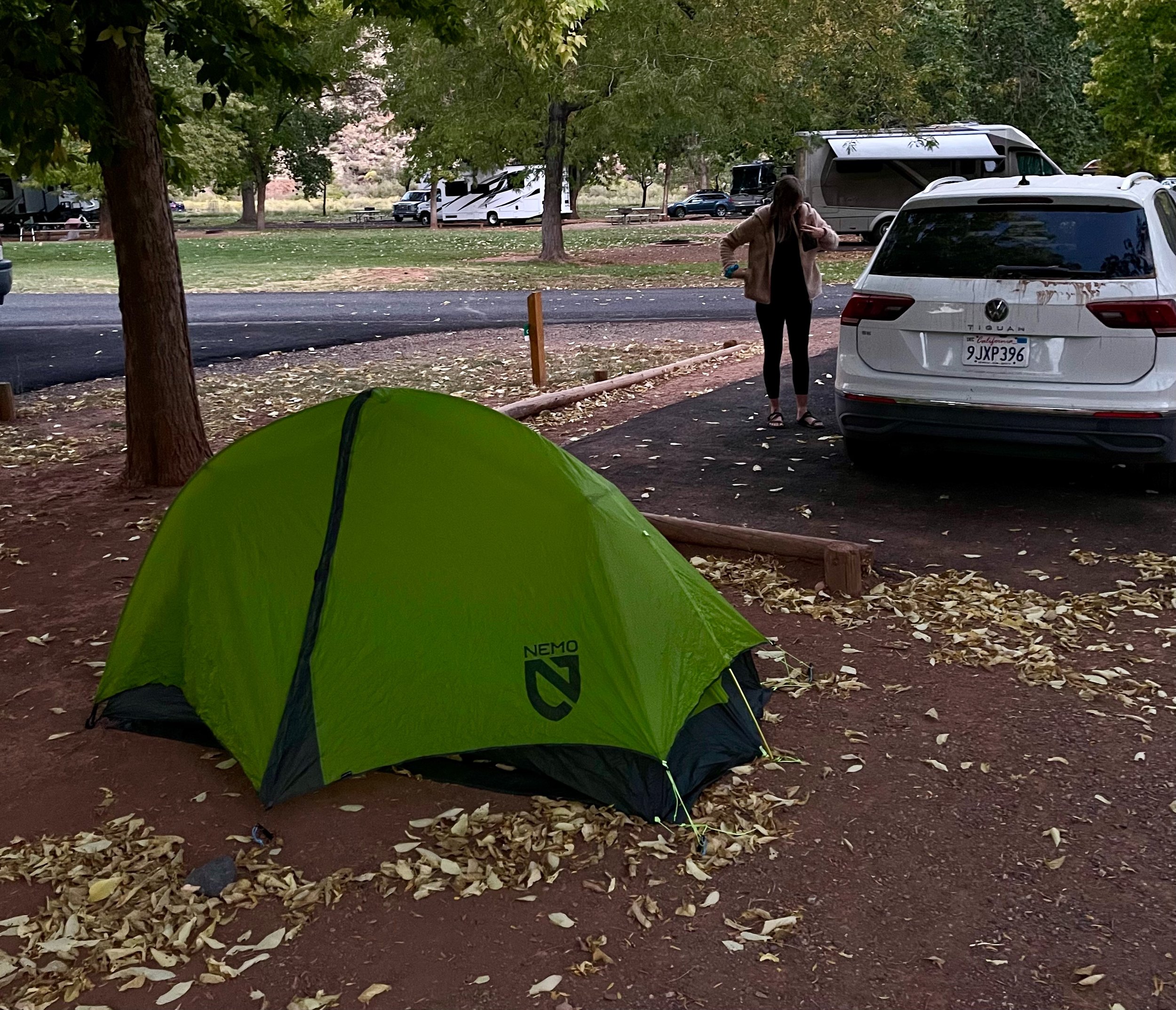
We drove our rented Tiguan about 3,800 miles in three weeks, from San Francisco down the coast, across the desert and through southern Utah. For four of those nights it was also my bed, while my daughter slept in her tent next to it.
The car
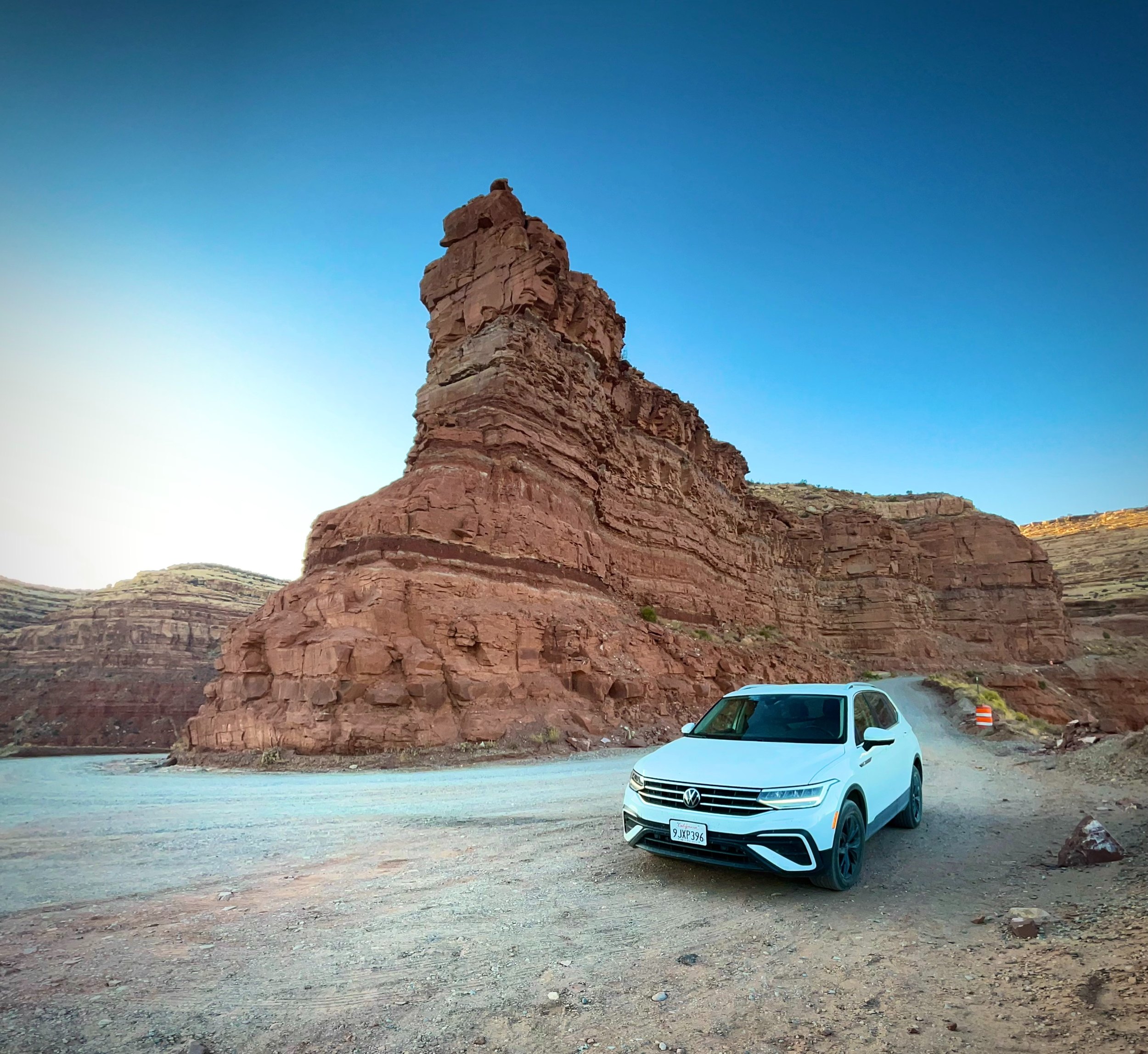
The car was good to us, easy to drive, good on the gravel roads, and reasonably comfortable to sleep in with flat-folding seats.
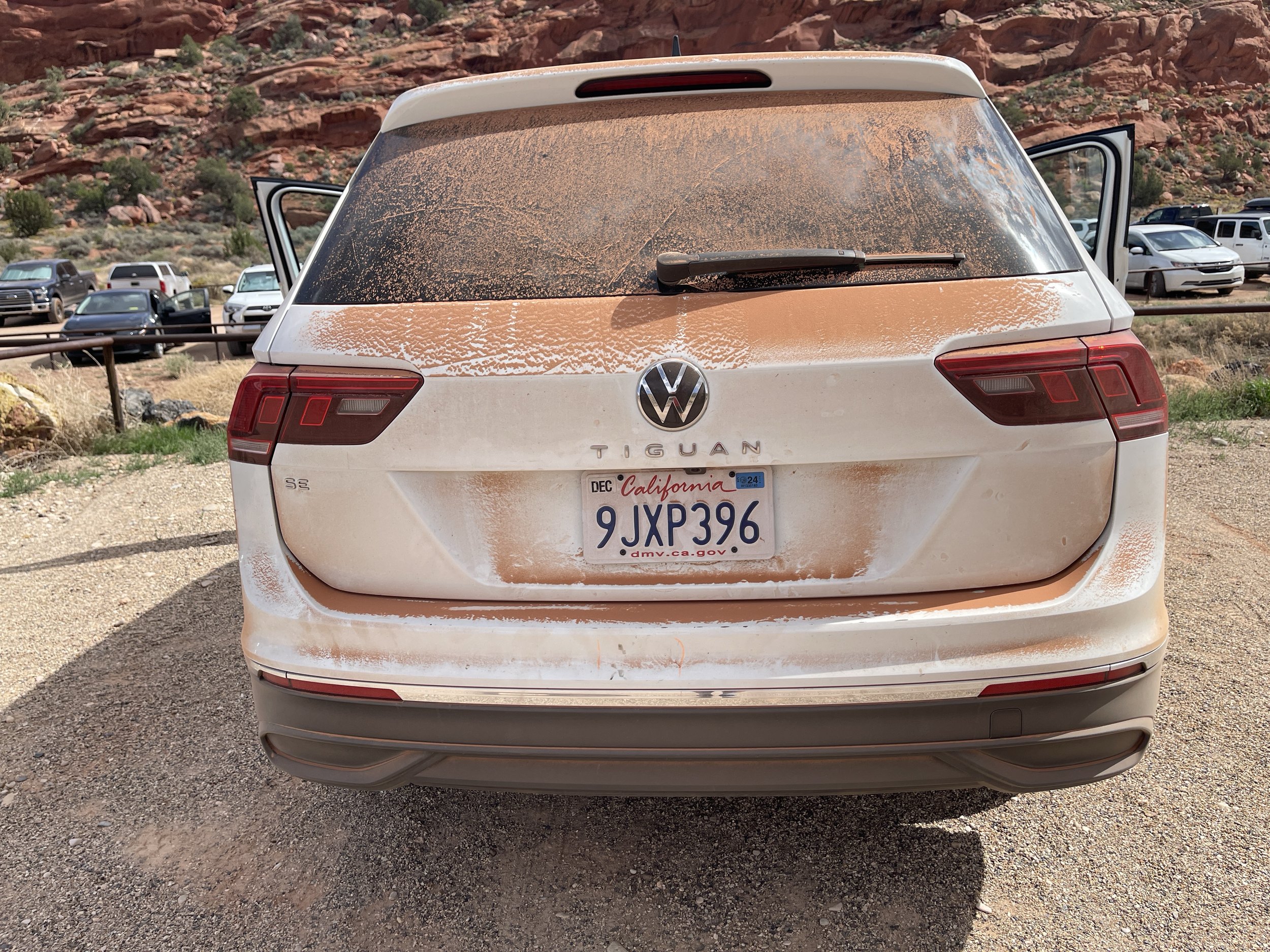
It got tested more than once. On Hole in the Rock Road near Escalante, 15 miles of severe washboard, my daughter kept a speed of 40-45 mph while the few other tourists crawled along at 10-15. The car didn’t fall apart. There is more about that morning in the Escalante post.
My bed in the back
Car camping was OK. I had my cheap inflatable mattress I bought on Temu, and my winter sleeping bag. We had cleared the left side in the back of the car, and I had room to stretch my legs. Getting in through the back hatch was easy, and getting out of the side door also not a problem. I slept fairly well back there.
The first night, at the Fruita Campground in Capitol Reef, I wrote that it was pretty comfortable, but a real pillow would have been nice. That still holds.
Finding a place to sleep
The first night we had a booked site in a national park campground. After that my daughter found free campsites with an app called The Dyrt: one below the mesa near Mexican Hat, and one on a dirt road off the road to Canyonlands, where we stayed two nights. Twice we arrived and set up in the dark.
The reward was the sky. With no lights for miles, the Milky Way was clearly visible, and I set up the tripod for star photos near Mexican Hat and again near Canyonlands.
Car camping in Utah, the practical stuff
- What car do you need? — An ordinary SUV with seats that fold flat was enough for us. The extra ground clearance helped on the washboard roads.
- What should you bring? — A sleeping mat or inflatable mattress, a warm sleeping bag (at Bryce it was 42°F before sunrise in early October), a real pillow, a headlamp, and more water than you think.
- Where can you sleep for free? — On BLM and national forest land, outside the parks, unless a sign says no. Use spots that have been used before. The Dyrt shows many of them.
- How long can you stay? — Up to 14 days within 28 days on BLM land, then you must move at least 25 miles.
- What about water, toilets and food? — None at free campsites. Fill up in the towns: Hanksville, Blanding and Moab were our supply stops, usually at Walmart or the local market.
- Can you drive a rental car on gravel? — Check the contract. Many prohibit unpaved roads, and the damage waiver may not cover you if you break the terms.
- When should you arrive? — Before dark. Finding a site and setting up is much easier in daylight.
- How to book — Free and paid campsites: The Dyrt. Park campgrounds: Recreation.gov. Rules for dispersed camping: Bureau of Land Management, camping. Rental car: Hertz and the other big companies.
USA 2024 — all posts
- 1 — Chicago, the license in the car visor
- 2 — Highway 1, waiting for the fog to lift
- 3 — Santa Monica, the end of a road I never drove
- 4 — Los Angeles, the road named after the water
- 5 — Crystal Cove, a man who stayed there in 1944
- 6 — Catalina, hitchhiking by golf cart
- 7 — Santa Cruz Island, the dolphins on the way home
- 8 — Joshua Tree, “Don’t die today”
- 9 — Oatman, where the burros have names
- 10 — Grand Canyon, sunrise with a few hundred others
- 11 — Buckskin Gulch, checking the sky first
- 12 — Angels Landing, at seventy
- 13 — Bryce Canyon, hoodoos in the kiln
- 14 — Escalante, the road the Tiguan survived
- 15 — Capitol Reef, the park that was closed
- 16 — Monument Valley, and the ticket we didn’t get
- 17 — Mesa Arch, “Is your name Bo Sjosten?”
- 18 — Arches, nine minutes to spare
- 19 — Sleeping in the back of a Tiguan
- 20 — Permits, lotteries and timed entry in the national parks
- 21 — What things cost in the US, and the tip screen
- 22 — Three weeks in the West: the route, and what I would change