
Joshua Tree, “Don’t die today”
/
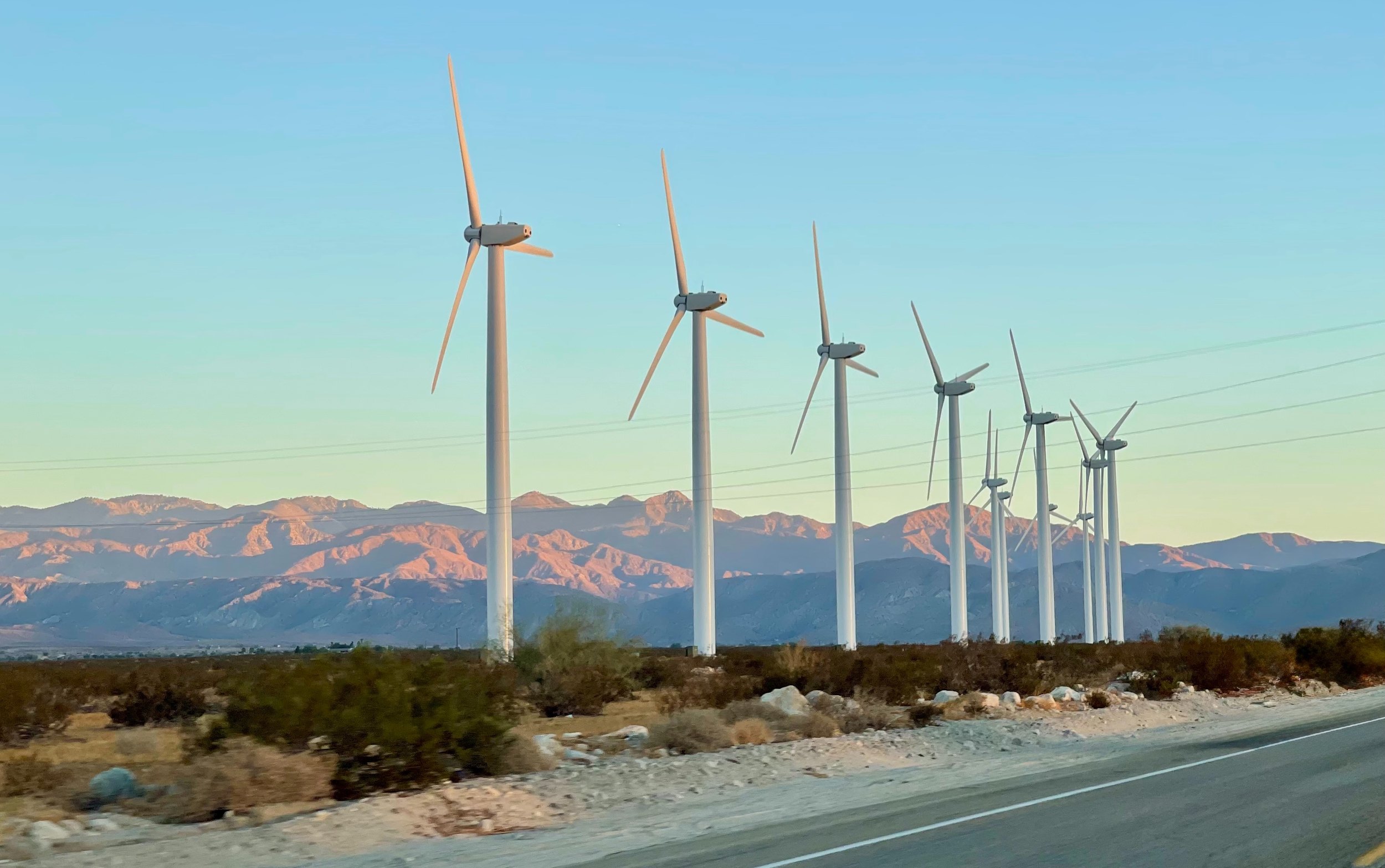
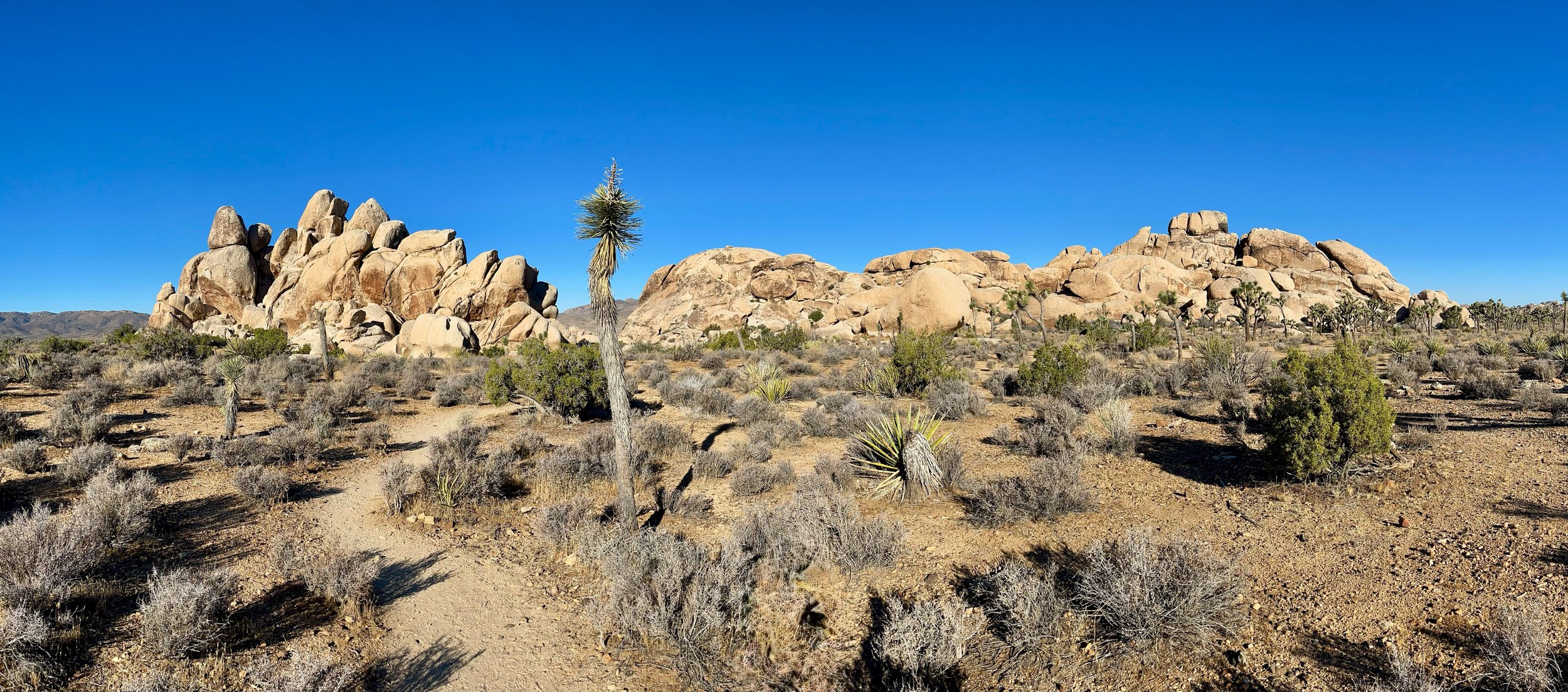
We got up early and set off from the Airbnb just before sunrise. We stopped for gas and coffee at the local Dino station, then set off for Joshua Tree National Park.
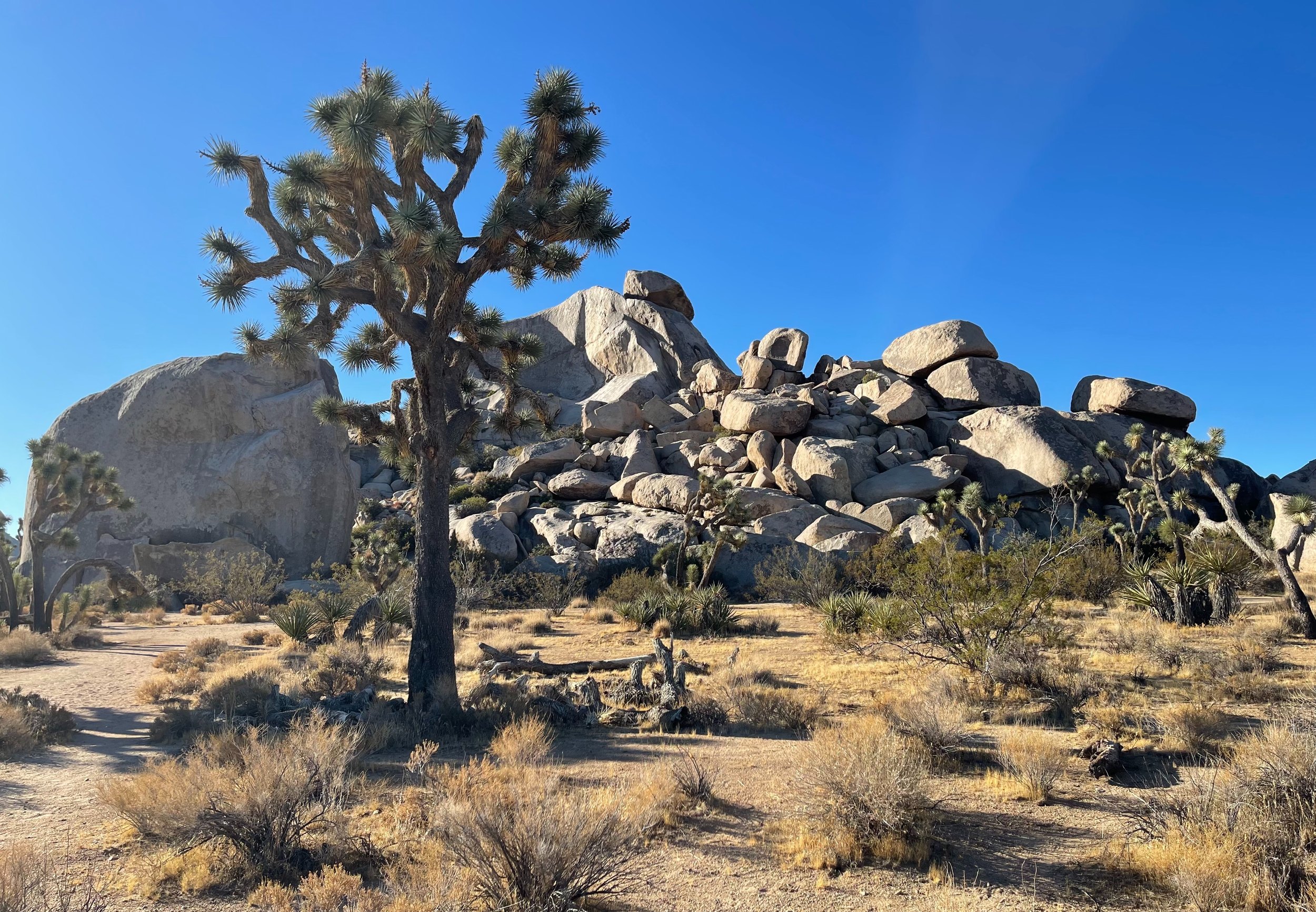
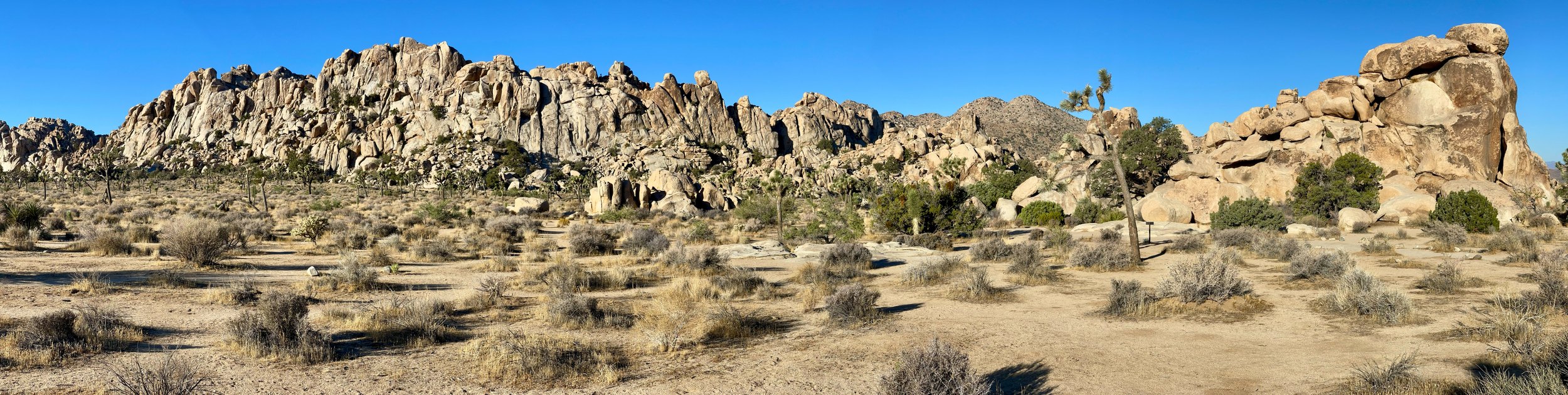
It was still reasonably early in the day when we got to Joshua Tree. We made a few stops for sightseeing and photography, then set off for the Ryan Mountain trailhead.
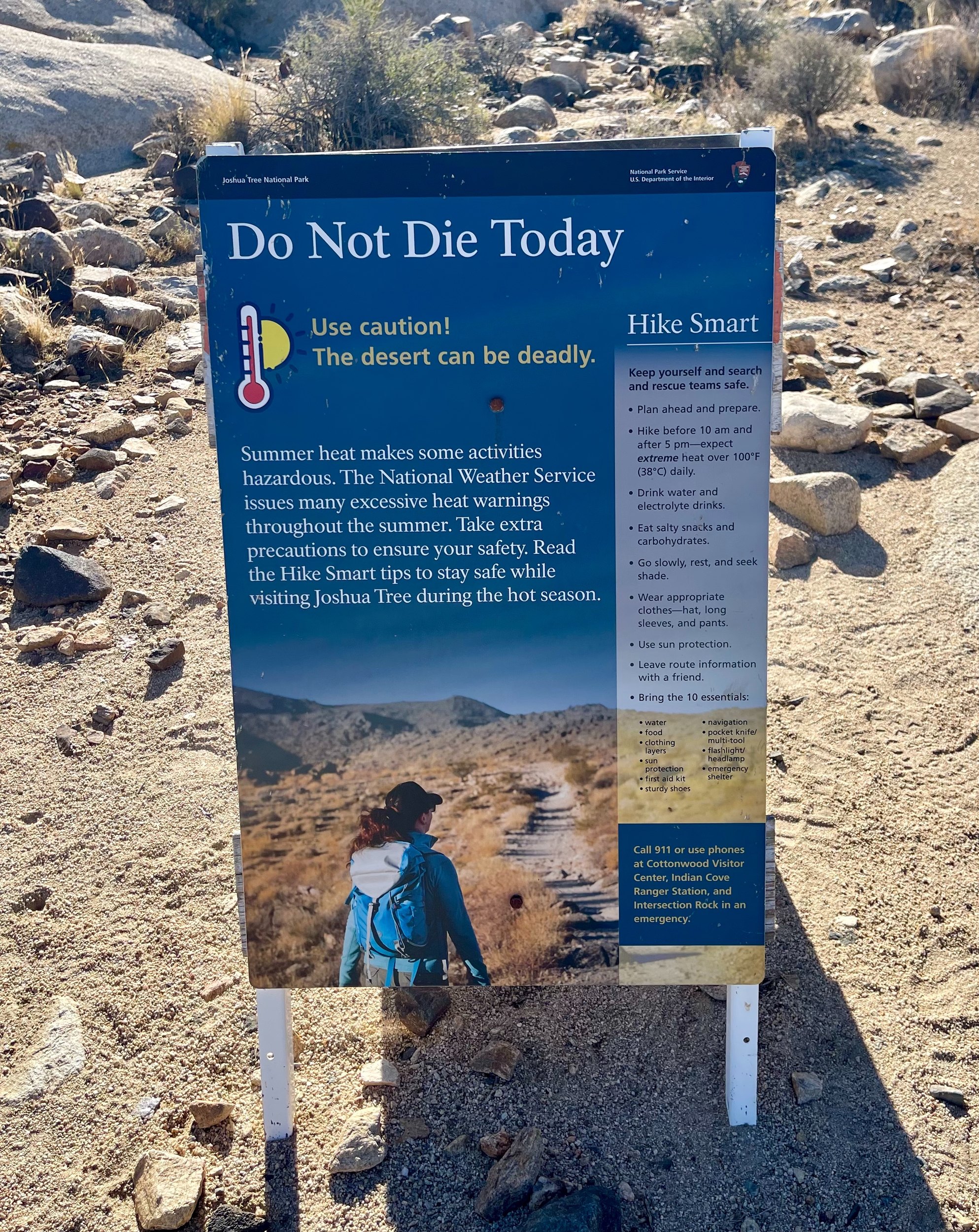
Don’t die today
At the trailhead we were met by what is apparently the slogan of Joshua Tree: “Don’t die today”. Be prepared, bring enough water, and don’t hike in the middle of the day. We got started by 9 AM. It was already hot, but manageable.
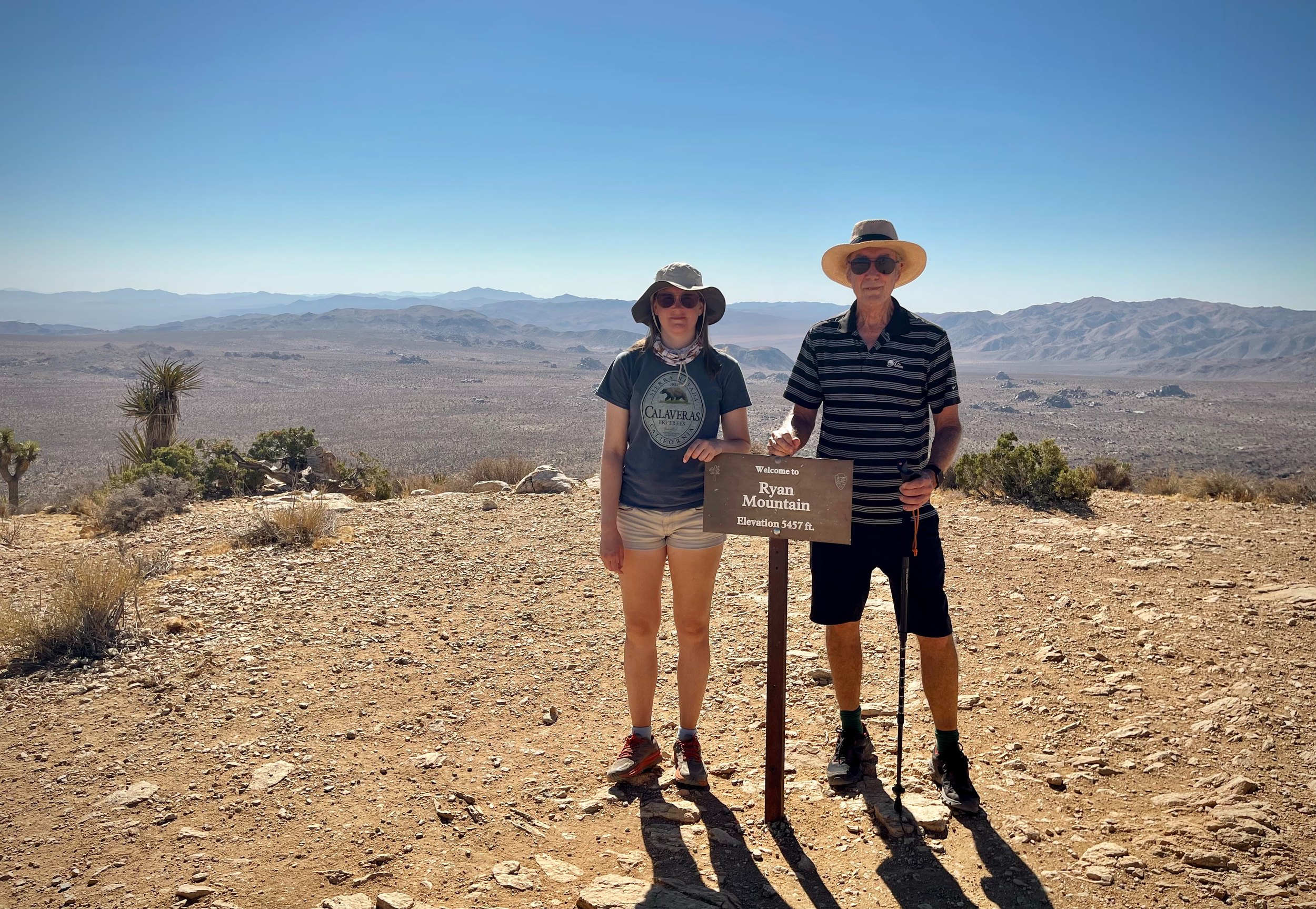
Up Ryan Mountain
The hike to the top of Ryan Mountain was not very long, but steep in sections, and with a lot of steps. Tiring on the way up, but for me a bit harder on the way down. Stepping down big steps is a challenge, both for my knees and my balance. This time I had my walking sticks, so it all went well.
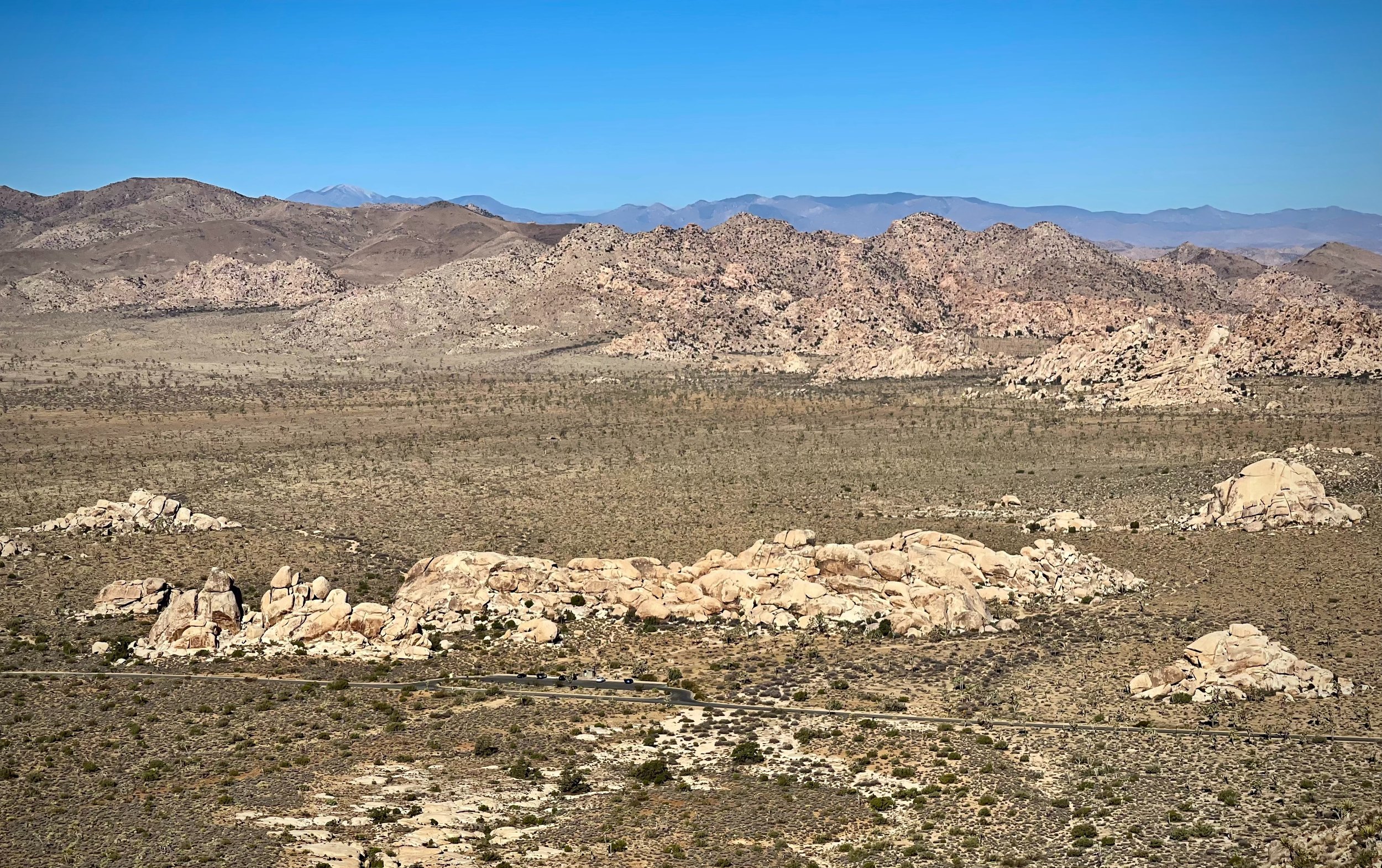
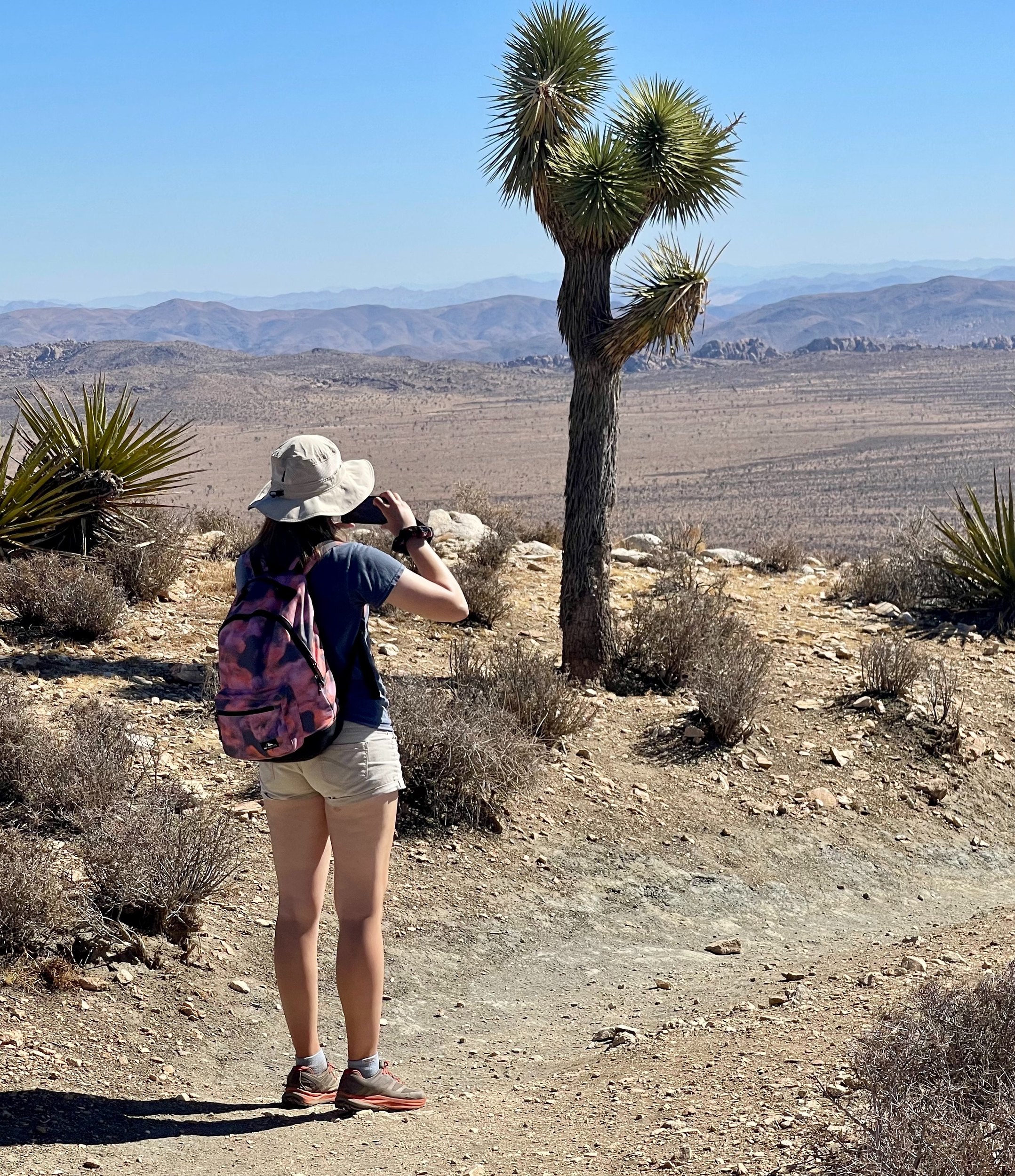
From the top we could see the entire park.
Ice cream and the tip screen
Once down we left the park and stopped for well-deserved ice cream at Cold Stone Creamery in Twentynine Palms.
When you pay by credit these days, you are asked by the machine to leave a tip with a pre-set choice of amounts, even at an ice cream store like this, where all they do is scoop the ice cream and hand it to you. No special service rendered, yet you are made to feel bad if you don’t tip them.
There is more about tipping, and what everything else cost on this trip, in a separate post.
Joshua Tree, the practical stuff
- How hard is the Ryan Mountain hike? — The park calls it difficult: 3 miles there and back and 1,050 feet of climbing, most of it on stone steps, to a summit at 5,457 feet. We started at 9 AM and were at the top just before 10. Walking sticks help a lot on the way down.
- When should you hike in Joshua Tree? — As early as you can, especially from May to October. Most heat emergencies in the park happen between 10 AM and 5 PM. At 9 AM in late September it was already hot.
- How much water should you bring? — More than you think you need, and some salty snacks. There is almost no drinking water in the park, and there are no shops, restaurants or hotels inside it.
- Is there cell service? — Not reliably. Download the NPS app and the park map for offline use before you go.
- Where should you stay? — Outside the park. We stayed at an Airbnb in Desert Hot Springs, under an hour from the west entrance. Twentynine Palms, Joshua Tree and Yucca Valley are closer.
- Where can you eat afterward? — Twentynine Palms, at the north entrance, has the usual chains. We had ice cream at Cold Stone Creamery.
- How to book — Park information and entrance fees: Joshua Tree National Park. Campgrounds in the park: Recreation.gov. Places to stay outside the park: Airbnb and Booking.com. Rental car: Hertz and the other big companies.
USA 2024 — all posts
- 1 — Chicago, the license in the car visor
- 2 — Highway 1, waiting for the fog to lift
- 3 — Santa Monica, the end of a road I never drove
- 4 — Los Angeles, the road named after the water
- 5 — Crystal Cove, a man who stayed there in 1944
- 6 — Catalina, hitchhiking by golf cart
- 7 — Santa Cruz Island, the dolphins on the way home
- 8 — Joshua Tree, “Don’t die today”
- 9 — Oatman, where the burros have names
- 10 — Grand Canyon, sunrise with a few hundred others
- 11 — Buckskin Gulch, checking the sky first
- 12 — Angels Landing, at seventy
- 13 — Bryce Canyon, hoodoos in the kiln
- 14 — Escalante, the road the Tiguan survived
- 15 — Capitol Reef, the park that was closed
- 16 — Monument Valley, and the ticket we didn’t get
- 17 — Mesa Arch, “Is your name Bo Sjosten?”
- 18 — Arches, nine minutes to spare
- 19 — Sleeping in the back of a Tiguan
- 20 — Permits, lotteries and timed entry in the national parks
- 21 — What things cost in the US, and the tip screen
- 22 — Three weeks in the West: the route, and what I would change