
Los Angeles, the road named after the water
/
My daughter was giving her presentation at eight in the morning, so I drove her to the conference center at half past six. After that I had Los Angeles to myself.
Breakfast first. Denny’s had no waffles here, so I switched to IHOP. It was horribly expensive: $29 for a Belgian waffle with a side of sausage, and $5 for the coffee.
Hollywood, as advertised
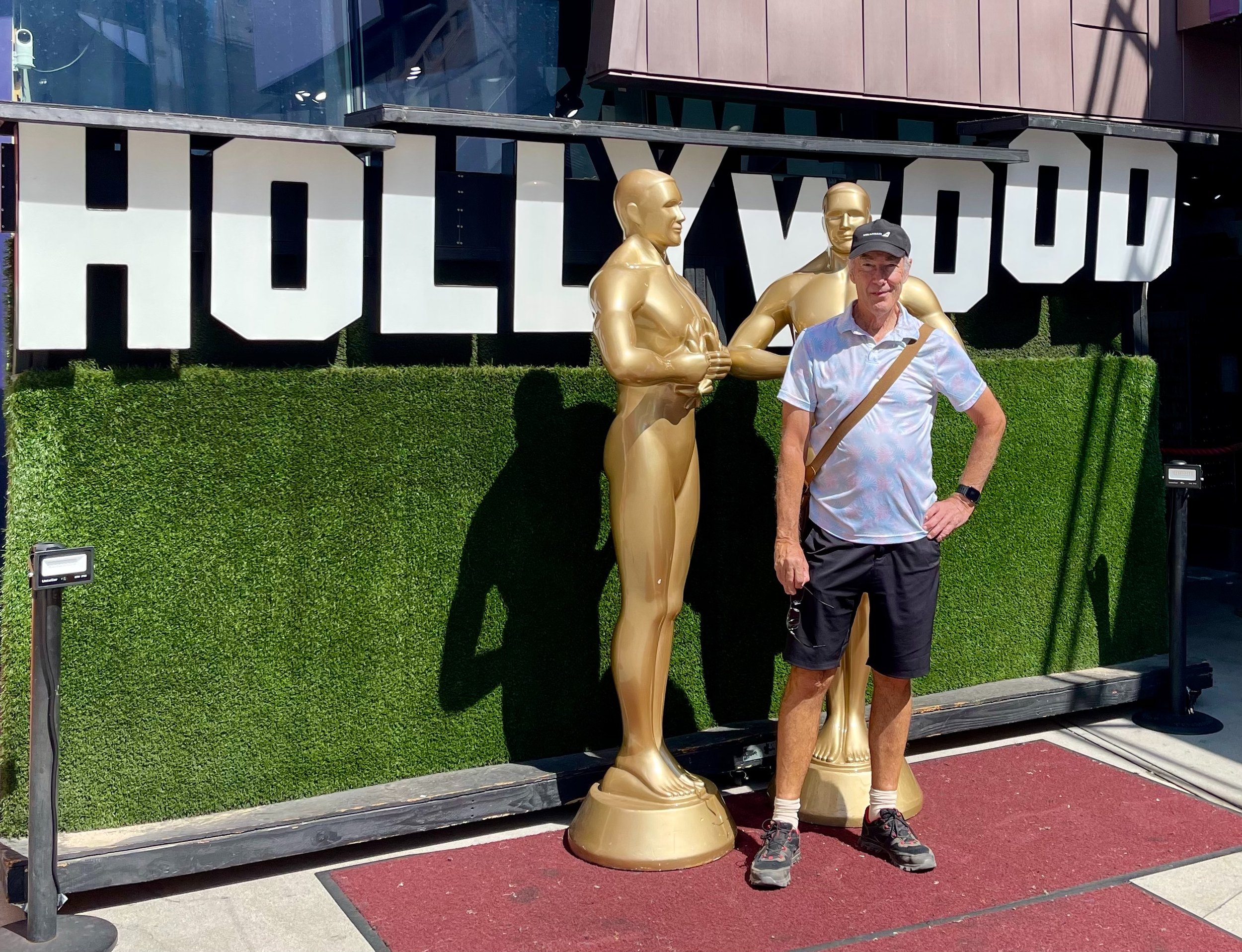
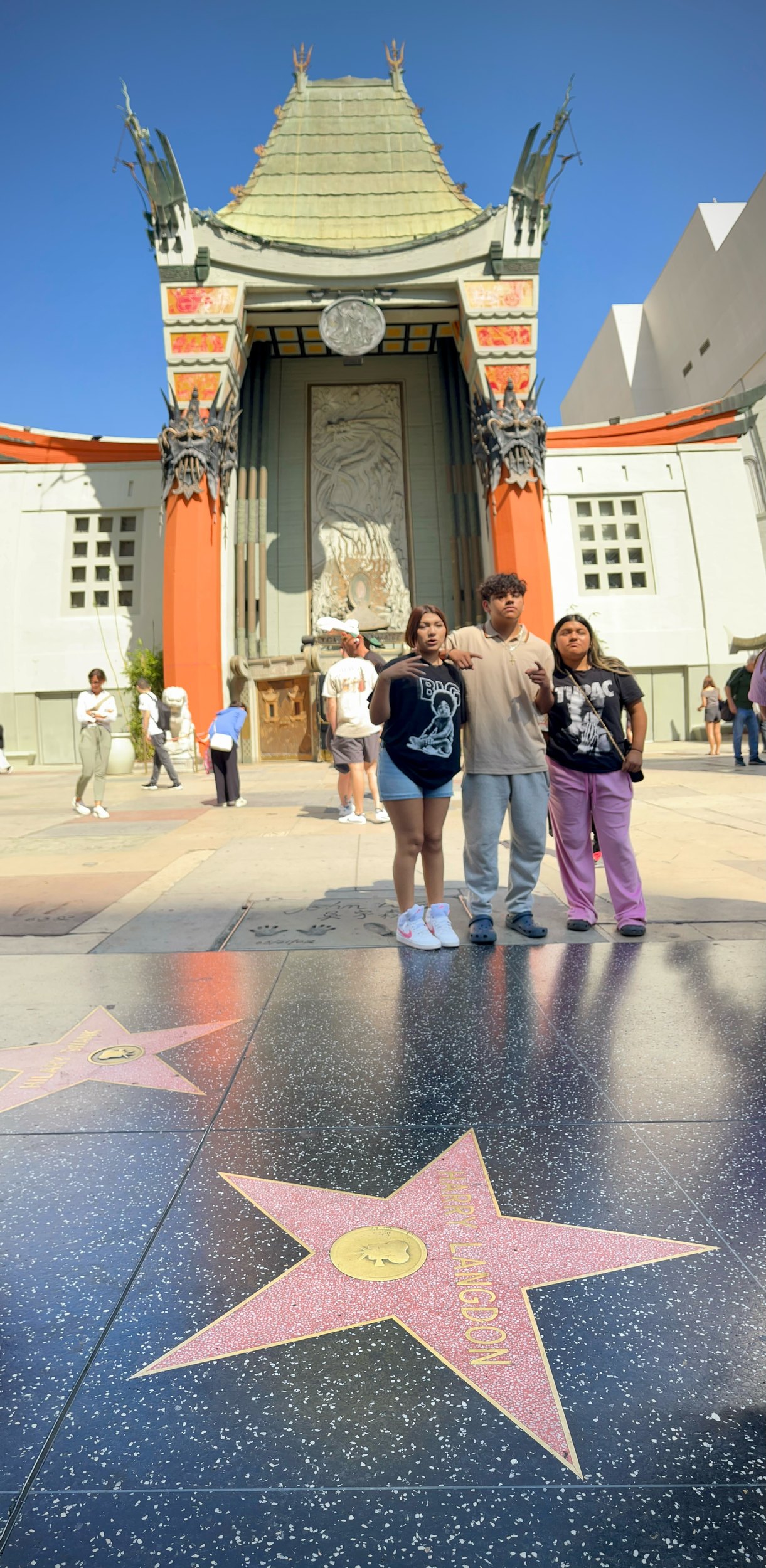
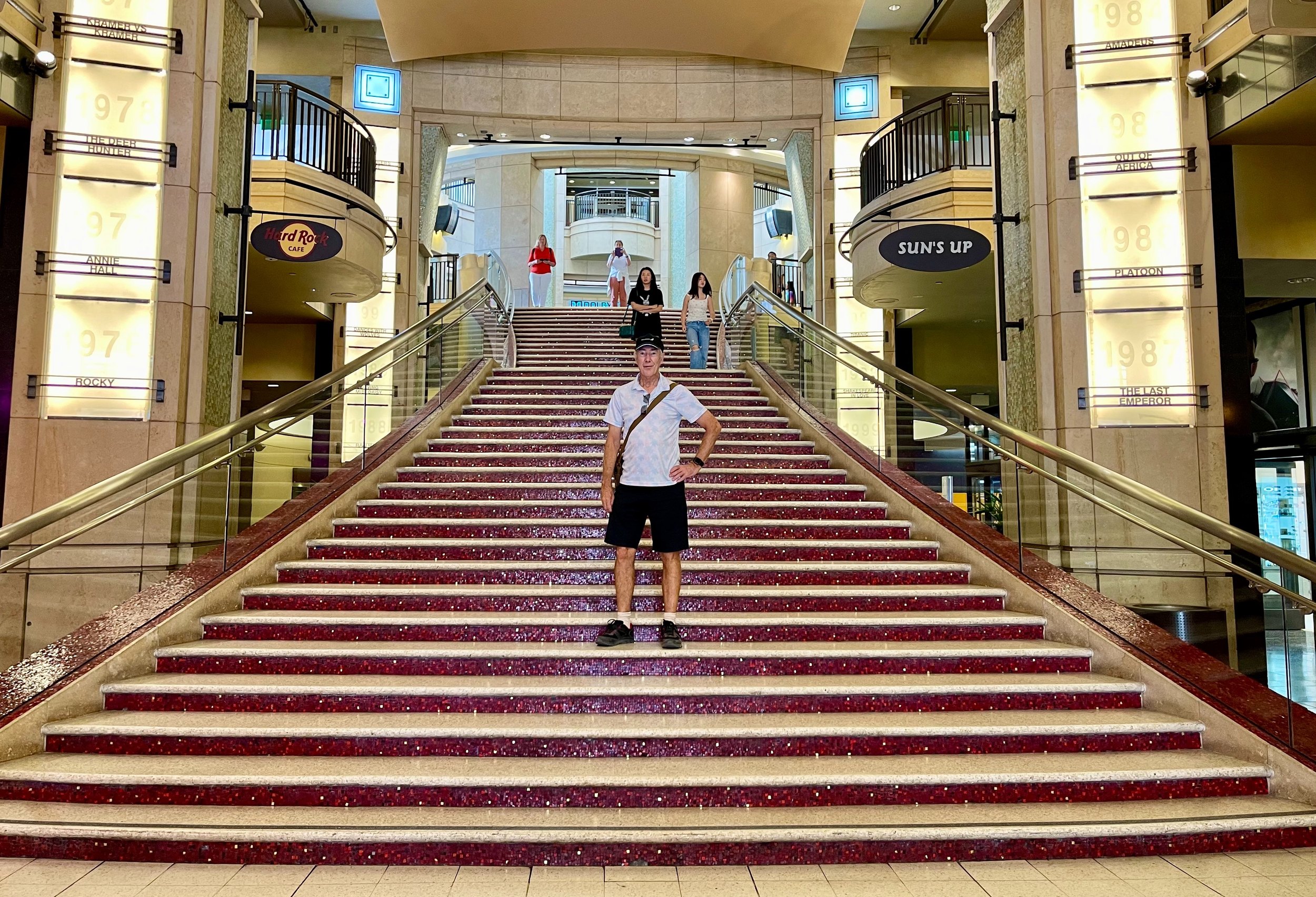
Then I headed up to Hollywood and the Walk of Fame. I found parking at an LA Fitness, a bit too far away as it turned out, but the 20-minute walk was not too bad. The Chinese Theatre and the Dolby Theatre were hopelessly touristy, as was the rest of the area. Still a must-see. There were many more stars in the sidewalk than I expected; they went on for maybe a mile.
Venice, a disappointment
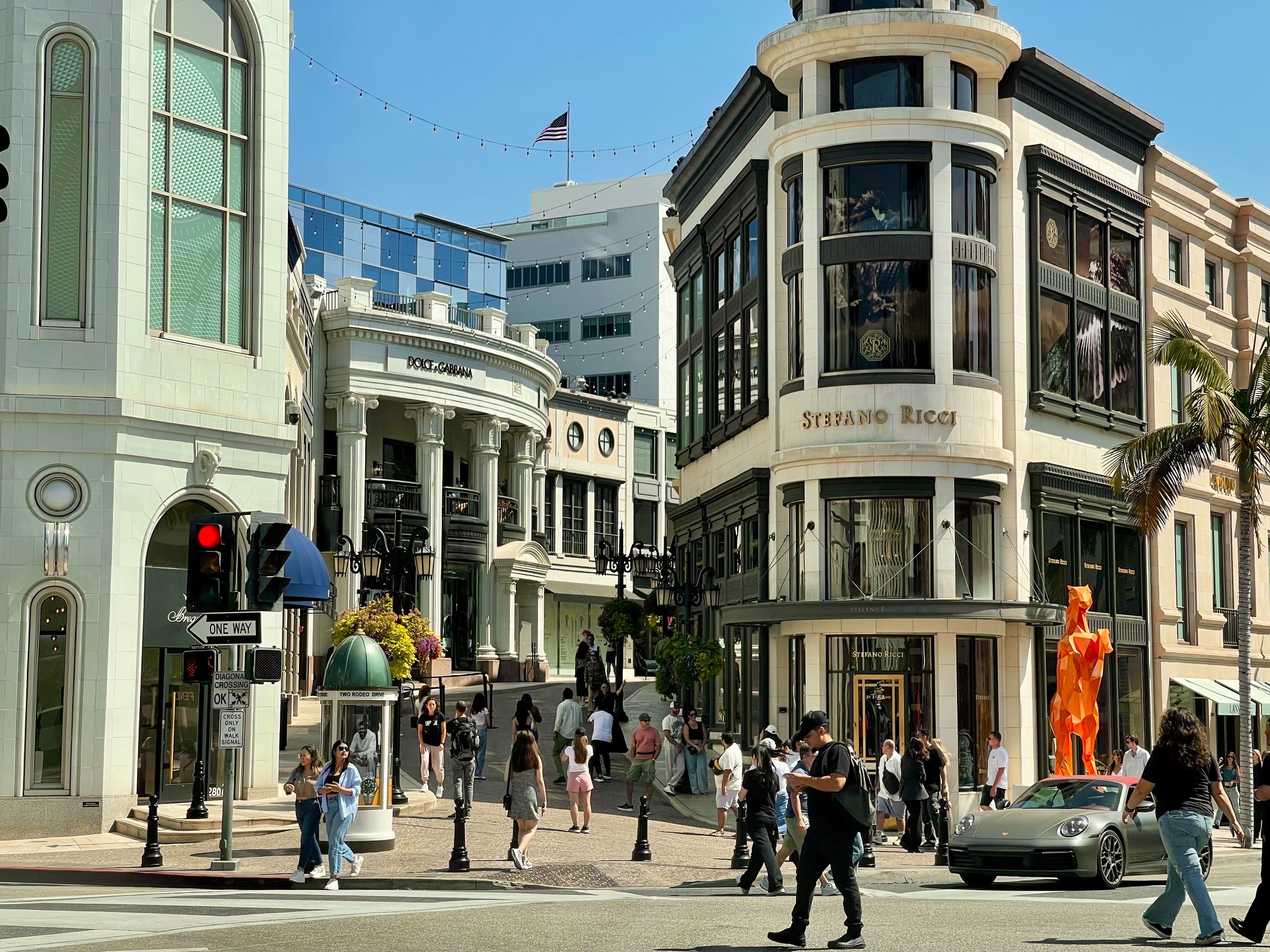
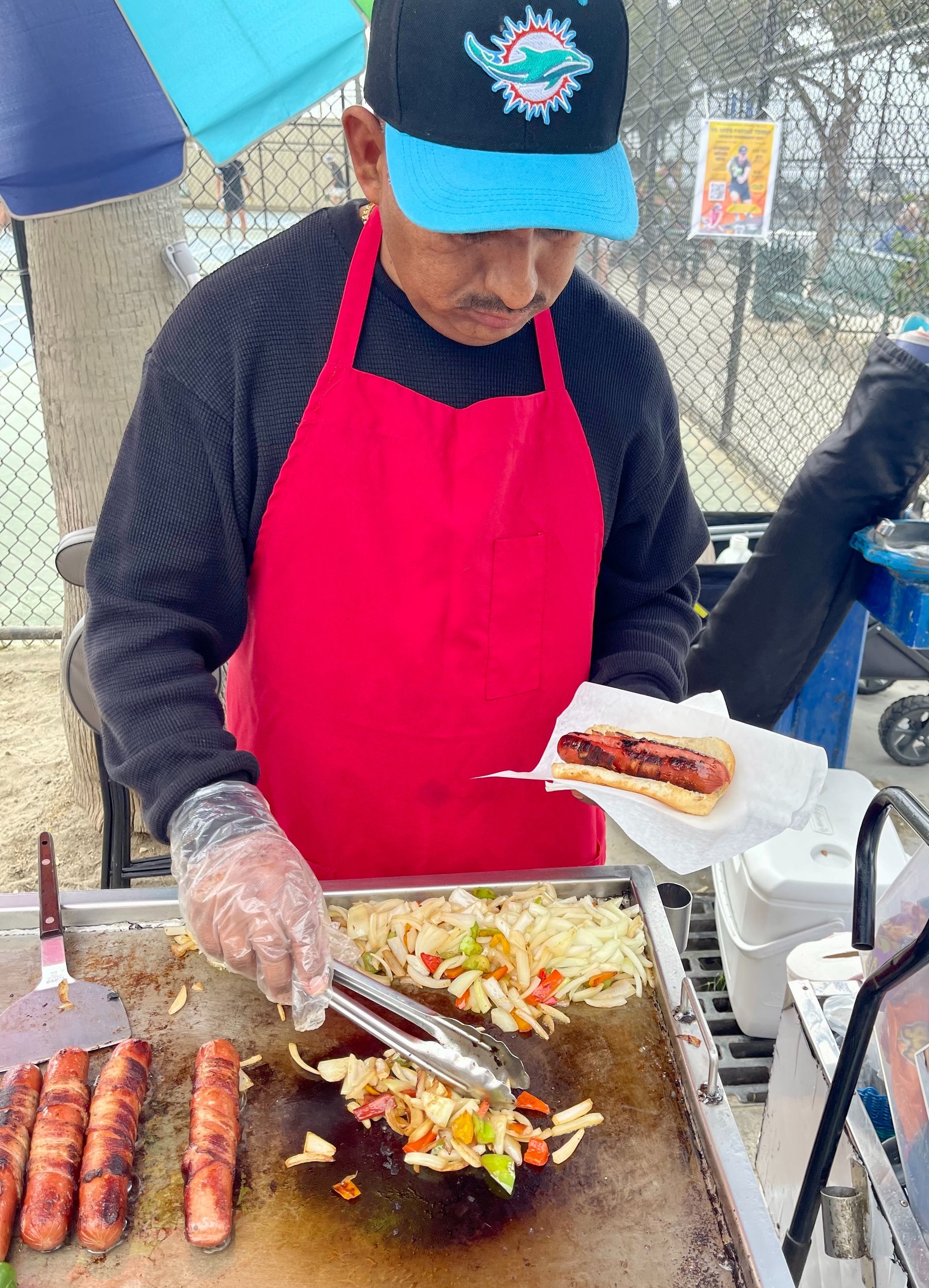
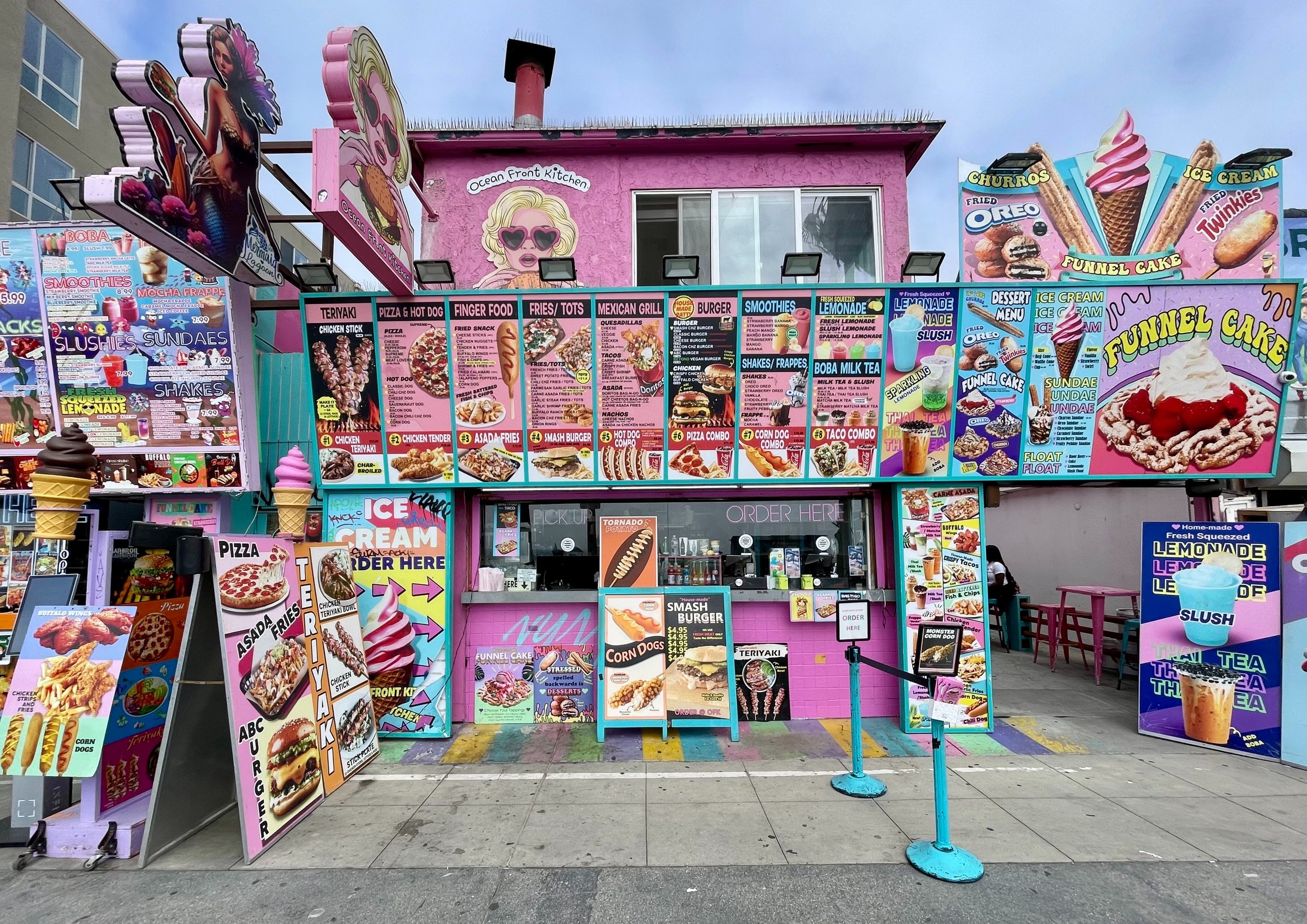
I continued down Santa Monica Boulevard, through Beverly Hills, to Venice Beach. Again the parking was expensive, $25 for two hours, but two hours turned out to be plenty. Venice was a disappointment, just a long stretch of souvenir shops along the beach.
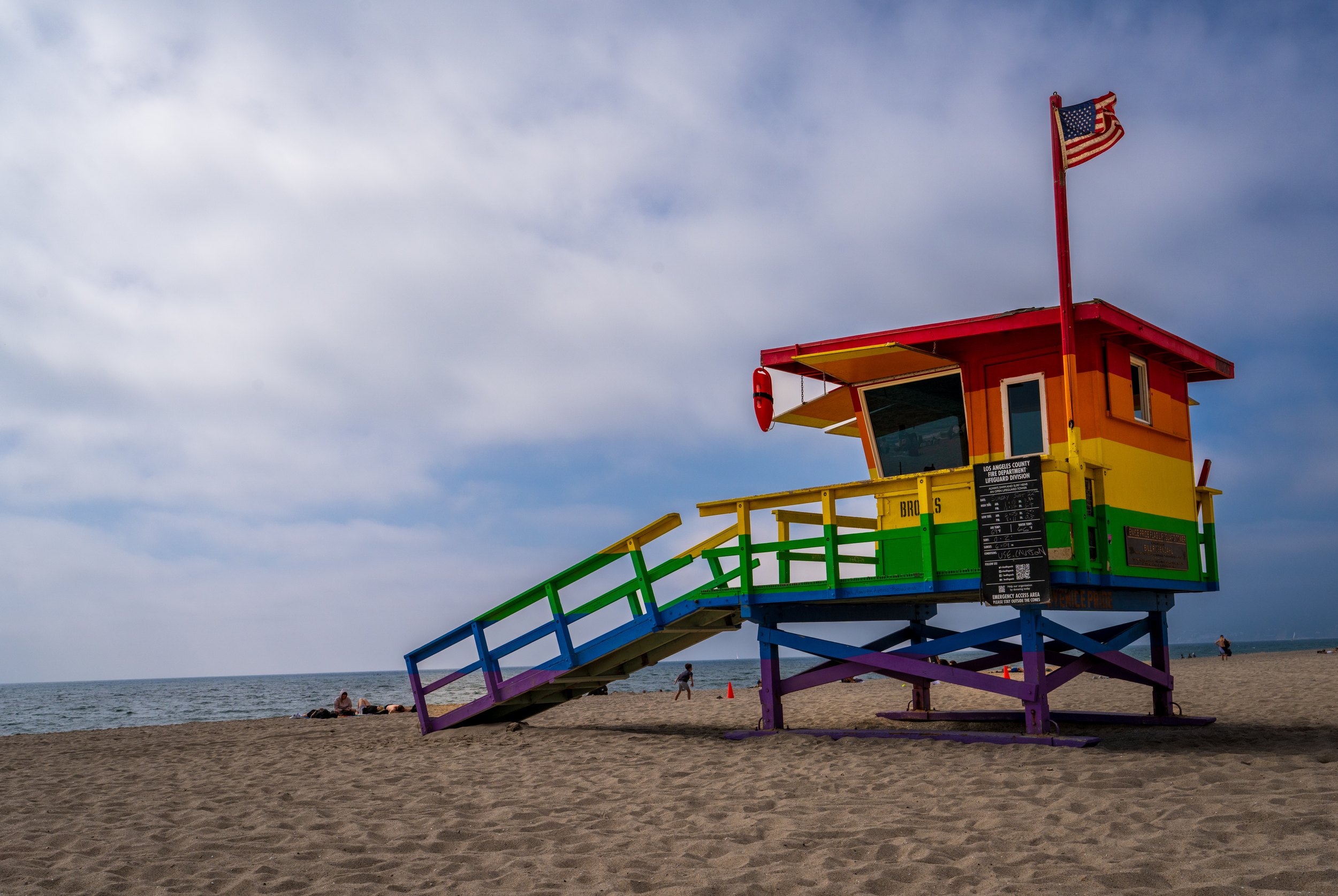
Griffith Observatory, in the haze
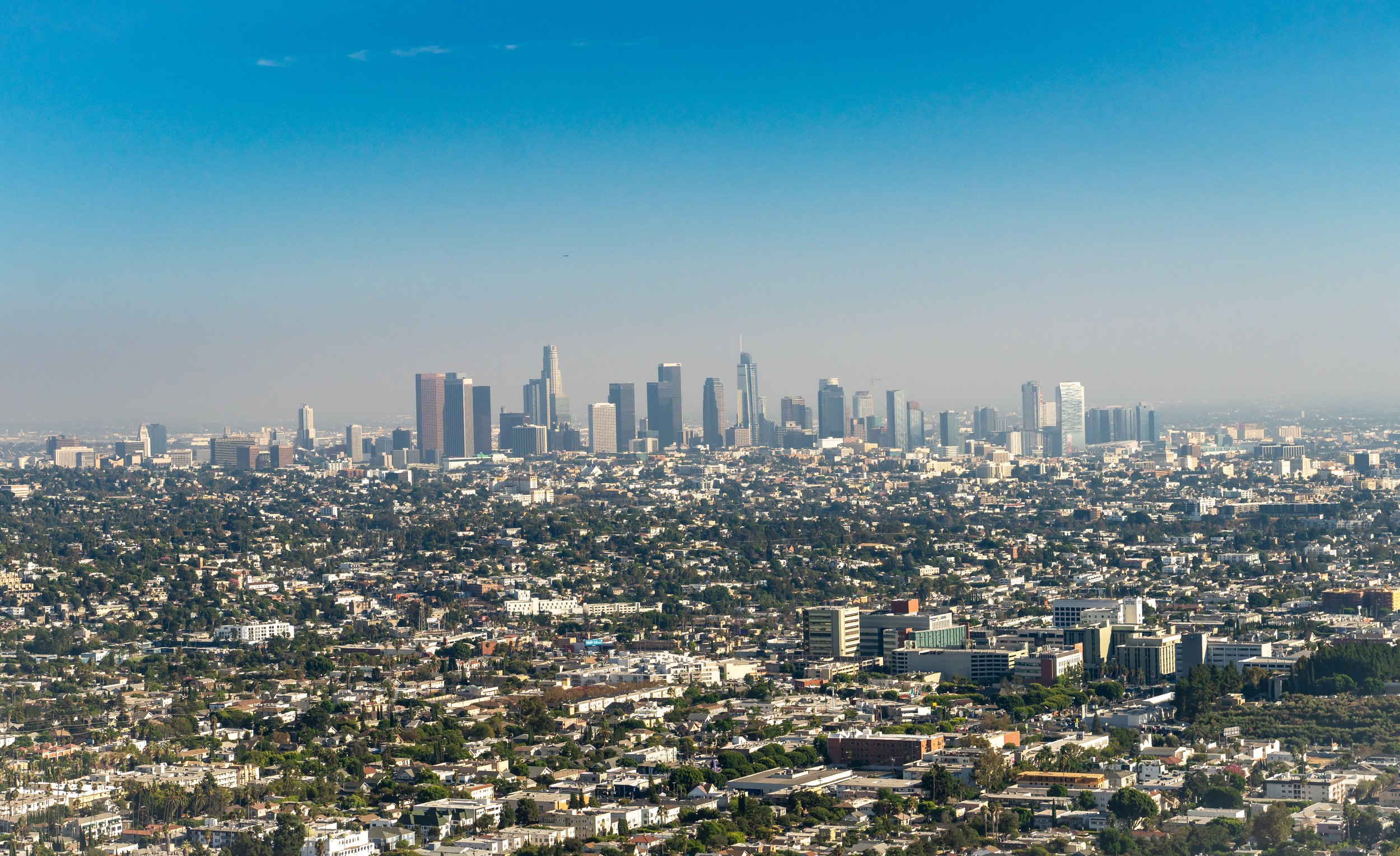
My last stop was Griffith Observatory, overlooking Los Angeles. Downtown was barely visible in the haze. Here too the parking was expensive, $10 an hour, and once you had paid you could not extend it, so the visit got a bit rushed. They had some films that seemed interesting, but there was not enough time.
I took Interstate 5 back, stopped at Arby’s for dinner and at Food4Less for some groceries, and got back to the hotel at 8:30, about twelve hours after setting out. Many of those hours were spent in LA traffic.
My verdict that evening was short. Done with LA. Other than the theme parks it does not have much to offer, in my opinion.
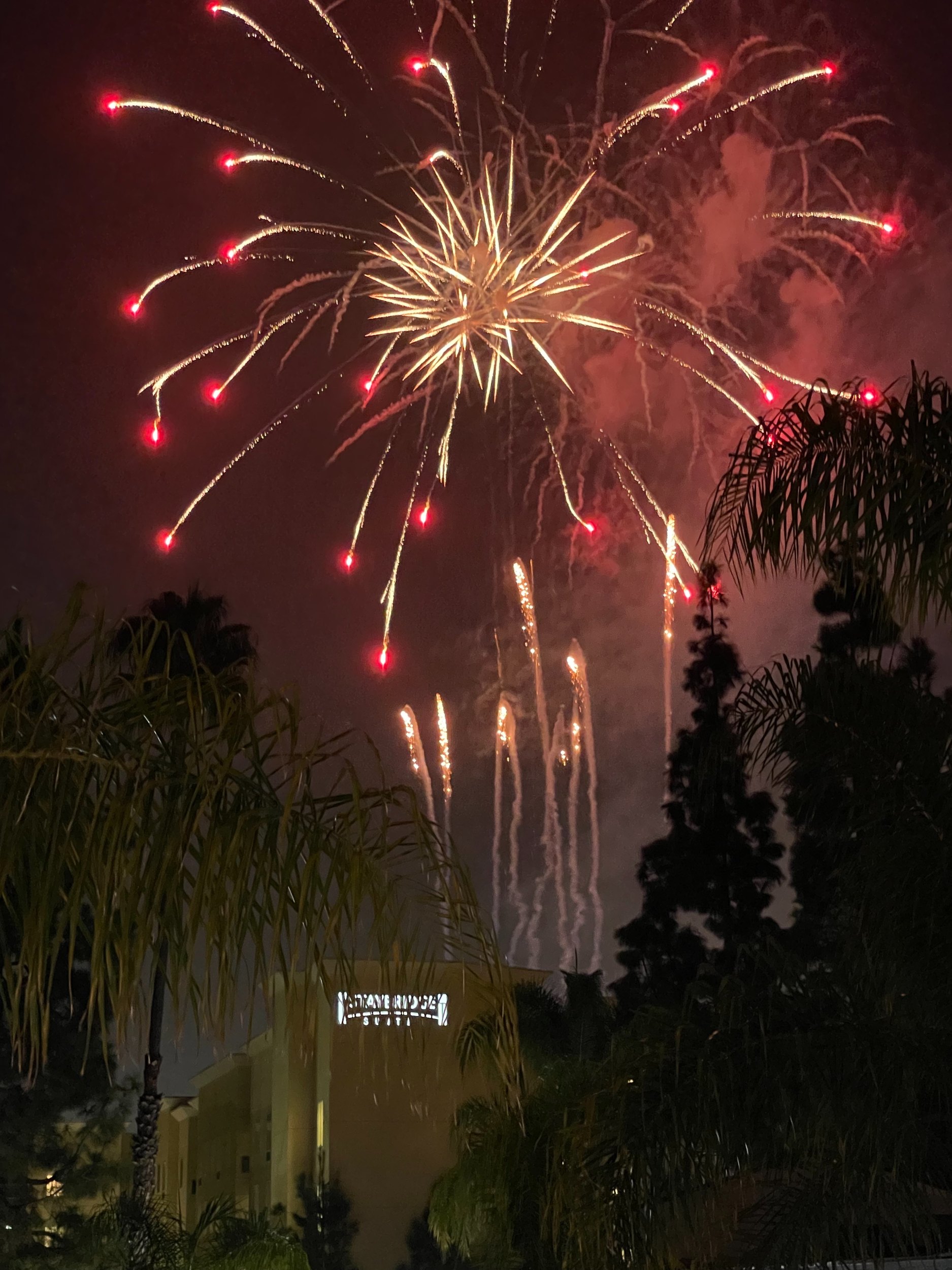
Speaking of theme parks: our hotel was right next to Disneyland, so we got to watch their fireworks from our balcony.
Downtown after all
Three days later I went back anyway, to explore downtown and drive the scenic roads in the hills. I downloaded the parking app so that I could pay for street parking, and parked near Grand Central Market.
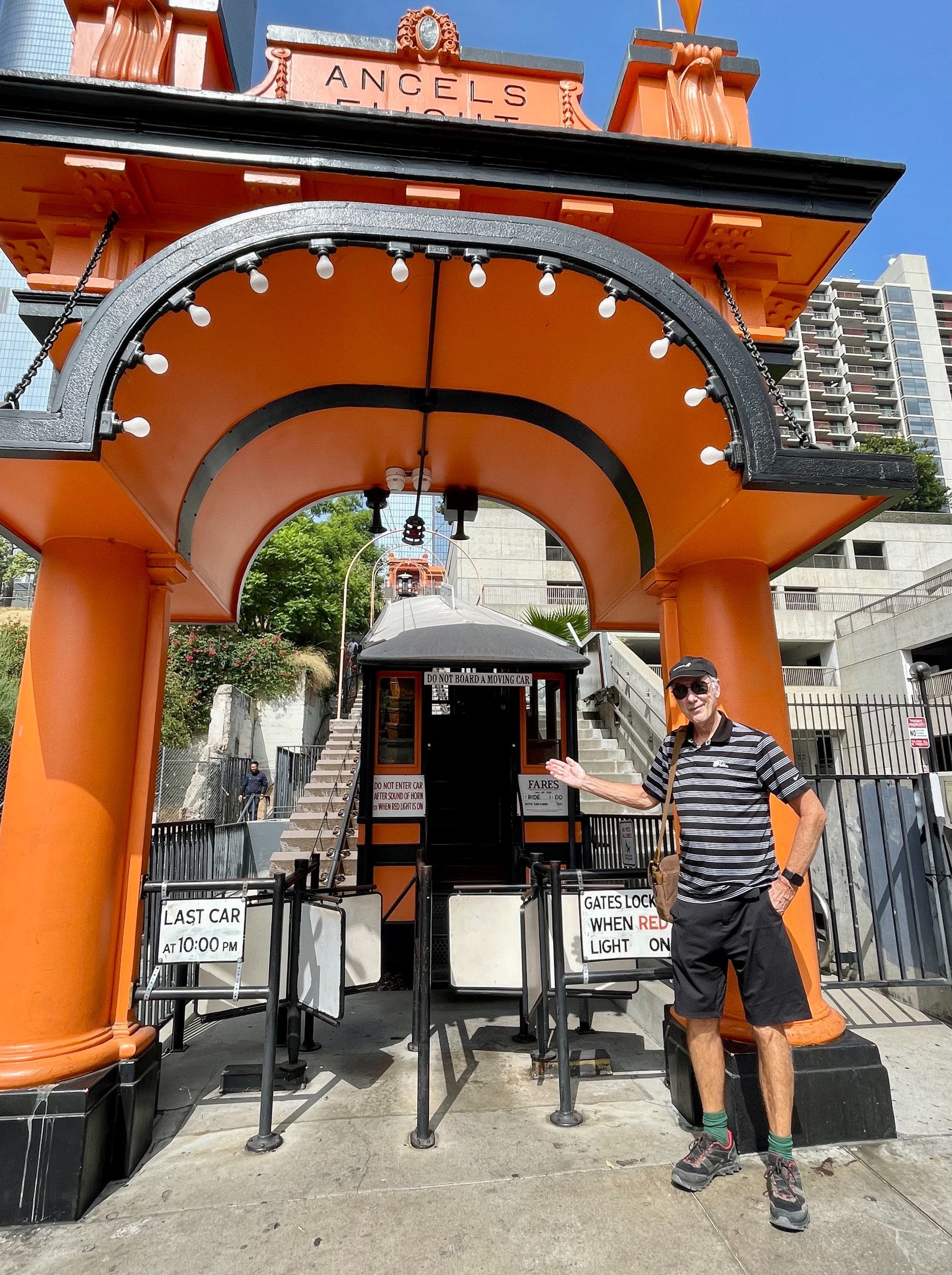
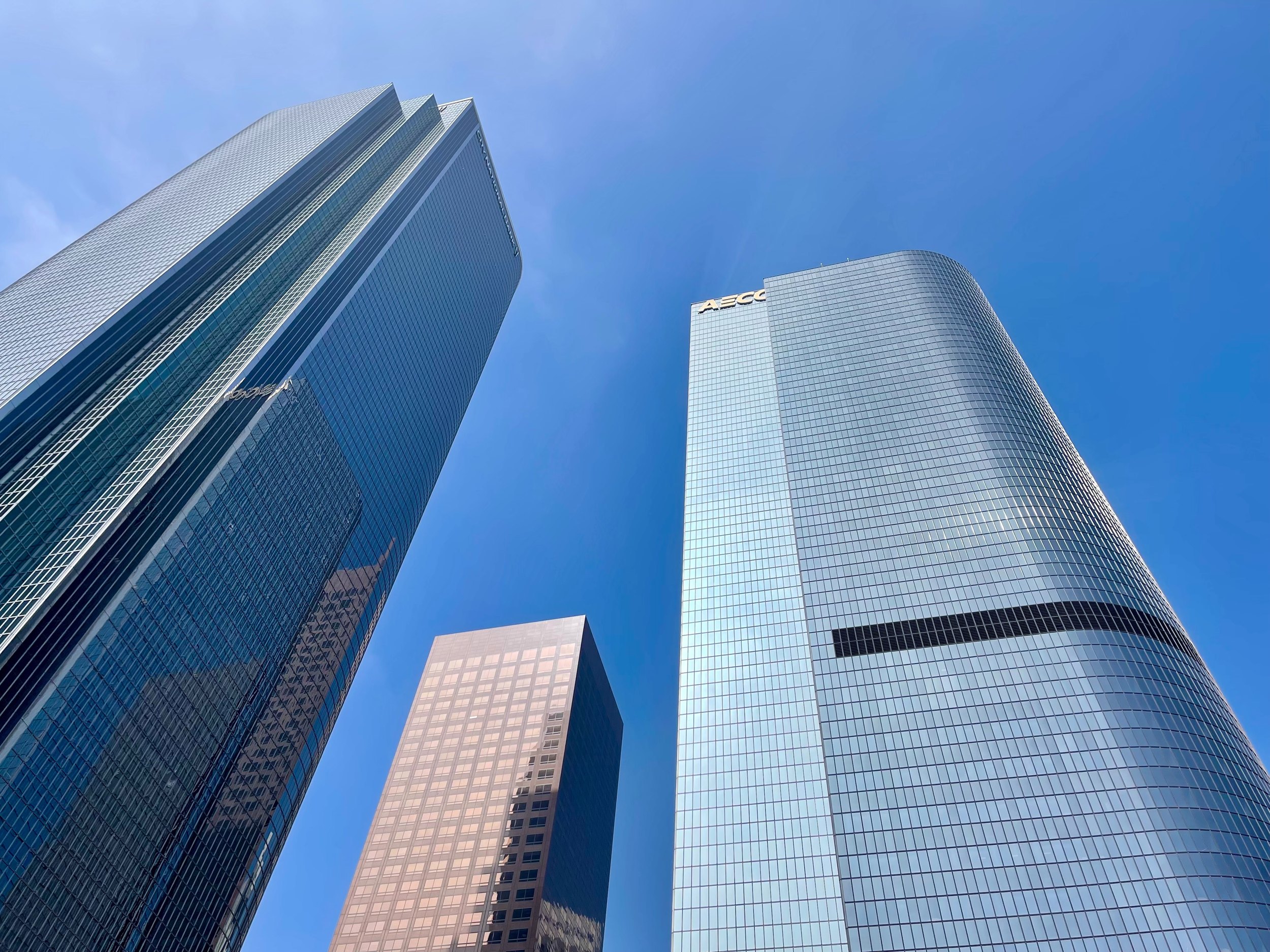
My first stop was Angels Flight, a short funicular railway that has been in many Hollywood movies. I rode it to the top, took some photos of the skyscrapers, and went back down.
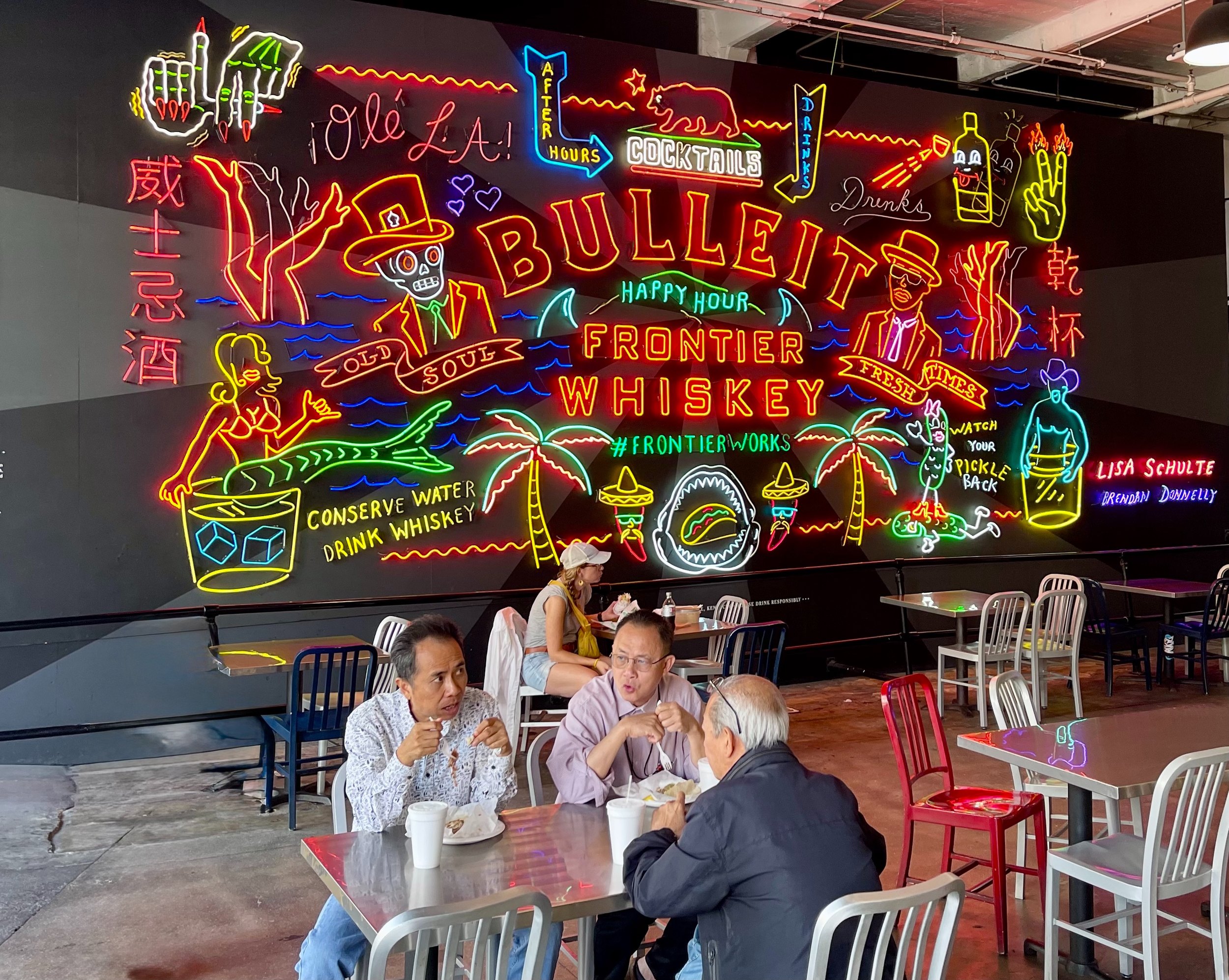
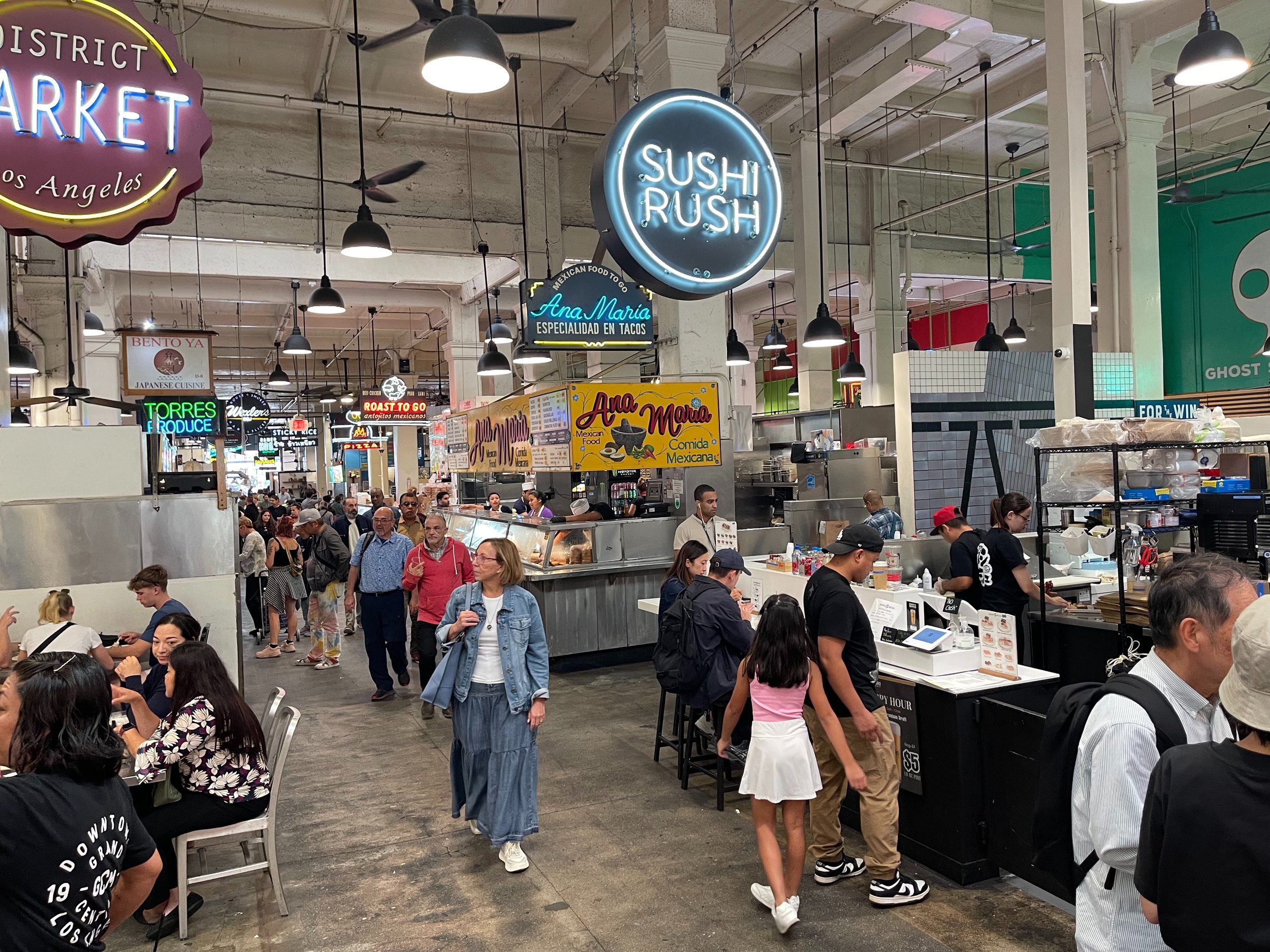
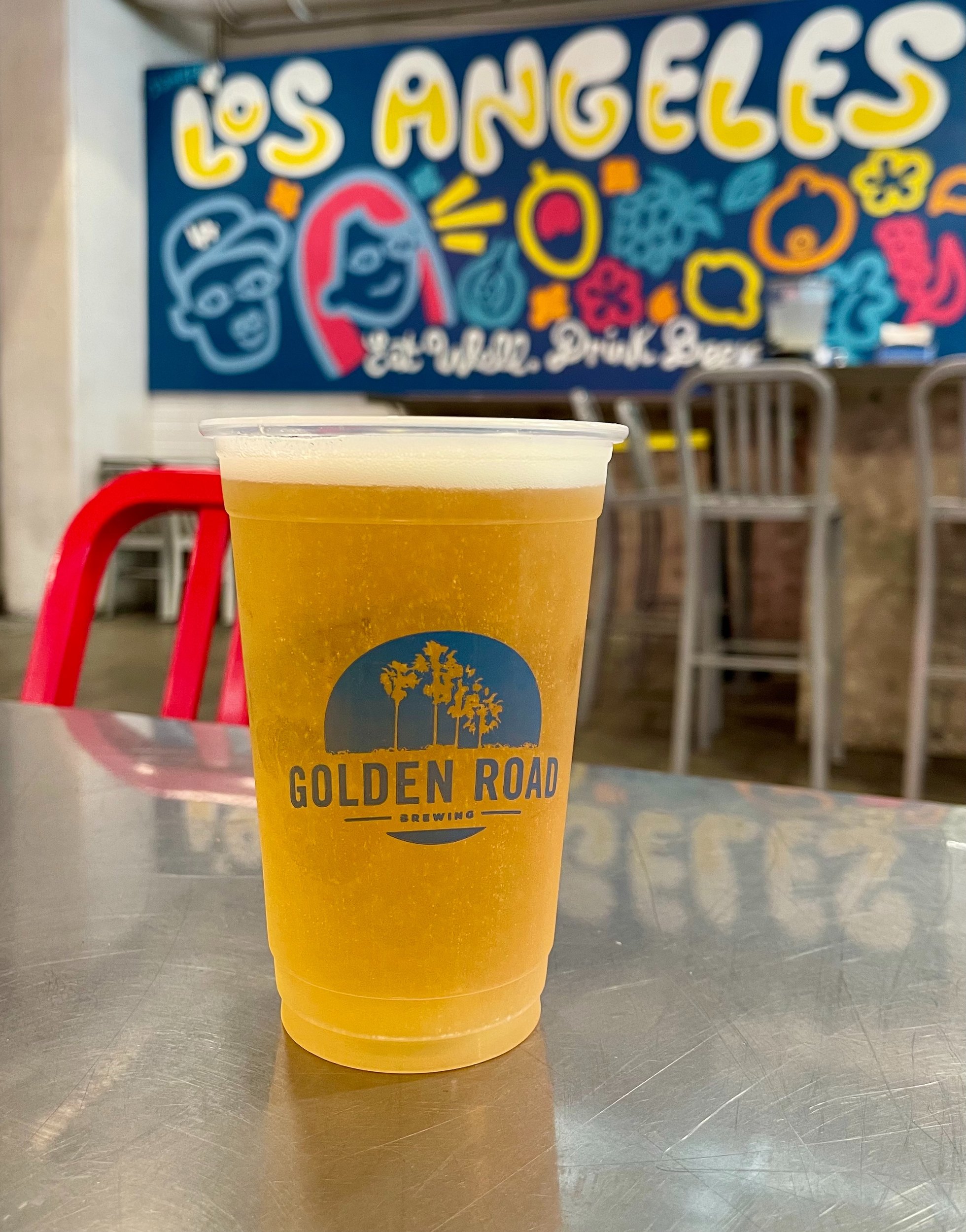
Grand Central Market was more of a food court than a real market. It is indoors but open at both ends, and full of counters serving food from all corners of the world. I settled on Chinese and had a good shrimp chow mein. A good place to eat, but not really a sight worthy of its place on the must-see lists.
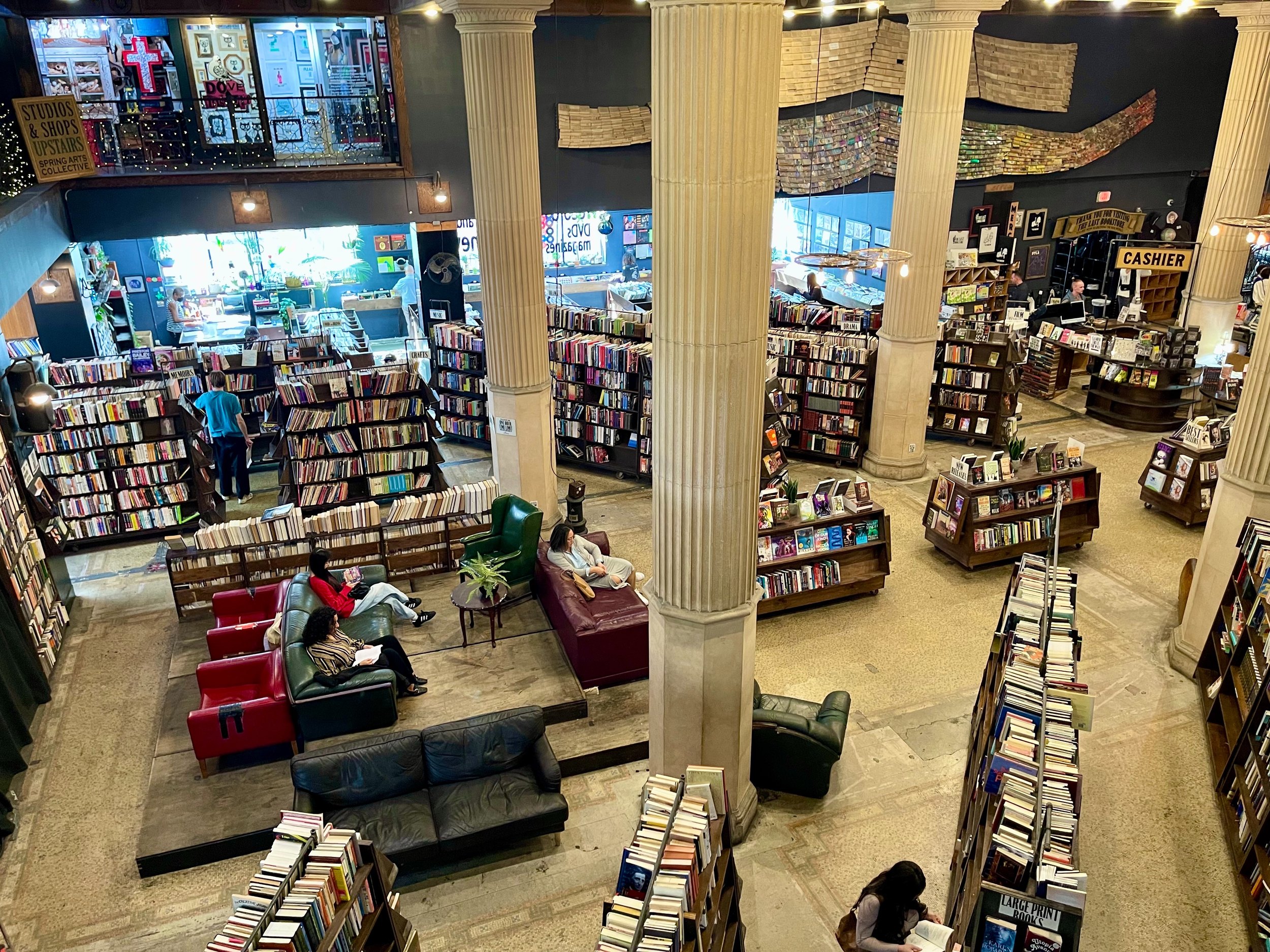
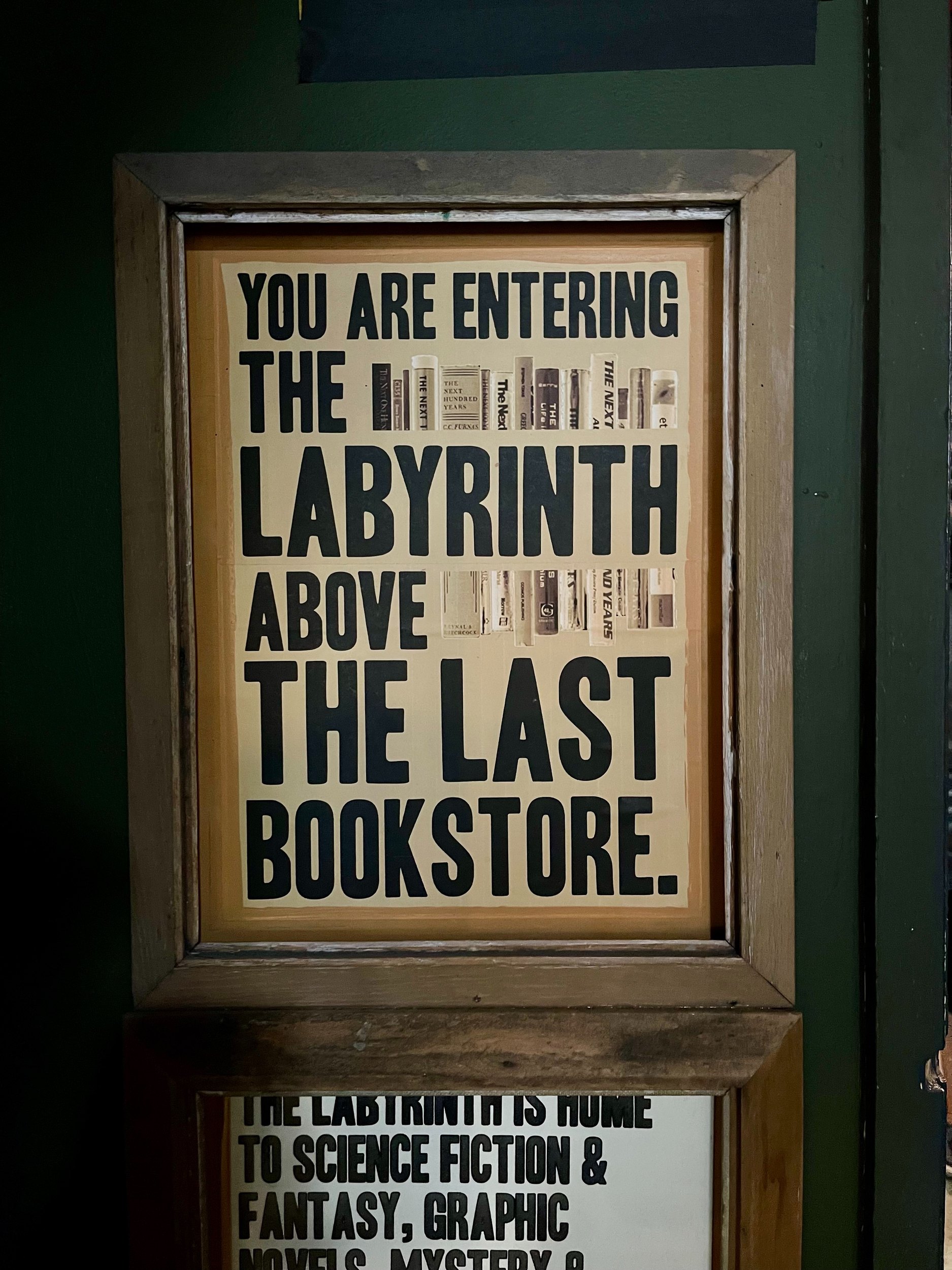
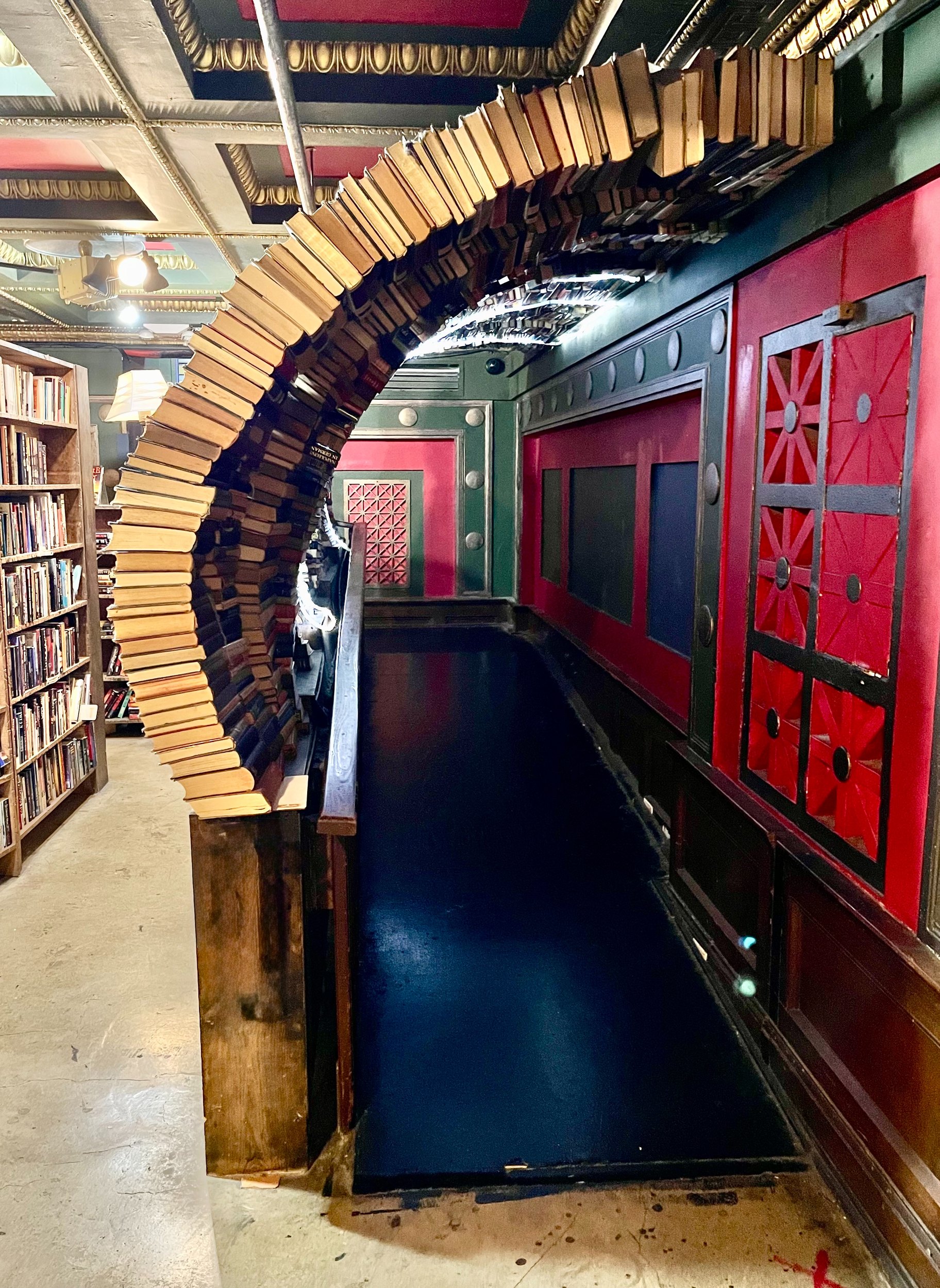
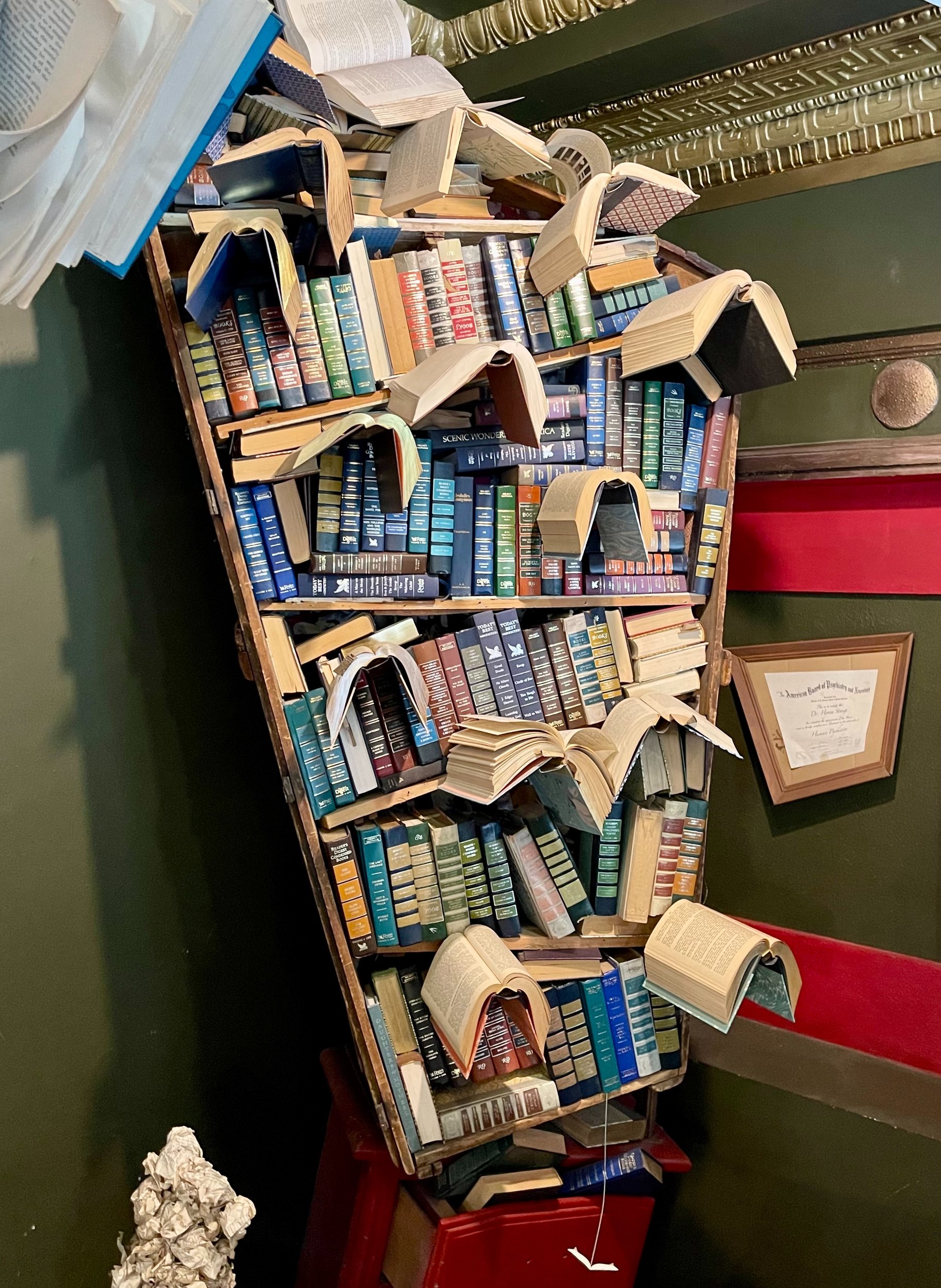
From there I walked over to The Last Bookstore and browsed the aisles. Lots and lots of books, and some interesting displays on two floors.
Along Mulholland
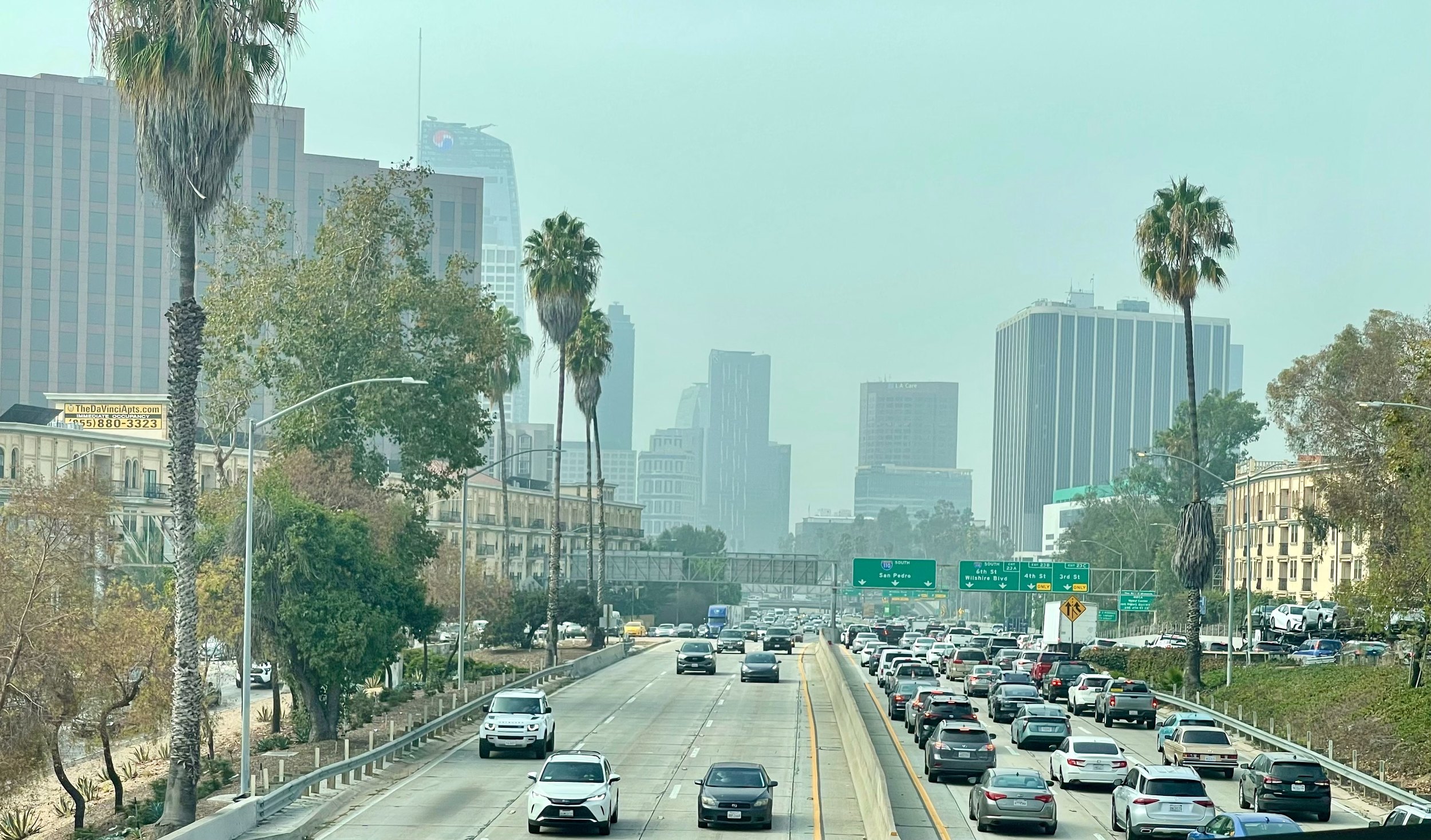
Back in the car, I continued north to Mulholland Drive and its lookout points. The first one looked out over the Hollywood Bowl, impressive but smoggy, with downtown mostly lost in the haze.
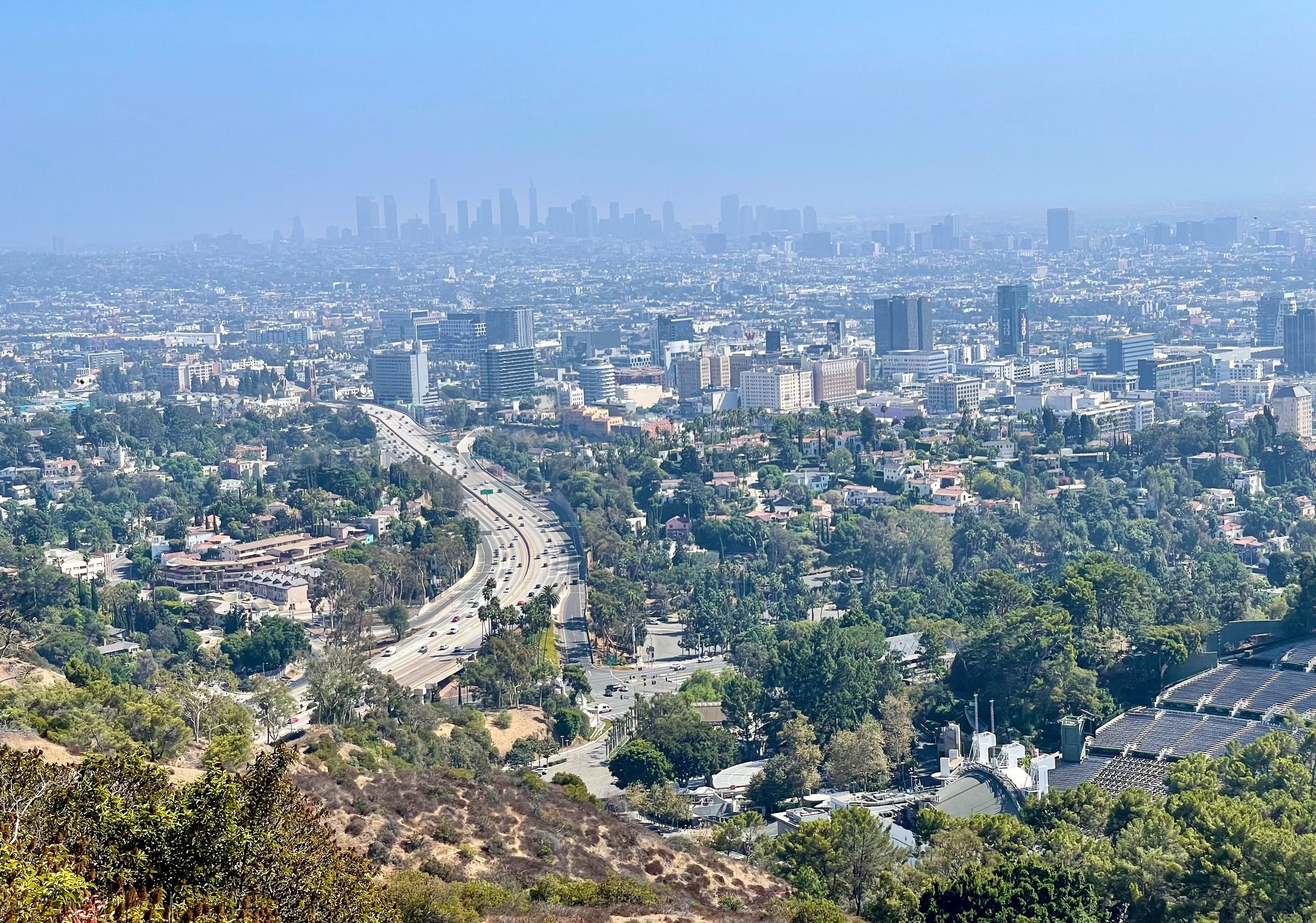
Second on my list was a hike in Runyon Canyon. It turned out to be asphalt all the way down, and then a strenuous climb back up the other side. I hiked about a third of the way down and decided it was not worth it in the heat and smog. There were no views I could not already see from the top.
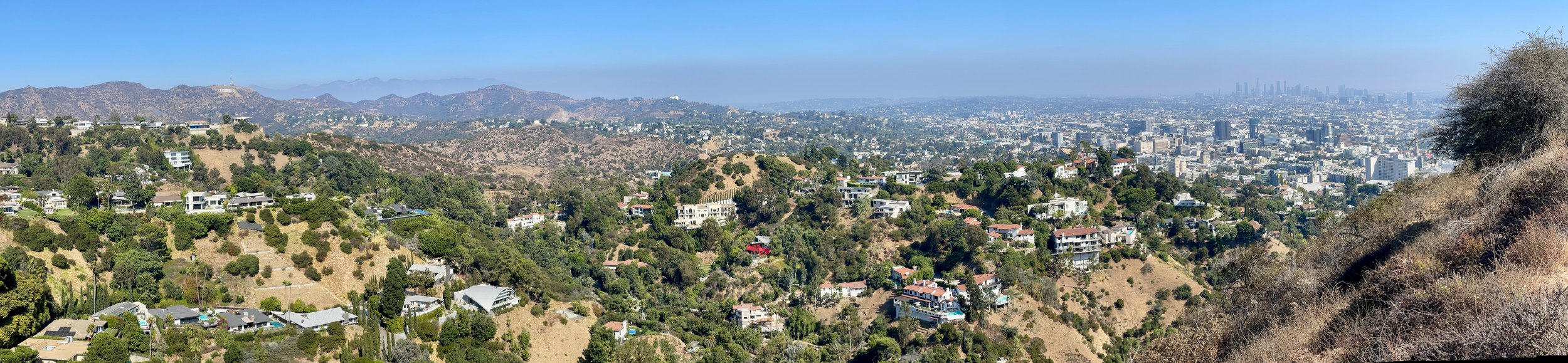
I continued along Mulholland, a nice drive, and stopped at the lookout over the film studios, where Universal Studios was the most prominent. Then I followed Mulholland all the way to Ventura Boulevard.
One of the things that made me take this drive was Tom Petty’s song Free Fallin’, which names both Mulholland and Ventura Boulevard. Now I have driven both, and I enjoy the memory every time I hear the song.
The road is named after a man, and the man is the reason the city down there could grow as large as it did.
William Mulholland was born in Belfast in 1855, went to sea at fifteen and arrived in Los Angeles in 1877, aged 21. He started out keeping the town’s water ditches clear and ended up running its water department. Los Angeles had outgrown its river, and between 1907 and 1913 Mulholland built the Los Angeles Aqueduct, 233 miles long, bringing water from the Owens Valley on the far side of the mountains. When the first water came down into the San Fernando Valley on November 5, 1913, his speech to the crowd was five words long: “There it is. Take it.”
In 1923 the city honored him with a new road along the spine of the Santa Monica Mountains, and it opened as Mulholland Drive in 1924. Four years later his career ended in a single night. In March 1928 the St. Francis Dam, which he had built, collapsed twelve hours after he had inspected it, and the flood killed more than 400 people. He has been called both a visionary and a villain ever since.
I drove his road on a hazy afternoon, looking down on a city of millions that his water made possible, with a song in my head and the fuel gauge heading for empty.
Out of gas, into REI
Getting low on gas, I turned off at Sunset Boulevard, expecting to find a gas station. There were none. I followed Sunset all the way to the coast and finally found one on Highway 1, just north of Santa Monica. Since I was now near Marina del Rey, where I knew there was an REI store, I set out to find it.
After more LA traffic I found it and picked out a better day pack, one with a waist belt, the Osprey Talon 22. Then I was stuck in traffic again, on the 405 this time, what a surprise, and finally made it to Anaheim with Arby’s on the way. My daughter walked in within minutes, and we packed for an early start to Ventura and the Channel Islands.
Los Angeles never won me over. From up on Mulholland I at least understood it a little better: a city in a dry basin, drinking water piped in from 233 miles away, and spending its afternoons in traffic.
Los Angeles, the practical stuff
- What does parking cost at the Los Angeles sights? — In September 2024: $25 for two hours at Venice Beach, and $10 an hour at Griffith Observatory, where you could not extend once you had paid. Downtown street parking is paid in a parking app.
- Is Griffith Observatory free? — Admission to Griffith Observatory is free, as it has been since 1935. The parking is not.
- Where do you park for the Hollywood Walk of Fame? — I parked about a 20-minute walk away. Closer parking costs more.
- Is Venice Beach worth a visit? — Not for me: mostly souvenir shops along the boardwalk. The surviving canals are a few blocks inland.
- What is Angels Flight? — A funicular railway in downtown Los Angeles between Hill Street and California Plaza on Bunker Hill, first opened in 1901. See Angels Flight.
- Where can you eat downtown? — At Grand Central Market on Broadway, a food hall with counters from all over the world.
- Is The Last Bookstore worth a visit? — Yes, for the building and the upstairs labyrinth. The Last Bookstore is at Fifth and Spring.
- What does breakfast cost in Anaheim? — $29 for a waffle with sausage, plus $5 for coffee, at IHOP in September 2024.
- How to book — Rental car: Hertz and the other big companies. Hotels near the Anaheim Convention Center and Disneyland: Booking.com. Outdoor gear: REI in Marina del Rey.
USA 2024 — all posts
- 1 — Chicago, the license in the car visor
- 2 — Highway 1, waiting for the fog to lift
- 3 — Santa Monica, the end of a road I never drove
- 4 — Los Angeles, the road named after the water
- 5 — Crystal Cove, a man who stayed there in 1944
- 6 — Catalina, hitchhiking by golf cart
- 7 — Santa Cruz Island, the dolphins on the way home
- 8 — Joshua Tree, “Don’t die today”
- 9 — Oatman, where the burros have names
- 10 — Grand Canyon, sunrise with a few hundred others
- 11 — Buckskin Gulch, checking the sky first
- 12 — Angels Landing, at seventy
- 13 — Bryce Canyon, hoodoos in the kiln
- 14 — Escalante, the road the Tiguan survived
- 15 — Capitol Reef, the park that was closed
- 16 — Monument Valley, and the ticket we didn’t get
- 17 — Mesa Arch, “Is your name Bo Sjosten?”
- 18 — Arches, nine minutes to spare
- 19 — Sleeping in the back of a Tiguan
- 20 — Permits, lotteries and timed entry in the national parks
- 21 — What things cost in the US, and the tip screen
- 22 — Three weeks in the West: the route, and what I would change