


I had time for a short visit to Tainan, Taiwan’s oldest city. I had only an afternoon and an evening, so I covered only the main sights, and I covered them on foot.
The day started in Alishan with the 10:10 bus down the mountain, then a high-speed train from Chiayi and a small shuttle train into the center. By mid-afternoon I was at a hotel two minutes from Tainan station with a tiny but comfortable room.
A Dutch fort under Chinese roofs
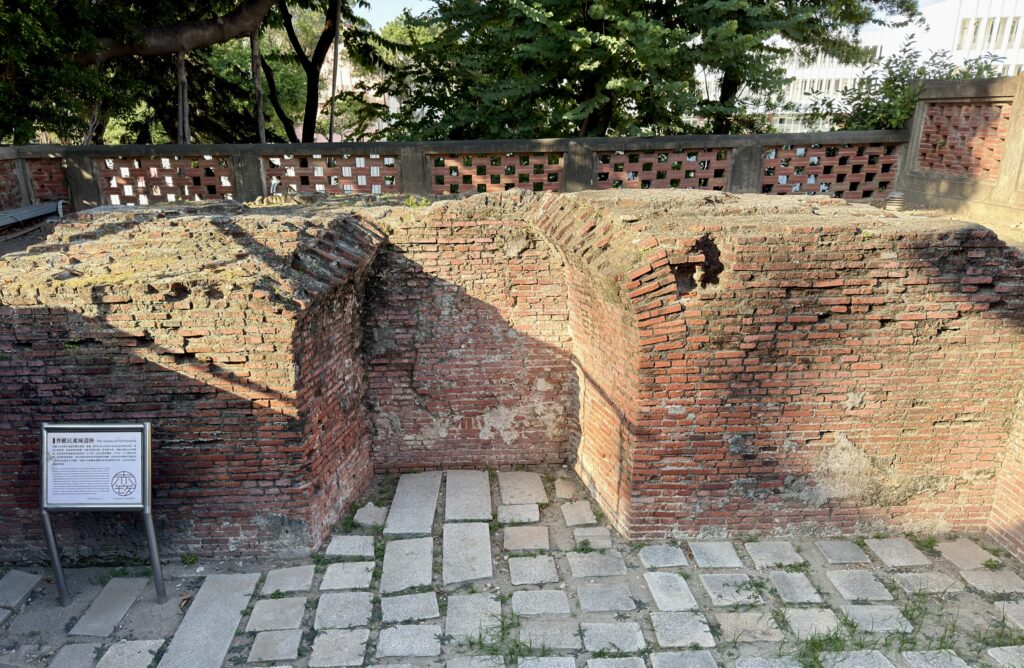
First out was Chihkan Tower. From the street it looks like what you expect in a Chinese city: two pavilions with curved red-tiled roofs, stone balustrades, a garden with a pond. Then you notice the base they stand on. The lower walls are old red brick, laid by the Dutch in the 1650s, and the pavilions were built on top of them two centuries later.
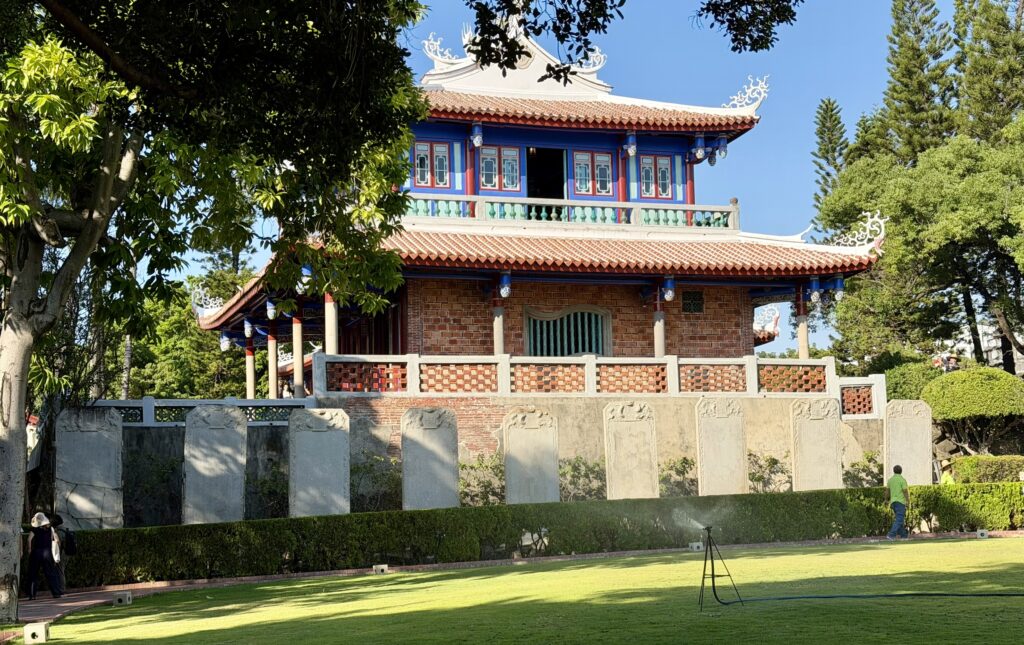
In front of them, a row of stone tablets stands on the backs of stone turtles. They were carved in 1788 to record the end of a rebellion, one of many the island saw under the Qing.
Two blocks on the floor
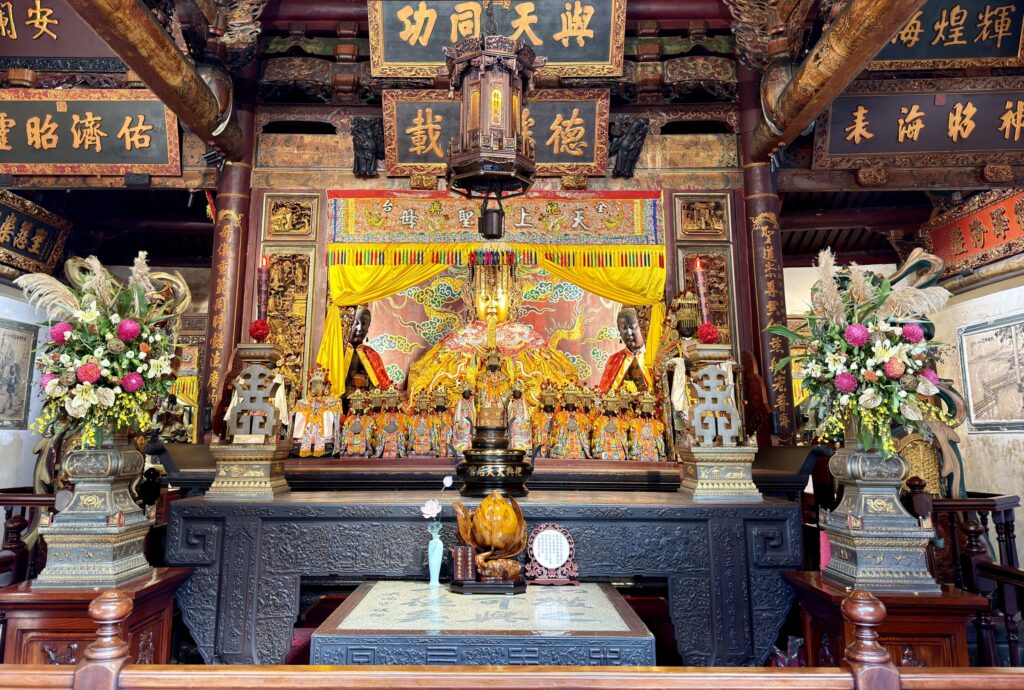
I then wandered around the old city temple cluster and spent some time in the Grand Matsu Temple. It has its own story. It was built in 1664 as the palace of a Ming prince who had come to Taiwan with Koxinga’s son. When the Qing took the island in 1683, the prince hanged himself, and his five concubines died with him. The new Qing commander turned the palace into a temple to Matsu, the goddess of the sea, who looks after sailors and fishermen, and it became the first officially sanctioned Matsu temple in Taiwan.
Here I watched something I had not seen before. The worshippers prayed and then tossed two wooden chips onto the floor in front of the altar. Apparently you can ask a question and then read the answer from how the chips land.
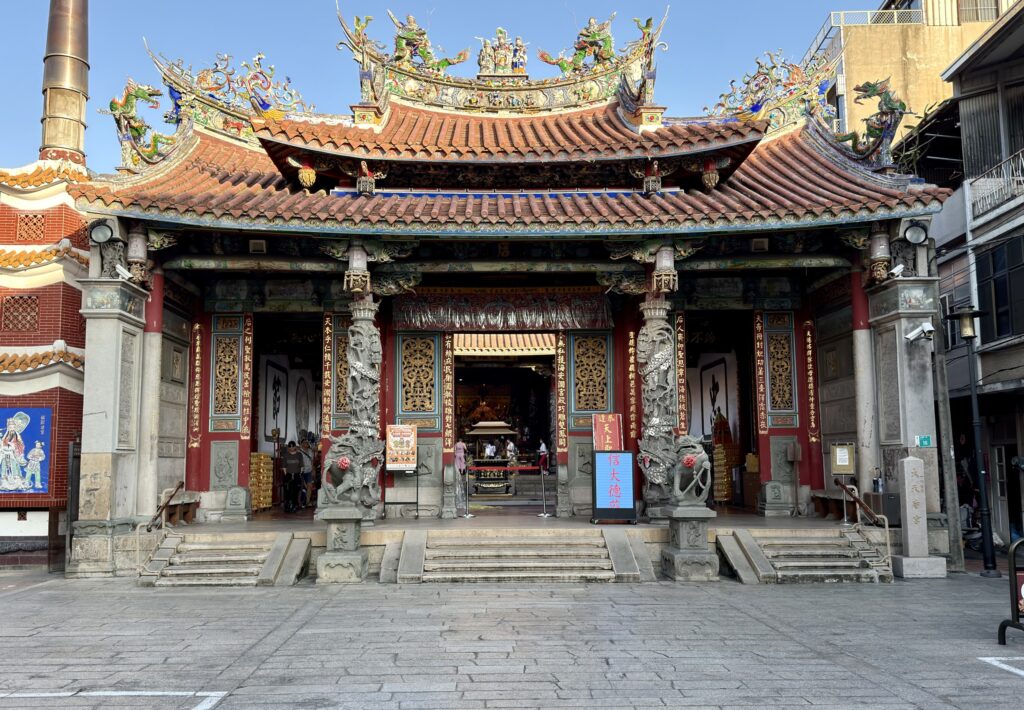
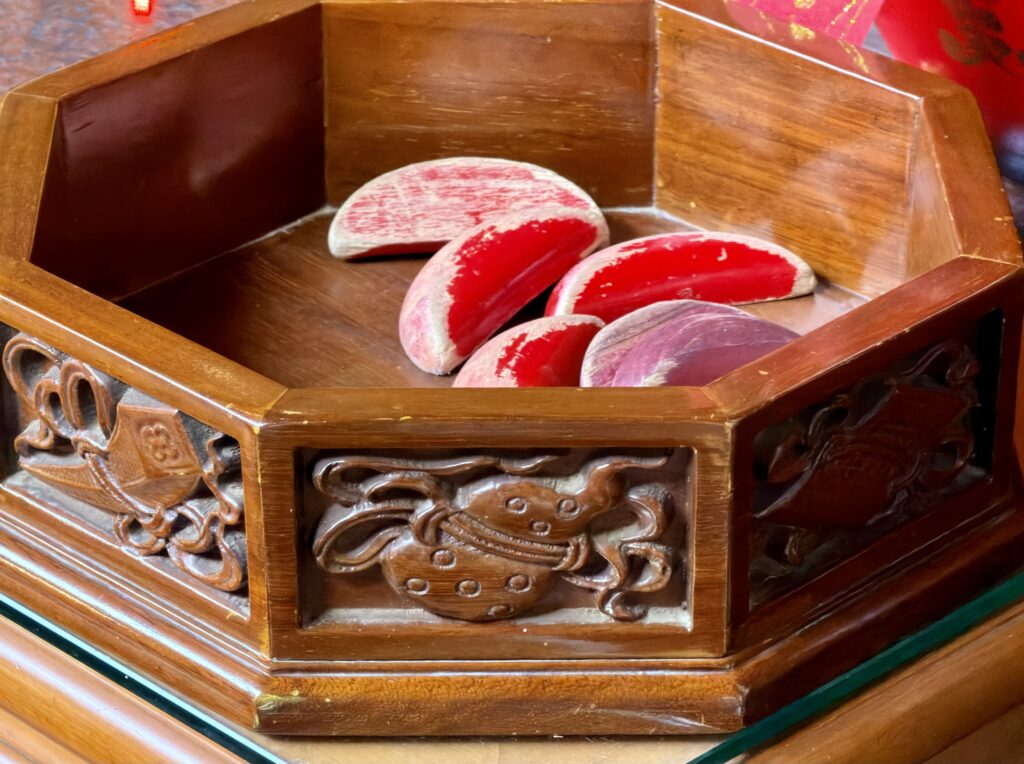
They are called moon blocks, and they are crescents of red-painted wood, flat on one side and rounded on the other, small enough to cup in two hands. The person asking stands or kneels in front of the god, says their name, their birth date and where they live, so that the god knows who is asking, and then asks one question that can be answered yes or no. Then the blocks are raised, and dropped.
One flat side up and one round side up is the holy answer, and it means yes. Two round sides up means no. Two flat sides up is the laughing answer: the god is amused, either because the question was unclear or because the answer should have been obvious, and you try again. If a block lands on its edge, which happens, nobody is quite sure what the god meant.
For anything that matters, one yes is not enough, and people throw until they get three holy answers in a row. With two blocks that is a one-in-eight chance on any given run, which explains why people sometimes keep throwing for quite a while. The blocks are also used together with the fortune sticks in the tall cups on the altar: you shake out a numbered stick, ask the blocks whether it is really meant for you, and only after a yes do you collect the printed verse with your answer.
Nobody can say exactly how old the practice is. It came to Taiwan with the settlers from Fujian, it is far older than that, and the shape of the blocks suggests it may once have been done with the two halves of a clam shell.
I only watched. I had a question or two, but I was not sure I wanted the gods to laugh at them.
Shennong Street at dusk
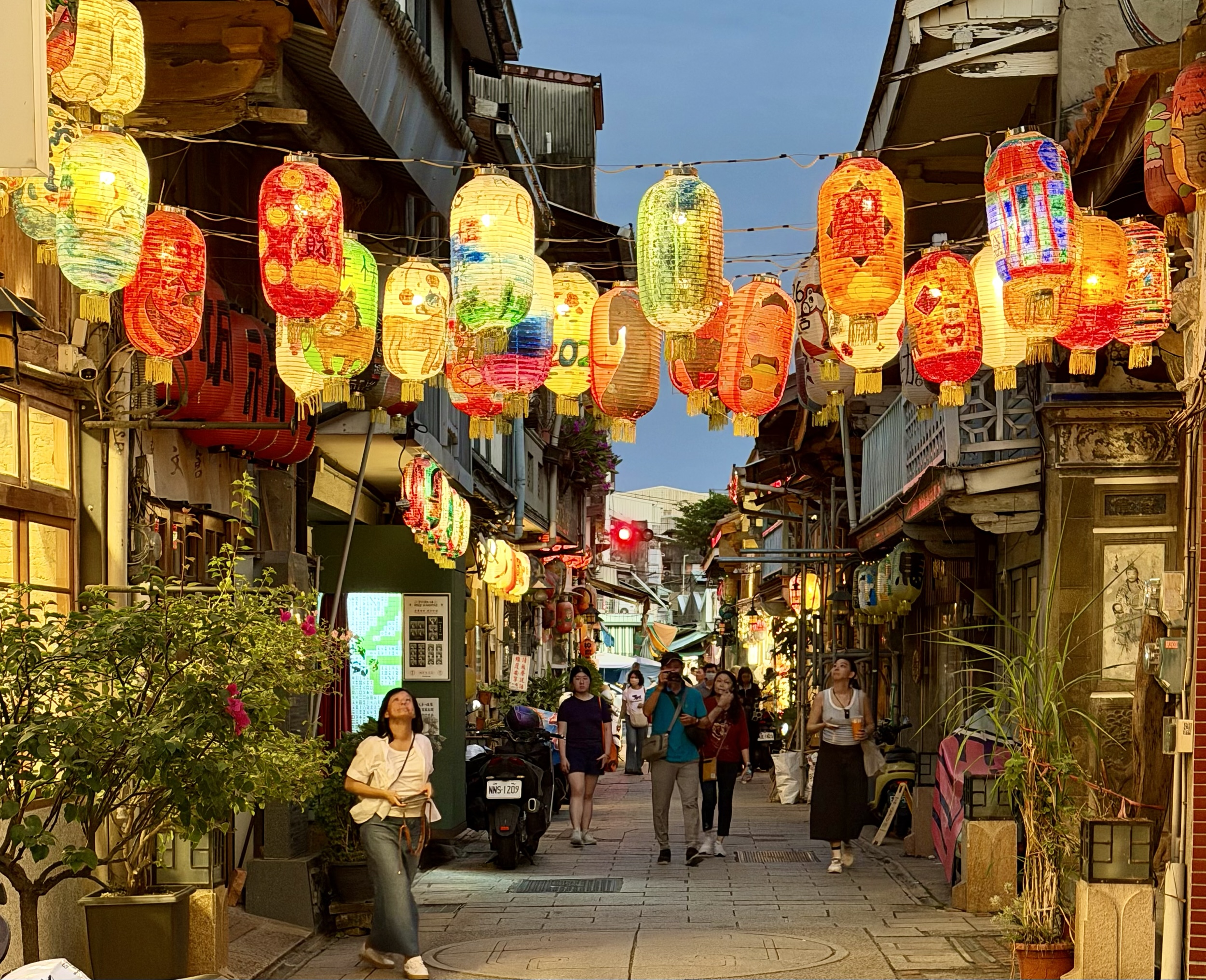
At dusk I wandered along Shennong Street to see the lanterns come on.
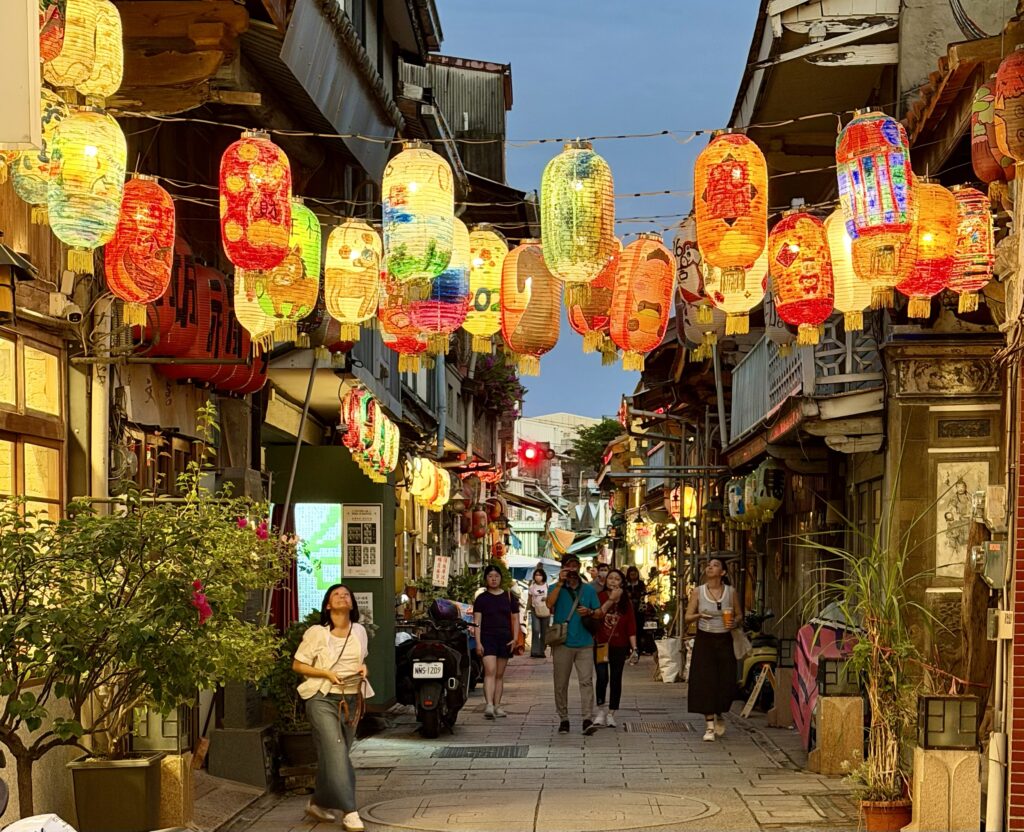
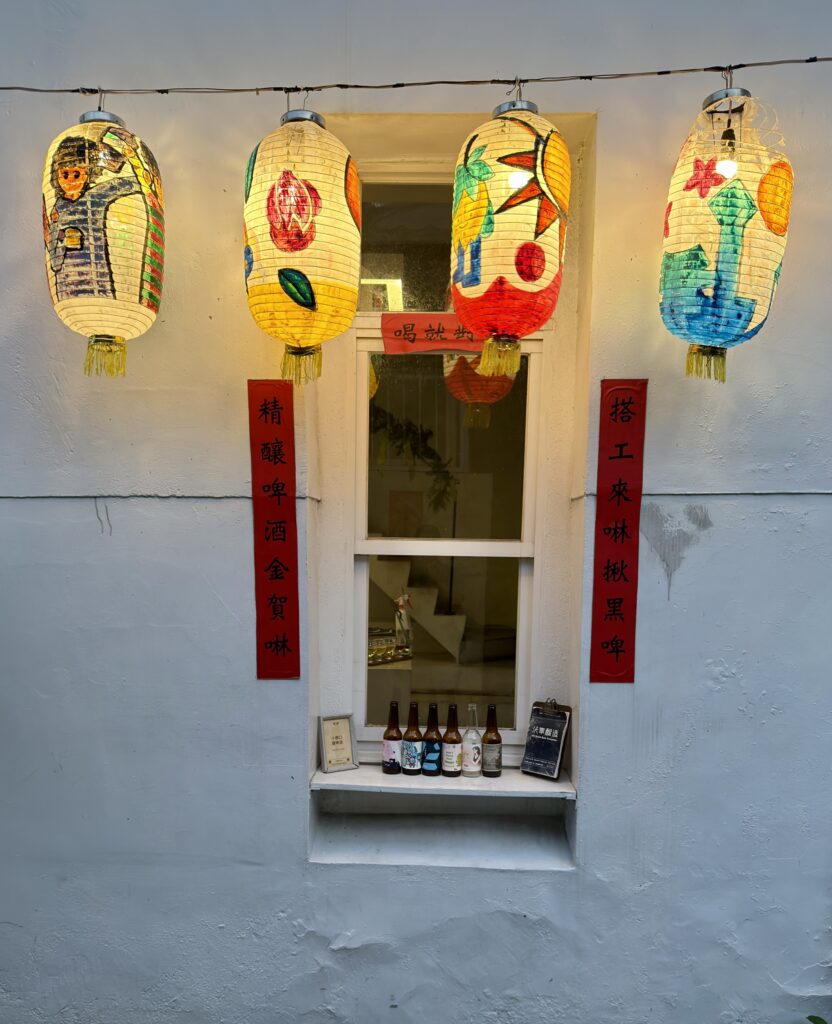
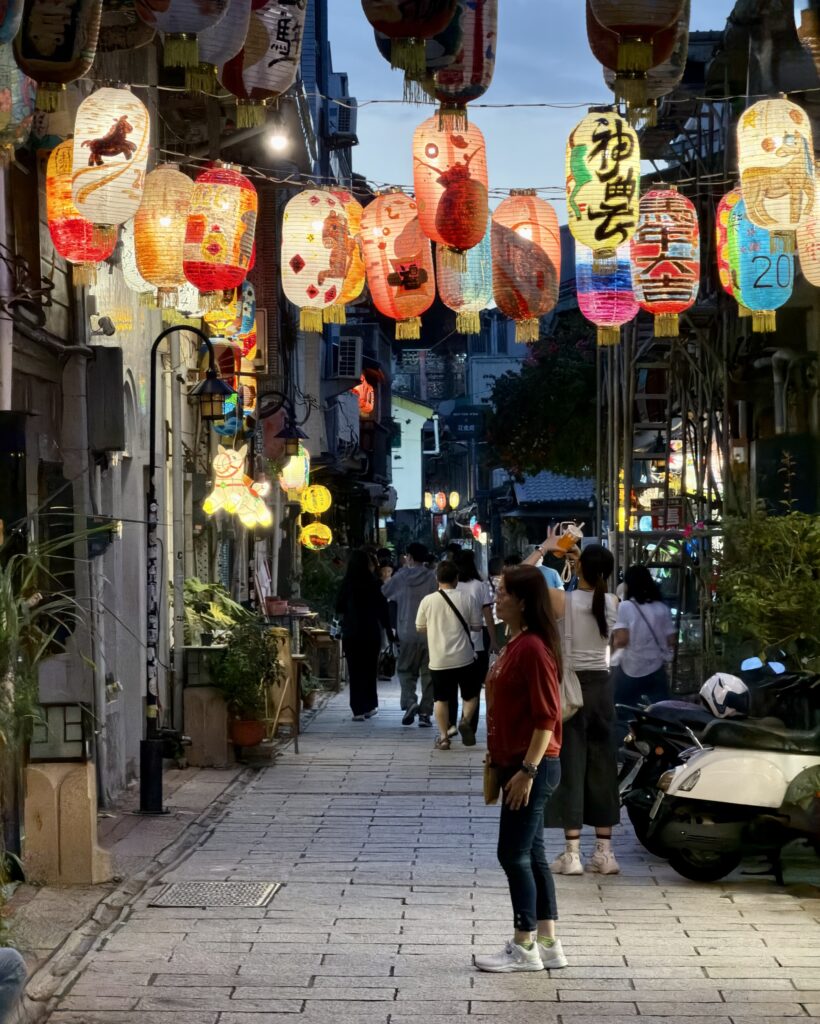
It is a narrow street, about four meters wide and three hundred meters long, lined with two-story Qing-era merchant houses. In the eighteenth century this was the head of the Five Channels, the waterways that brought ships in from the lagoon that then reached the edge of the city. Goods were unloaded straight into the ground floors, and the merchant families lived above. The street was known for its trade in herbal medicine, and it takes its present name from Shennong, the Divine Farmer, the god of agriculture and herbal medicine, whose temple stands at the far end.
Then the lagoon silted up, after a great storm in 1823 and many smaller ones, the ships went elsewhere, and the street went quiet for a century and a half. Today the old houses are cafes, small studios and bars, and red lanterns hang the length of the street.
The time to come is the short stretch just after sunset, when the lanterns are lit but the sky is still blue. There is a quarter of an hour of it, and then the sky goes black and the street becomes a lantern street like any other. The street was pretty quiet, with only a few people wandering around, and I really enjoyed strolling and seeing the lanterns get lit as the sun set.
I had a nice dinner in the area, very welcome after a long travel day that didn’t have time for lunch.
One evening
One afternoon and one evening is not enough for Tainan, and I knew that when I booked it. A Dutch wall under a Chinese roof. A prince’s palace turned into a temple for the sea goddess. Two wooden blocks on a stone floor, asking yes or no. Four hundred years, a short walk apart.
Tainan, the practical stuff
- How do you get from Alishan to Tainan? — Bus 7329 down the mountain to Chiayi high-speed station, about 2.5 hours, then the high-speed train to Tainan, 16 minutes (my early-bird fare was NT$220, about US$7). From Tainan HSR station, the Shalun line shuttle reaches Tainan station in about 22 minutes, paid with the EasyCard.
- Where should you stay for one night in Tainan? — Near Tainan station. A basic single room two minutes away cost about US$31, fine for one night and an early train.
- What are the Chihkan Tower opening hours? — Daily from 08:30 to 21:30. Over-65s pay NT$35 (about US$1) with a passport. Come in the late afternoon and stay until the pavilions are lit.
- Can you visit the Grand Matsu Temple in Tainan? — Yes. It is free, open every day and a short walk from Chihkan Tower. This is where you can watch worshippers throw moon blocks. Watch quietly, and do not photograph people while they pray.
- When is the best time to see Shennong Street? — Just after sunset, around 17:40 in early October. It is free. The entrance end is narrow and crowded; the far end is quieter.
- How do you get around Tainan? — On foot. Tainan has no subway, but the old city is compact, flat and walkable from the station. Taxis are cheap for anything farther.
China 2026 — all posts
- 1 — Shanghaied
- 2 — Three days in Shanghai
- 3 — Xi’an, the beginning of the Silk Road
- 4 — Chengdu, panda town
- 5 — Chongqing, the world’s biggest city?
- 6 — Zhenyuan, the other Silk Road
- 7 — Xijiang, the village that is paid to look like itself
- 8 — Zhangjiajie, the mountain that was renamed after a film
- 9 — Yangshuo, the view on the twenty
- 10 — Shenzhen, from thirty thousand people
- 11 — Why China’s big cities are so quiet
- 12 — Hong Kong, nowhere to go but up
- 13 — Traveling through China’s holidays
- 14 — Taipei, four kilometers of gondola
- 15 — Alishan, the forest that left by train
- 16 — Tainan, where the gods answer yes or no
- 17 — Taiwan, a short history of a long question
- 18 — Why Uber in Taiwan sends you a taxi
- 19 — Hualien, a gorge you can only look at
- 20 — Jiufen, the gold you are allowed to touch
- 21 — Beware of Old Street
- 22 — Taipei, the crates that crossed the strait
- 23 — Shanghai again, through new glasses
- 24 — Train travel in China
- 25 — Paying for things in China, Hong Kong and Taiwan
- 26 — Getting online behind the Great Firewall
- 27 — China at 72
- 28 — Six weeks in China and Taiwan: the route, and what I would change
Before you go: Planning a trip to China · Essential apps for travelling in China