
Finally Time for Thailand: Starting in Bangkok
/
The taxi I had prebooked arrived promptly at 6.45 in the morning and took me to the airport. Check-in was painless, even though my daypack came in a little over the 7kg carry-on limit; nobody weighed anything, and several passengers ahead of me were carrying noticeably more. My seat was 28A on the Norse Atlantic Dreamliner, window, left side. We left Stockholm at 9.25, and over eleven hours in the air the airline offered water exactly once. I’d downloaded several things to watch beforehand, which turned out to be essential preparation, and got up twice to stretch at the back of the cabin.
We landed in Bangkok on time at 2.40 AM. Immigration moved fairly quickly, and I found an ATM outside arrivals and withdrew 10,000 baht, about 300 dollars. Since I was arriving in the middle of the night the airport train was not running, so I’d pre-booked a car to take me to the hotel, a small luxury I can recommend after long red-eye flights. My driver was waiting in the arrivals hall with a sign with my name on it. Traffic was light at that hour and I was at the hotel by 4.30 in the morning. I set an alarm, turned off the light, and went to sleep: eleven hours on a budget airline, a new timezone, a city I had never been to.
Getting My Bearings in Bangkok
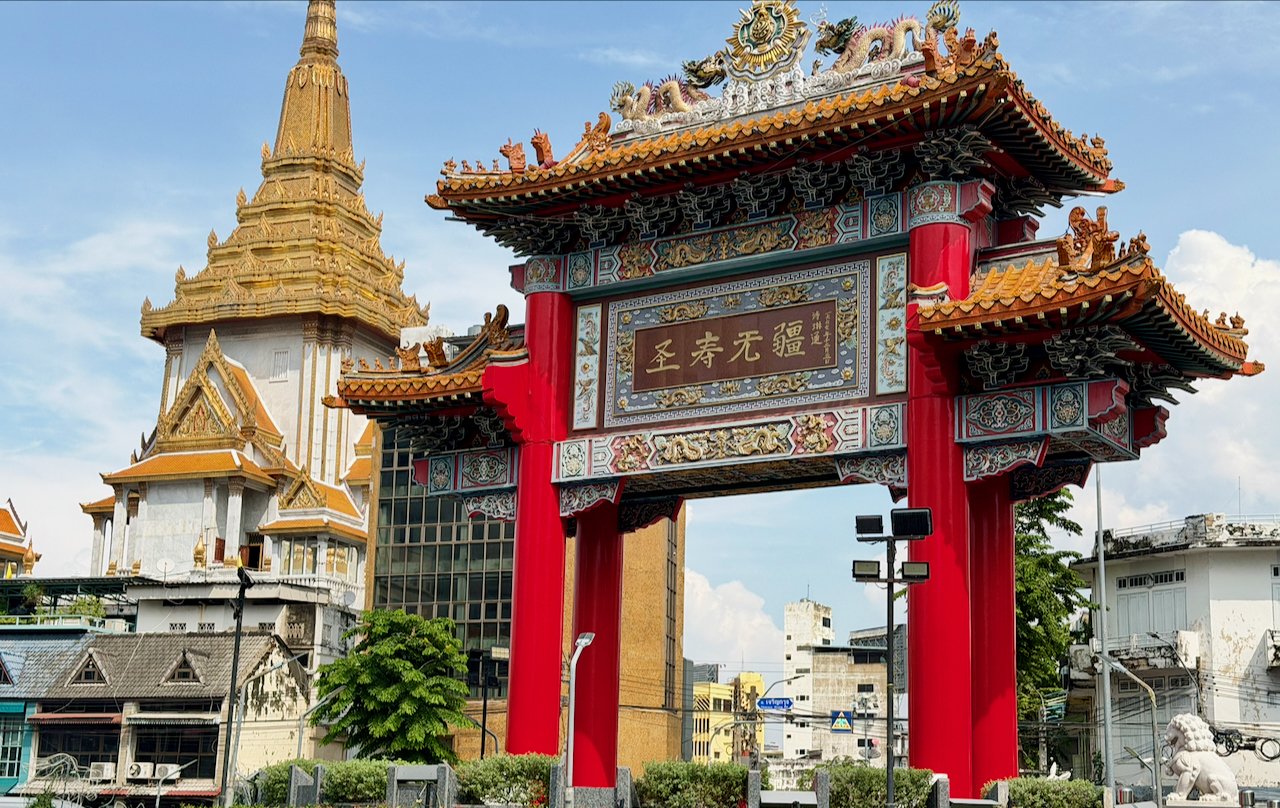
I slept until 10 AM, catching up on sleep after the long flight, which was the right call. My hotel was near Si Praya pier on the Chao Phraya river, a location that turned out to be well chosen: quiet enough to recover in, and close to the boats that make this part of the city easy to get around without a car. Breakfast and lunch merged into a single meal at a small restaurant outside the hotel, then I set out on foot: a shopping centre near the pier, a coffee, a long walk to Chinatown, and my first Thai temple. This part of Bangkok is straightforward to navigate on foot.
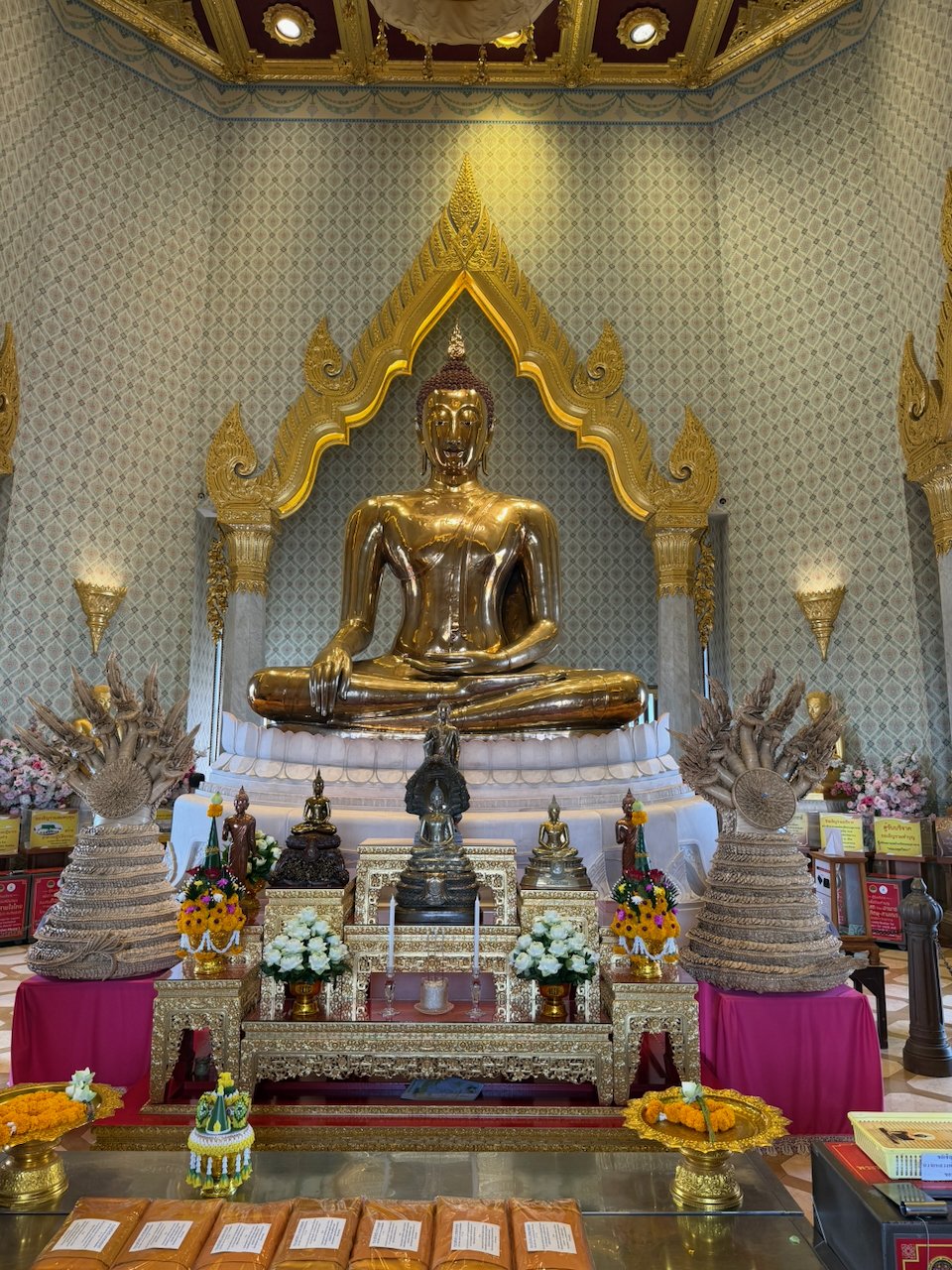
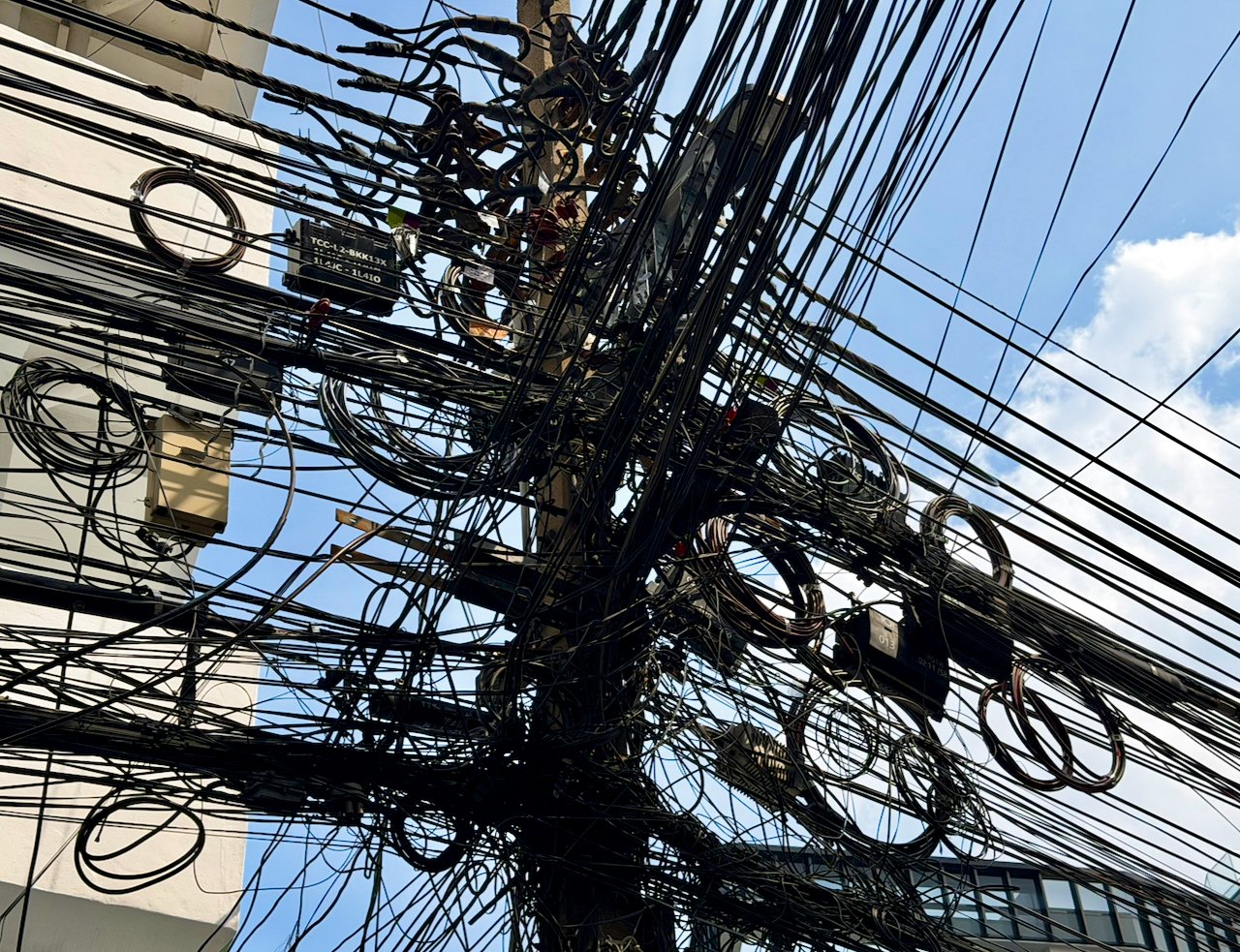
Back at the hotel in the afternoon for a nap, then out again for dinner, only to find the street food vendors I’d spotted earlier already gone. This turned out to be a pattern I hadn’t learned yet: street food in Bangkok runs on its own schedule, and by early evening plenty of good spots are closed or already packing up. I ended up at an Indian restaurant nearby instead, shrimp and fried rice, decent, no argument with the spice for once, though the rice caught in my throat as it usually does.
After dinner I walked to the Sky Bar, sixty-four floors up in the State Tower. The view of Bangkok at night is substantial: the river, the lit-up temples, the sprawl going in every direction. The bar didn’t serve beer. The cheapest option was 800 baht, about 23 dollars, and I ordered a single shot of Maker’s Mark, the service charge alone coming to more than my dinner. I stayed for one drink and took it slowly. It was worth it. Everything else in Bangkok is cheap enough that you can afford one absurd evening drink.
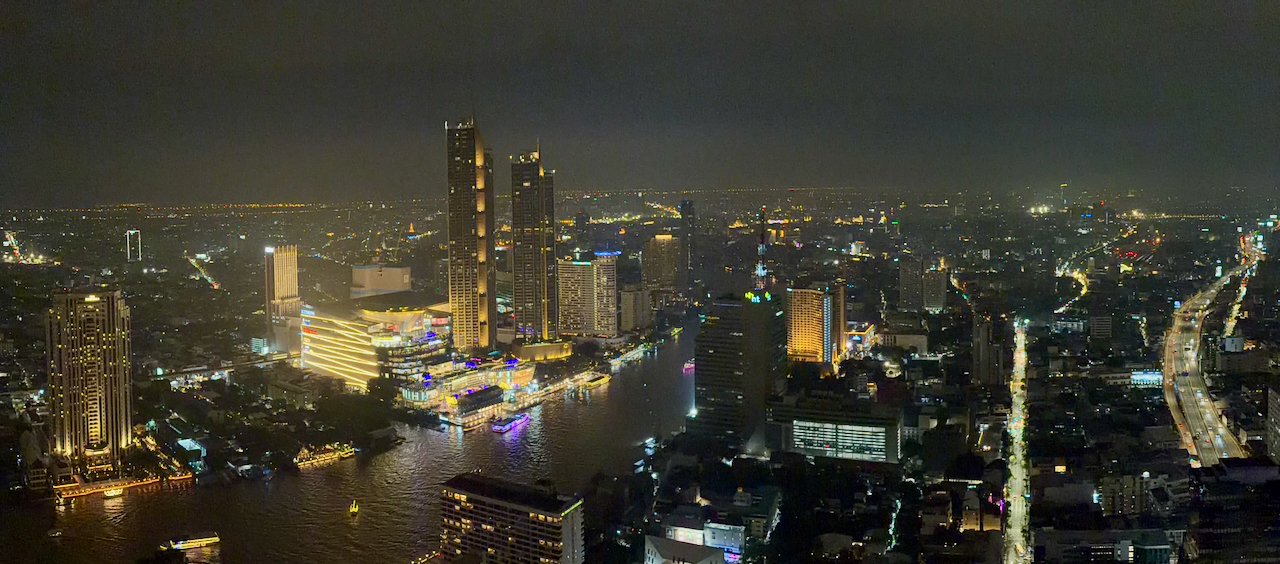
A good first day. A useful location. An expensive lesson about rooftop bars that I will probably not learn from.
Temple Day
Today’s plan was simple on paper: Bangkok’s big three temples in a single day, the Grand Palace, Wat Pho, and Wat Arun, before the crowds caught up with me or my legs gave out first.
I found the right ferry pier after some confusion. Si Praya, marked N3 on the maps, is straightforward enough in theory, but in the early morning before the tourist traffic builds up the riverside piers all look similar. I arrived at the Grand Palace at 8.45, fifteen minutes after opening, and it was already crowded.
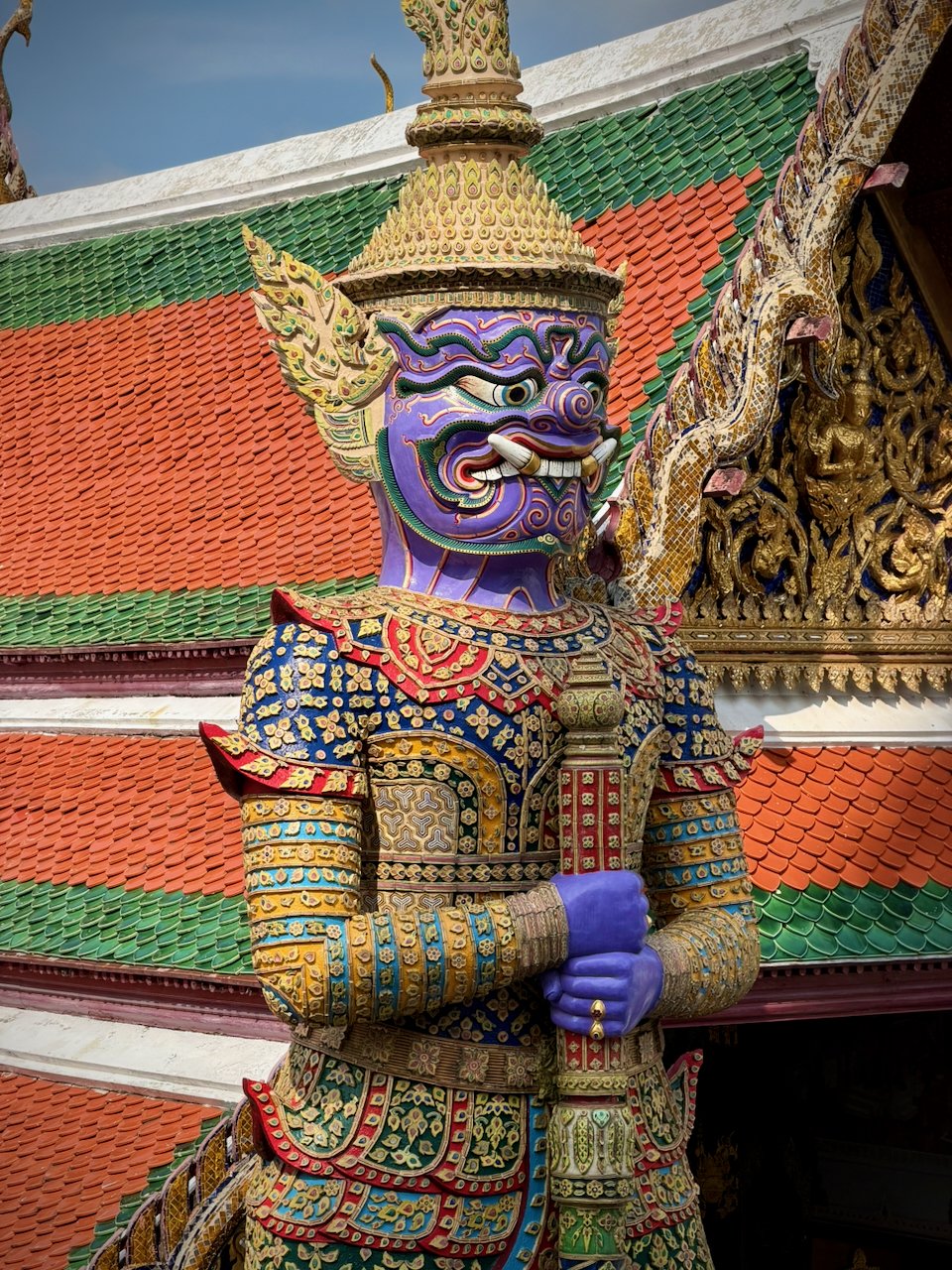
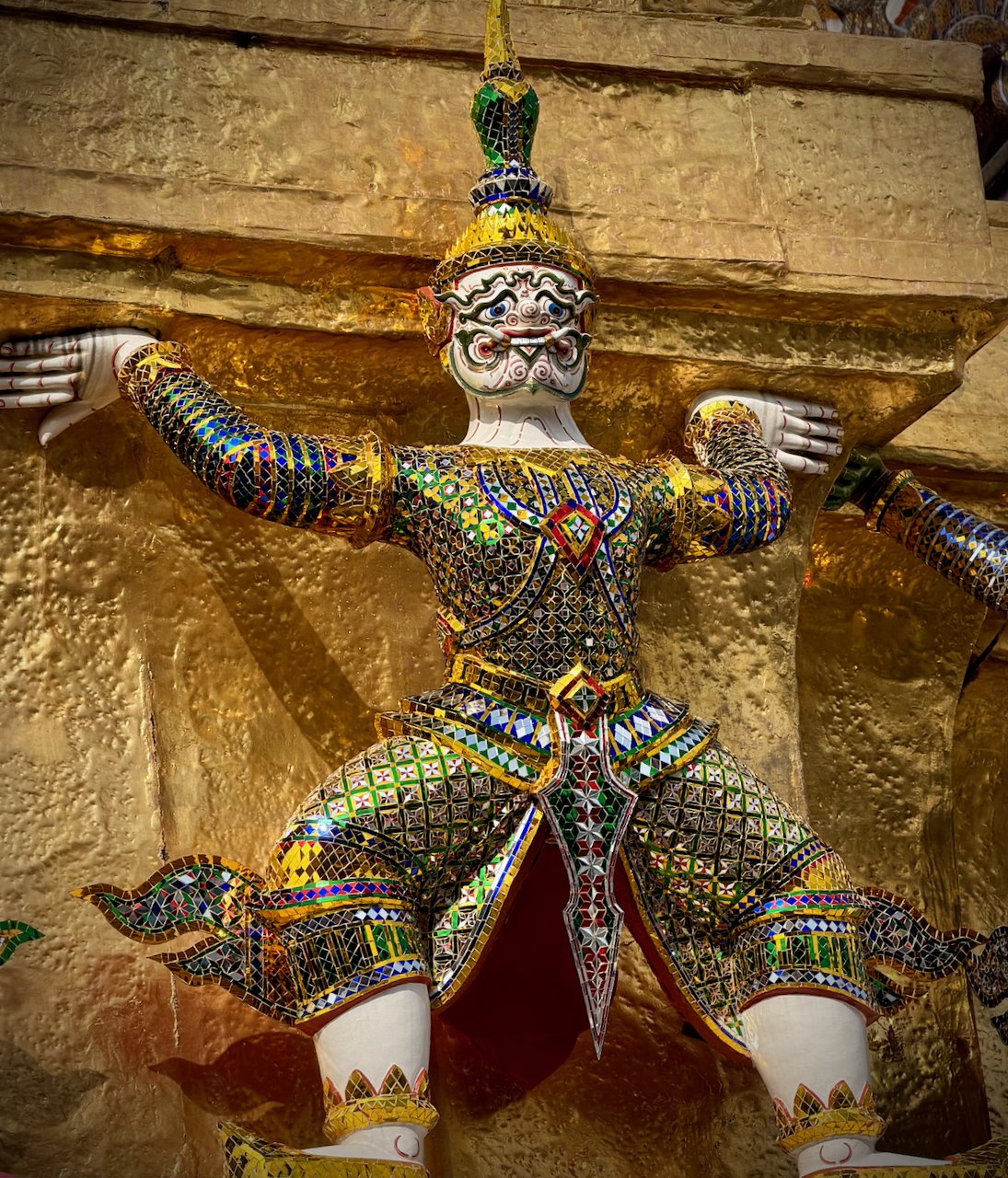
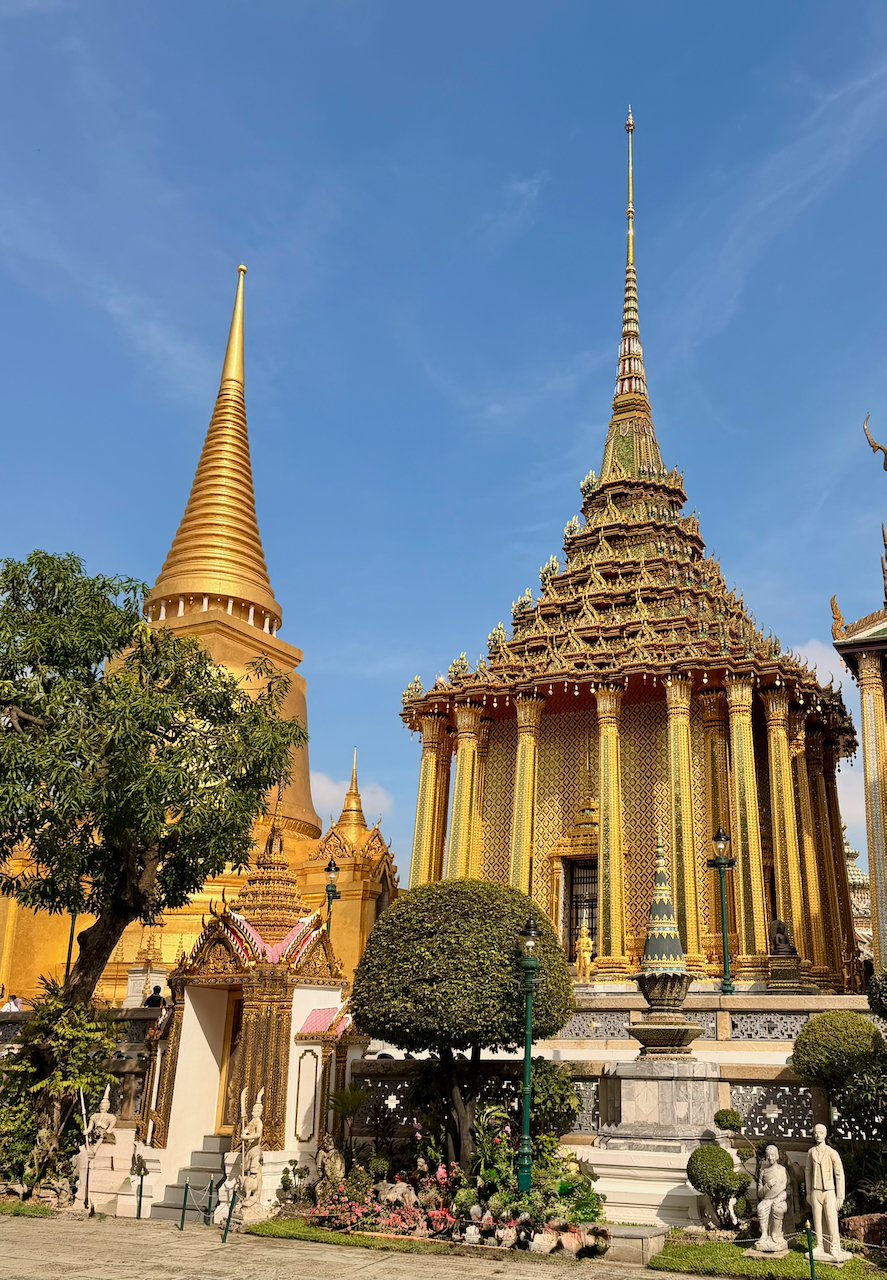
Wat Phra Kaew, the Temple of the Emerald Buddha inside the palace compound, was genuinely impressive: elaborate, gilded, maintained at a standard that only royal patronage can sustain. The Grand Palace itself was largely closed due to a royal ceremony. I hadn’t known about this, and there was no way to have known, so I spent the extra hour wandering the parts still open: a stretch of cloister wall wrapped in painted panels telling the entire Ramakien epic, Thailand’s version of the Ramayana, one mural after another without a single blank stretch. Worth slowing down for, even rushed as I was, and I moved on without too much regret.
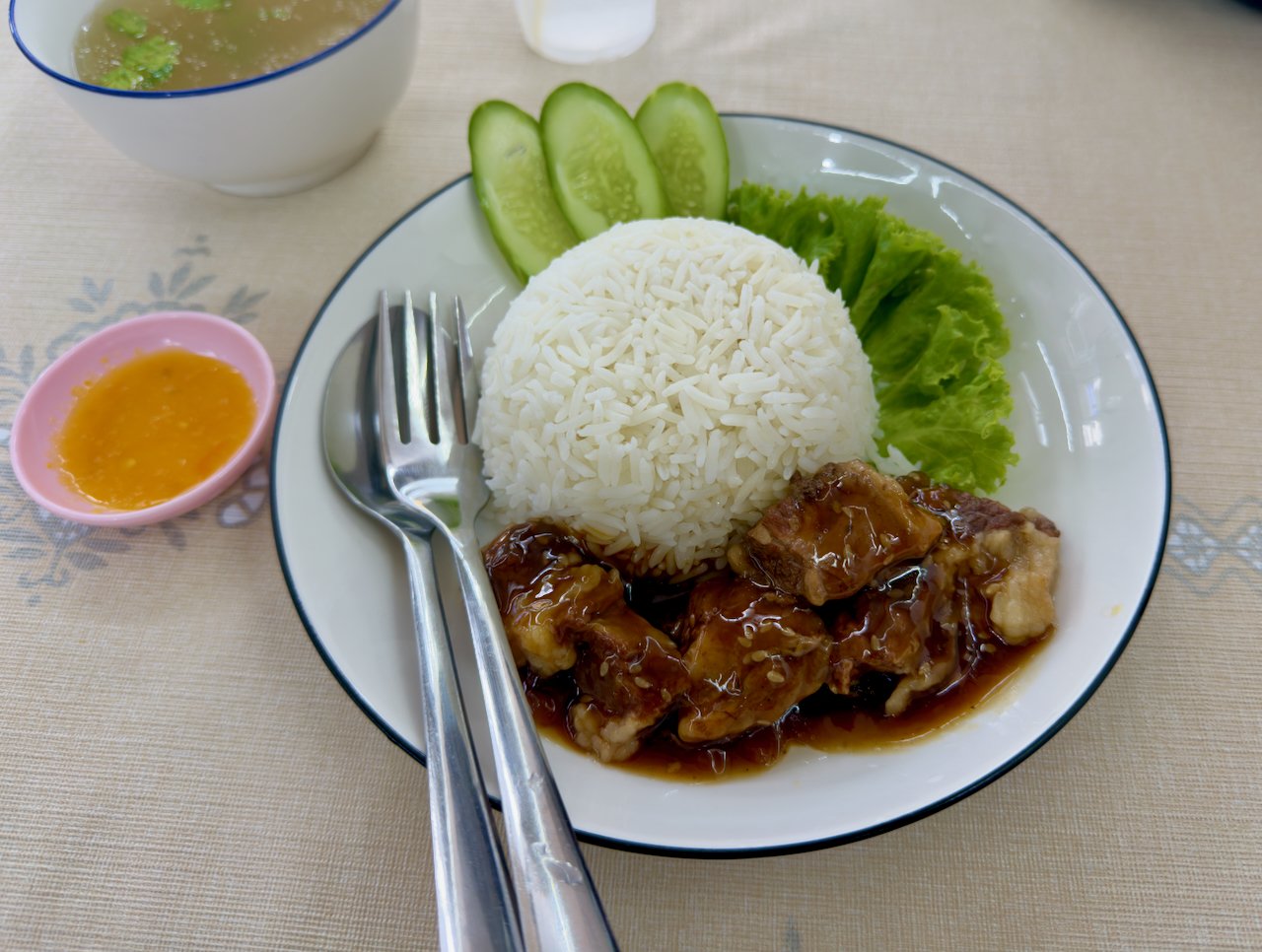
Lunch was at a restaurant near the entrance, obviously tourist-facing, better than it had any right to be, and only 7.50 dollars. From there I walked to Wat Pho, five minutes away, for the reclining Buddha: very large, very golden, and visited by what felt like half of Bangkok at once.
A beer at a stall by the river, then a short ferry across to Wat Arun, the Temple of Dawn, on the opposite bank. The most photogenic of the three, especially in the afternoon light. The main activity that day seemed to be renting traditional Thai costume for photographs. Scores of people posed in front of the temple in outfits they’d borrowed twenty minutes earlier. I didn’t join them, but the photos they were getting looked good.
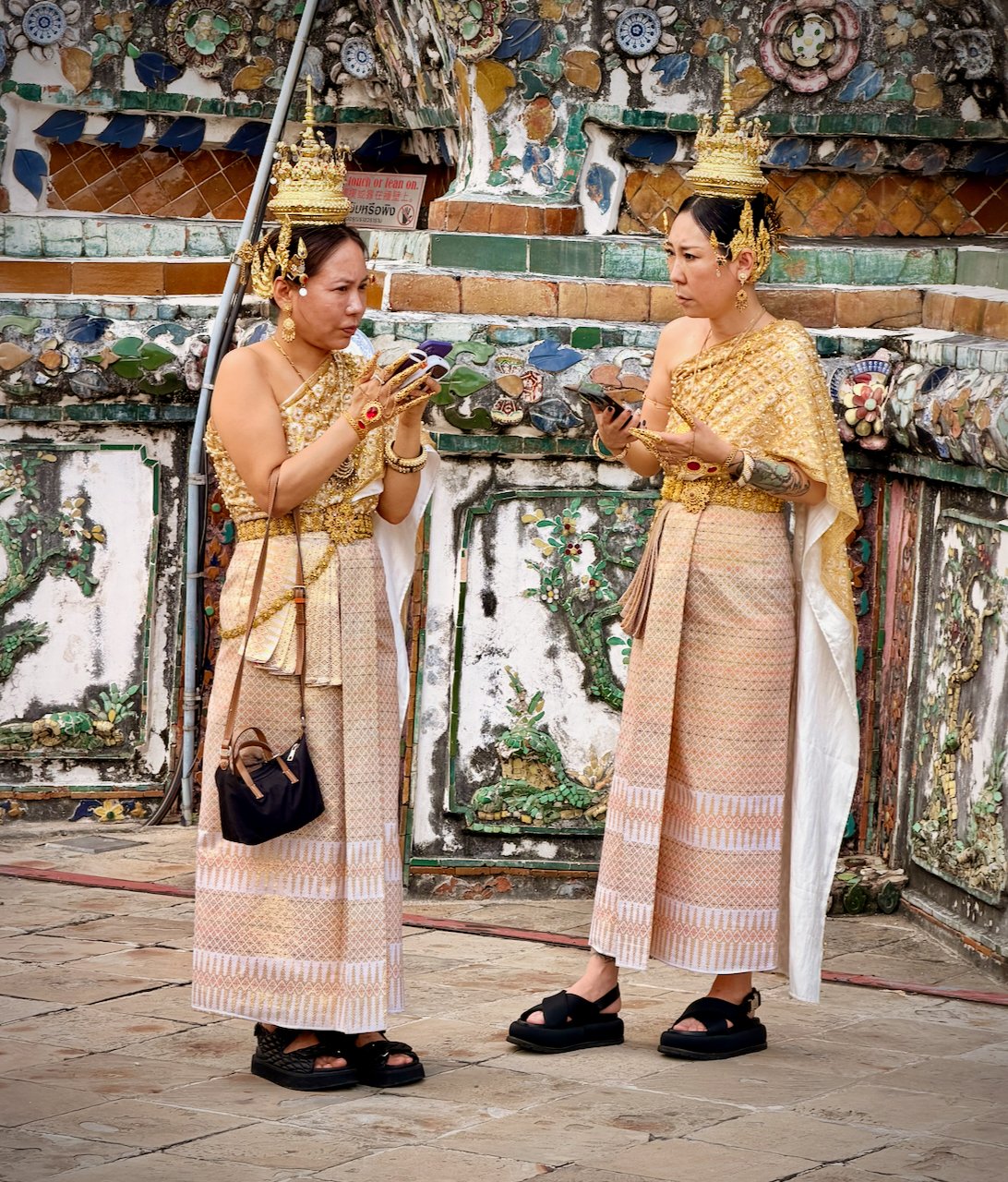
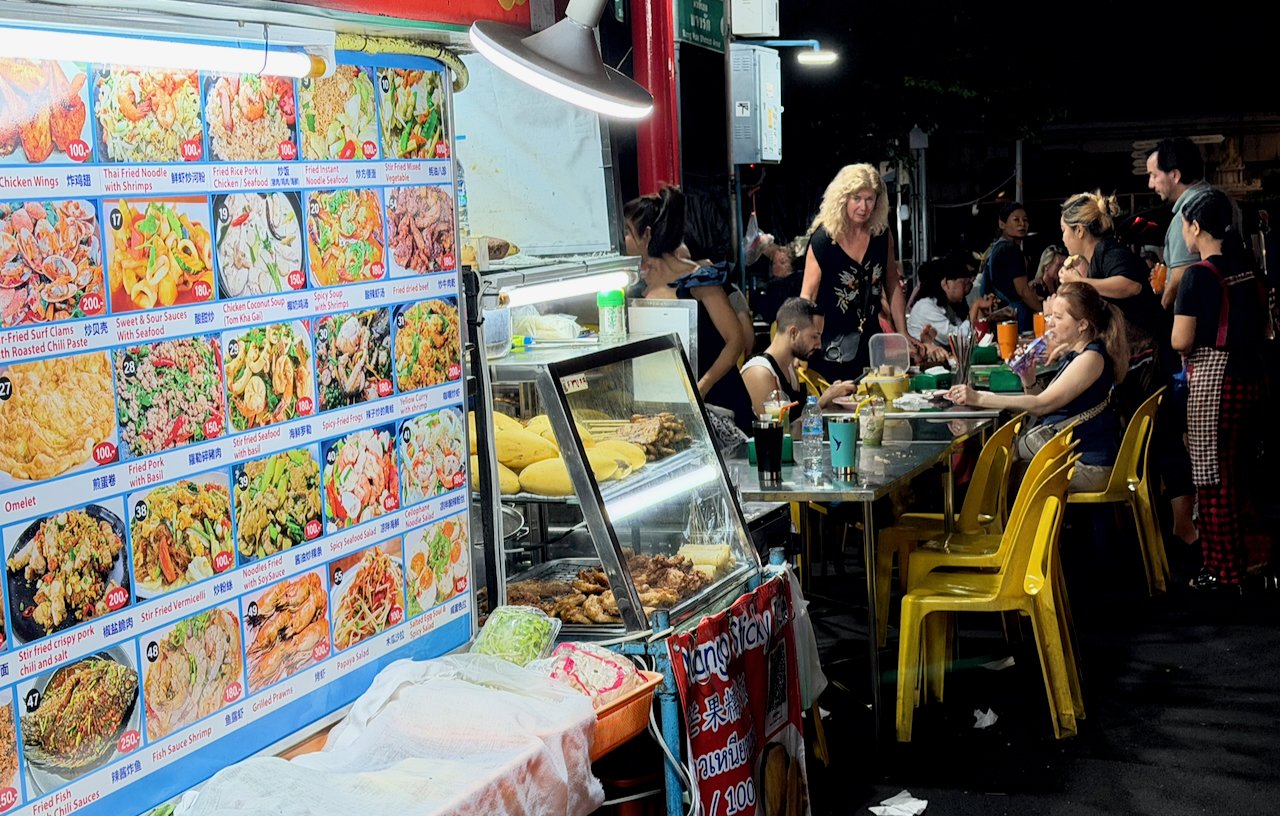
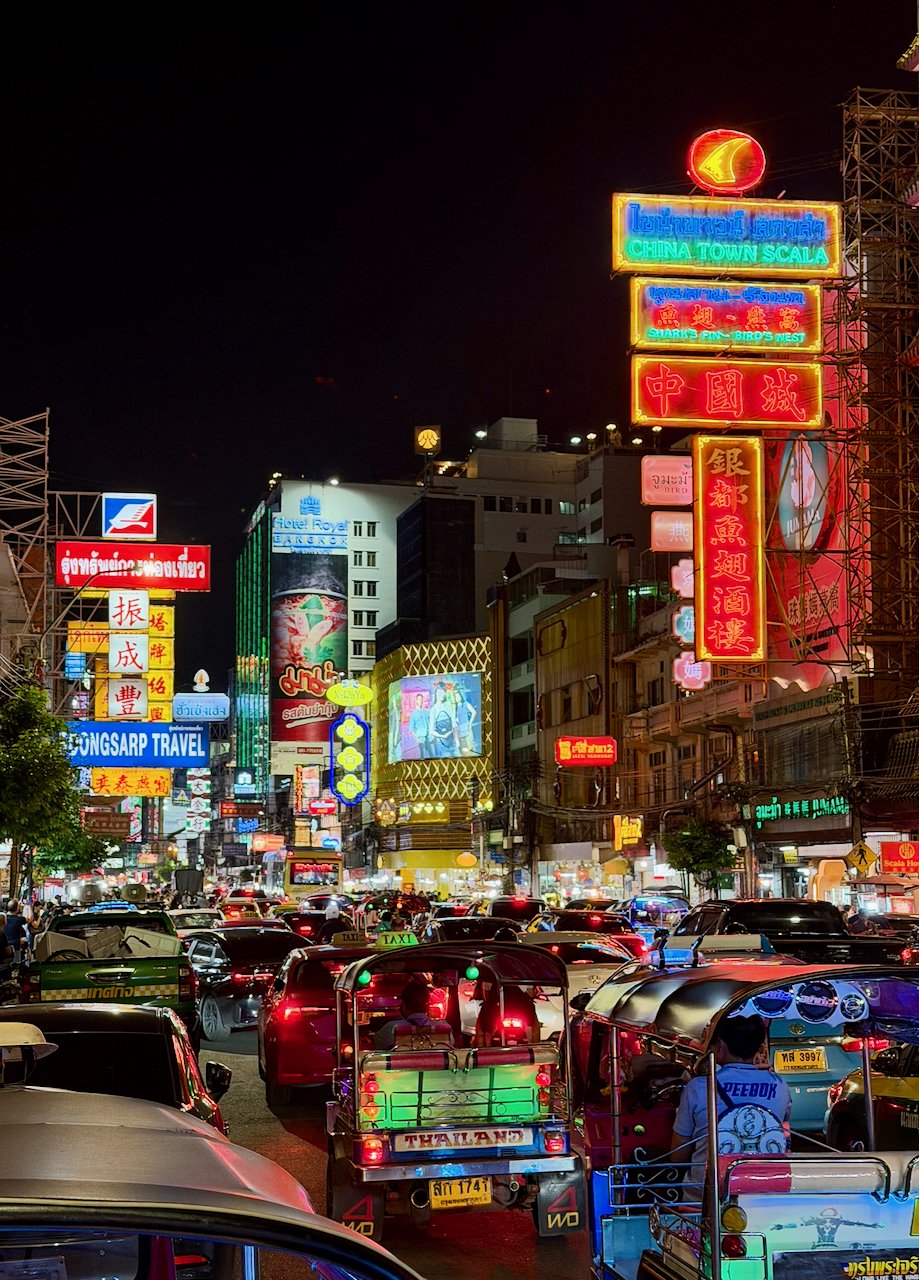
By three in the afternoon I’d had enough. Ferry back, shower, a long nap. Dinner was street food near Si Praya pier, still operating at a sensible hour this time. Afterwards I walked to Chinatown, had a beer, watched the evening crowd for a while, and walked back. Three temples, two ferries, around 20,000 steps, a full day.
Last Day in Bangkok
The next morning was slow by design. I caught up on diary entries, made coffee in the room, and finished the last of the snacks I’d brought from Sweden. At ten I checked out and left my backpack at reception. From Si Praya pier I took the express boat up to the area near Khao San Road, stopped at a cafe for a brownie and a cappuccino, then walked over. Khao San Road is about 400 metres long and sells approximately everything. I meandered for a while and sat down at the end of it for lunch: chicken and cashews, reliable as always.
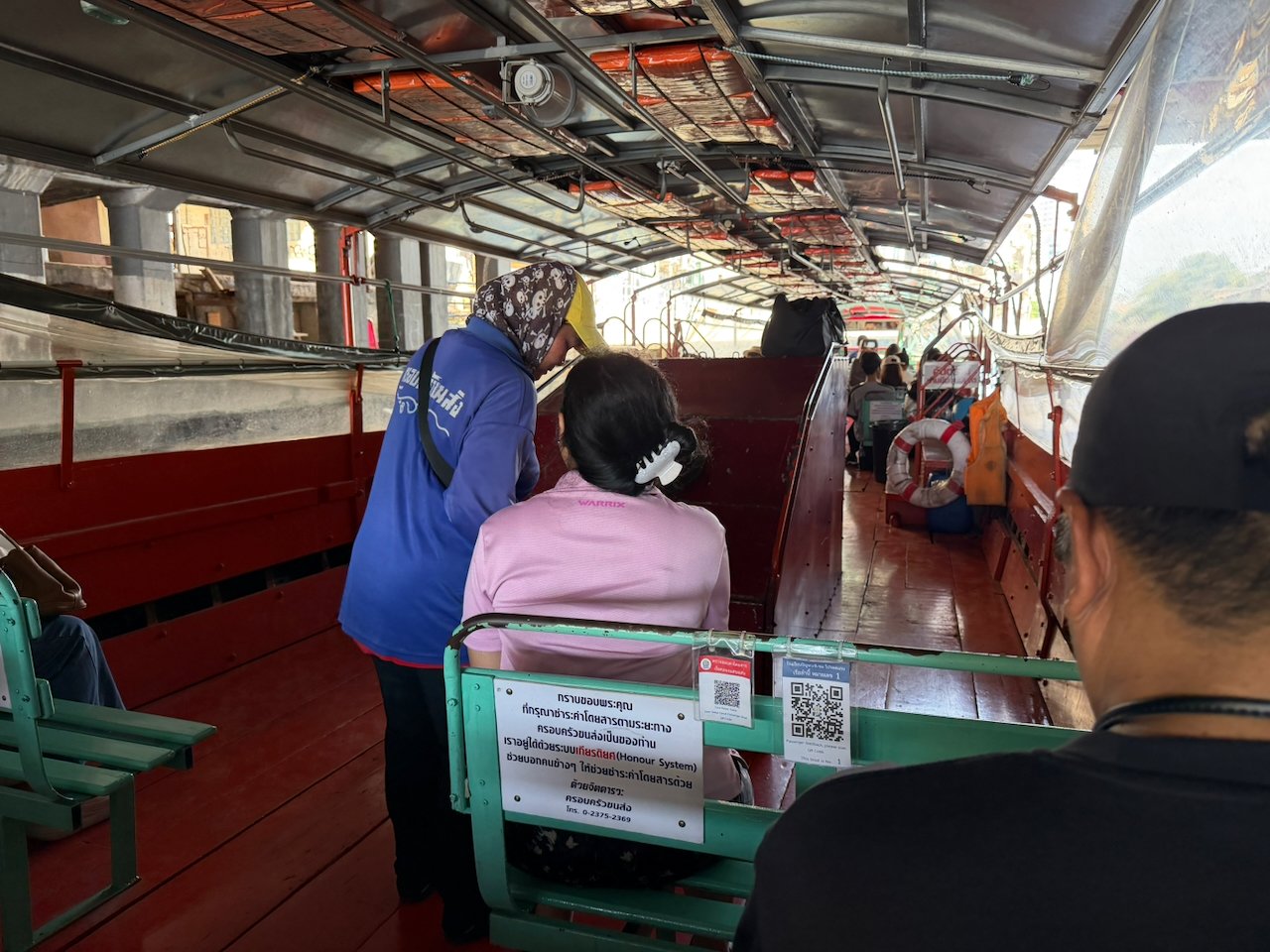
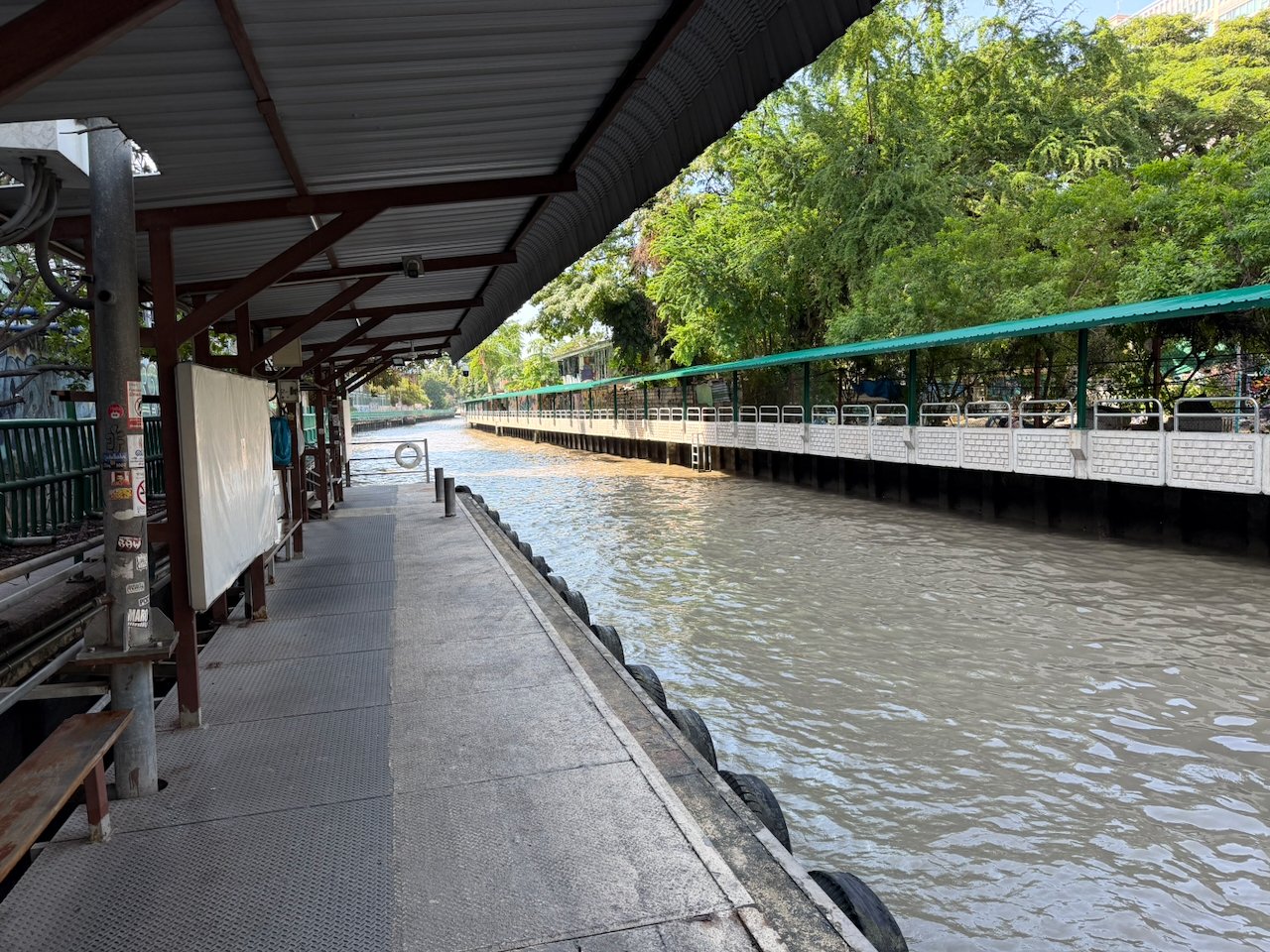
I wanted to see the MBK Center before leaving Bangkok. Apple Maps suggested a canal ferry, which turned out to be correct advice: a boat through the middle of the city, very fast and very efficient, dropping me close to the mall entrance.
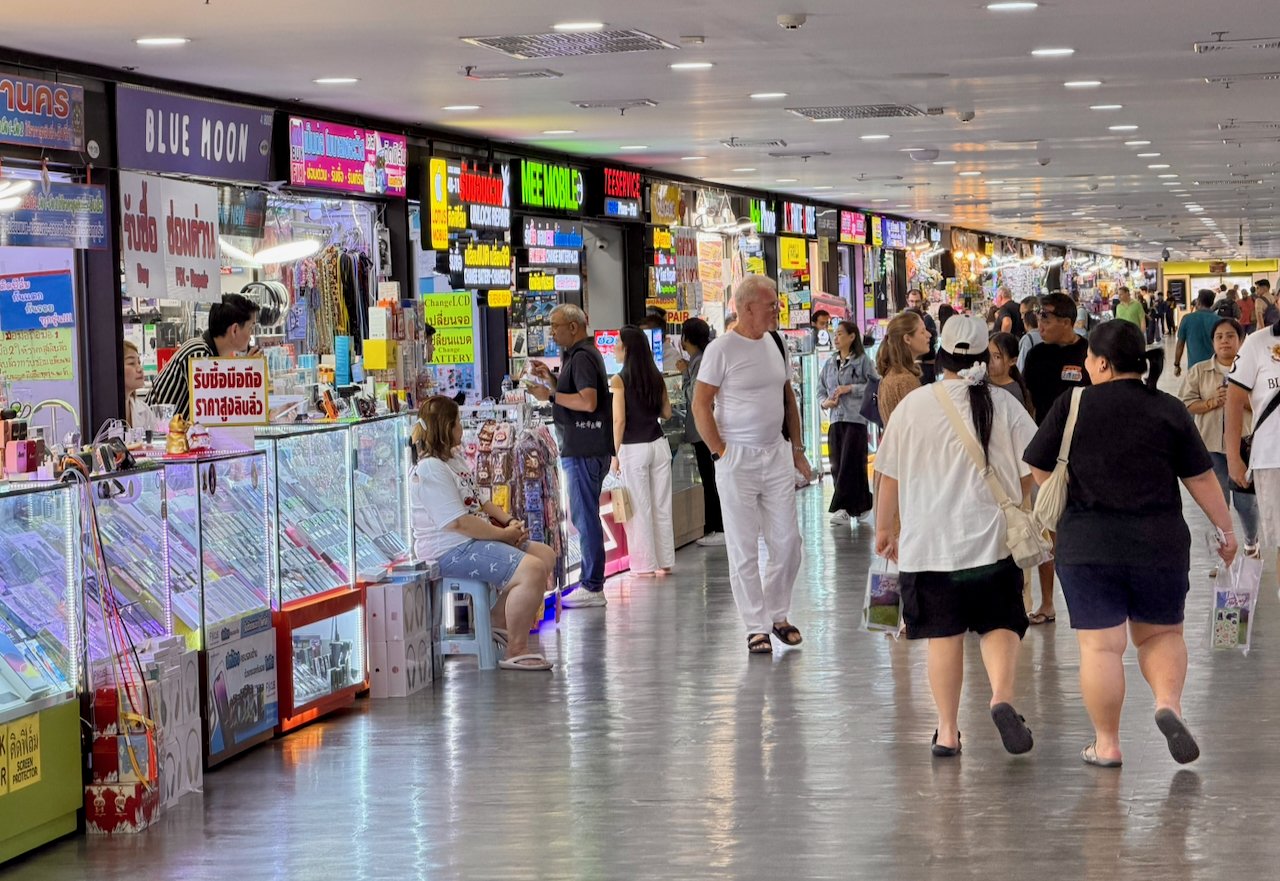
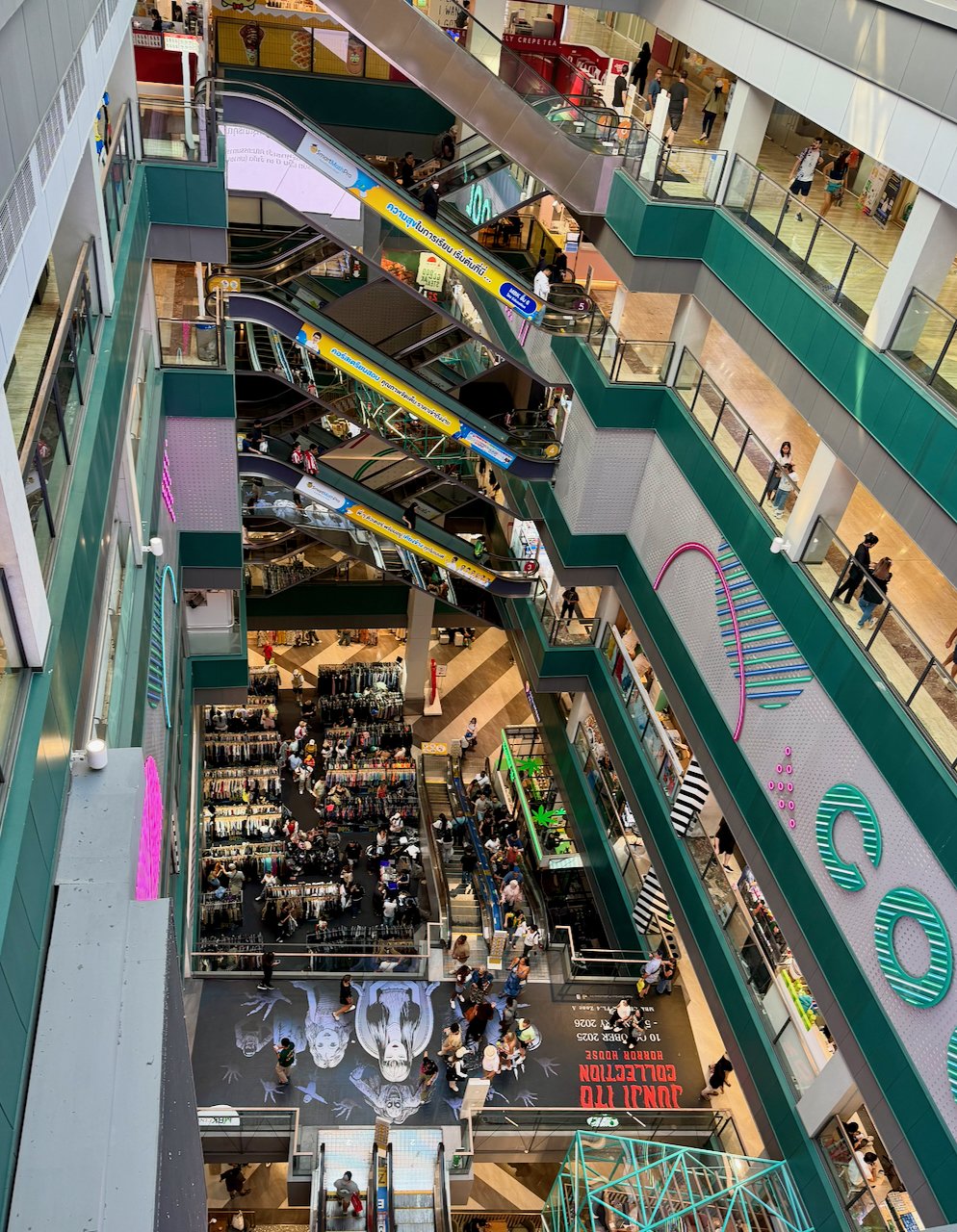
MBK has around 2,000 stores across eight floors, compared to about 500 at the Mall of America. The electronics floor alone had perhaps 300 phone repair and accessories shops, almost too much to process in one visit. I was looking for an Under Armour shirt, found one for 250 baht, and stopped there before I bought anything else.
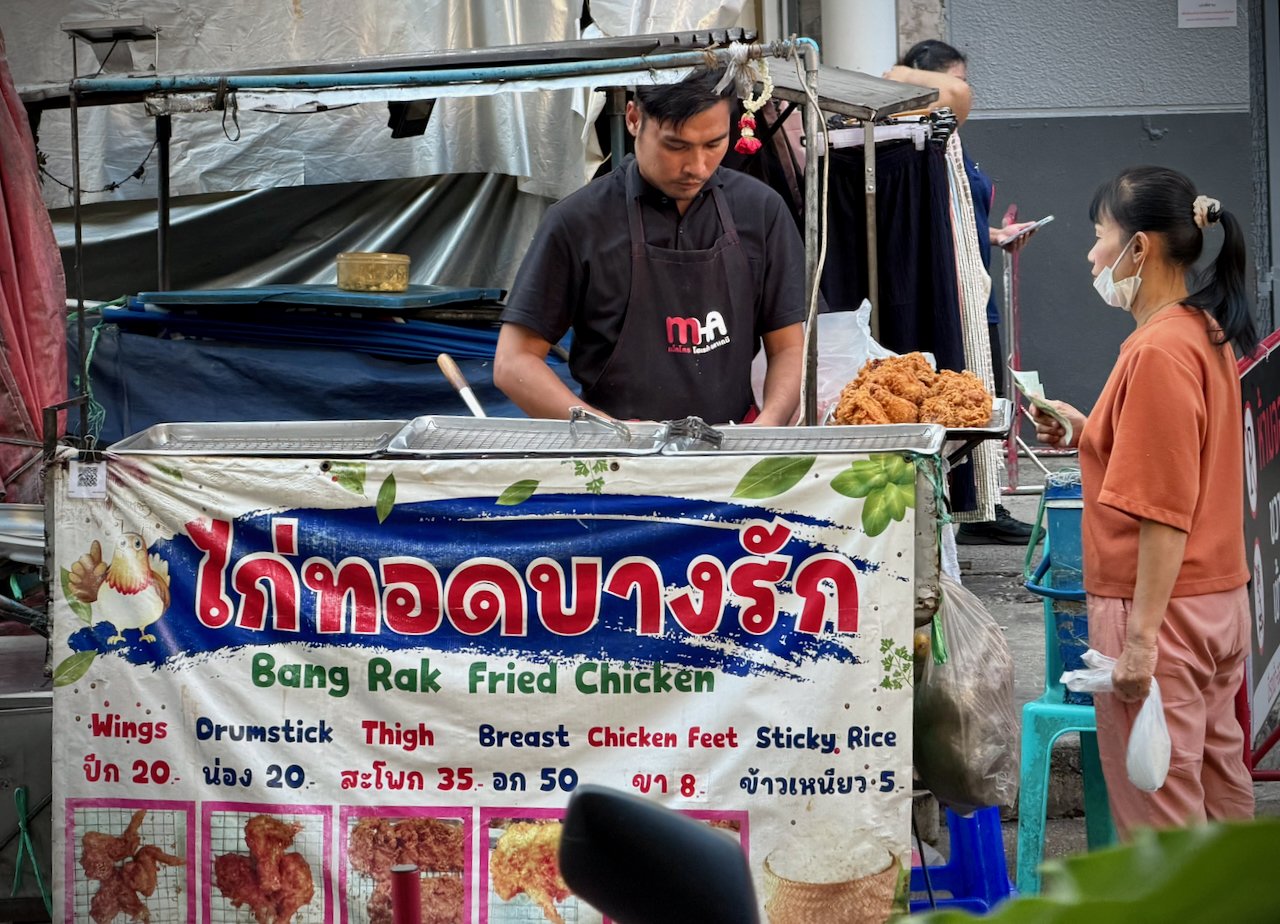
From MBK I took the BTS to a stop near my hotel, had a beer, then picked up some fried chicken from a couple of street stalls, better than it had any right to be. Back at the hotel I collected my backpack and ordered a Grab to the airport. Traffic was heavy but I made it. Check-in at the machine was quick despite the app refusing to find my reservation, and I was at the gate with an hour to spare.
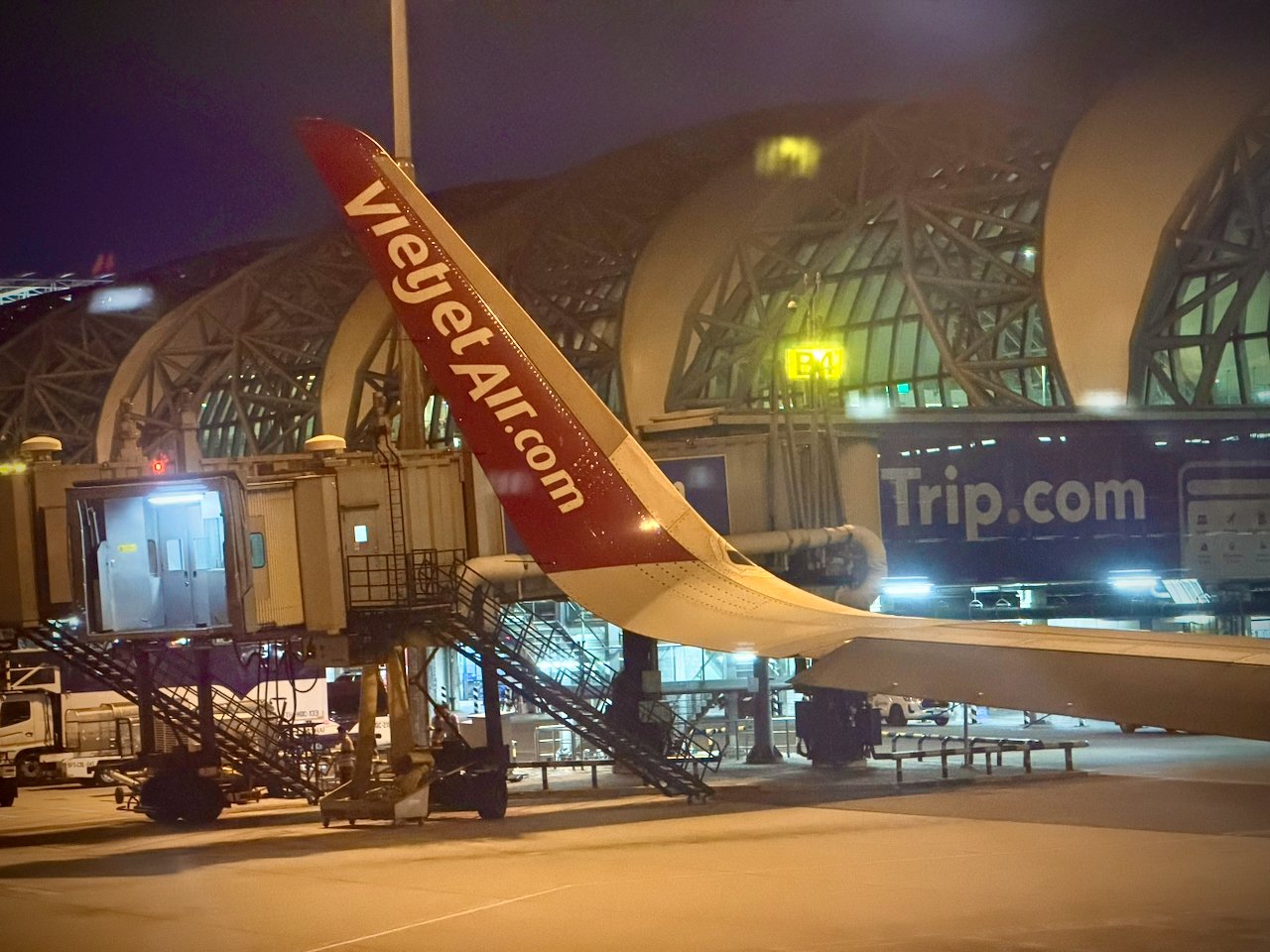
Seat 36A on the VietJet A321, last row, reasonably comfortable. The flight left on time and landed in Chiang Mai twenty minutes early, my fifth VietJet flight without a problem on any of them, though that’s a low bar to clear.
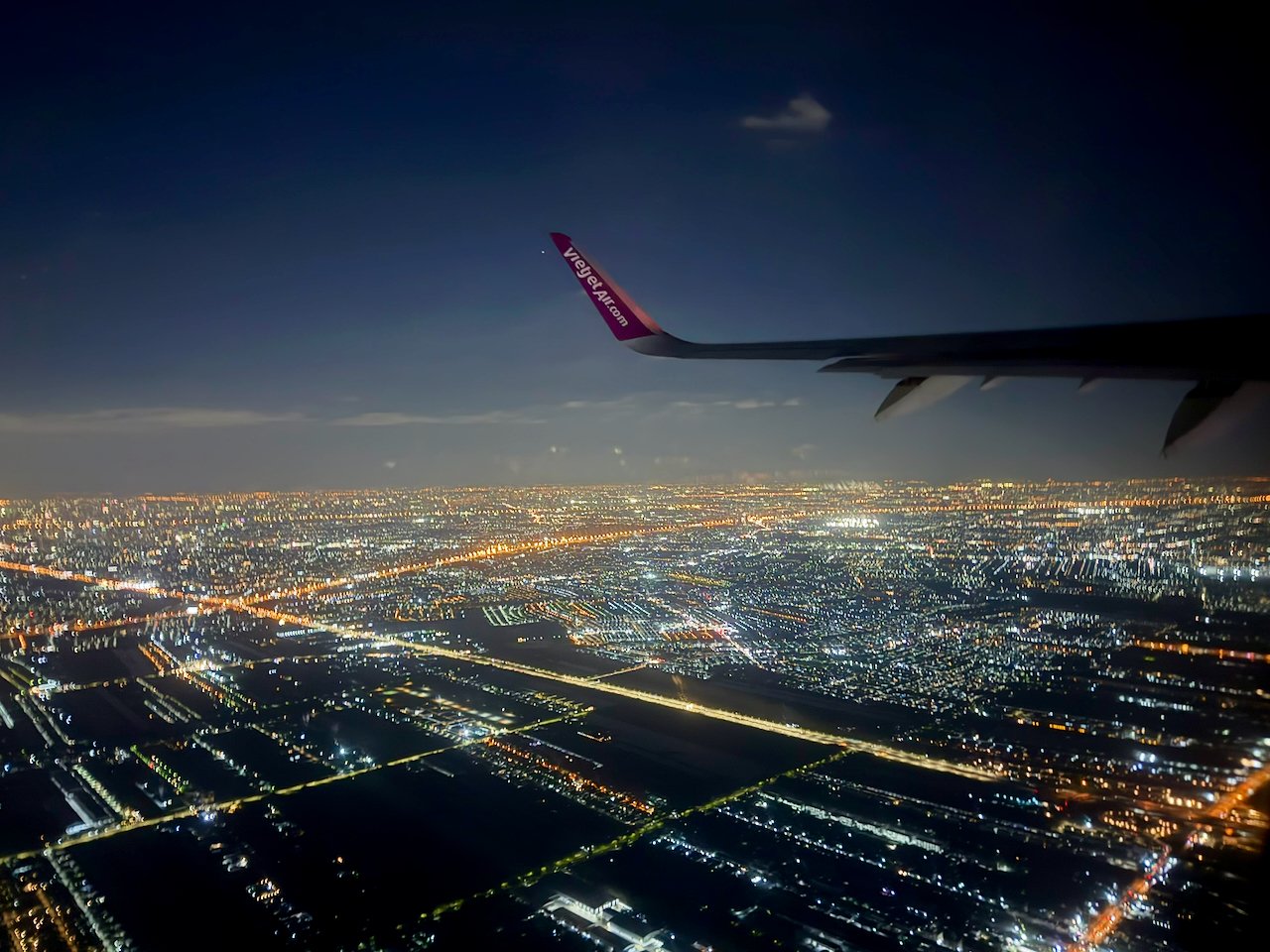
Bangkok was a good first stop: a useful base near the water, three temples worth the crowds, one outrageous drink, and a shirt for 250 baht. Enough to leave satisfied, and ready to head north.
Bangkok — the practical stuff
- The Grand Palace is worth a half-day, ceremony permitting — 500 baht entry, covered shoulders and knees required, opens 8:30am. Royal ceremonies can close large sections without warning, so build in a buffer if the palace itself matters more than the temple inside it.
- The Sky Bar is worth exactly one drink — 800 baht (about $23) for the cheapest option, sixty-four floors up in the State Tower. Go after dinner rather than at sunset to skip the lift queue.
- MBK Center beats Khao San Road for actual shopping — around 2,000 stores across eight floors versus 400 metres of tourist stalls. The klong canal boat gets you there faster than a taxi in traffic.
- Getting around needs no car — the BTS Skytrain, MRT subway, Chao Phraya Express Boat, and Saen Saep canal boats cover almost everything; Grab fills in the last mile for hotels and the airport run.
- How to book — Flights: Thai VietJet or AirAsia. Rides: Grab or Bolt. River boats: Chao Phraya Express Boat. Trains: State Railway of Thailand. Hotels: Booking.com or Agoda. Tours: Klook.
Thailand 2025 — all posts
- 1 — Finally Time for Thailand: Starting in Bangkok
- 2 — Chiang Mai, temples, a shoe hunt and the Sunday market
- 3 — Doi Inthanon, the top of Thailand in the clouds
- 4 — Pai, 762 curves, hot springs and the canyon
- 5 — Mae Hong Son by motorbike, two Long Neck villages and a jungle fail
- 6 — Ban Rak Thai, 42 km up the mountain
- 7 — Khao Sok, monkeys, floating huts and sunrise on the lake
- 8 — Phuket, not really my taste
- 9 — Phi Phi, the viewpoint, Maya Bay and a low door frame
- 10 — Koh Lanta, a bungalow, a motorbike and the Lighthouse Bar
- 11 — Railay and Tonsai, wading ashore
- 12 — Bangkok, the train market, the floating market and home
- 13 — Getting around Thailand: planes, vans, longboats and Grab
- 14 — Renting a motorbike in Thailand