

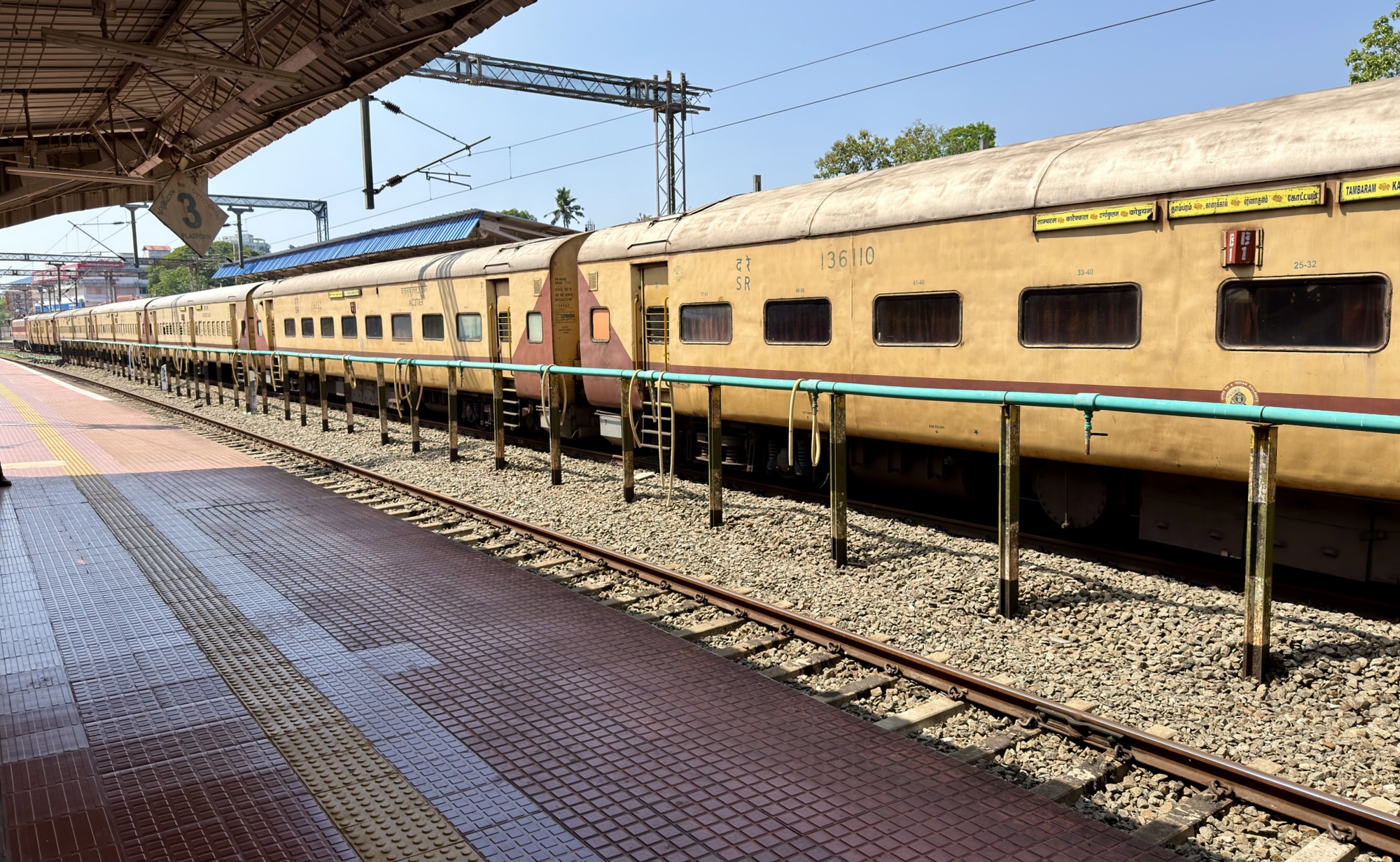

Four hours on a local bus and three hours on a train is not, on the surface, an exciting itinerary. But as many has said before me, “The journey is the reward”.
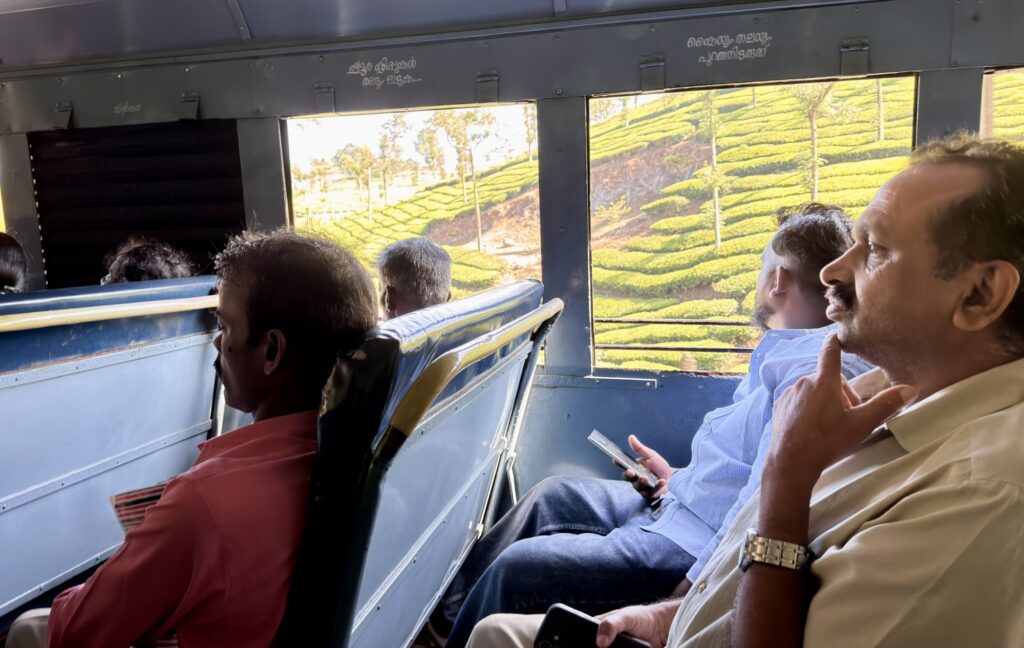
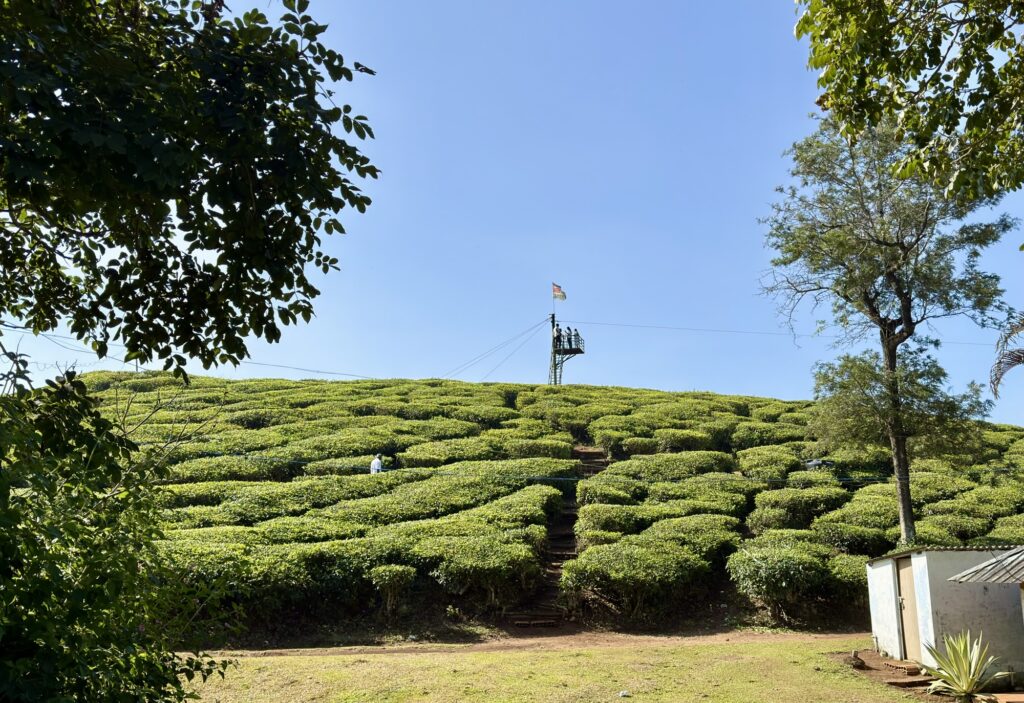
The bus from Kumily was in no hurry. It stopped at proper stops, at junctions that barely qualified as stops, and at stretches of road where someone simply stepped out of a doorway and raised a hand. The driver obliged every time. For the first hour or so we were still deep in the mountains, the slopes covered entirely in tea plantations, row after row of clipped bushes running up gradients that would have deterred most farmers. In the early morning light they looked almost manicured, the rows catching the sun at a low angle that made the hillsides glow.
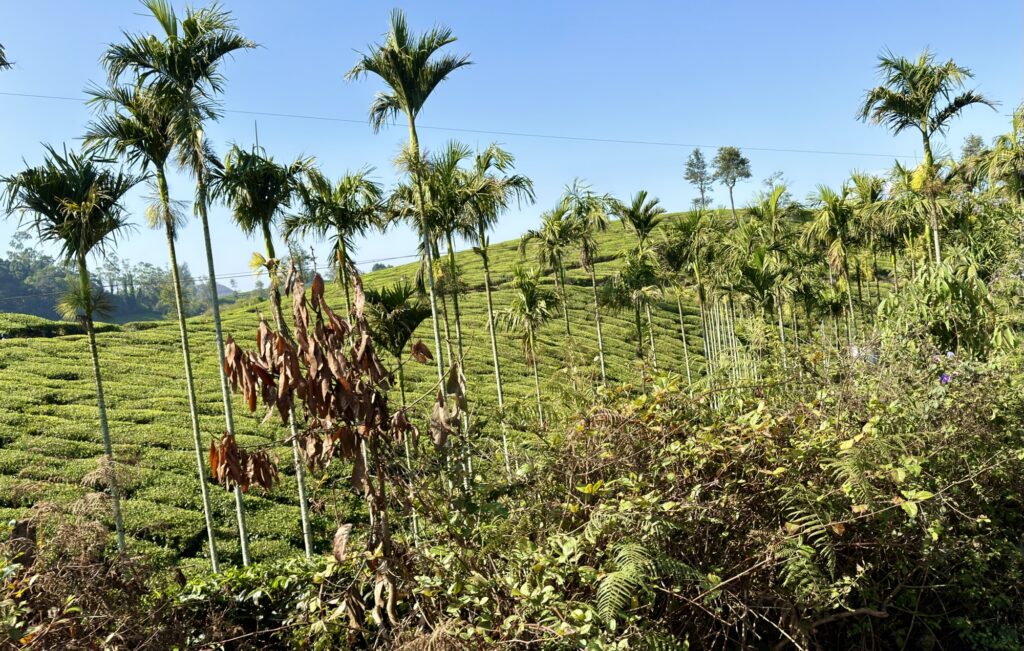
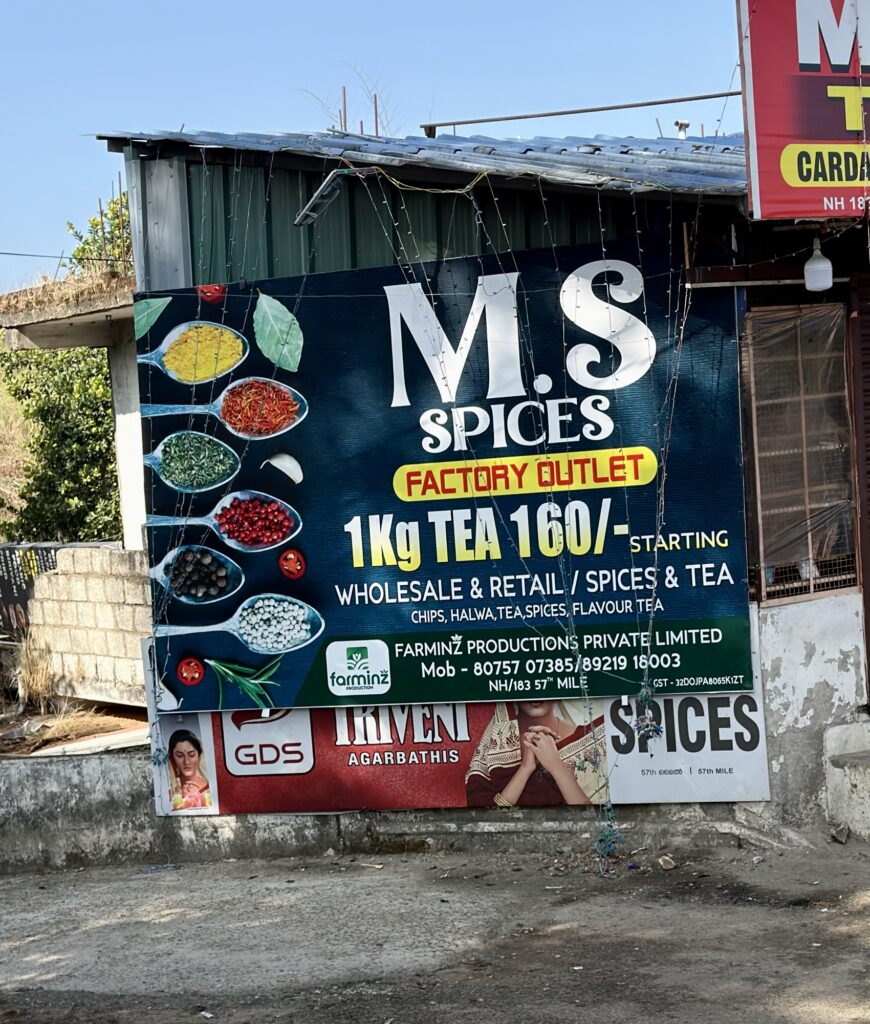
Further down the terrain changed. The high-altitude monoculture gave way to more traditional smallholdings in the valleys: rice paddies, banana groves, small farms worked the way they have been for generations. As we neared Kottayam we passed through several towns that were already fully alive, the main streets thick with motorcycles, autorickshaws, and early commerce. Nobody was pretending that the working day had not already started.
Kottayam train station was calm by comparison. I had two hours to wait, which turned out to be no hardship at all: the station has an air-conditioned waiting room available for thirty cents. This is a civilised touch that deserves more than a passing mention. I settled in with a coffee and watched had a drink and caught up on some reading.
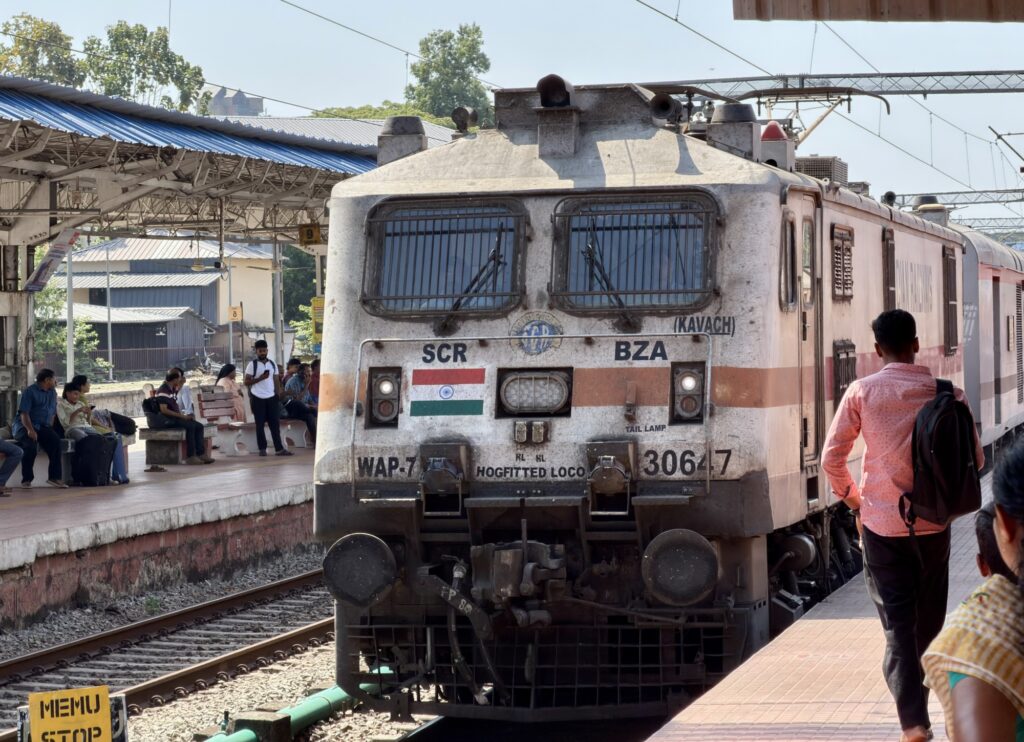
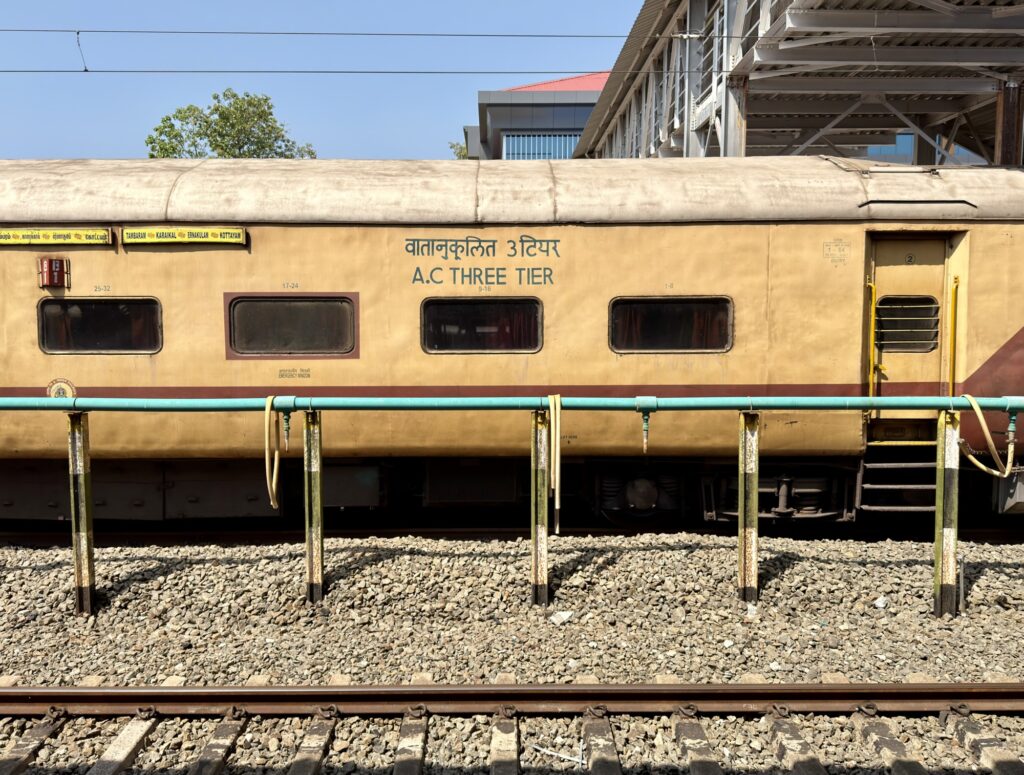
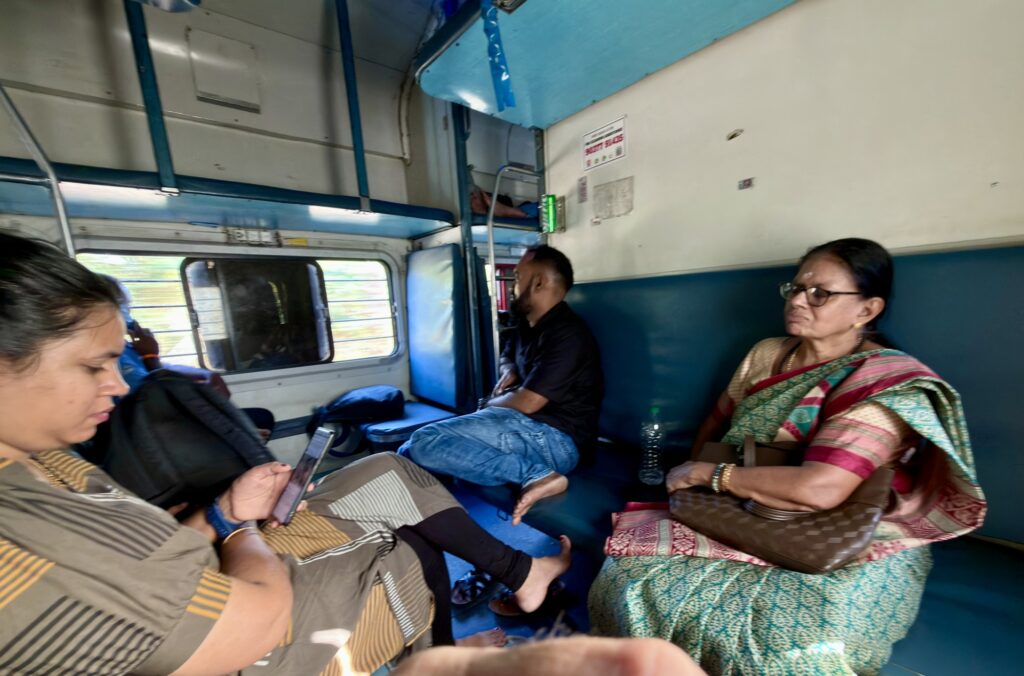
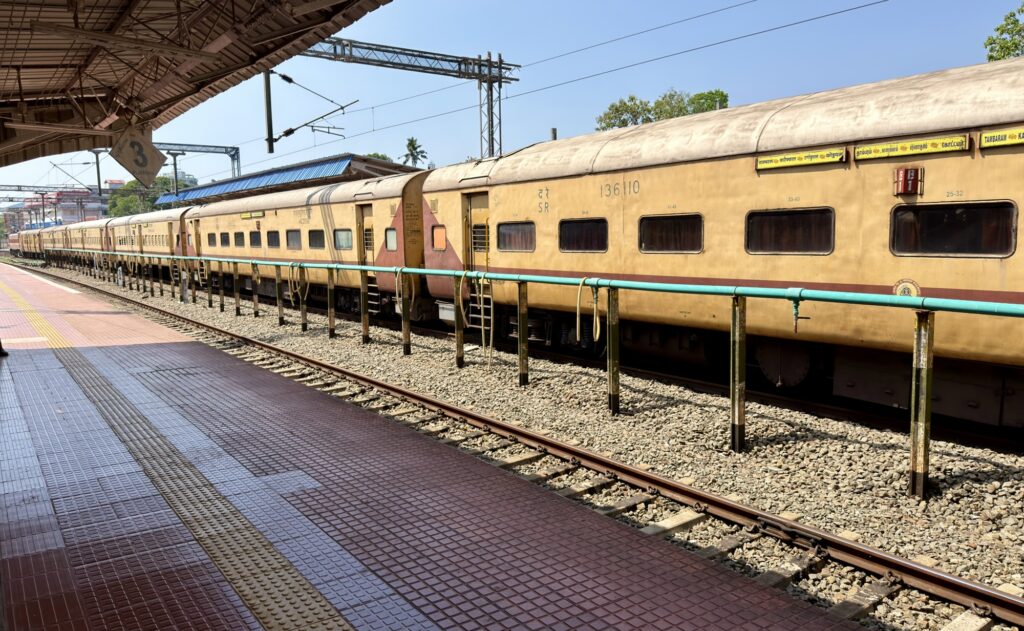
My train to Varkala was listed for 2:45 PM and arrived more or less on time, which in Indian railways terms counts as punctual. Sleeper class, the berths folded up during the day, the carriage functioning as a regular seated coach until nightfall. I ended up next to a young family travelling south, and we spent most of the journey in conversation. They were curious about where I was from and what I was doing in Kerala on my own. I was curious about them. These are the conversations that do not happen in taxis or air-conditioned coaches.
The route ran south through backwaters country. Every few minutes a window of water would open up between the palm trees: a wide canal, a stretch of lake, a cluster of boats moored in the afternoon light. Not the formal backwater tour with a houseboat and a set itinerary, just glimpses from a moving train window.
I reached Varkala just after 5 PM and took an Uber to the Deauville Guest House near the cliff walk. There was just enough time to drop my bag and head out for the sunset.
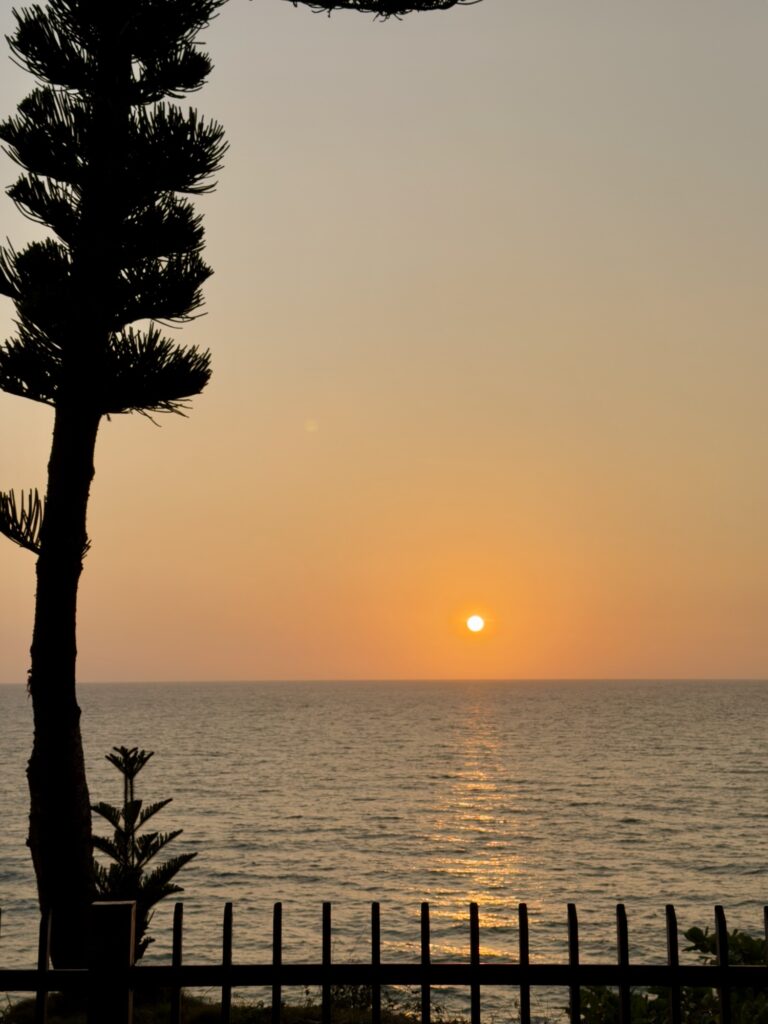
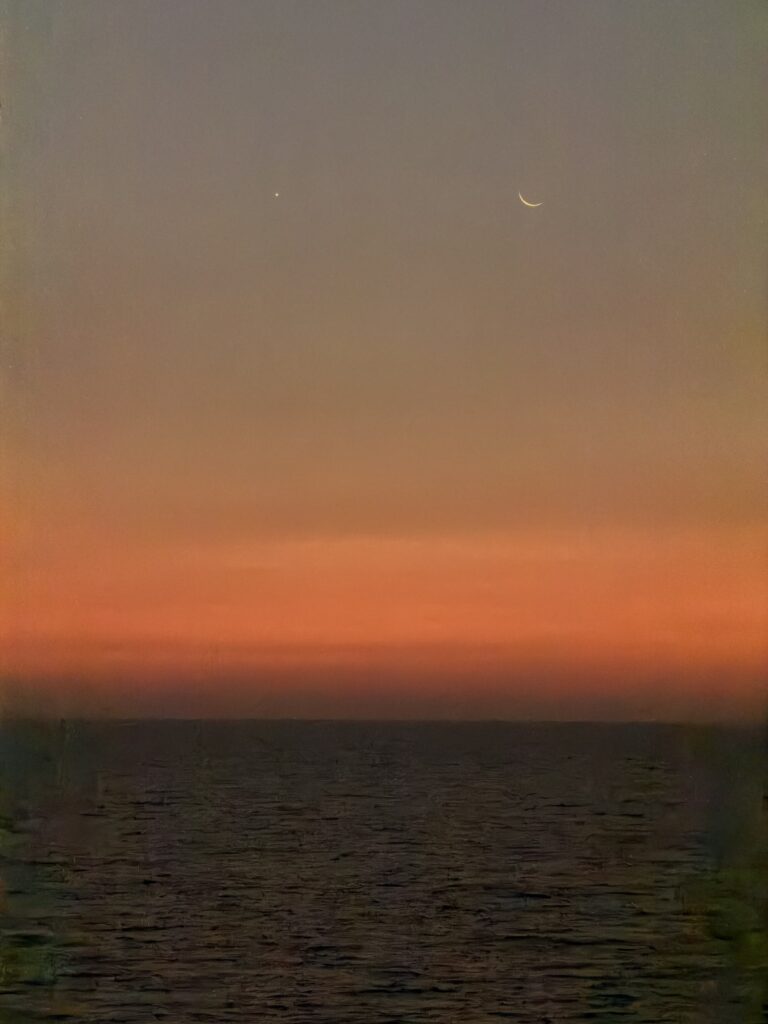
The cliff walk is the reason people come to Varkala. A path runs along a laterite cliff above the beach, lined on one side with restaurants, cafes, and shops. The shops are worth noting: the goods here are noticeably better quality than the usual circuit of Indian tourist merchandise, which is a small but genuine distinction. I found a table at a restaurant right on the cliff edge, ordered a beer, and watched the sun take its time going down over the Arabian Sea. Once the light was gone I ordered dinner. It was a reasonable place to spend an evening.
I walked the full length of the path afterward. Busy, unambiguously touristy, but still a nice experience if a bit crowded. Maybe because it was a Friday night.
Seven hours of travel to cover a modest distance. The tea fields in the early morning light. The waiting room that charged thirty cents and was worth considerably more. A conversation with strangers that lasted half the journey. The backwaters sliding past outside the window, unscheduled and therefore free. The journey is the reward.
India and Sri Lanka 2026 — all posts
- Day 1 — 24 Hours to Mumbai
- Day 2 — First Morning in Mumbai
- Day 3 — Exploring Mumbai
- Dhobi Ghat: Mumbai’s Laundromat
- Day 4 — Sightseeing in Colombo: One Day is Enough
- A Short History of Ceylon
- Day 5 — Kandy: Moving into the Mountains
- Day 6 — Moving on to Ella
- Day 7 — Hike and Sunstroke
- Tea in Sri Lanka: From a Blight in 1869 to Four Million Cups a Day
- Day 8 — Nine Arches Bridge
- Day 9 — Tuktuk Tour Around Ella
- Day 10 — Time to Leave Ella
- Orphans of Udawalawe: Inside Sri Lanka’s Elephant Transit Home
- Day 11 — Safari and Galle Fort
- Day 12 — Onwards to Negombo for the last day in Sri Lanka
- Day 13 — All the problems concentrated on a single day
- Royal Enfield: Why India Rides Different
- Day 14 — The Kerala Backwaters
- Day 15 — Local bus to Munnar
- Leyland, a familiar name from the past
- Buying a beer in Kerala: Local knowledge required
- Mahindra: The Jeep That Never Left
- Discovering India Through Its Food – One Plate at a Time
- Day 16-19 — Four Relaxing Days in Munnar
- Day 20 — Travel to Kumily
- Day 21 — I Was Ready, Tigers Were Not
- Kathakali and Kalaripayattu
- Day 22 — Kumily to Varkala: The Journey is the Reward
- Day 23 — Slow day in Varkala
- IndiGo: Air travel for the masses
- Day 24 — Breakfast in Varkala, lunch in Bangalore, dinner in Goa