


Twenty days into the trip, this was the first evening spent on something cultural rather than physical. Two shows, back to back in Thekkady. The first fast, the second slow. Together they made a reasonable two-hour introduction to what Kerala has been doing for several centuries.
The Kalaripayattu show was at 6 PM at the Kadathanadan Kalari Centre. Kalaripayattu is a martial art that originated in Kerala and may be the oldest codified fighting system in the world. The claim is disputed, as these claims tend to be, but the form itself is ancient and the technique is not in doubt.
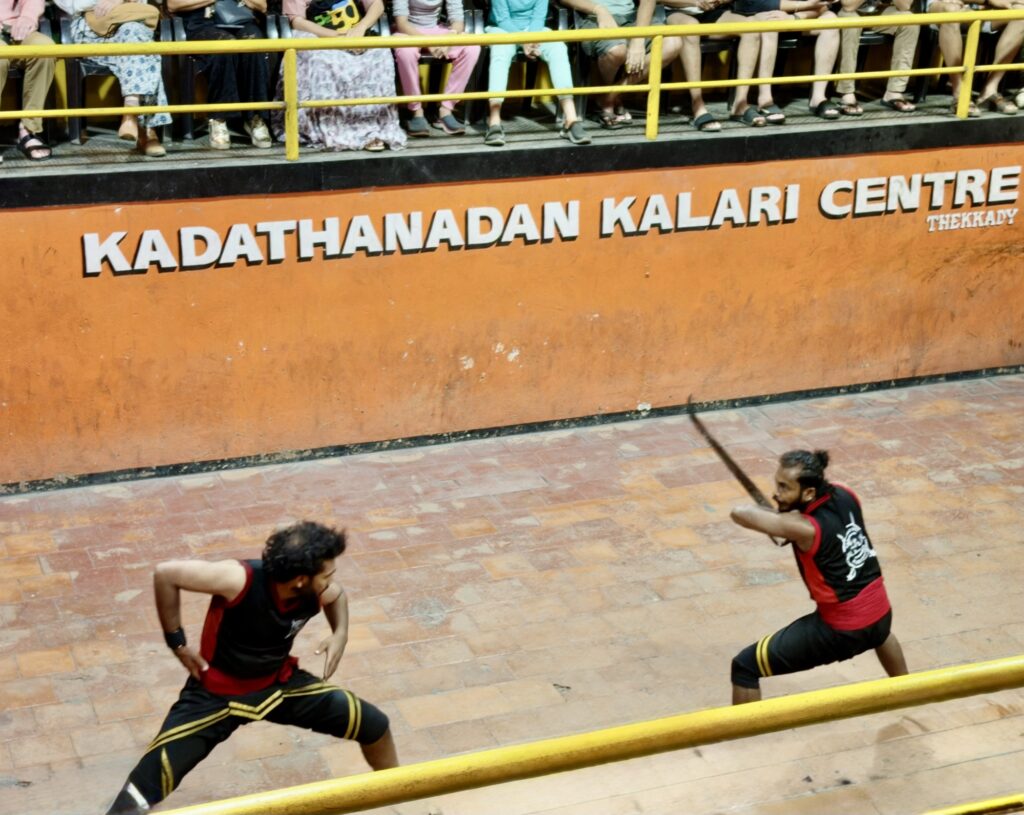
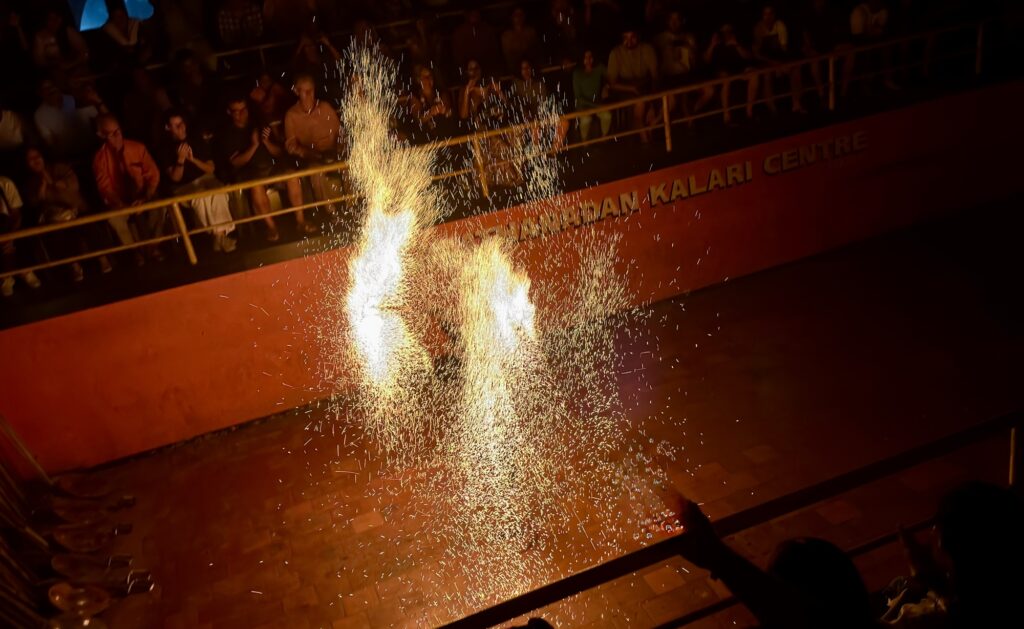
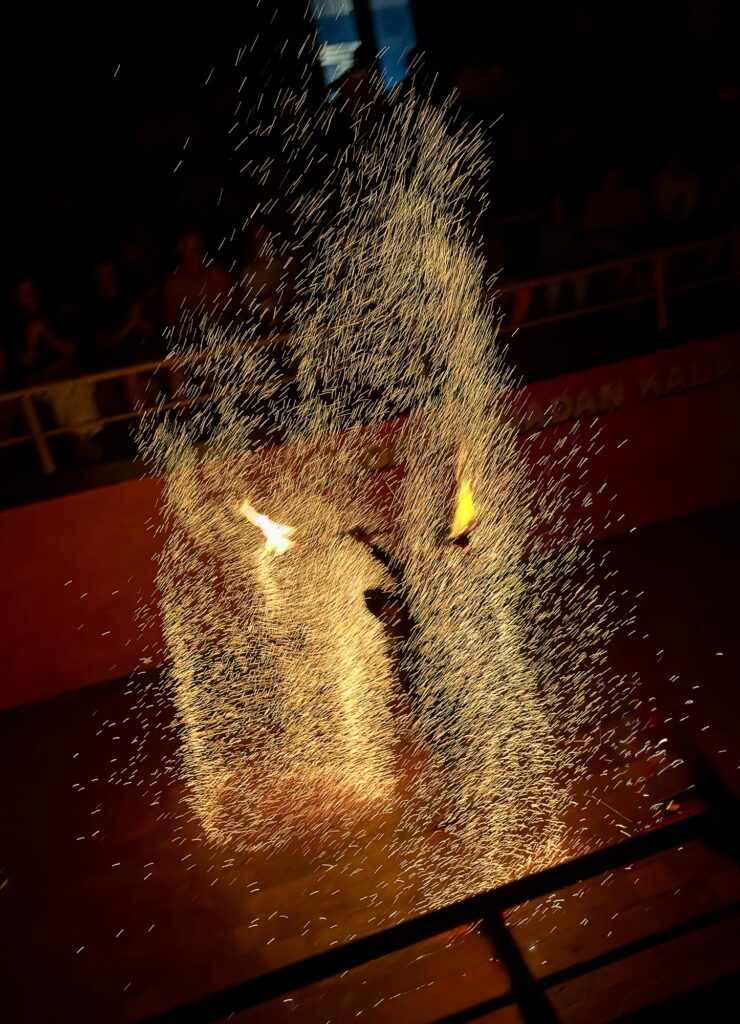
The performance begins with unarmed sequences: low stances, deep backbends, jumps that belong to a much younger body, or so you would think until you watch someone twice your age execute one cleanly. The weapons work follows. Wooden sticks first, then sword and shield, then a long flexible sword that bends without breaking. The sequence builds in speed until the final section, where two performers spar at a pace that makes it difficult to track individual movements.
Everything is choreographed for the audience, but unlike stage combat in a Western context, the technique here is the performance. There is no pretending. The performers are simply doing it in front of you, which makes watching feel more like attending a demonstration than a show.
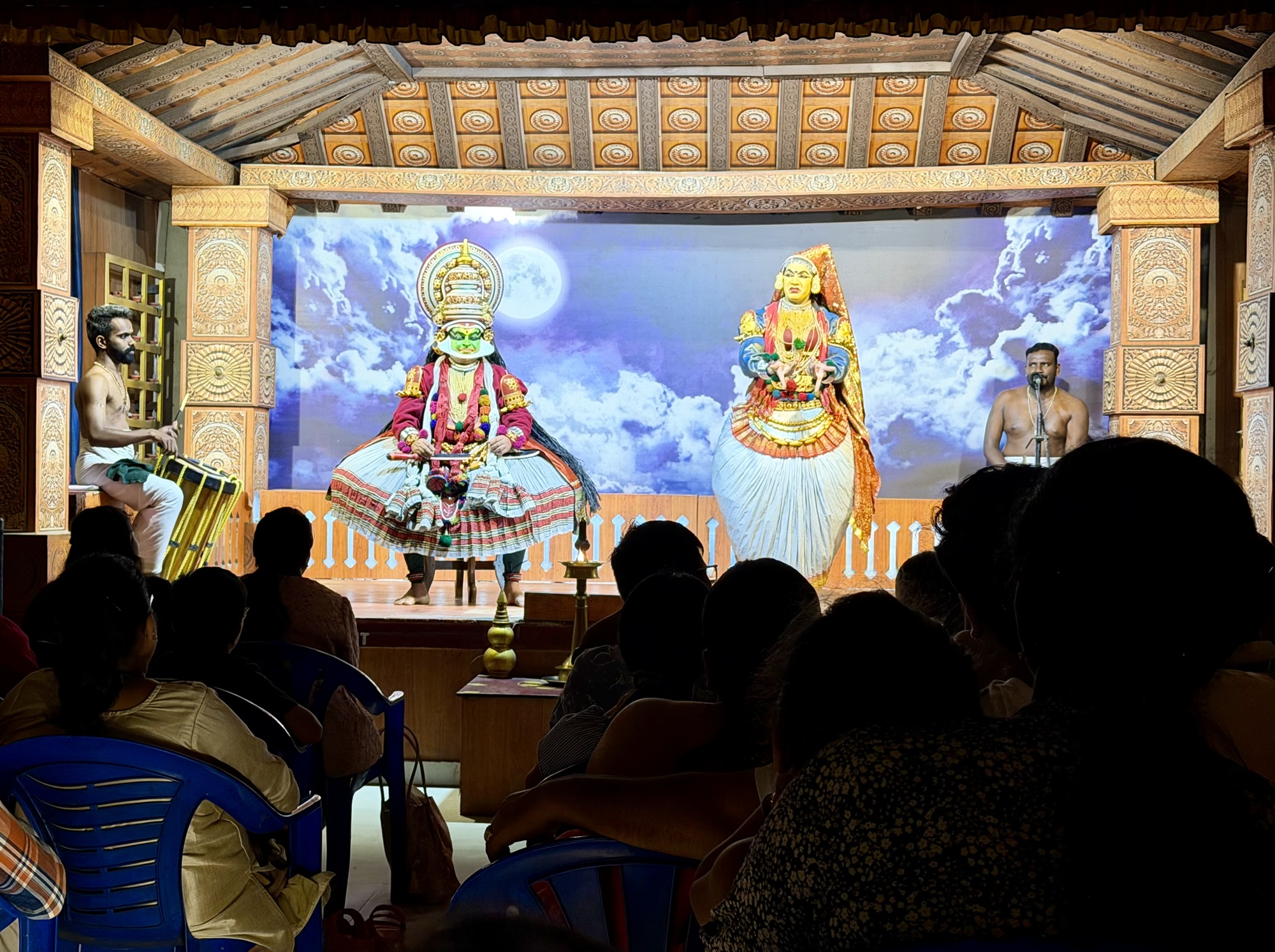
The Kathakali performance followed at 7 PM at the Navarasa Kathakali Centre, a small venue with tiered seating and a low stage. The performers were already in full makeup when the doors opened. The colour palette is limited but specific: green for heroes and divine characters, black for hunters, red and black for demons. The costumes extend the body outward, the headdresses adding half a metre of height, the padded skirts making each gesture feel monumental.
Kathakali has no spoken dialogue. The story is told through gesture and expression, with two musicians singing the narrative from the side. The hand gestures form their own vocabulary: there are around 500 of them, each with a precise meaning. The form is built around nine codified emotions, each with its own expression. Watching a performer move through them without leaving the spot is not unlike watching an argument conducted entirely through eyebrows.
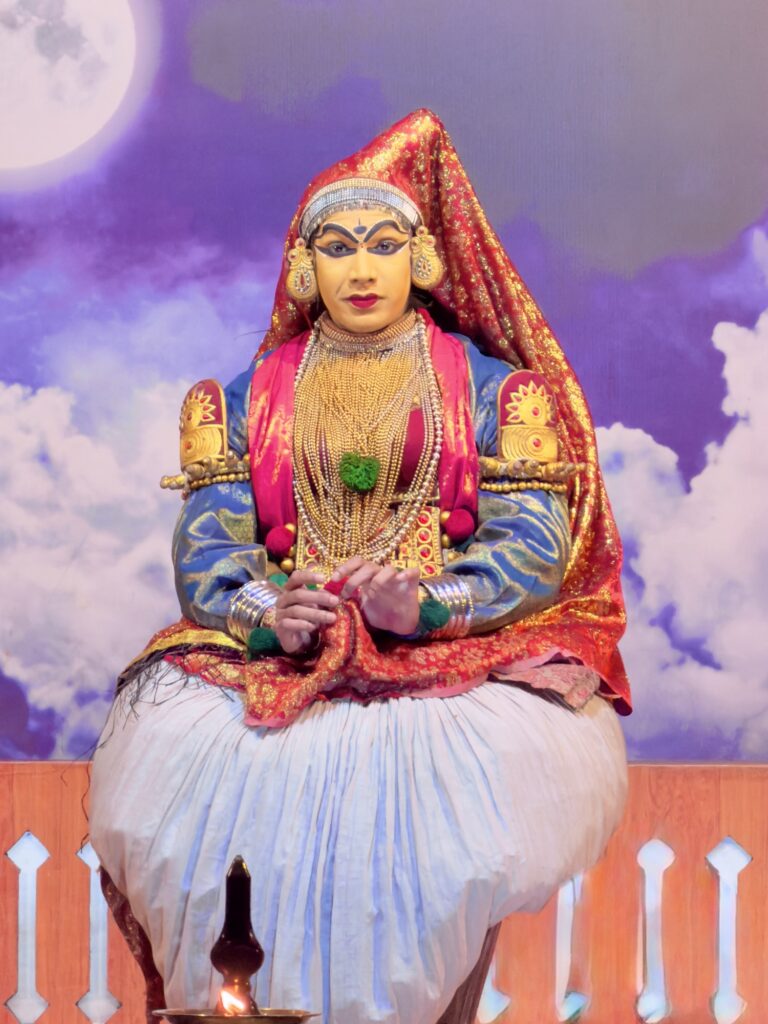
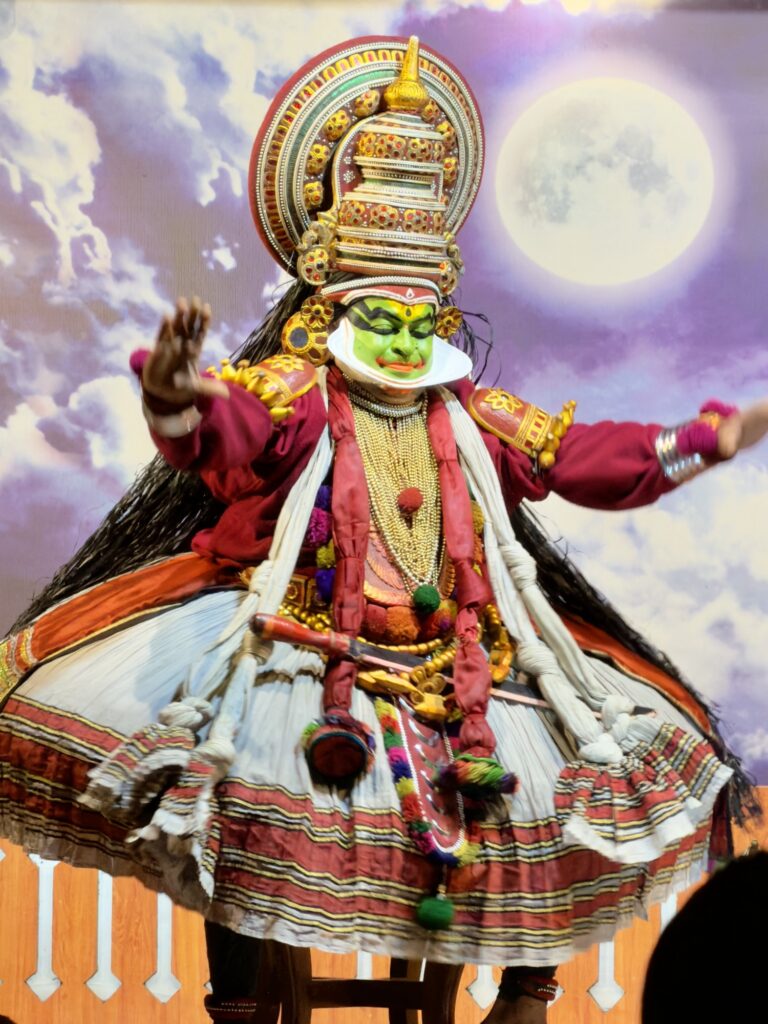
The eye work is the thing. Performers train for years specifically to control muscles most people have never been conscious of. From the third row you can watch the eyes roll, flash, go wide, and settle in sequence, each movement deliberate. It is more technically demanding than it looks and more hypnotic than you might expect.
The lighting is warm and directional, the green and red makeup photographs well, and no one minds if you are shooting from your seat.
What connects the two forms is not obvious until you know it. Kathakali dancers traditionally trained in Kalaripayattu to develop the strength and physical control their performances required. Seeing both in the same evening, in the right order, makes that connection legible in a way that reading about it does not.
One evening, two disciplines, a reasonable amount of craft in both. An entertaining evening.
India and Sri Lanka 2026 — all posts
- Day 1 — 24 Hours to Mumbai
- Day 2 — First Morning in Mumbai
- Day 3 — Exploring Mumbai
- Dhobi Ghat: Mumbai’s Laundromat
- Day 4 — Sightseeing in Colombo: One Day is Enough
- A Short History of Ceylon
- Day 5 — Kandy: Moving into the Mountains
- Day 6 — Moving on to Ella
- Day 7 — Hike and Sunstroke
- Tea in Sri Lanka: From a Blight in 1869 to Four Million Cups a Day
- Day 8 — Nine Arches Bridge
- Day 9 — Tuktuk Tour Around Ella
- Day 10 — Time to Leave Ella
- Orphans of Udawalawe: Inside Sri Lanka’s Elephant Transit Home
- Day 11 — Safari and Galle Fort
- Day 12 — Onwards to Negombo for the last day in Sri Lanka
- Day 13 — All the problems concentrated on a single day
- Royal Enfield: Why India Rides Different
- Day 14 — The Kerala Backwaters
- Day 15 — Local bus to Munnar
- Leyland, a familiar name from the past
- Buying a beer in Kerala: Local knowledge required
- Mahindra: The Jeep That Never Left
- Discovering India Through Its Food – One Plate at a Time
- Day 16-19 — Four Relaxing Days in Munnar
- Day 20 — Travel to Kumily
- Day 21 — I Was Ready, Tigers Were Not
- Kathakali and Kalaripayattu
- Day 22 — Kumily to Varkala: The Journey is the Reward
- Day 23 — Slow day in Varkala
- IndiGo: Air travel for the masses
- Day 24 — Breakfast in Varkala, lunch in Bangalore, dinner in Goa