

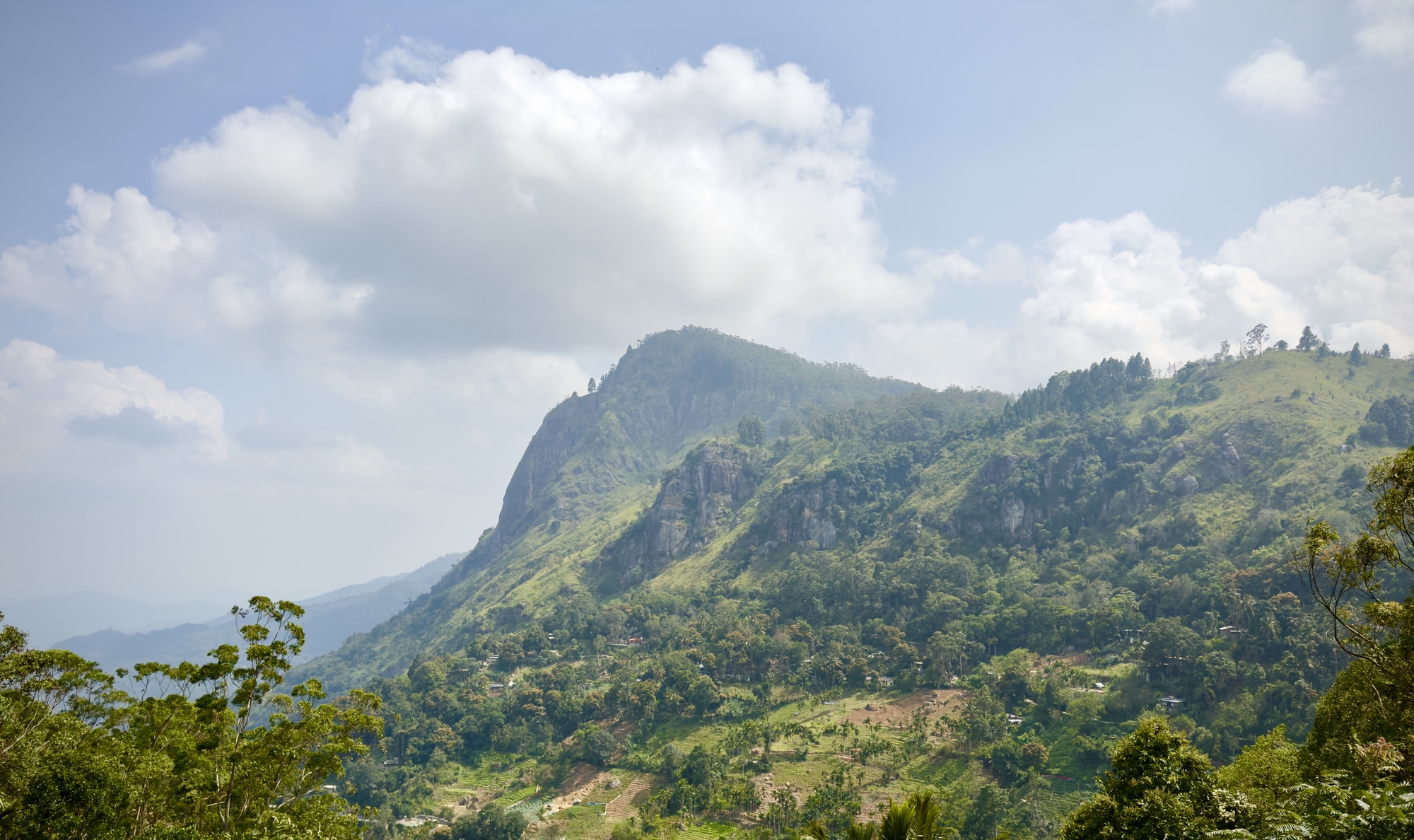

Moving on to Ella
The owner of White Lodge cooked breakfast just for me at 6.15 in the morning. Coffee, toast, sausage and mango, while the rest of Kandy was still asleep. It was a kind gesture, and I appreciated it more than I said.
I had booked a seat in a shared van departing at 7 AM. The alternative would have been the train, and under normal circumstances that would have been an easy choice. The Kandy to Ella route is one of the most celebrated rail journeys in Asia, climbing through tea country and cloud forest, crossing the famous Nine Arch Bridge at Demodara. Cyclone Ditwah hit Sri Lanka in November 2025 and caused devastating damage to the railway network, triggering over 150 landslides and washouts along the line. The Kandy to Ella section remains closed and is not expected to reopen until mid-2026. So, a shared van it was.
The driver called from the main street at 7.20. Eight of us in the van. The booking had mentioned stops at around six sights along the way.
The road from Kandy into the hill country climbs through some of the most dramatic scenery in Sri Lanka, winding past tea estates that cover every slope in neat green rows, through mountain passes with views that open up without warning and then disappear just as fast. It is beautiful country. It is also a very windy road, and the driver treated it like a time trial. The Chinese girl two seats ahead of me was sick within the first half hour and spent the rest of the journey with her face in a bag. The Australian got off at some random village without explanation. The Chinese guy beside me slept the whole way, his head bouncing steadily off the window.
Our first stop was a waterfall. Two minutes, not particularly remarkable, back in the van. The route climbs through Nuwara Eliya at nearly 2,000 meters elevation, a British hill station established in the 1820s as a retreat from the coastal heat, and it still carries the architecture to prove it: a red post office, a racecourse, mock-Tudor hotel facades, and a golf club. At this altitude the air is cool enough to feel improbable, given that you left the tropics only a few hours ago.
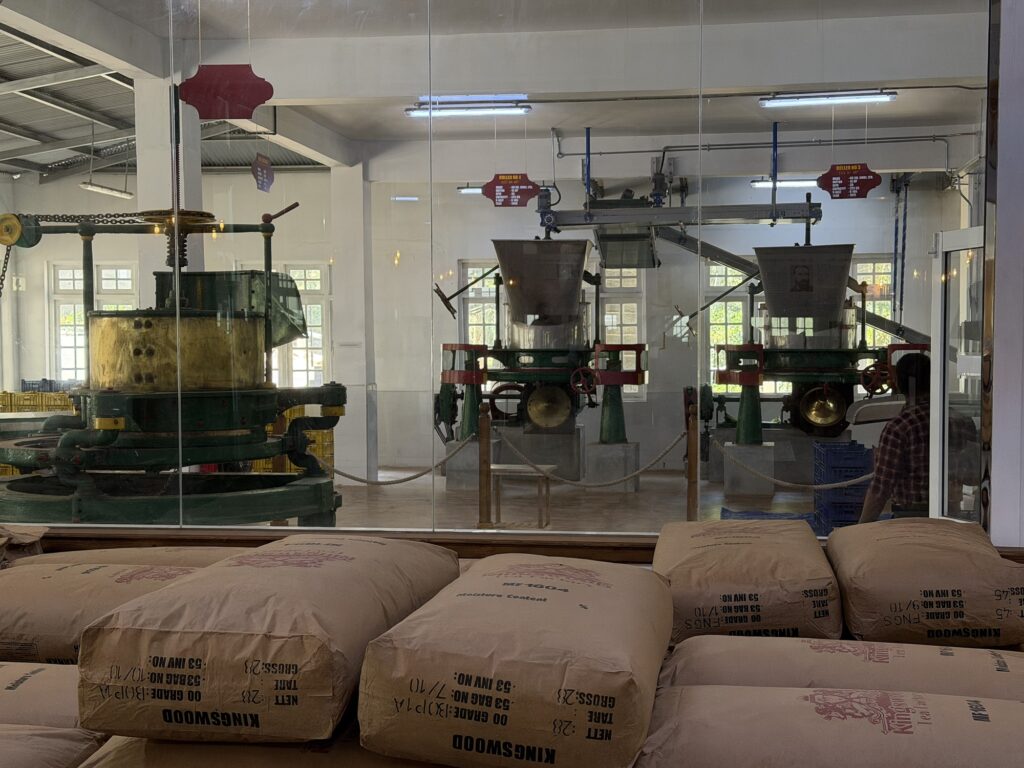
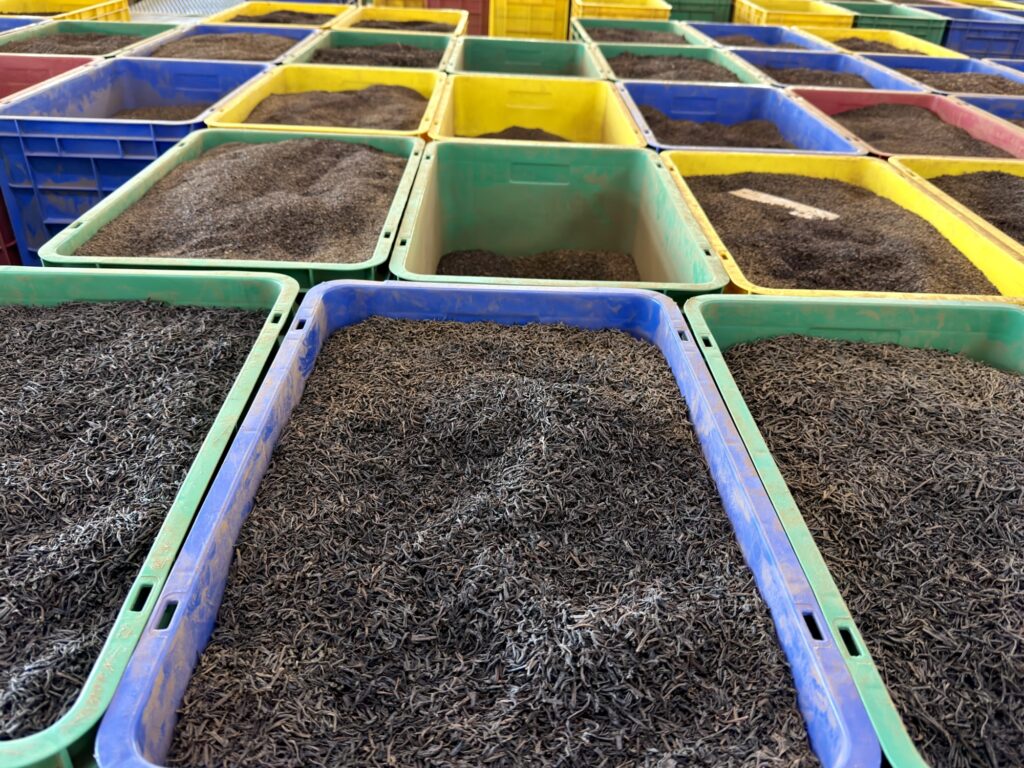
The second stop was a tea factory, one of hundreds that dot the hillsides between Kandy and Ella. Sri Lanka is the world’s fourth largest tea producer, and the British planted the first estates in the 1860s after a coffee blight wiped out the previous crop. The factory tour showed the full process: withering, rolling, fermenting, firing, sorting. There was a tasting at the end. The guide was enthusiastic but spoke in a high-pitched voice with a strong dialect, and between that and the noise of the machinery I caught perhaps one word in three. I drank the tea and nodded.
That turned out to be the last stop. The other four promised in the itinerary never materialized.
We were dropped in the center of Ella just before lunch. Ella sits at around 1,000 meters, small enough to walk across in twenty minutes, strung along a single main street lined with guesthouses, cafes and tuktuks. The Nine Arch Bridge, a colonial-era viaduct built in 1921 from brick and concrete, spans a valley on the outskirts and has become something of a symbol for the region. Trains cross it several times a day, and photographers line the jungle path above it each time. I blame Instagram. The town has grown considerably as a backpacker hub but still feels manageable. I stepped out of the van and directly into a restaurant.
After lunch I walked 300 meters down the road and found my hotel. Ella Rock Heaven turned out to be better than expected. Good bed, a balcony, and a view across the valley that I was happy to sit with for a couple of hours. Some hotels earn their names. This one certainly did.
In the evening I found a place for a couple of beers, then dinner. I ordered sweet and sour chicken. What arrived was more sweet and chili chicken. It is almost impossible to avoid spices here in Sri Lanka, even if you clearly say “no spices” and they nod approvingly.
Around 7 PM the rain came in, light but steady. At 980 meters you are well above the coastal heat, and the evenings here have a different quality entirely. Cooler, quieter, with cloud moving through the valley below. Very pleasant.
Moving on to Ella: the practical stuff
- The Kandy–Ella train is not running. Cyclone Ditwah in November 2025 triggered over 150 landslides along the line. It remains closed and is not expected to reopen until mid-2026.
- Book a shared van that stops at viewpoints and a tea factory. Several operators run the route, departing around 7 AM. Book through your guesthouse the evening before and confirm the stop list before you commit. Vans that don’t commit to stops in advance tend not to make them.
- The road is extremely winding. The van climbs through mountain passes at speed. Take motion sickness medication before departure and request the front seat.
- Nuwara Eliya is the high point of the journey, at 1,868 meters. A British hill station from the 1820s, still recognizable by its racecourse, red post office, and mock-Tudor hotels. The temperature here feels like a different country from the coast.
India and Sri Lanka 2026 — all posts
- Day 1 — 24 Hours to Mumbai
- Day 2 — First Morning in Mumbai
- Day 3 — Exploring Mumbai
- Dhobi Ghat: Mumbai’s Laundromat
- Day 4 — Sightseeing in Colombo: One Day is Enough
- A Short History of Ceylon
- Day 5 — Kandy: Moving into the Mountains
- Day 6 — Moving on to Ella
- Day 7 — Hike and Sunstroke
- Tea in Sri Lanka: From a Blight in 1869 to Four Million Cups a Day
- Day 8 — Nine Arches Bridge
- Day 9 — Tuktuk Tour Around Ella
- Day 10 — Time to Leave Ella
- Orphans of Udawalawe: Inside Sri Lanka’s Elephant Transit Home
- Day 11 — Safari and Galle Fort
- Day 12 — Onwards to Negombo for the last day in Sri Lanka
- Day 13 — All the problems concentrated on a single day
- Royal Enfield: Why India Rides Different
- Day 14 — The Kerala Backwaters
- Day 15 — Local bus to Munnar
- Leyland, a familiar name from the past
- Buying a beer in Kerala: Local knowledge required
- Mahindra: The Jeep That Never Left
- Discovering India Through Its Food — One Plate at a Time
- Day 16-19 — Four Relaxing Days in Munnar
- Day 20 — Travel to Kumily
- Day 21 — I Was Ready, Tigers Were Not
- Kathakali and Kalaripayattu
- Day 22 — Kumily to Varkala: The Journey is the Reward
- Day 23 — Slow day in Varkala
- IndiGo: Air travel for the masses
- Day 24 — Breakfast in Varkala, lunch in Bangalore, dinner in Goa
- Day 25-27 — Winding Down in South Goa
- Pit No. 30
- Day 28 — A Morning in Dharavi
- Day 28 part 2 — Hollywood, Bollywood: Different but the Same