

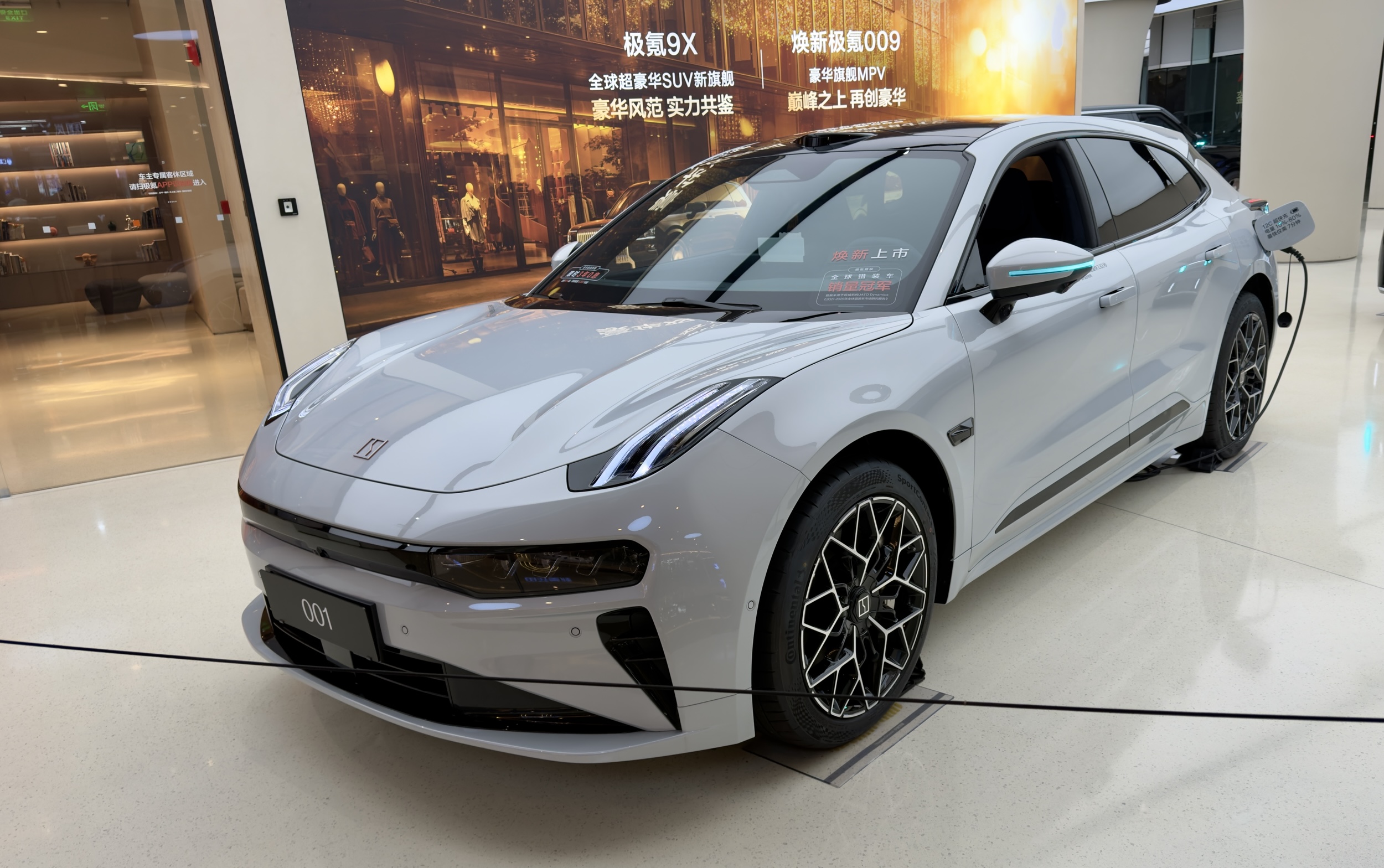

Somewhere between Shanghai and Shenzhen I noticed what was missing from China’s big cities. It was the noise.
Shanghai, Xi’an, Chengdu, Chongqing, Shenzhen. Cities of ten million people and more, eight-lane roads, traffic at every hour of the day, and none of the roar I expected. It took me a while to work out why, and the answer turned out to be different from what I assumed.
The scooters went first
The biggest change is the one closest to the ground. China has more than 350 million electric two-wheelers, e-bikes and e-scooters, and in the cities they have almost completely replaced the gasoline motorbike. That was not left to the market. Beijing has restricted gasoline motorbikes since the 1980s, Guangzhou banned them outright in 2007, and other cities followed. The delivery riders who bring lunch to every office tower, the parents taking children to school, the old men going to the market, all of them glide past on batteries, and the national standard caps an e-bike at 25 kilometers an hour (although I noticed on the scooters I rented that the speedometer stopped increasing at 25, but the scooter was still accelerating for quite some time after that).
In Yangshuo I joined them. The rental place next to the hotel charged 40 yuan (about $6) for the day, with no helmet, no instructions and no driver’s license required. I left my hotel key as security and rode off. The next day the hotel itself rented me a better one for 30 (about $4.50). By ten in the morning there were scooters everywhere on the loop around the rice fields.
Then the buses
City buses were the next easy target, since a city government owns its buses and can simply order new ones. Shenzhen replaced its entire fleet, more than 16,000 buses, by the end of 2017, the first city in the world to do it. There is more on that in the Shenzhen post. By the end of 2024, 83 percent of China’s city buses were classed as new-energy vehicles, most of them running on batteries.
And now the cars
Cars are where the numbers get large. In 2015 China sold about 330,000 new-energy vehicles, the official term for battery-electric cars and plug-in hybrids together. In 2025 it sold 16.5 million, nearly half of all new vehicles. This year the share has passed half, and in August it was over 60 percent. China now builds about three of every four electric cars made in the world, and buys about six in ten.
Which brings me to the part that puzzled me. In the big cities it was sometimes hard to spot a gasoline car at all. Yet only about 13 percent of China’s cars are new-energy vehicles, 49 million out of 371 million in the middle of 2026. Even in the cities furthest ahead the figure is only about a quarter. Shenzhen had 1.08 million new-energy vehicles out of 4.26 million in mid-2024.
Both things are true, because a car that is owned is not the same as a car that is moving. What moves through a city center all day is taxis, ride-hailing cars and buses, and those went electric first. In Shanghai 95 percent of the taxis and 96 percent of the buses are new-energy vehicles. Shenzhen stopped accepting gasoline cars on its ride-hailing platforms in 2020, and Guangzhou, Xi’an and Beijing have followed. I used DiDi, the Chinese Uber, a lot on this trip, and every single car that picked me up was electric. A taxi is on the road most of the day, while a private car spends most of its life parked. On top of that, the new cars are the electric ones, around three quarters of new car sales in Shenzhen, and their green license plates make them easy to count. Some of those green plates are plug-in hybrids, which do sometimes run on gasoline, but quietly enough.
So the quiet comes from what is moving: the scooters, the buses, the taxis and the newest cars. The country’s fleet as a whole will take another decade or more to catch up.
How Beijing paid for it
None of this happened by itself. The usual explanation is that around 2009 China’s leaders concluded they would never catch Germany, Japan and America on gasoline engines, and that electric cars were a race where everybody started from zero. Then they paid for it, for fifteen years.
Purchase subsidies of up to 60,000 yuan (about $9,000) a car. No purchase tax. Free license plates in cities where a plate for a gasoline car sells at auction for more than 90,000 yuan (about $13,000). Quotas that forced every carmaker to build electric models. And, for the last two years, cash for scrapping an old car. The Washington think tank CSIS puts the national support at about 231 billion dollars between 2009 and 2023, and calls that a floor.
Who builds them
Most of the DiDis I rode in were makes I had never heard of. Fifteen years ago most of these names meant nothing outside China, and many of them did not exist. In 2025 BYD sold 4.6 million cars, every one of them electric or a plug-in hybrid, and for the first time it sold more battery-electric cars than Tesla over a full year, 2.26 million against 1.64 million. China passed Japan as the world’s largest car exporter in 2023 and exported more than 7 million vehicles in 2025, 2.6 million of them new-energy. The largest single exporter is not BYD but Chery, which has held that position for 23 years in a row.
The fifteen largest Chinese carmakers, ranked by new-energy vehicles sold in 2025:
| # | Company | New-energy vehicles | All vehicles | Overseas | Domestic |
|---|---|---|---|---|---|
| 1 | BYD | 4,602,000 | 4,602,000 | 1,046,000 | 3,556,000 |
| 2 | Geely Auto | 1,688,000 | 3,025,000 | 420,000 | 2,605,000 |
| 3 | SAIC | 1,643,000 | 4,507,000 | 1,071,000 | 3,436,000 |
| 4 | Changan | 1,110,000 | 2,913,000 | 637,000 | 2,276,000 |
| 5 | Dongfeng | 1,050,000 | 2,473,000 | 295,000 | 2,178,000 |
| 6 | Chery | 904,000 | 2,806,000 | 1,344,000 | 1,462,000 |
| 7 | Leapmotor | 597,000 | 597,000 | 67,000 | 530,000 |
| 8 | Seres (AITO) | 472,000 | 472,000 | not published | not published |
| 9 | GAC | 434,000 | 1,722,000 | 130,000 | 1,592,000 |
| 10 | Xpeng | 429,000 | 429,000 | 45,000 | 384,000 |
| 11 | Xiaomi | 410,000 | 410,000 | none reported | 410,000 |
| 12 | Li Auto | 406,000 | 406,000 | not published | not published |
| 13 | Great Wall | 404,000 | 1,324,000 | 506,000 | 818,000 |
| 14 | BAIC | 390,000 | 1,752,000 | 308,000 | 1,444,000 |
| 15 | NIO | 326,000 | 326,000 | not published | not published |
New-energy vehicles include plug-in hybrids, which are about half of BYD’s sales. The overseas figures are as each company reports them. For BYD, SAIC and Changan they may include cars built in their factories abroad; Chery’s figure is exports only. Domestic is simply the total minus overseas. SAIC, Changan, Dongfeng and GAC totals include their joint ventures with foreign brands. Geely’s parent group, which also owns Volvo and Polestar, sold more than 4.1 million. Tesla, which is not Chinese but builds cars in Shanghai, sold about 852,000 from its Shanghai factory in 2025, roughly a quarter of them exported.
Quiet, but enormous
One thing disappointed me a little. China has electrified its cars, but it has also followed the American taste for SUVs. Many of the electric cars I saw were truly enormous, so big that they would not even fit in a European city, too wide for the old streets and too long for the parking spaces.
The numbers bear that out. The AITO M9, a large SUV built by Seres with Huawei’s technology, is 5.23 meters long and two meters wide, and more than 156,000 of them were sold in 2024. The newest version weighs around 3,000 kilograms. The six-seat Li Auto L9 weighs more than 2,500. For comparison, a Volkswagen Golf is 1.79 meters wide, and a European parking space is often no more than five meters long. Many of these giants are not even fully electric. They are range extenders, with a small gasoline engine that only charges the battery, which keeps them quiet in town and lets them cross the country without stopping to charge.
The quiet in China’s cities is a policy. Somebody decided it, paid for it for fifteen years, and banned the alternative. The scooters went first, then the buses, and the cars are only halfway there.
Two days on a rented scooter in Yangshuo. Five cities without a roar. Thirteen percent of China’s cars, and almost every taxi.
Electric China, the numbers
- What share of new cars sold in China are electric? — 47.9 percent of all new vehicles sold in China in 2025 were new-energy vehicles (CAAM), and the share has been above 50 percent so far in 2026.
- How many electric two-wheelers are there in China? — More than 350 million in use. E-bikes are capped at 25 km/h by national standard.
- How many Chinese city buses are electric? — 83 percent were new-energy at the end of 2024. Shenzhen’s fleet has been all-electric since 2017.
- Are taxis in China electric? — Mostly. 95 percent of Shanghai’s taxis are new-energy, and Shenzhen, Guangzhou, Xi’an and Beijing no longer let new gasoline cars join ride-hailing platforms.
- How many EV charging points does China have? — More than 20 million at the end of 2025, 4.7 million of them public.
- Is China the world’s largest car exporter? — Yes, since 2023, with more than 7 million vehicles exported in 2025.
- Can a tourist rent an electric scooter in China? — In Yangshuo, yes: 30 to 40 yuan (about US$4.50 to $6) a day, no license asked, with the hotel key as the deposit. No helmet was offered; ask for one.
China 2026 — all posts
- 1 — Shanghaied
- 2 — Three days in Shanghai
- 3 — Xi’an, the beginning of the Silk Road
- 4 — Chengdu, panda town
- 5 — Chongqing, the world’s biggest city?
- 6 — Zhenyuan, the other Silk Road
- 7 — Xijiang, the village that is paid to look like itself
- 8 — Zhangjiajie, the mountain that was renamed after a film
- 9 — Yangshuo, the view on the twenty
- 10 — Shenzhen, from thirty thousand people
- 11 — Why China’s big cities are so quiet
- 12 — Hong Kong, nowhere to go but up
- 13 — Traveling through China’s holidays
- 14 — Taipei, four kilometers of gondola
- 15 — Alishan, the forest that left by train
- 16 — Tainan, where the gods answer yes or no
- 17 — Taiwan, a short history of a long question
- 18 — Why Uber in Taiwan sends you a taxi
- 19 — Hualien, a gorge you can only look at
- 20 — Jiufen, the gold you are allowed to touch
- 21 — Beware of Old Street
- 22 — Taipei, the crates that crossed the strait
- 23 — Shanghai again, through new glasses
- 24 — Train travel in China
- 25 — Paying for things in China, Hong Kong and Taiwan
- 26 — Getting online behind the Great Firewall
- 27 — China at 72
- 28 — Six weeks in China and Taiwan: the route, and what I would change
Before you go: Planning a trip to China · Essential apps for travelling in China