


The high-speed train from Shenzhen to Hong Kong takes fourteen minutes. The border takes longer. Both sets of passport controls sit in the same building at West Kowloon, so you check out of China, walk a few meters, maybe shop at one of the many duty-free shops, and check into Hong Kong, with a line for each.
Then the subway, and then, as usual, the last 500 meters. My guesthouse was in Chungking Mansions in Tsim Sha Tsui, which turned out to be one building with five towers standing on a shared ground floor of money changers, phone shops and curry counters. Each tower has its own elevators. I asked my way from one Indian vendor to the next until somebody pointed at the right one.
The room had a window, which in that building is not a given. Everything else about it was small, the bathroom especially, and there were spots on the sheets that made me think about bed bugs. But at least the air conditioning worked. This is just the way it is in Hong Kong. Everything is cramped.
Up, because there is nowhere else
Chungking Mansions went up in 1961: seventeen floors, five blocks, around four thousand residents and more than a hundred guesthouses. It is Hong Kong in one building. Everything is stacked on top of everything else.
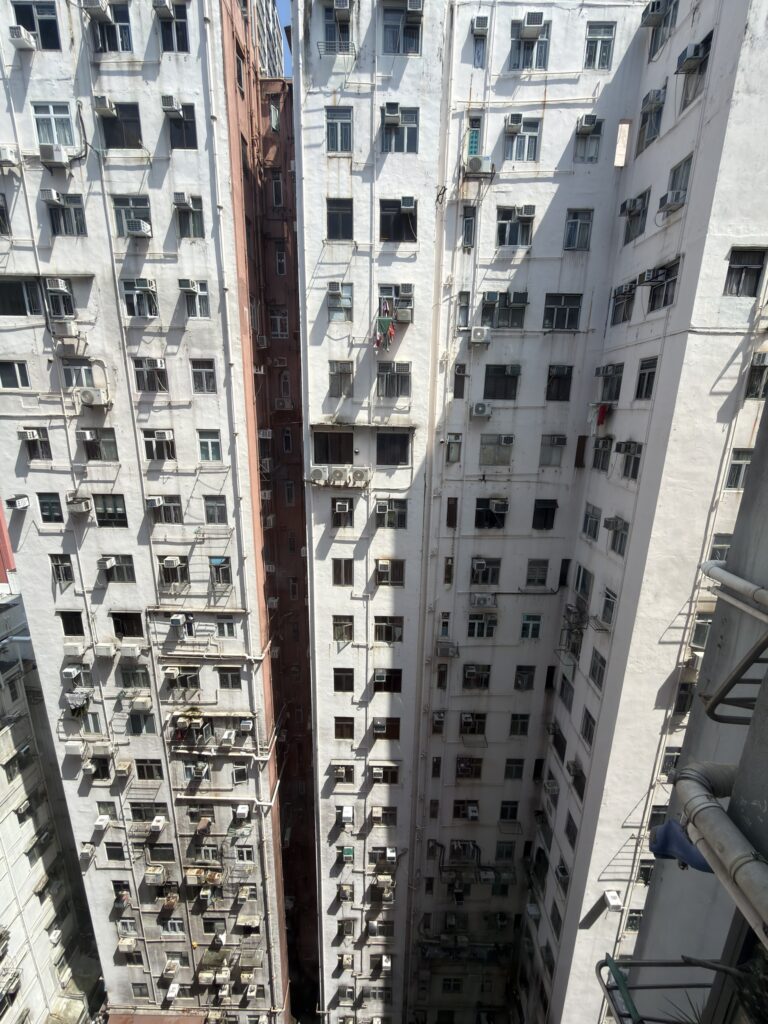
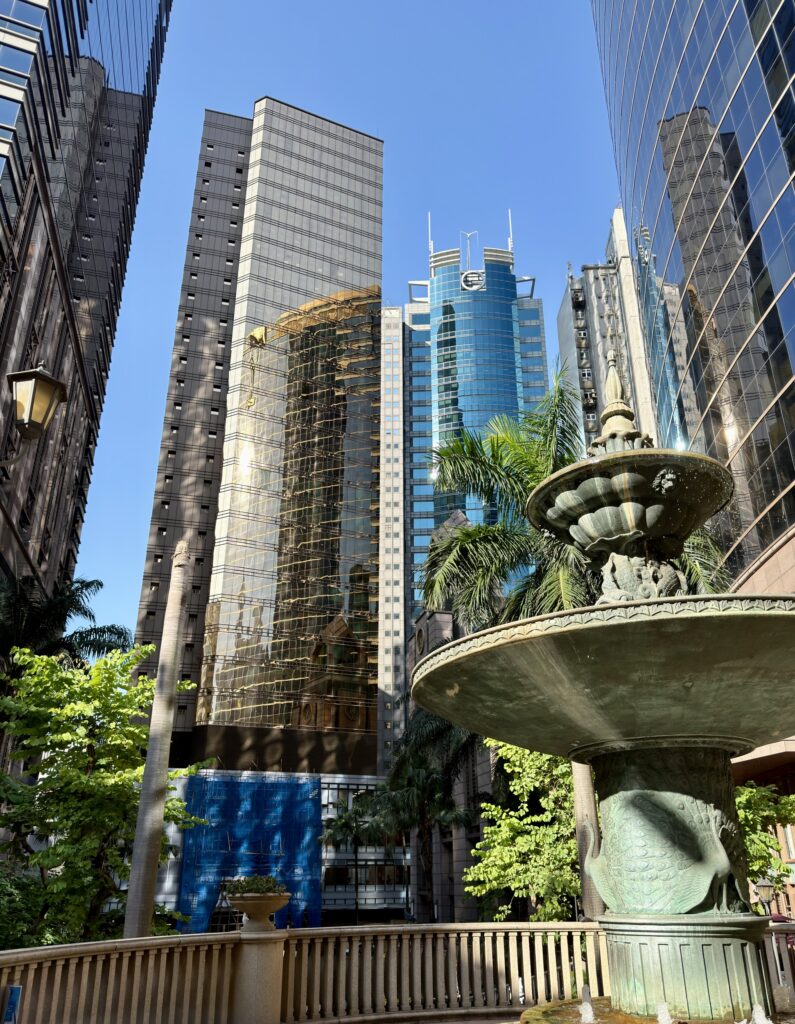
The reason is the ground. Hong Kong is mostly mountain. Away from the harbor the land is steep hillside, and about 40 percent of it is protected as country park. What flat land there is runs along the water, and a lot of it used to be water. Roughly a quarter of all the developed land in Hong Kong was reclaimed from the sea.
So the city went up instead of out. Hong Kong has 569 buildings over 150 meters. New York has about 320. A fifty-story apartment block is ordinary housing here.
It shows at street level too. Every walk between two places seems to pass through a mall, usually on more than one floor.
On the island the hills start right behind the waterfront, and the city has found its own way up them. From Central to the Mid-Levels runs a chain of covered outdoor escalators, about 800 meters in all, carrying commuters downhill in the morning rush and uphill for the rest of the day. It has been running since 1993 and is often called the longest of its kind.
For some people there is even less room. Hong Kong has about 360,000 foreign domestic helpers, most of them from the Philippines and Indonesia, and most of them live in their employers’ already small apartments. On Sundays, their day off, they take over the sidewalks, footbridges and plazas of Central, because there is nowhere else for them to go.
The Star Ferry, forty years on
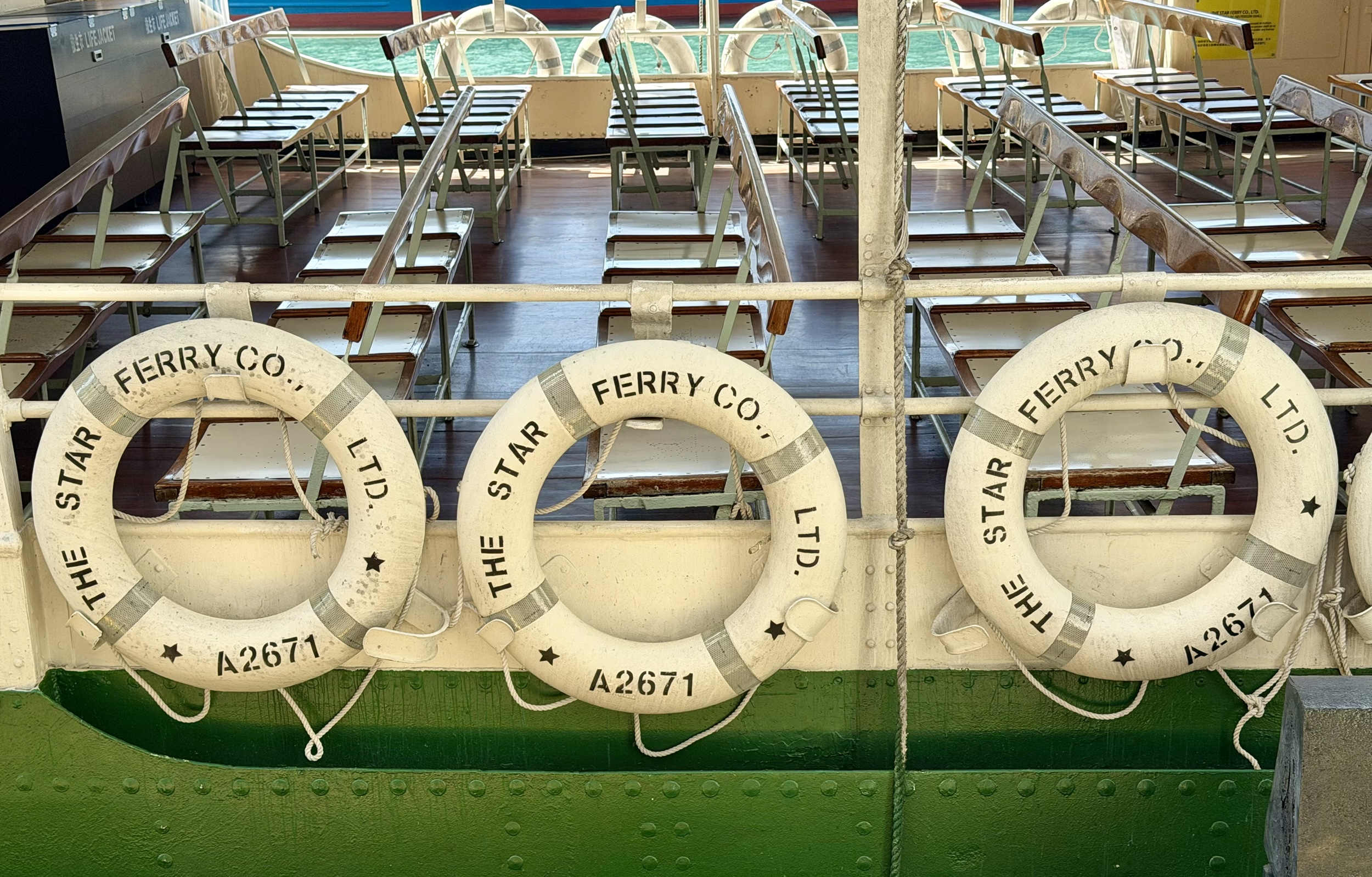
The first afternoon I took the Star Ferry across to the island. I last did that about forty years ago, and nothing obvious had changed. The same green and white boats, the same wooden benches where you flip the backrest to face whichever way you want. The company has run the crossing since 1888, and the oldest boat in the fleet was built in 1956.
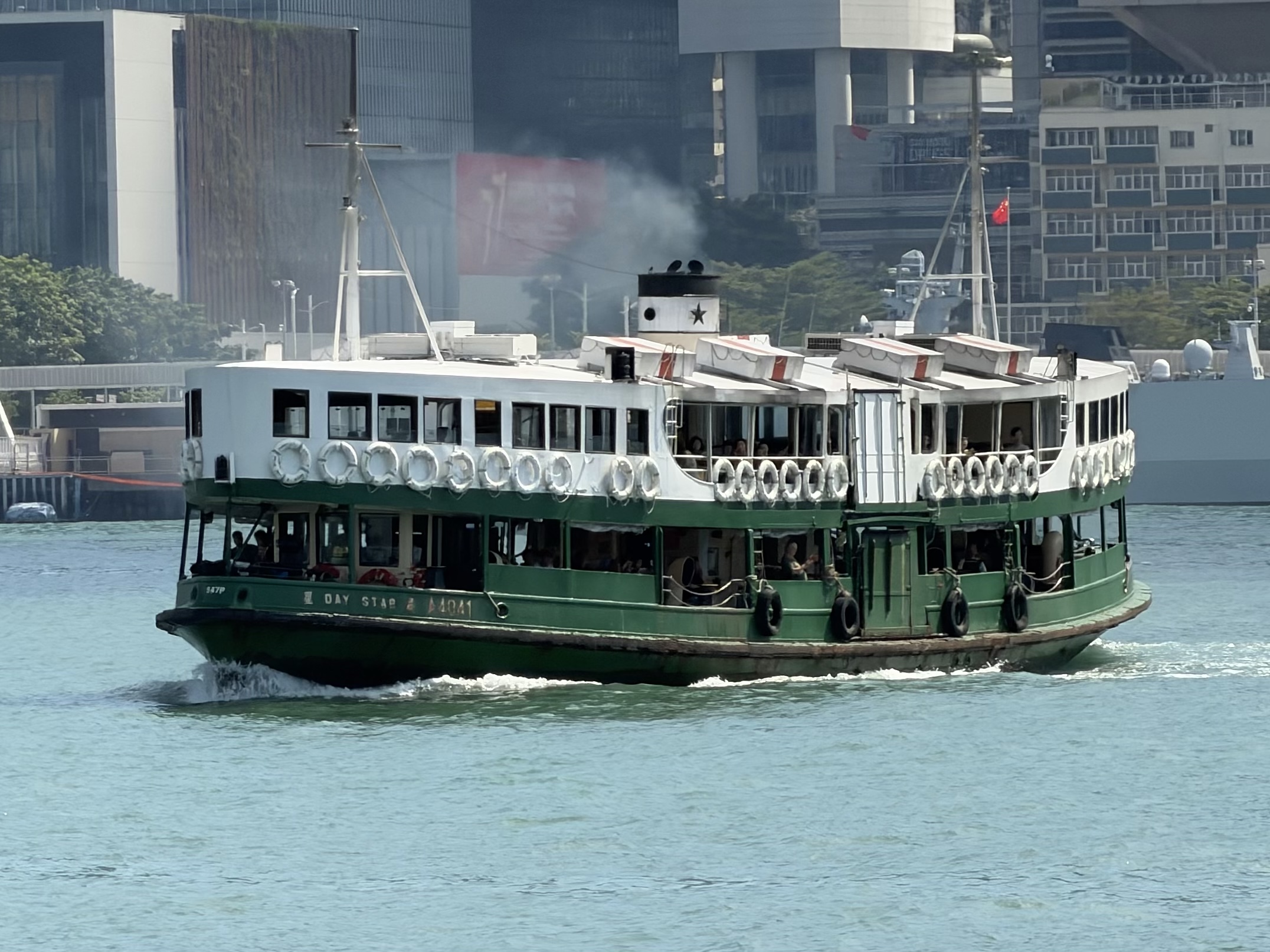
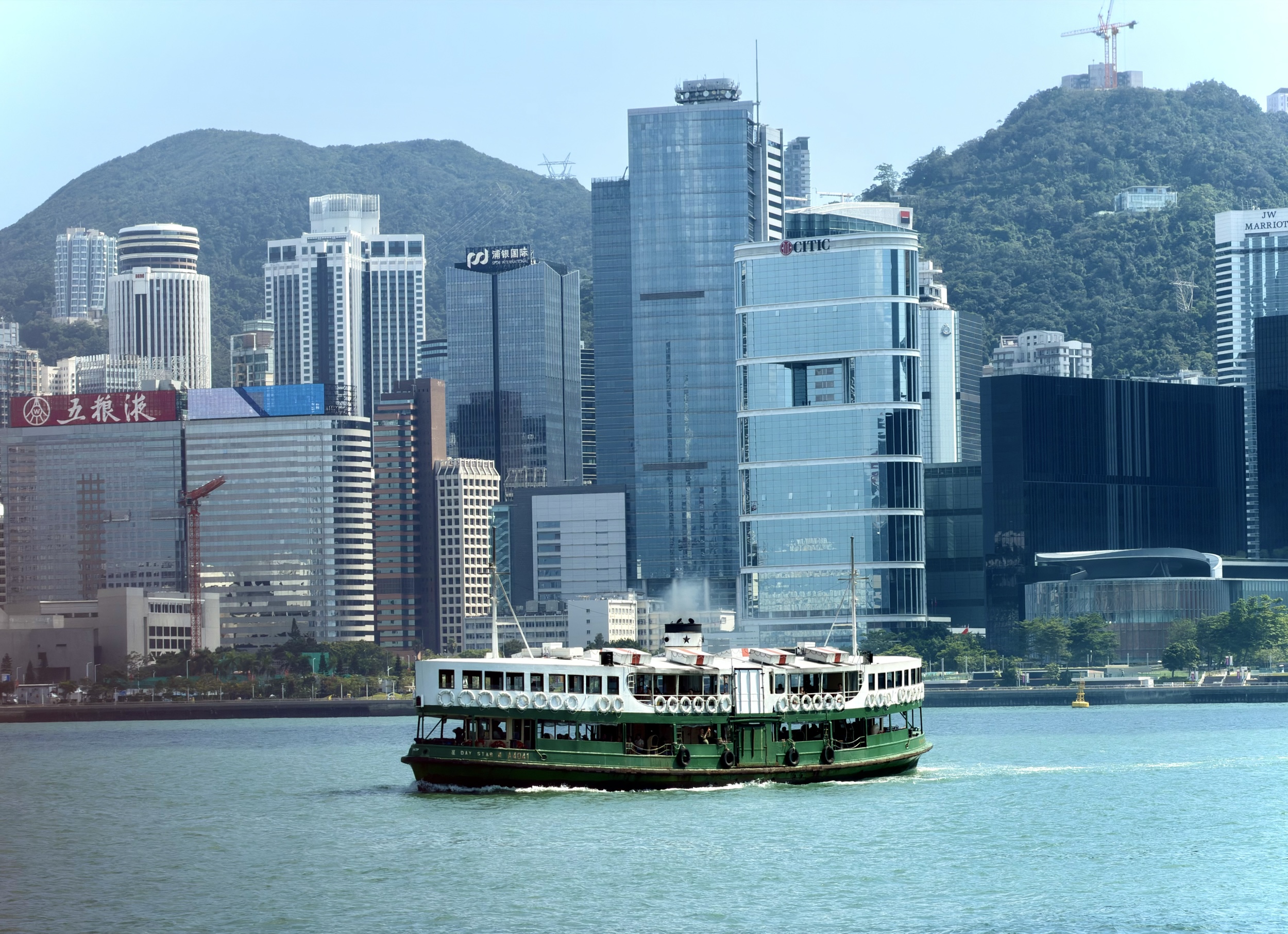
What has changed is the harbor. On the island side the old Central pier was demolished in 2006 to make room for more reclamation, and the new one stands on land that was open water when I was last here. The ferry is the same. The harbor it crosses is narrower.
I came off the boat and walked straight into a mall, and it took me a good while to find a way out to an actual street. I had lunch in there in the end, which felt like conceding the point. I finally found my way out of the shopping mall and walked around at random, just ingesting the Hong Kong atmosphere.
That evening I walked down to the promenade on the Kowloon side. The island skyline at night, lit from the waterline to the top of the hill, is as good as its reputation. I picked a spot for the fireworks the next night.
The Peak before eight
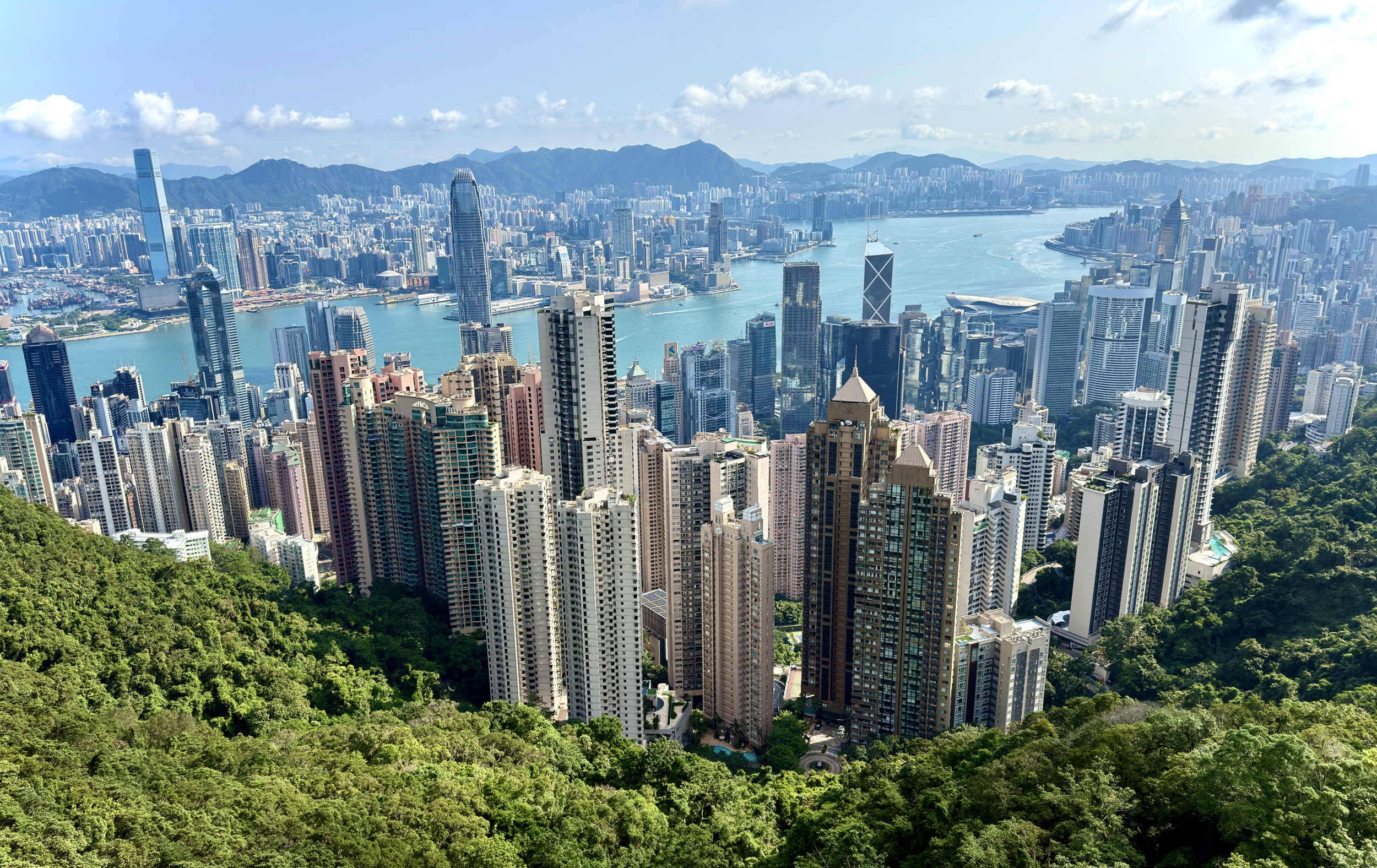
I was at the lower Peak Tram station at 7:20 for the first tram at 7:30. I had been warned about lines. There were none, and by 7:45 I was at the top with a cappuccino, a cheese croissant and the whole city below me.
From up there the argument about the ground makes itself. The towers stand in a narrow band between the mountain behind them and the harbor in front, the same again on the Kowloon side, and then green hills again behind that. There is no sprawl, because there is nowhere for it to go.
The view was not always open to everyone. From 1904 to 1930 a colonial ordinance reserved most of the Peak as a place to live for non-Chinese residents. Chinese people worked in the houses up there as servants, but living there in your own right took an exemption from the governor.
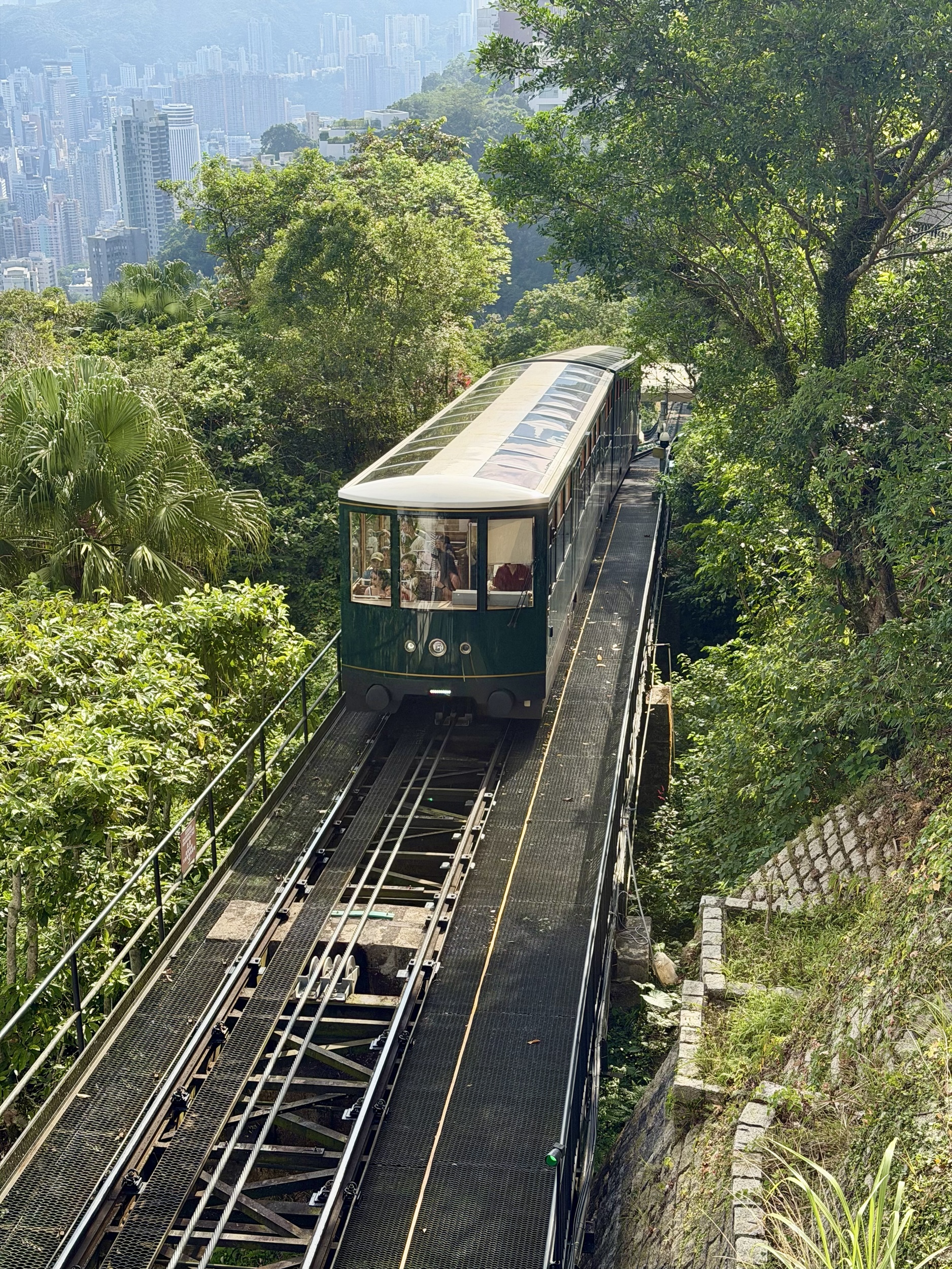
When the Sky Terrace opened at 8:30 I went up for the same view from a little higher. Two hours in all, then down on a tram that has been climbing the same slope since 1888, at up to a 48% incline.
The rest of the day was less successful. An old temple and a couple of streets of galleries did not amount to much. What did work was the other tram, the ordinary double-decker that runs along the north shore of the island. I rode the top deck for no reason other than the ride. It is cheap, it is slow, and you are higher than everyone else on the street, which in Hong Kong is the right place to be.
Two hundred meters
October 1 is National Day, and in Hong Kong that means fireworks over the harbor at eight in the evening. The promenade was 200 meters from my guesthouse, and I had picked out my spot the night before.
I left at 6:30, which for a 200-meter walk felt generous. The streets were already full, and not ordinary Hong Kong full. Hundreds of thousands of people, police barricades at the junctions, and the crowd let through in blocks of 50 or 100 meters at a time, then held.
In an hour and a half I covered about half the distance. When the fireworks started I was standing behind a row of buildings. I saw the top of every burst, and it was spectacular, and I never got to the spot I had picked.
A city with no room has solved the problem by building upwards, and it has solved it well. A crowd cannot do that. On the one night when a few hundred thousand people want the same strip of waterfront, the old arithmetic comes back.
Hong Kong, the practical stuff
- How do you get from Shenzhen to Hong Kong by train? — High-speed train from Futian to Hong Kong West Kowloon, 14 minutes. Both border controls are in the same building at West Kowloon: exit China first, then enter Hong Kong. Allow time for a line at each.
- What is it like to stay in Chungking Mansions? — Budget guesthouses in five blocks, A to E, each with its own elevators. Know your block before you arrive, or ask on the ground floor. Rooms are small, so ask for one with a window.
- How much is the Star Ferry in Hong Kong? — A few Hong Kong dollars for a few minutes across the harbor from Tsim Sha Tsui, and still the best way to see the skyline.
- When does the Peak Tram start, and what does it cost? — The first tram is at 07:30, when there was no line at all. HK$82 (about US$10.50) single and HK$116 (about US$15) return, fares from December 2025. The Sky Terrace opens at 08:30, and the flat loop path around the summit is free and takes about an hour.
- How much is the Hong Kong street tram? — A flat HK$3.30 (about US$0.40) however far you ride along the north shore of Hong Kong Island, paid by Octopus card or exact change when you get off. Go upstairs.
- When should you arrive for the National Day fireworks in Hong Kong? — By the afternoon of October 1 if the waterfront matters to you. Leaving at 18:30 for a 20:00 start was hours too late, even for 200 meters.
- How do you get from central Hong Kong to the airport? — MTR to Central, then the Airport Express, about an hour in all. Inside the airport, the far gates are a train ride away.
- When is the best time to visit Hong Kong? — November to February, which is clear, cool and the best season for the hill trails. May to September is hot, humid and typhoon season.
China 2026 — all posts
- 1 — Shanghaied
- 2 — Three days in Shanghai
- 3 — Xi’an, the beginning of the Silk Road
- 4 — Chengdu, panda town
- 5 — Chongqing, the world’s biggest city?
- 6 — Zhenyuan, the other Silk Road
- 7 — Xijiang, the village that is paid to look like itself
- 8 — Zhangjiajie, the mountain that was renamed after a film
- 9 — Yangshuo, the view on the twenty
- 10 — Shenzhen, from thirty thousand people
- 11 — Why China’s big cities are so quiet
- 12 — Hong Kong, nowhere to go but up
- 13 — Traveling through China’s holidays
- 14 — Taipei, four kilometers of gondola
- 15 — Alishan, the forest that left by train
- 16 — Tainan, where the gods answer yes or no
- 17 — Taiwan, a short history of a long question
- 18 — Why Uber in Taiwan sends you a taxi
- 19 — Hualien, a gorge you can only look at
- 20 — Jiufen, the gold you are allowed to touch
- 21 — Beware of Old Street
- 22 — Taipei, the crates that crossed the strait
- 23 — Shanghai again, through new glasses
- 24 — Train travel in China
- 25 — Paying for things in China, Hong Kong and Taiwan
- 26 — Getting online behind the Great Firewall
- 27 — China at 72
- 28 — Six weeks in China and Taiwan: the route, and what I would change
Before you go: Planning a trip to China · Essential apps for travelling in China