


The last leg from Zhangjiajie to Yangshuo was the most expensive part of a long day, and it was a taxi.
Everything before it was cheap and quick. A DiDi through the rain to Zhangjiajie West for 40 yuan. A train down to Changsha labeled regional, which went up to 305 km/h anyway. Lunch in Changsha, an hour wandering the station with the camera, and then a nasty moment when I realized the next train was at 14:23 and not 14:53, as I had been telling myself. It left from a different station, Changsha South, so there was also a subway ride across a city of more than ten million people, for about forty cents. I made it.
Two hours and a half on to Guilin North, then a DiDi for the last hour and a quarter to Yangshuo, which cost more than everything else that day put together.
I left my reading glasses in that car. We looked and looked, could not find them, and I gave up and checked in to my hotel. Half an hour later the driver had found my glasses and came back to the hotel and handed them in at reception. He did not have to do that. It was the kind of thing you remember about a country.
That evening I went out to West Street, the walking street in the old center, for dinner. It was quite the circus, very intense, and it only got busier as the week went on and the Mid-Autumn holiday brought the families out.
The view on the twenty
I had hoped to find a boat at the wharf in Yangshuo. There was nothing going where I wanted, so I took a DiDi up to Xingping instead, which is where the famous stretch of the river is.
Xingping was a lot more commercial than I had expected. After some confusion I found the bamboo rafts. You need four people to a raft, so I waited until a family with a child turned up, and rode with them.
The bamboo raft was not bamboo. It was plastic, shaped and colored to look like bamboo, with an electric motor at the back. We motored out for about half an hour to the bend everyone comes to see, stopped for photographs, and motored back.
That bend is printed on money. The back of the 20 yuan note shows the Li River near Xingping, karst peaks on both banks and their reflections in the water, with a small boat in the middle. The spot is called Yellow Cloth Shoal, after a pale slab on the riverbed that shows through the water like a length of cloth.
Which is a nice irony, because very few people in China ever see the note now. For three weeks I had watched street vendors, taxi drivers and temple ticket offices take payment by QR code on the phone. A view that was put on the currency so that everyone would carry it around now mostly stays in the bank.
I took my photo of it from a plastic raft with an outboard motor. That part is not on the note.
It was a nice ride but not spectacular. Afterwards I walked through the old town of Xingping, which is smaller than most of the old towns I have seen in China, sat down with a beer and watched the sun go down behind the peaks. That part was better than the raft.
On two wheels
The next afternoon I took a DiDi down to Moon Hill, a limestone peak with a hole through the top. It was closed, as advertised, but you can still see the arch from the road. I walked along that road for a while and realized something: everyone around me was on an electric scooter, and that was clearly the way to get around here.
So the following morning I rented one from the place next to the hotel. 40 yuan for the day. No helmet, no instructions, no driving license asked for. I left my hotel key as a deposit, and that was the whole procedure.
I went back to Moon Hill as a practice run and had a cappuccino there, then on to the rafting place on the Yulong River, which was crowded, so I kept going. I rode small roads between the peaks until I had had my fill, and was back at the hotel by one.
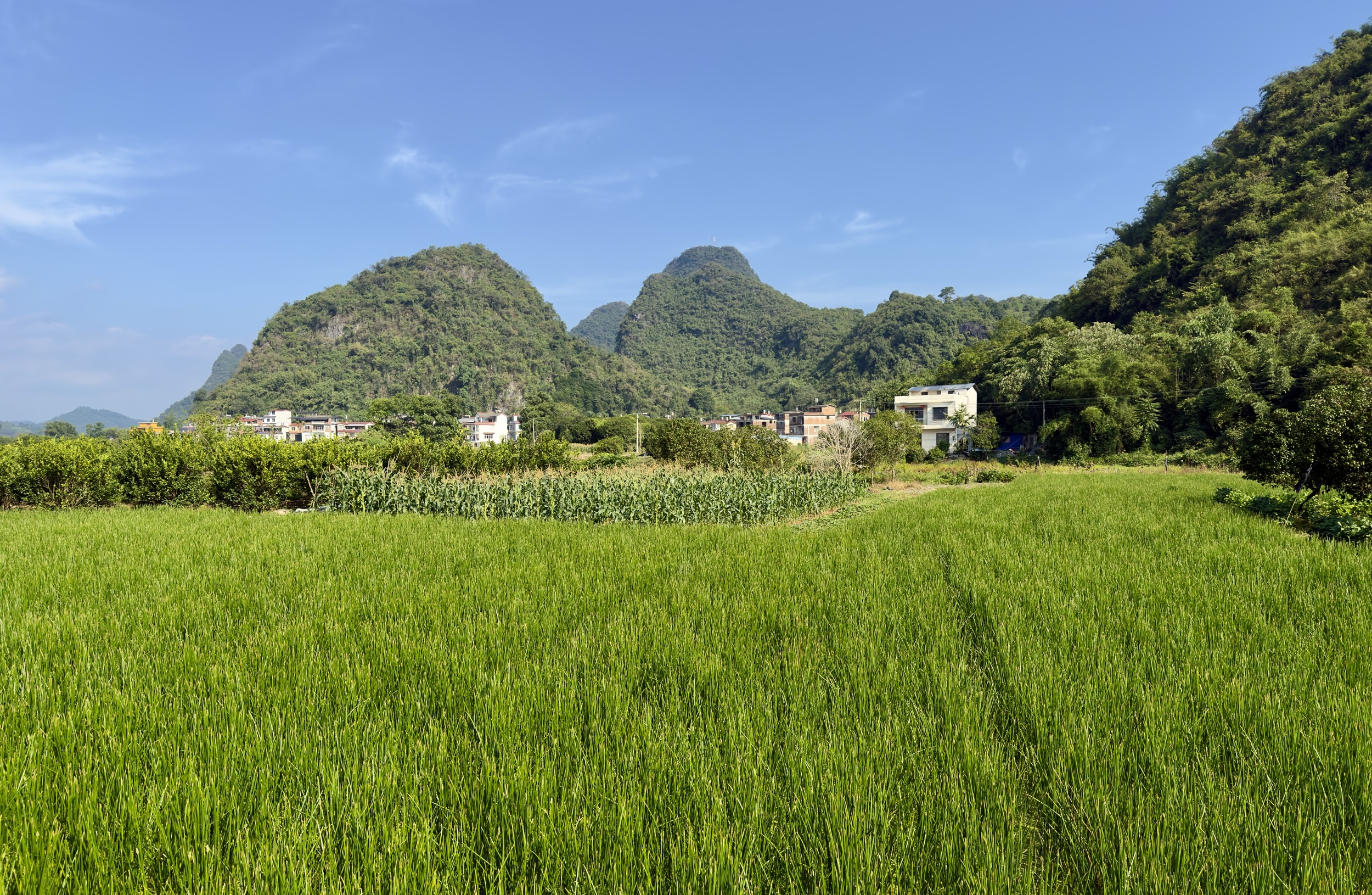
The day after, the hotel itself rented me an even better scooter for 30 yuan, and I was on the road by a quarter past eight. I had put waypoints into the map for the whole loop the night before, but I kept leaving it for smaller side roads, which turned out to be the best decision of the day. Out among the rice fields I had the countryside to myself for two hours. Then, at about ten, mass tourism arrived, and there were scooters everywhere.
I went out again in the late afternoon, down past Moon Hill and the Yulong River, a little further than before. Turning around on the main road, I made an ill-advised U-turn and was very nearly run over by a bus. No contact was made and I survived. The lesson is recorded: on a road shared with tour buses, no unplanned U-turns.
Yangshuo, the practical stuff
- How do you get from Zhangjiajie to Yangshuo? — Train from Zhangjiajie West to Changsha, metro across the city to Changsha South, high-speed train to Guilin North (14:23 to 16:58 on my day), then about an hour and a quarter to Yangshuo by DiDi, the priciest leg. Leaving, Yangshuo has its own high-speed station, about 45 minutes from town.
- What is West Street in Yangshuo? — The walking street in the center. It is intense in the evening, and more so on holidays.
- How do you see the 20 yuan note view at Xingping? — On a motorized plastic “bamboo” raft, about half an hour each way to the bend on the note. Rafts take four people, so you may wait for company.
- Is Xingping old town worth a visit? — It is small, but worth a drink at sunset.
- Can you visit Moon Hill in Yangshuo? — It was closed during my visit in September 2026, but the arch is visible from the road.
- Can you rent an electric scooter in Yangshuo? — Yes, for 30 to 40 yuan (about US$4.50 to $6) a day from shops and hotels, with no license asked and no helmet offered. The side roads through the rice fields are quiet early in the morning; the main roads carry tour buses.
- When should you raft the Yulong River? — Early in the day or on a weekday. On a holiday weekend the bamboo rafting was crowded.
China 2026 — all posts
- 1 — Shanghaied
- 2 — Three days in Shanghai
- 3 — Xi’an, the beginning of the Silk Road
- 4 — Chengdu, panda town
- 5 — Chongqing, the world’s biggest city?
- 6 — Zhenyuan, the other Silk Road
- 7 — Xijiang, the village that is paid to look like itself
- 8 — Zhangjiajie, the mountain that was renamed after a film
- 9 — Yangshuo, the view on the twenty
- 10 — Shenzhen, from thirty thousand people
- 11 — Why China’s big cities are so quiet
- 12 — Hong Kong, nowhere to go but up
- 13 — Traveling through China’s holidays
- 14 — Taipei, four kilometers of gondola
- 15 — Alishan, the forest that left by train
- 16 — Tainan, where the gods answer yes or no
- 17 — Taiwan, a short history of a long question
- 18 — Why Uber in Taiwan sends you a taxi
- 19 — Hualien, a gorge you can only look at
- 20 — Jiufen, the gold you are allowed to touch
- 21 — Beware of Old Street
- 22 — Taipei, the crates that crossed the strait
- 23 — Shanghai again, through new glasses
- 24 — Train travel in China
- 25 — Paying for things in China, Hong Kong and Taiwan
- 26 — Getting online behind the Great Firewall
- 27 — China at 72
- 28 — Six weeks in China and Taiwan: the route, and what I would change
Before you go: Planning a trip to China · Essential apps for travelling in China