



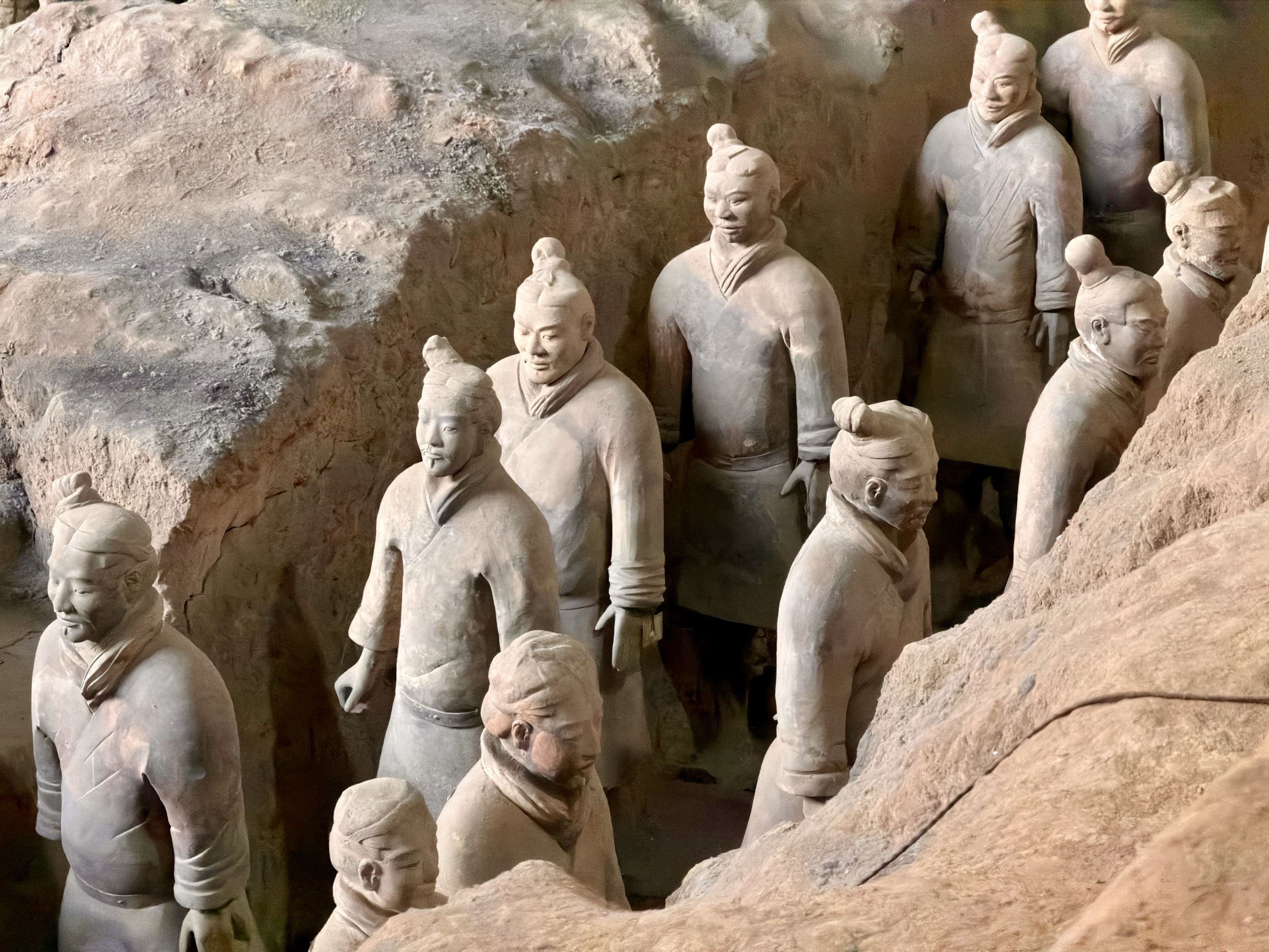
In March 1974 a drought had left the fields around Xiyang, a village about 35 kilometers east of Xi’an, badly short of water, and a group of farmers decided to dig a well. What came up out of the hole was not water. It was fragments of fired clay, a bronze arrowhead, and a head.
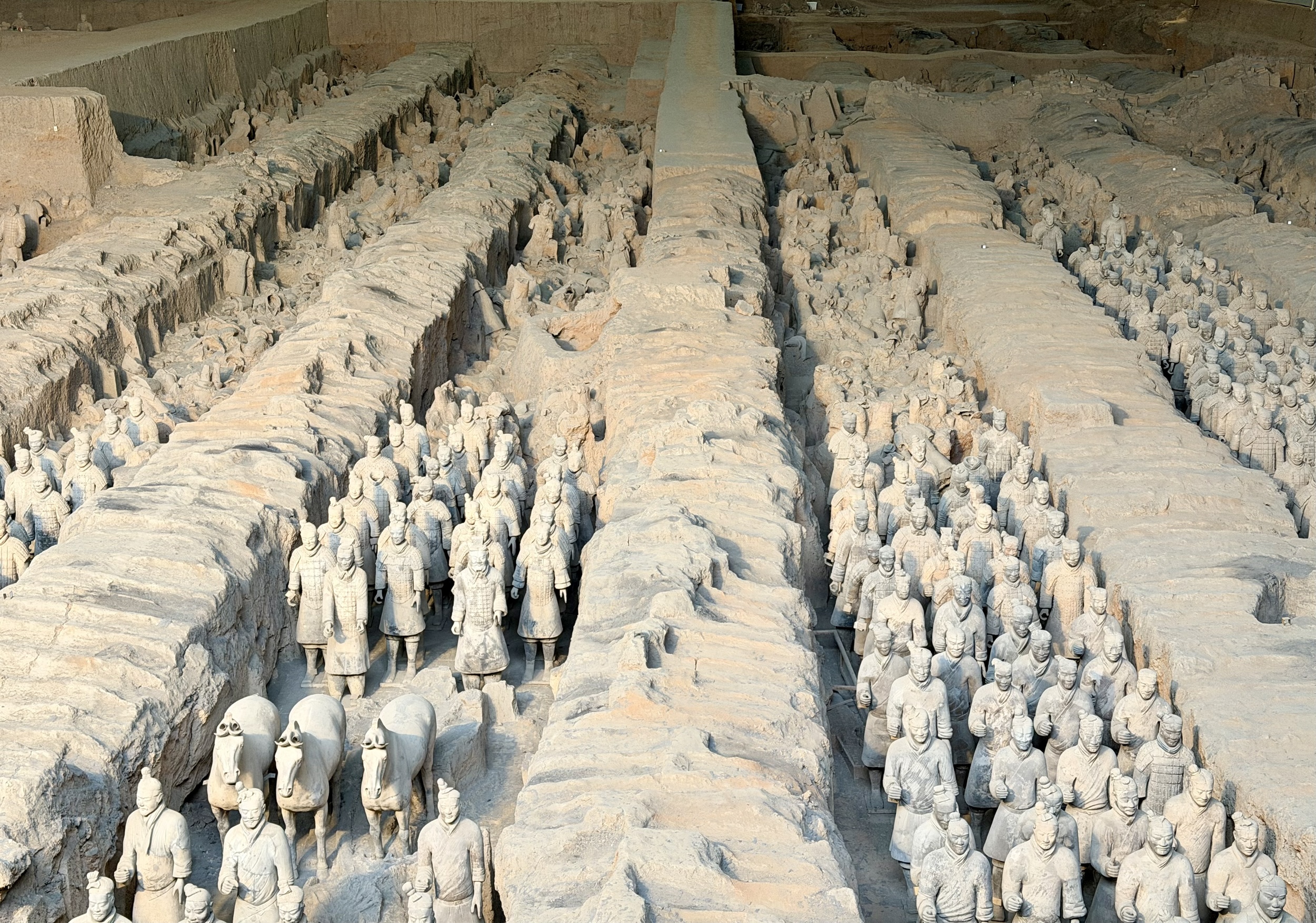
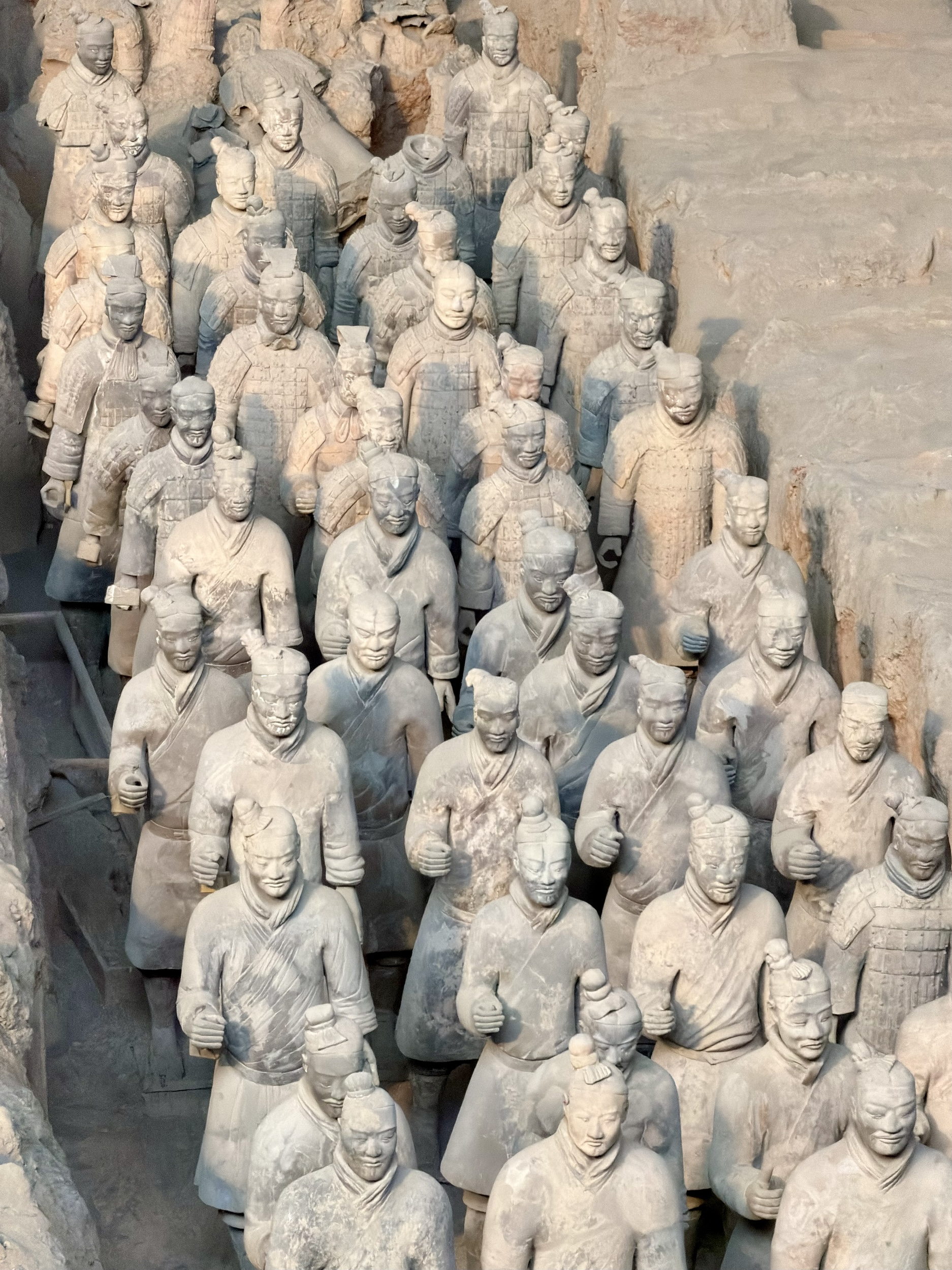
They had dug into the edge of an army of some eight thousand clay soldiers, buried more than two thousand years earlier to guard the tomb of China’s first emperor. They were looking for water.
Half a century later that army is the reason most people come to Xi’an, and one of the reasons I did.
When the Silk Road first came into being under the Han Dynasty in the second century BC it took months, sometimes years, to travel to Xi’an from Europe. I got to Xi’an in less than six hours on the high speed train from Shanghai, traveling at 345 km/h in significantly more comfort than the traders 2,200 years ago. I had come to learn more about Chinese history and the Silk Road, and Xi’an is the place to do so.
During the height of trading along the Silk Road people of all nationalities came to Xi’an, and many made the city their new home. At times up to 10,000 foreigners lived in Xi’an. One large group were Muslims, and their descendants can still be found in the Muslim Quarter in the center of the city, nowadays a bustling neighborhood with many shops and restaurants and a favorite among tourists and visitors.
Museums in China are a contact sport
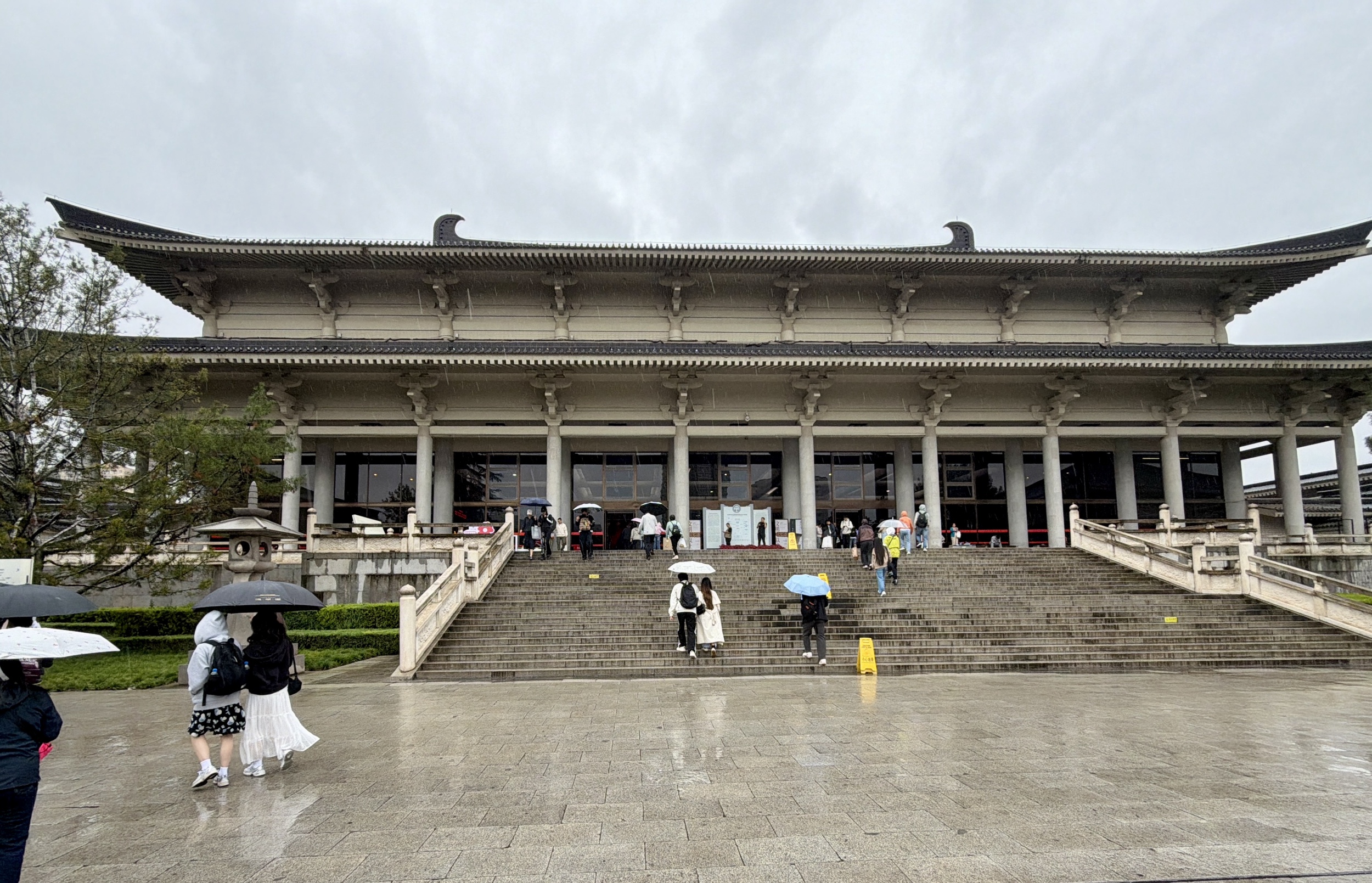
One day it rained from morning to night, which made it the obvious day for the Shaanxi History Museum. A DiDi took me the six kilometers across town in half an hour for less than ten yuan, a price that makes the bus hard to argue for.
The museum is very big, and it was very crowded. It turns out that visiting a museum in China is a contact sport. You fight your way to the screens to find out what you are looking at, and then you fight your way to the glass to actually look at it. When you get there, everyone around you is photographing every single object in the case with a phone. What they do with all those pictures afterwards I have no idea. I travel to take photographs myself, so I am in no position to complain.
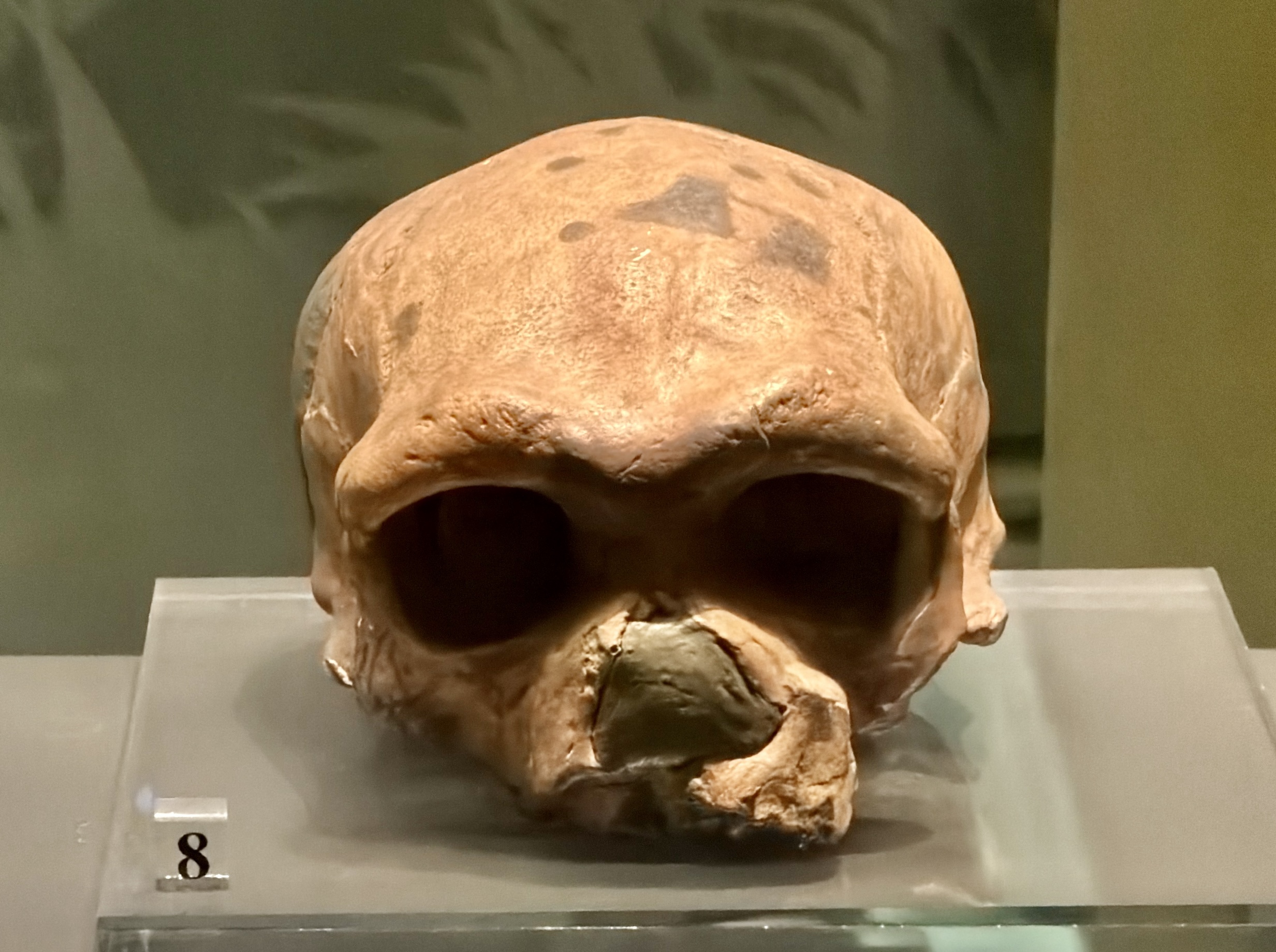
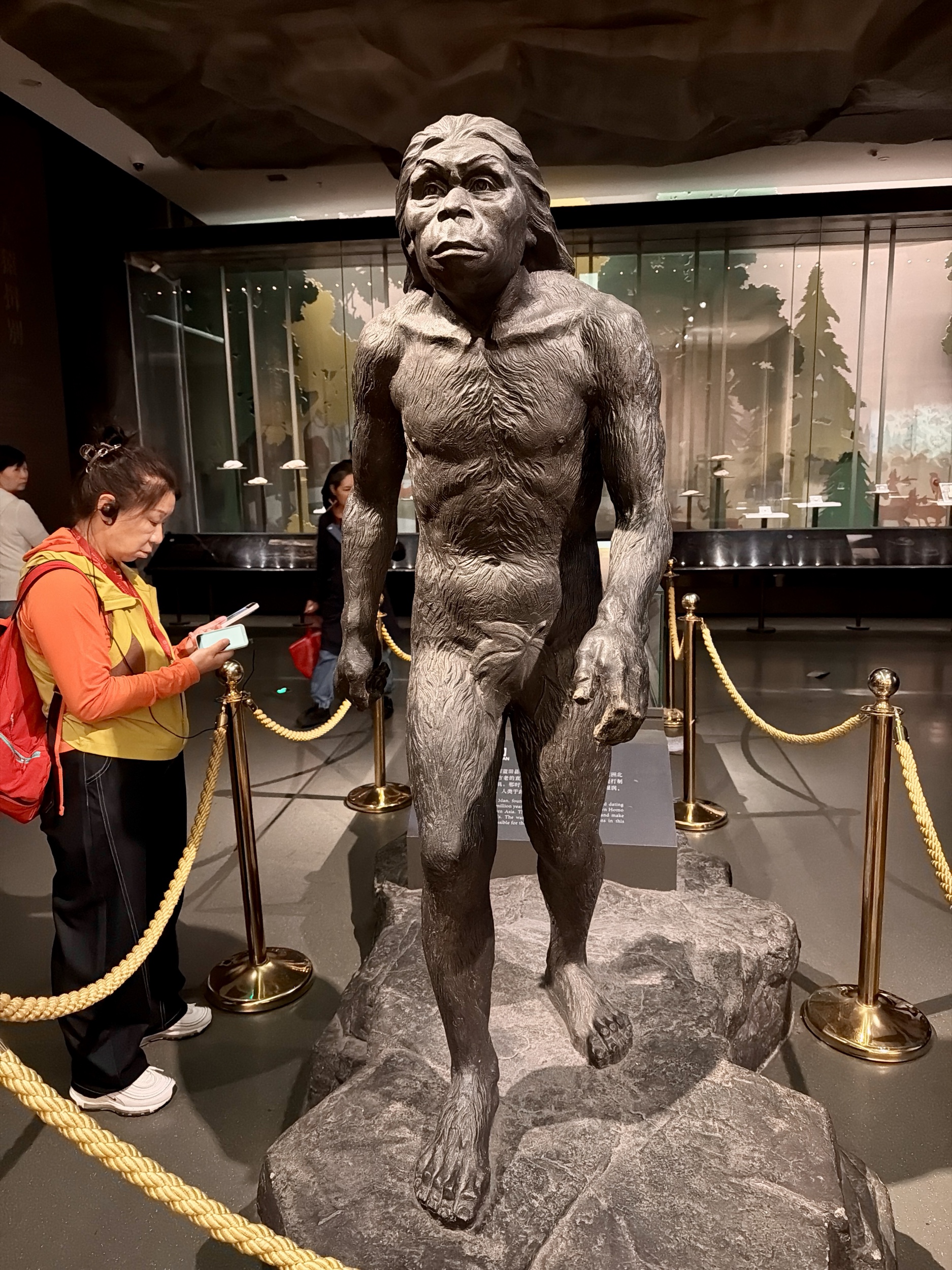
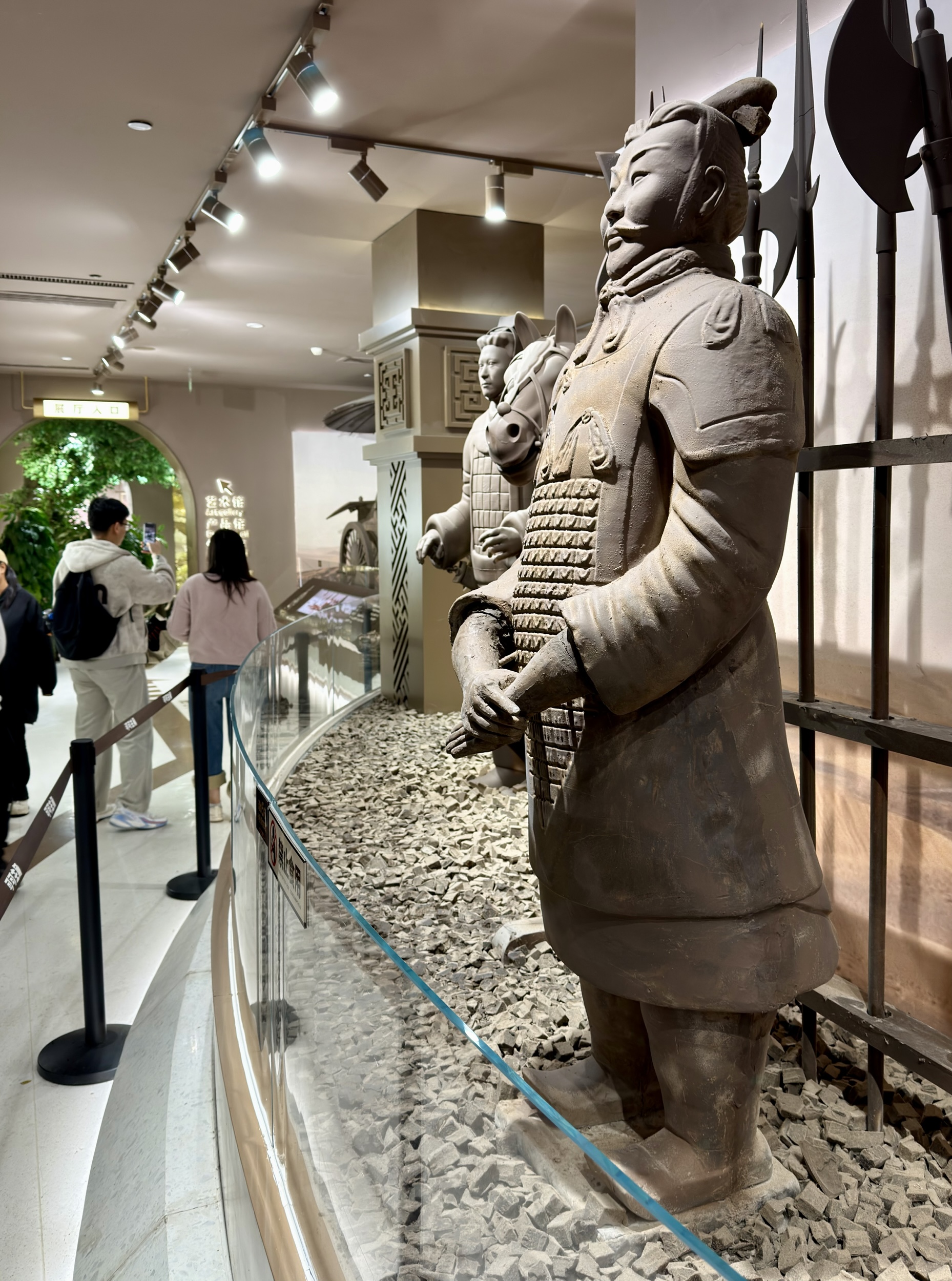
The exhibition is laid out as a walk through time. It starts with Lantian Man, one of the oldest human fossils found in China and well over a million years old, and works its way forward through the dynasties, the Qin, the Han, the Tang and on to the Ming, with the Silk Road running through the middle of it all. By the end I had a far better idea of how the pieces of Chinese history fit together than when I walked in.
It would have been ideal preparation for the Terracotta Army. I went the day after. If you go, do it the other way round.
Eight thousand soldiers and a few thousand elbows
The Terracotta Army was the whole reason for coming to Xi’an, and it is not actually in Xi’an. The pits are about 50 kilometers away by road, and a DiDi took me out there in the rain for around 70 yuan, which for the distance is a bargain.
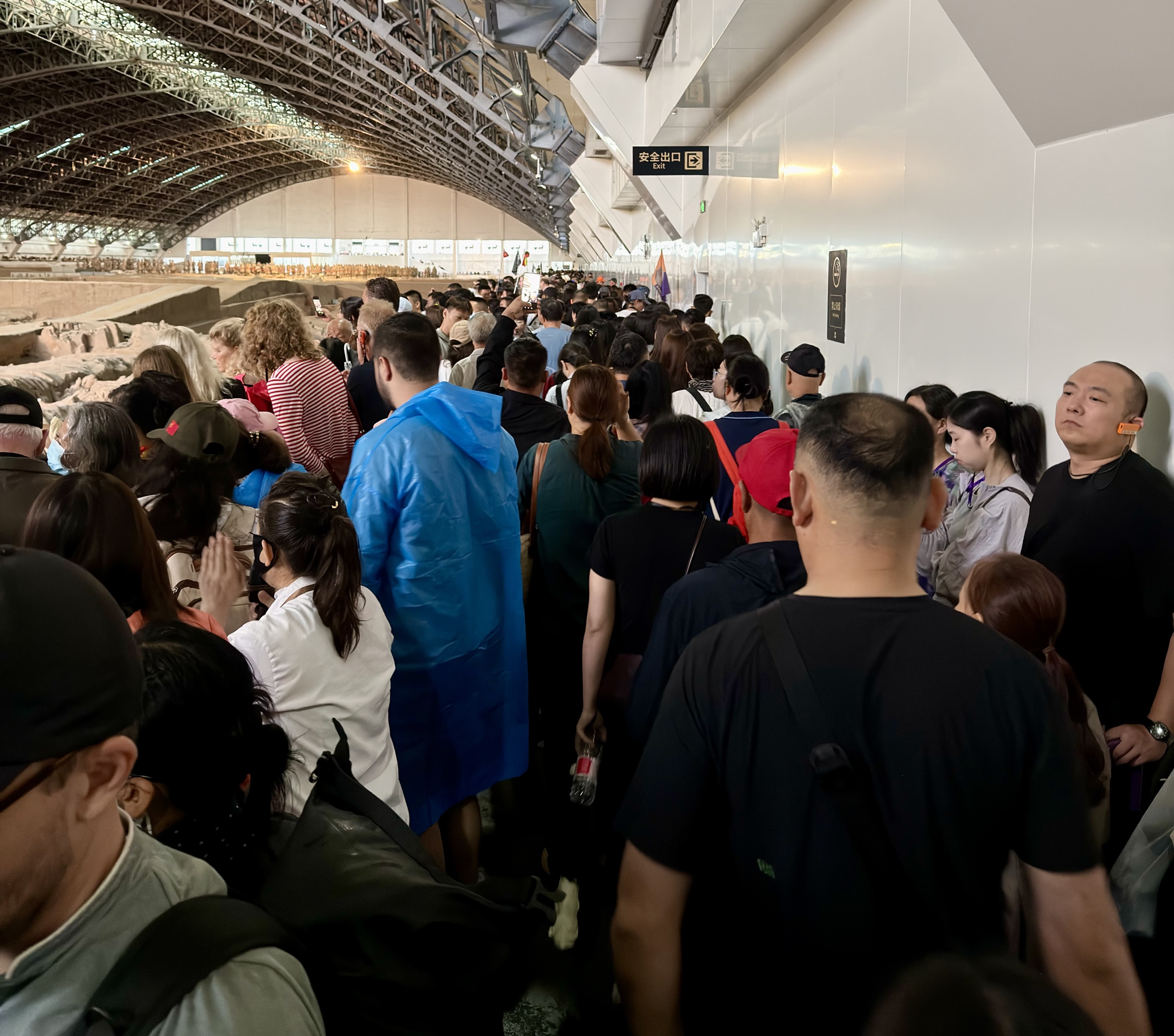
The crowds were already massive when I arrived. Even with a ticket bought in advance I had to queue. At the gate they scanned my passport, which was the ticket, and I picked up the English audio guide and went straight to Pit 1.
Pit 1 is the one in all the photographs, rank after rank of soldiers standing in long earth corridors under a roof the size of an aircraft hangar. It is very impressive. It was also jam-packed. Personal space is a smaller unit in China than it is at home, and the rail around the pit was a slow-moving scrum of pushing and shoving, several people deep.
From there the route takes you to Pit 3 and then to Pit 2, and each is less impressive than the one before. Pit 3 is the command post, with fewer than a hundred figures, and much of Pit 2 is still under its covering of earth. Starting with the best and finishing with the least is an unusual way to arrange a visit. I would have reversed it, so that you get more impressed as you go along rather than less.
After the pits there is an exhibition hall, also impressive. Then I returned the audio guide and ate a couple of pieces of chicken, on the theory that this was my last chance of food. Outside the gates was an enormous commercial area full of restaurants. The theory was wrong.
Three evenings in the Muslim Quarter
My hotel was a short walk from the Muslim Quarter, and I ended up there on all three evenings. The first visit was an accident. I came up out of the metro at a random exit, looking for my hotel, and found myself in the middle of it instead.
The main street is lined with restaurants, one after another, with food stalls squeezed in between them. It is noisy, crowded and thoroughly touristy, and it felt more like Southeast Asia than anything I had seen in Shanghai.
On the second evening I picked a small restaurant with a menu only in Chinese and ordered, as best I could, lamb skewers with noodles. Two very good skewers arrived, and then a full bowl of beef noodles, which I had apparently also ordered. It was a good dinner and there was a great deal of it. I managed about half, which in China seems to be the normal outcome.
On the last evening, in the rain, I skipped the restaurants and ate my way along the street instead. A lamb skewer, a bowl of potatoes, a rolled frozen yogurt made in front of me, a sweet of uncertain composition, and then another ice cream, since nobody was keeping count.
The alleys off the main street are quieter, and that is where the shops are. I had left my hat on the train from Shanghai and found a new one there, along with some socks. Not the souvenirs from Xi’an I had planned on, but the ones I needed.
Two days, the same history twice. Once behind glass with a label, once standing in a pit in the rain. Both of them crowded. Both of them worth the elbows.
Xi’an, the practical stuff
- How long is the train from Shanghai to Xi’an? — Under six hours on the fastest high-speed trains, at up to 350 km/h. Book on 12306 or Trip.com; the passport is the ticket.
- Where is the Terracotta Army? — Not in Xi’an itself. The pits are near Lintong, about 50 km from the city center by road. A DiDi cost about 70 yuan (about US$10) each way.
- How much is a Terracotta Army ticket? — 120 yuan (about US$18), covering Pits 1, 2 and 3, Lishan Garden and the shuttle bus. Book ahead with your passport, which is scanned as the ticket at the gate. Open 08:30 to 18:30 from mid-March to mid-November, last entry 17:00.
- In what order do you see the Terracotta Army pits? — The standard route runs Pit 1, Pit 3, then Pit 2, from most to least impressive. Pit 1, with the ranks of soldiers, is also the most crowded. An English audio guide is available at the entrance.
- When was the Terracotta Army found? — In March 1974, by farmers from Xiyang village digging a well, about 1.5 km east of the tomb of Qin Shi Huang, China’s first emperor. The three pits are thought to hold more than 8,000 soldiers, and the emperor’s tomb has never been opened.
- Should you visit the Shaanxi History Museum before the Terracotta Army? — Yes. The museum, opened in 1991, walks through Chinese history in date order from Lantian Man to the Ming, which is the ideal preparation. The main halls are free, the Tang mural hall has its own ticket, and the museum is closed on Mondays.
- Where is the Muslim Quarter in Xi’an? — In the center, north of the Drum Tower. Beiyuanmen is the main food street, about 500 meters long, and the Great Mosque is in Huajue Lane. The side alleys are quieter and sell everyday goods.
- What should you eat in Xi’an? — Yangrou paomo, a lamb soup with flatbread you break in yourself; roujiamo, the “Chinese hamburger”; biangbiang noodles; lamb skewers; and fried persimmon cakes.
- How do you get around Xi’an? — By metro in the center and DiDi for the rest. Six kilometers across town by DiDi cost less than 10 yuan (about US$1.50).
China 2026 — all posts
- 1 — Shanghaied
- 2 — Three days in Shanghai
- 3 — Xi’an, the beginning of the Silk Road
- 4 — Chengdu, panda town
- 5 — Chongqing, the world’s biggest city?
- 6 — Zhenyuan, the other Silk Road
- 7 — Xijiang, the village that is paid to look like itself
- 8 — Zhangjiajie, the mountain that was renamed after a film
- 9 — Yangshuo, the view on the twenty
- 10 — Shenzhen, from thirty thousand people
- 11 — Why China’s big cities are so quiet
- 12 — Hong Kong, nowhere to go but up
- 13 — Traveling through China’s holidays
- 14 — Taipei, four kilometers of gondola
- 15 — Alishan, the forest that left by train
- 16 — Tainan, where the gods answer yes or no
- 17 — Taiwan, a short history of a long question
- 18 — Why Uber in Taiwan sends you a taxi
- 19 — Hualien, a gorge you can only look at
- 20 — Jiufen, the gold you are allowed to touch
- 21 — Beware of Old Street
- 22 — Taipei, the crates that crossed the strait
- 23 — Shanghai again, through new glasses
- 24 — Train travel in China
- 25 — Paying for things in China, Hong Kong and Taiwan
- 26 — Getting online behind the Great Firewall
- 27 — China at 72
- 28 — Six weeks in China and Taiwan: the route, and what I would change
Before you go: Planning a trip to China · Essential apps for travelling in China