


Most people who haven’t been to India picture chaos. They’re right, of course, but they have the wrong kind of chaos in mind. It’s not dangerous chaos. It’s sensory chaos, the kind that takes a couple of days to stop fighting and another few days to start enjoying. The tips below are the ones I wish someone had given me before my first morning in Mumbai.
Visas and Entry
Apply for an e-Visa before you leave. It’s straightforward, approved within 72 hours for most nationalities, and costs around $25–$80 depending on duration (30-day, 1-year, or 5-year options). Do it on the official Indian government site only. There are clone sites that charge triple and deliver nothing useful.
Airlines check your e-Visa at check-in before allowing you to board a flight to India. Print a copy. Immigration will accept the digital version on your phone, but a printed copy is faster at both check-in and on arrival.
You also need to complete an e-Arrival Card before entry. Since October 2025 this is mandatory for all foreign visitors and replaces the old paper disembarkation card. Fill it in at indianvisaonline.gov.in/earrival up to 72 hours before arrival. You’ll receive a QR code which airlines may check at boarding, so have it ready alongside your e-Visa. A printed copy of both saves considerable fumbling.
Money
Carry cash. India is changing rapidly, and UPI payments are everywhere in cities, but the moment you step into a rural market, a tuk-tuk, or a small guesthouse in Kerala, cash is king. ATMs are reliable in cities and larger towns, but plan ahead in places like Thekkady or smaller Goa villages.
At the time of writing, 1 USD is 94 INR and 1 EUR is 108 INR, so if you just divide prices by 100 you get a reasonable approximation in US dollars or Euros.
Withdraw larger amounts when you find a working ATM. Fees per transaction add up fast, and ATMs run out of cash with impressive regularity. ICICI and HDFC machines tend to accept foreign cards most reliably.
Budget roughly 100–150 rupees for a tuk-tuk across town, 300–600 for a decent thali lunch, and 1,500–3,000 for a mid-range guesthouse room. Goa runs about 20–30% higher than Kerala for accommodation. By any European standard, it’s all very inexpensive.
Getting Around
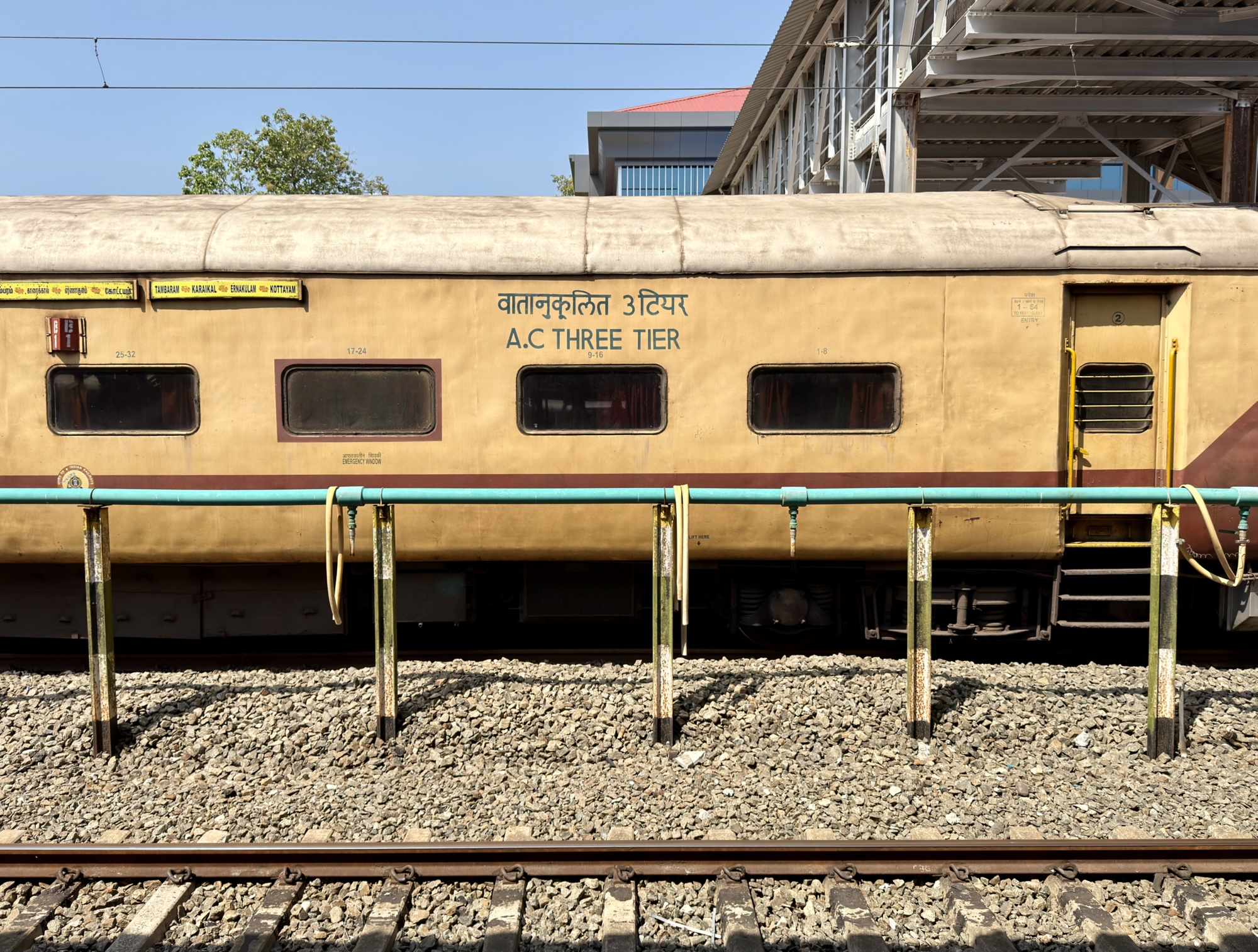
Trains are the backbone of Indian travel and worth using at least once. Book through the official IRCTC website or app, and do it weeks ahead if possible. Sleeper class is fine for shorter journeys; AC 2-Tier or 3-Tier for overnight. The trains run more or less on time, the scenery through the Western Ghats is extraordinary, and a chai vendor will appear at your window within twenty minutes of departure.
Flying is becoming available for the masses with low fare carriers like IndiGo, whose entire business idea is to be cheaper than the train. While riding on Indian trains is an experience you shouldn’t miss, if your train journey is more than 6 hours you should consider flying.
Rickshaws and tuk-tuks are the standard for short hops. Agree on the price before you get in. Most drivers in tourist areas will quote double; half is a reasonable counter-offer. However, often the fare will be so low that it almost feels insulting to negotiate. Some cities now have app-based auto services (Rapido, Ola) that fix the price in advance, which saves the negotiation entirely. How do you find a tuktuk? Just raise your hand and one will appear. A great way to see a new place is to simply set off from your hotel, walk for as long as you have the energy, and then just catch a tuktuk back.
Goa specifically: rent a scooter if you’re comfortable on one. It’s how most of Goa moves. Rates are 300–400 rupees per day. An international driving licence is technically required; in practice, most rental places don’t ask. Another thing to note about Goa is that Uber is not available here.
Kerala: What to Know
Kerala rewards slowing down. The standard tourist loop, Kochi to Munnar to Thekkady to Alleppey, works well, but the pace most people set is too fast. Two nights in each place is the minimum; three is better.
The backwaters around Alleppey are genuinely worth seeing, not just photographically. A day on a houseboat sounds like a tourist cliché until you’re actually drifting between rice paddies at six in the morning with no one else in sight.
Munnar is at around 1,600 metres. It will be cooler than you expect. Bring a layer.
The wildlife at places like Thekkady can be hit or miss. A boat safari on Periyar Lake gives you a decent chance of spotting bison, elephants, and various birds, but it’s not guaranteed. Go anyway. Even when the animals are elsewhere, the lake itself in the early morning is worth the hour.
Goa: What to Know
Goa has two versions. North Goa is louder, cheaper, and aimed squarely at party tourists and backpackers. South Goa is quieter, the beaches wider and less crowded, and the accommodation generally better quality. If you’d rather sleep than dance until 4 AM, you’ll prefer the south.
Calangute and Baga in the north will remind you that overtourism is a real thing. Palolem and Agonda in the south will remind you why you came.
The seafood is excellent everywhere. Order whatever the small places near the beach are making that day. The laminated tourist menus can be off-putting but even these places will serve genuine seafood at competitive prices.
Health and Practicalities
Drink only bottled or filtered water, including when brushing teeth. This is not overcautious. A bad stomach can cost you three days, which is a lot of a 30-day trip.
Street food is generally fine in India, contrary to reputation, as long as you follow the obvious logic: hot, freshly cooked, busy stalls. One word of warning though: Indian food is spicier than most visitors expect, and menus are not always honest about this. If you have a low spice tolerance, ask before you order rather than after the first bite.
A basic travel pharmacy: oral rehydration salts, Imodium, antihistamine, broad-spectrum antibiotic (consult your GP before leaving), ibuprofen, and something for sunburn. Pharmacies in India are excellent and inexpensive, but you won’t want to spend your first afternoon in Kochi looking for rehydration salts.
Photography
India is one of the great photography destinations, which is also the problem. It’s almost too easy to take interesting pictures, and the discipline worth developing is subtraction: put the camera down occasionally and actually look.
The light in Kerala, particularly in the hills around Munnar and around the backwaters, is soft and diffuse for longer than you’d expect. Golden hour lasts. The flat light that makes everything look the same is usually between 10 AM and 3 PM. Shoot early, shoot late, nap in the middle.
People are generally willing to be photographed, especially if you show them the result. Ask first in mosques and temples.
The Honest Part
India is not an easy country to travel, and anyone who tells you otherwise is either very experienced or very lucky. The crowds are real, the noise is real, the pollution in cities is real, and the gap between what something costs and what you’ll be charged as a foreigner is real. It asks more of you than a week in Portugal.
What it gives back, though, is harder to name. A kind of intensity. The sense that you are somewhere that has nothing to prove to you and is getting on with things regardless. It’s one of the few places I’ve been where arriving back at the guesthouse in the evening with nothing dramatically wrong felt like a modest triumph, and where modest triumphs, accumulated over two or three weeks, add up to something memorable.
Go with low expectations for comfort, high expectations for surprise.
Frequently Asked Questions
Do I need a visa to visit India?
Most nationalities need an e-Visa, applied for online before departure. Approval takes up to 72 hours and costs $25–$80 depending on duration (30-day, 1-year, or 5-year). Use the official Indian government site only. Airlines will check your e-Visa at check-in, so carry a printed copy.
What is the India e-Arrival Card and do I need one?
Since October 2025, all foreign visitors to India must complete an e-Arrival Card before entry. It replaces the old paper disembarkation card. Fill it in at indianvisaonline.gov.in/earrival up to 72 hours before your flight. You receive a QR code which airlines may check at boarding.
How much does it cost to travel in India?
India is very affordable. Budget around 100–150 rupees for a tuk-tuk, 300–600 for a thali lunch, and 1,500–3,000 for a guesthouse room per night. At current rates (1 USD is approximately 94 INR, 1 EUR approximately 108 INR), most meals cost $3–6 and decent accommodation $15–30 per night. Goa runs about 20–30% higher than Kerala.
Is street food safe to eat in India?
Generally yes, if you stick to hot, freshly cooked food at busy stalls. Avoid buffets that have been sitting out. Be aware that Indian food is often much spicier than visitors expect, and menu descriptions are not always accurate on spice levels. Ask before ordering.
Is the tap water safe to drink in India?
No. Drink only bottled or filtered water everywhere in India, including when brushing teeth. This applies in cities as well as rural areas.
What is the best way to travel between cities in India?
Trains are the most comfortable and reliable option for longer distances. Book through the official IRCTC app several weeks in advance. AC 2-Tier or 3-Tier is recommended for overnight journeys. For short distances, use tuk-tuks or app-based autos such as Rapido or Ola, which show a fixed price before you book.
Is South Goa or North Goa better for older travellers?
South Goa. It is quieter, less crowded, and has better-quality accommodation. Palolem and Agonda are the standout beaches. North Goa (Calangute, Baga) is louder and aimed primarily at party tourists and backpackers.
How much time do you need in Kerala?
At minimum two weeks to cover the main circuit (Kochi, Munnar, Thekkady, Alleppey) without rushing. Two nights per stop is the minimum; three is better. Kerala rewards slowing down more than almost anywhere else in India.
Is India a good destination for travellers over 70?
Yes, with realistic expectations. South India in particular (Kerala, Goa) is manageable, relatively well-organised for tourists, and less physically demanding than the north. The heat, uneven pavements, and noise are real considerations. Budget extra time, book accommodation in advance, and prioritise areas with reliable medical facilities nearby. The rewards are considerable.