

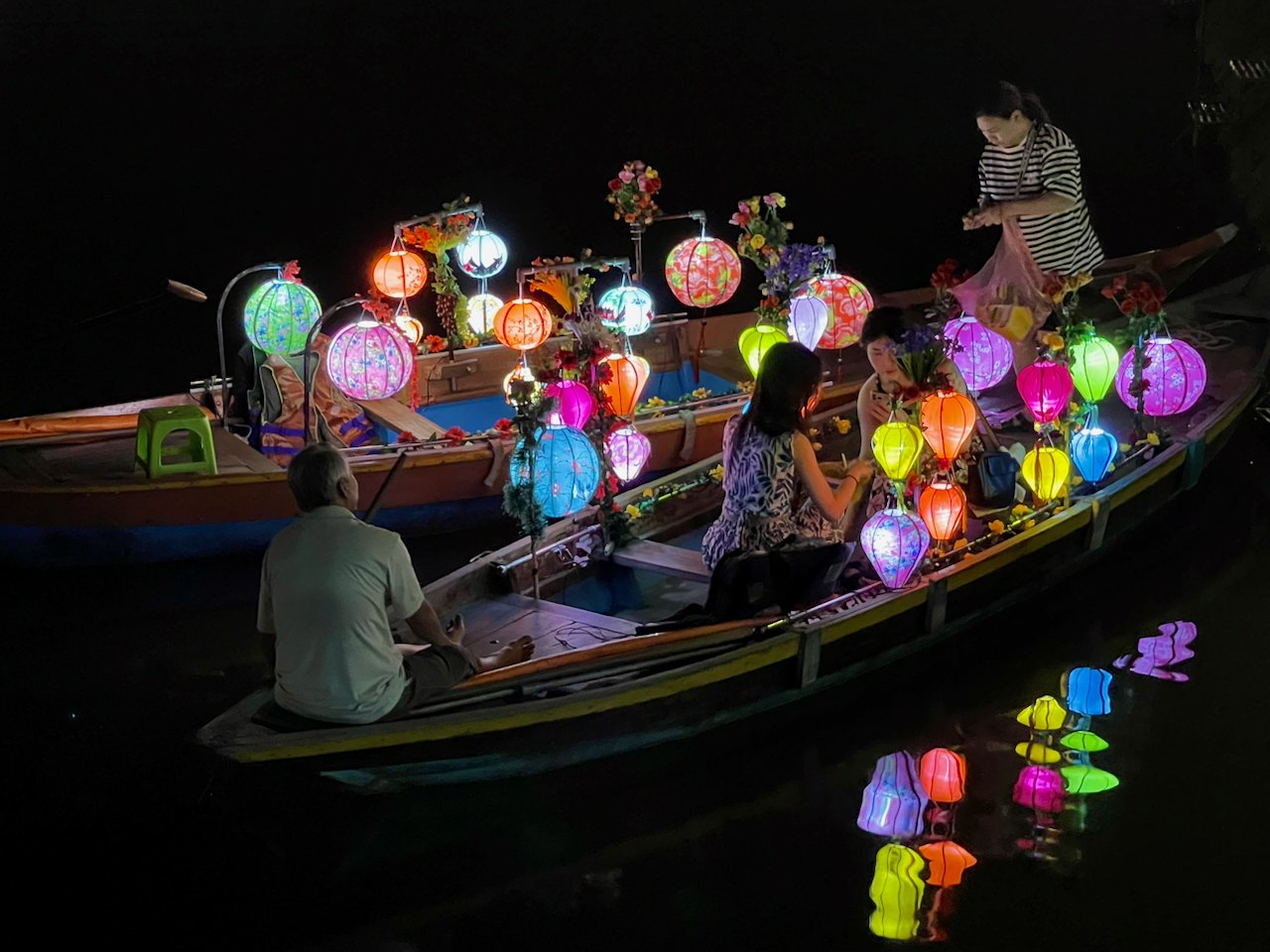
Hoi An, lanterns from a front-row table
/
After a shower and packing I headed out to the local cafe again. I had booked a car transfer through the Hoi An hotel the night before, for pickup at 11:30 AM. It cost 290,000 dong (about $11), which is not bad, considering the shuttle transfer is more than half of that, with at least a 15-minute walk to the pickup spot and a set schedule.
The car came on time, and the ride to Hoi An was smooth and comfortable. The taxi standard is high, with mostly new vehicles. We arrived at the RAON Hotel in Hoi An just after noon.
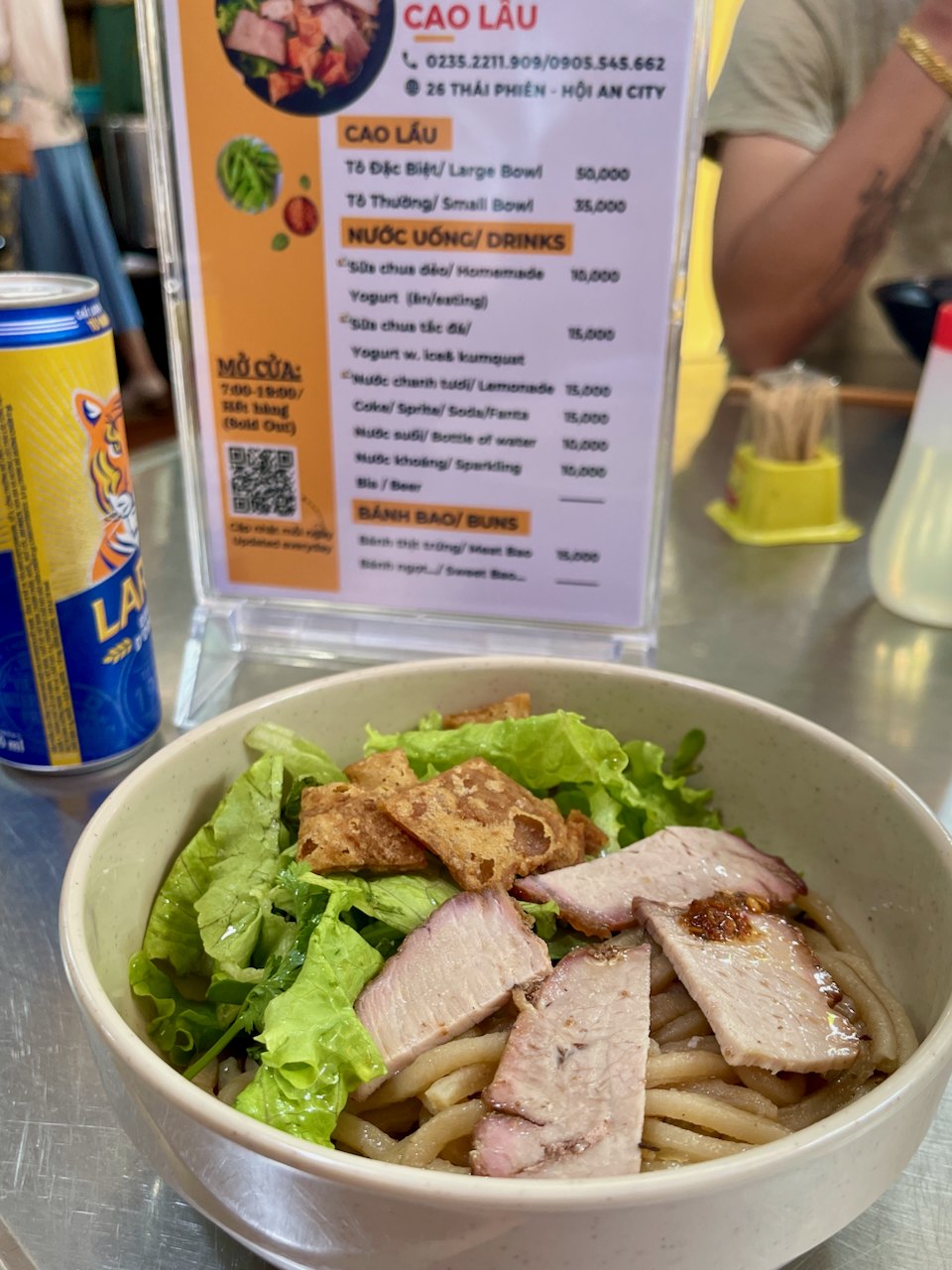
Cao lau
My room wasn’t ready until 2 PM, so I headed out to a lunch restaurant recommended by the hotel receptionist. Cao lau is a local specialty. This dish with a beer set me back $2.20.
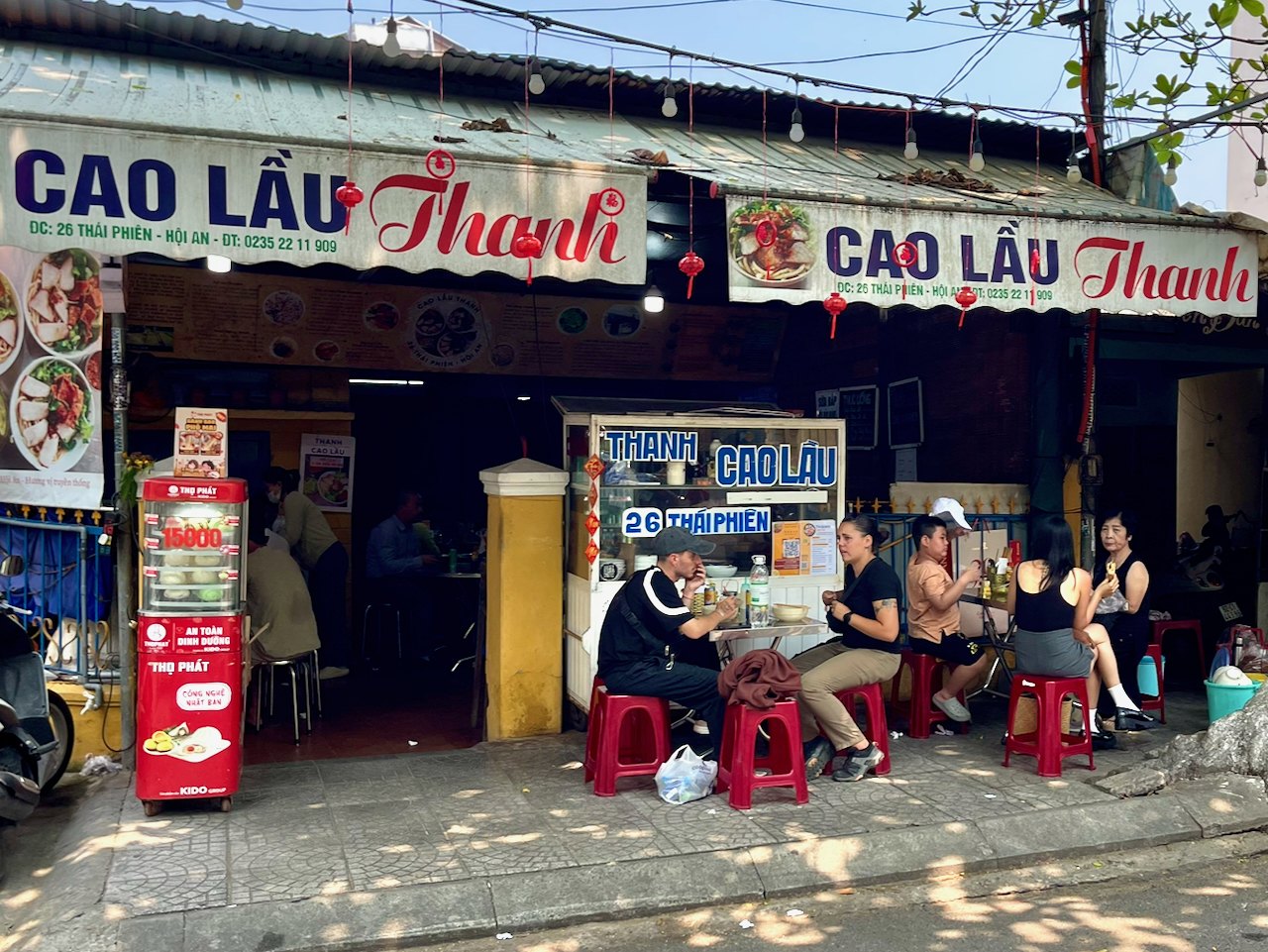
I then wandered around town to get my bearings before heading back to the hotel. Stopping for coffee, of course. It’s what you do here in Vietnam, the land of coffee and beer.
The hotel turned out to be a lot more luxurious than I had expected, yet again, although I spent a bit more this time, $35 a night. Hot tub, good air conditioning, a balcony with not much of a view, but on the quiet side, which is good, since the streets can be noisy. Easy walking distance to the Old Town, about 5 minutes.
Sunset over the roofs
After checking in I took a nap. Around 4:30 PM I headed for the Old Town. My first stop was the Faifo rooftop cafe, where I had yet another cappuccino and a piece of cake while looking down at the street life as the sun set. I then randomly walked around the canal as the sun went down and the lanterns lit. Lots and lots of lantern boats on the river.


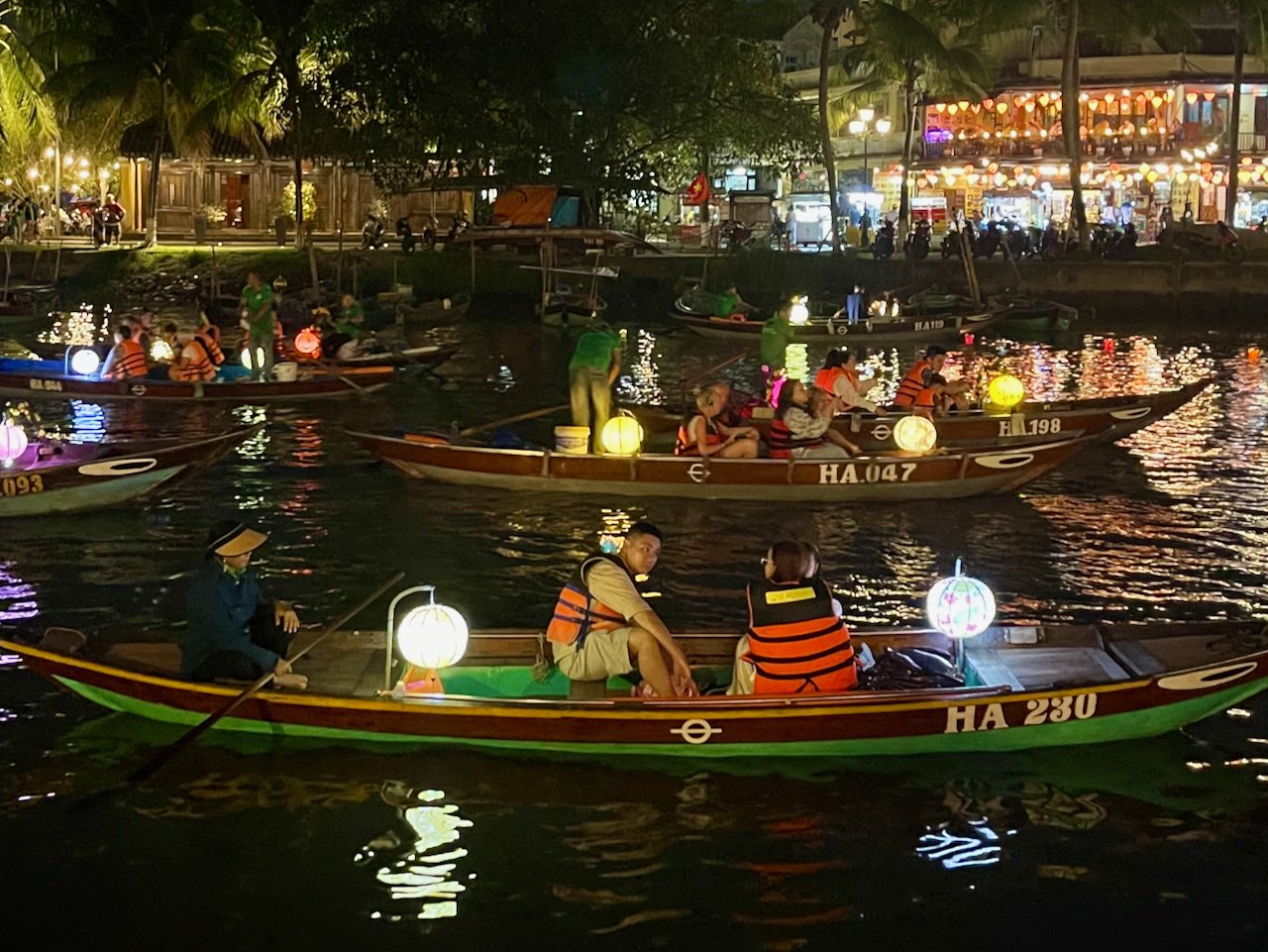
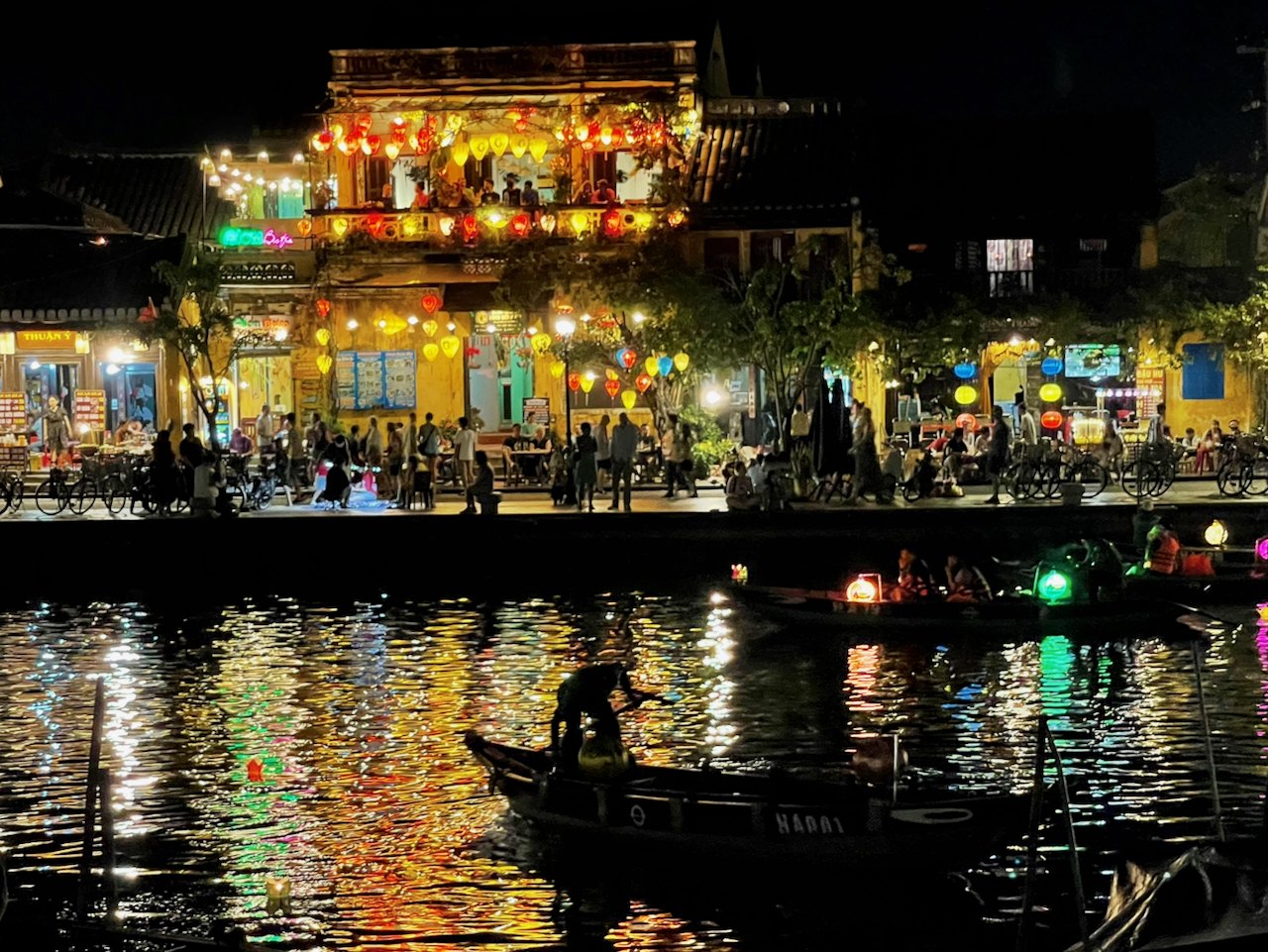
I stopped for a beer, and then it was time to shop for dinner in one of the many food stands that popped up out of nowhere. I settled on some old favorites and some new experiences. Afterwards I wandered around the street market, had a glass of red wine, and then wandered slowly back to the hotel, taking more photos.

The coconut boat
With not much planned for the next day, I decided to do the very touristy coconut boat experience. I signed up via the hotel reception for an 11 AM pickup, then headed out for breakfast. The street I lived on had several cafes, and I just picked one at random. I had coffee and banana pancakes with chocolate, good and filling. I then headed back to the hotel for my ride to the coconut boat.
The ride was touristy but fun, and also much longer than expected. We were out for about an hour and a half, me alone in my boat with the paddler, an old man working hard against the wind in the more open areas of the river. I later tipped him 60,000, more than he expected, I think.
We stopped at a number of preset stations for tourists. Like I said, touristy.
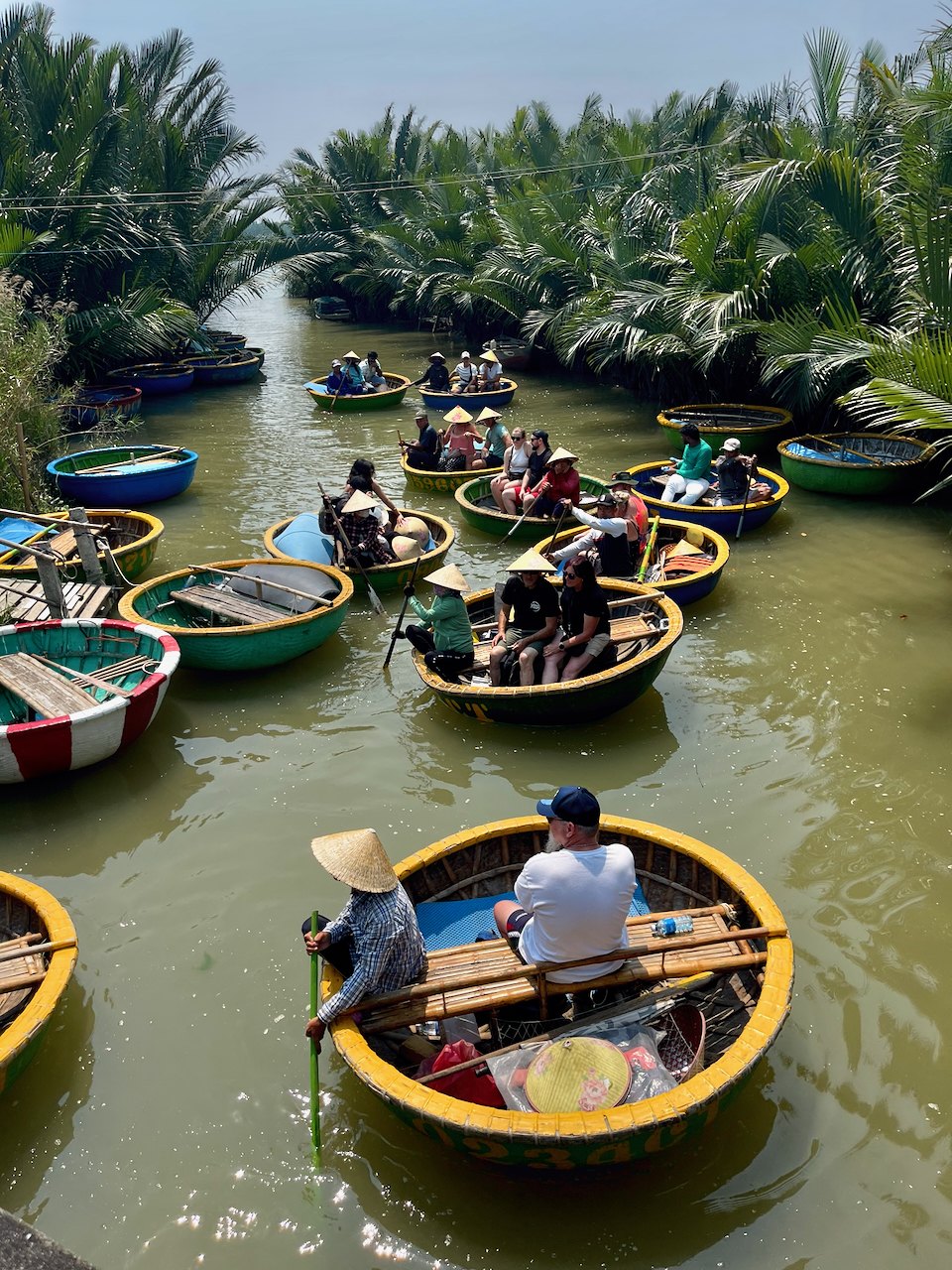
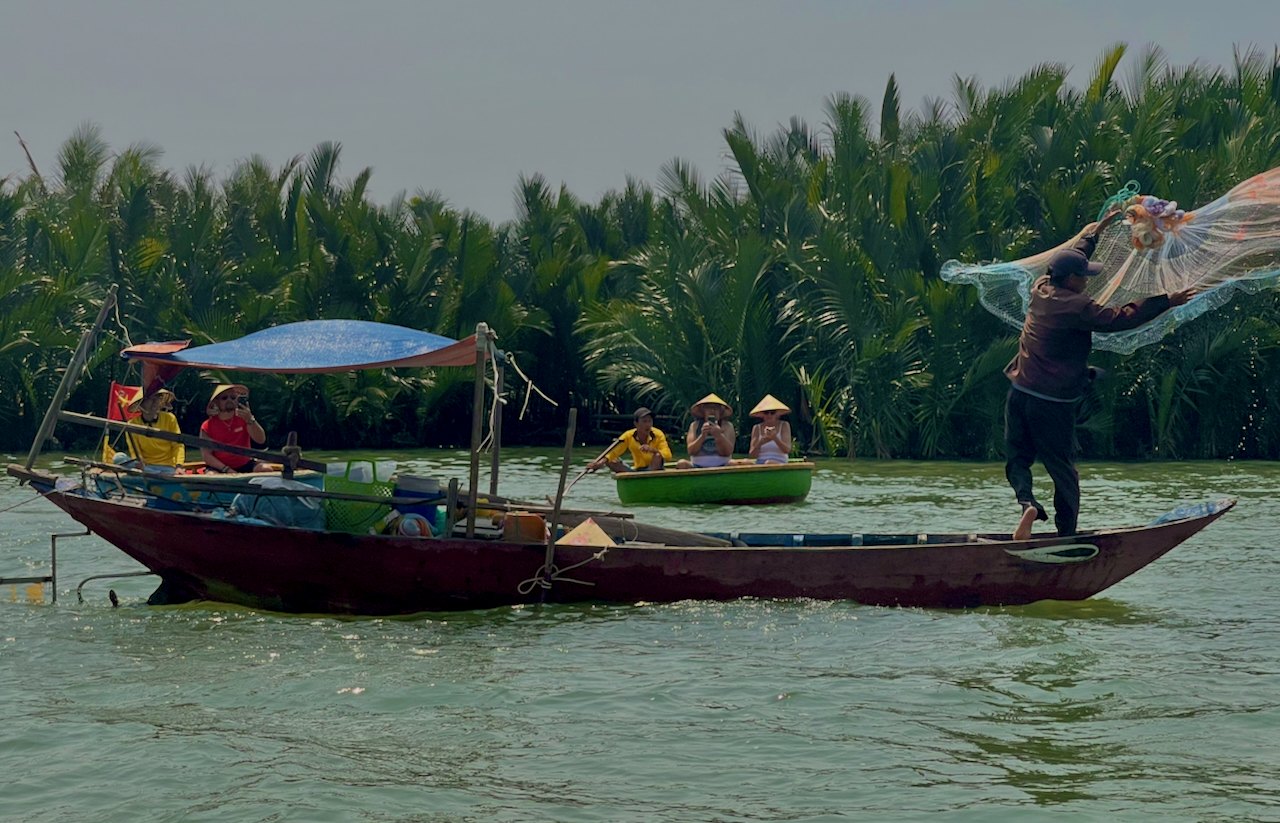
Back at the hotel I ventured out for lunch. I couldn’t find the place I ate the day before, so I picked another random place that served the same local cao lau at the same nominal price.
A front-row table
After a short nap at the hotel I headed out for dinner and lantern photography. I found a building by the river that looked good, and headed over to a restaurant on the opposite side of the canal and got a front-row table on the second floor. Now all I had to do was drink beer and wait for good light.
I spent about two hours at the restaurant, first chatting with an Australian couple, then a Cuban man. I took photos at regular intervals as the light changed. At around 7 PM I had dinner. Two hours well spent.
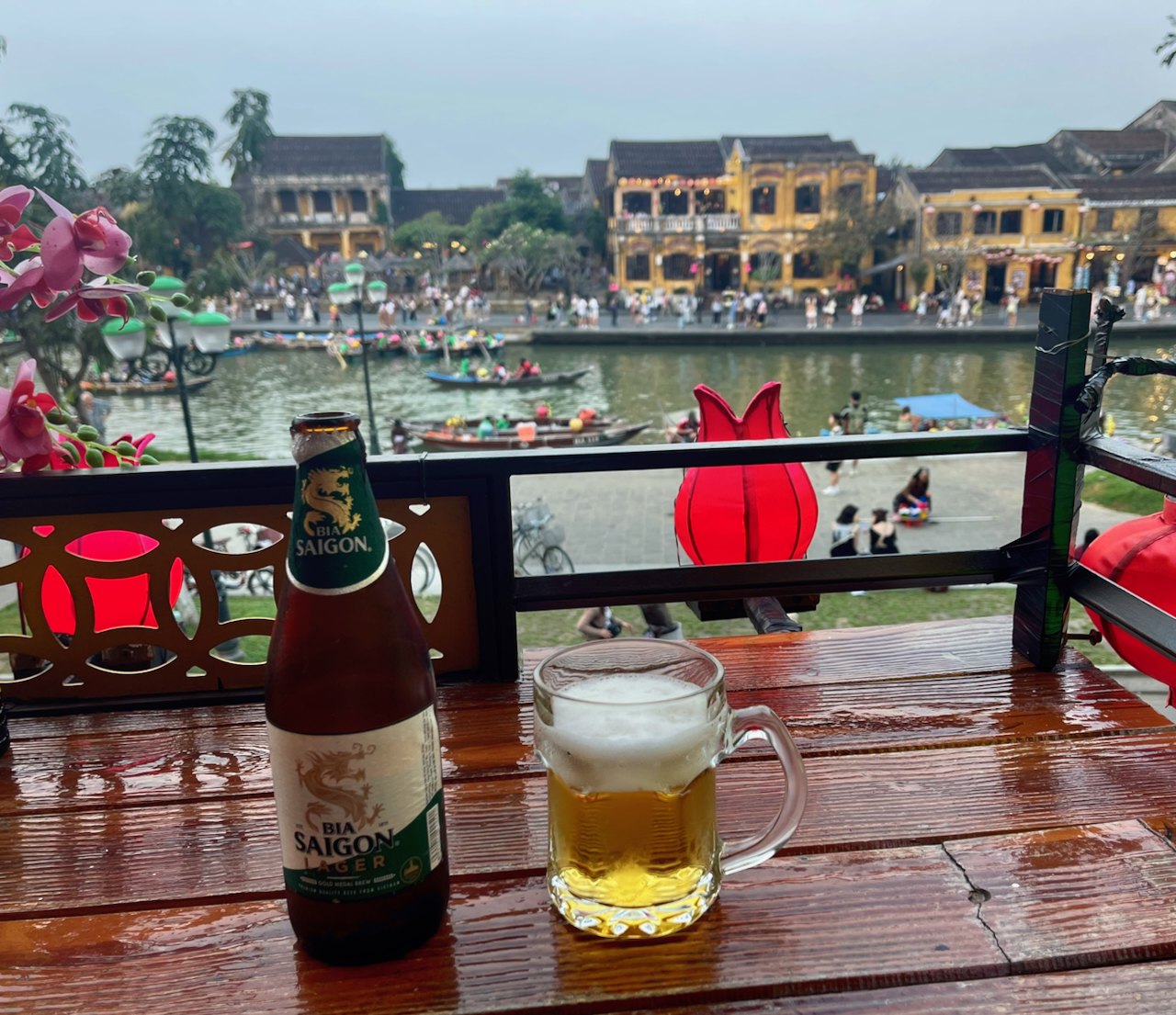
The rest of the evening I just strolled around the river and the local market.
Hoi An, the practical stuff
- How do you get there from Da Nang? — By car, about 45 minutes. My private transfer booked through the hotel cost 290,000 dong (about $11). Grab works too.
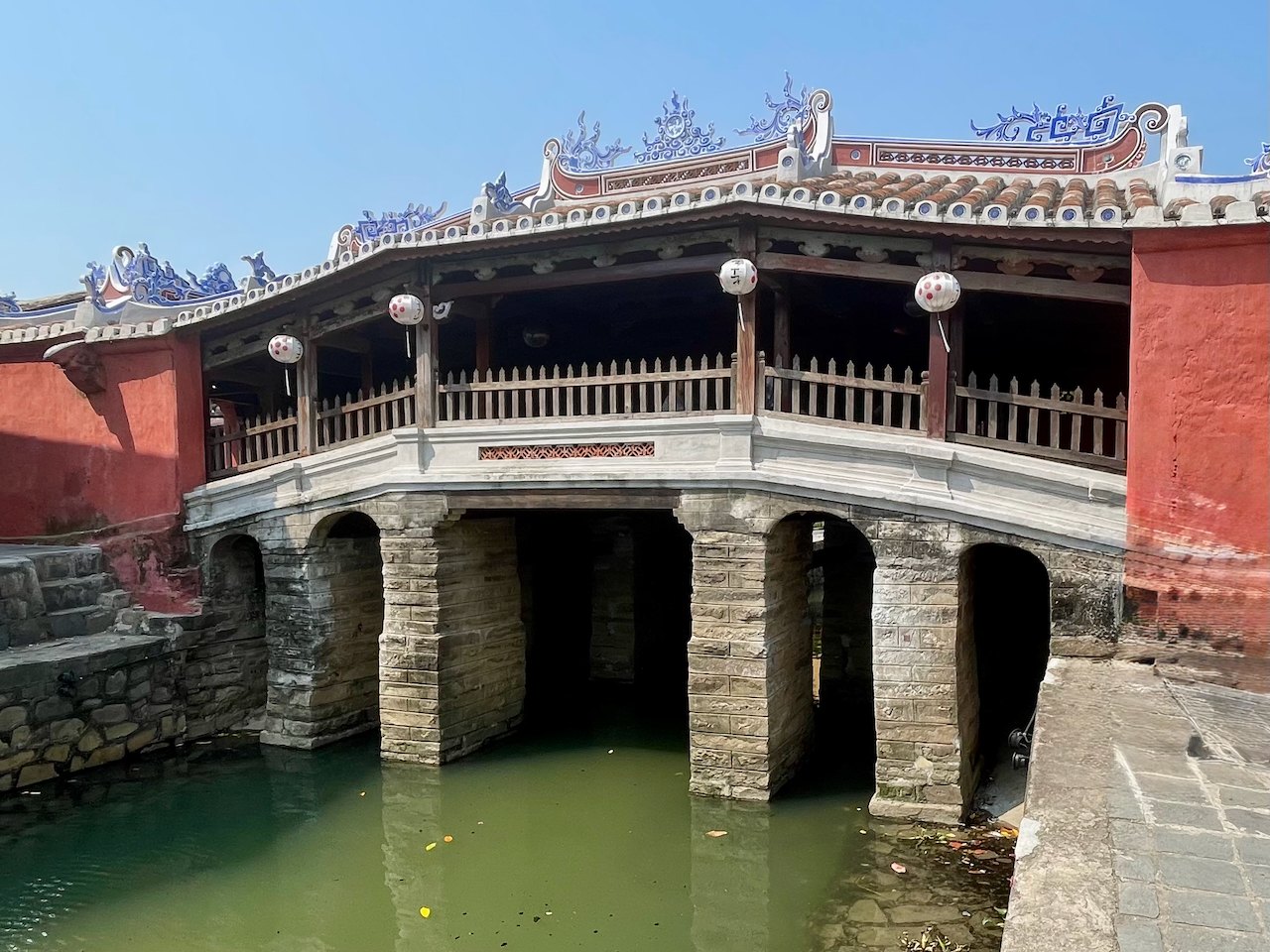
- Do you need a ticket for the old town? — To walk the streets, no. To enter the old houses, halls and the Japanese Covered Bridge, you need the old town ticket, 120,000 dong (about $5) for foreigners. It covers several sites and is valid for up to three days.
- When is it best? — Late afternoon and evening, when the lanterns are lit and the day-trippers have left. Mornings are quiet too.
- What should you eat? — Cao lau, the local noodle dish, about $2 with a beer at a simple place.
- Are the coconut boats worth it? — If you know it is a show, yes. I had a boat to myself and a hard-working paddler for an hour and a half. Booked through the hotel, with pickup.
- Where do you stay? — A few minutes’ walk from the old town, on a quiet street. Mine was $35 a night with a hot tub.
- How to book — Hotels: Booking.com. Rides: Grab. Coconut boats and transfers: through your hotel, or on Klook. Old town tickets and opening hours: Hoi An Heritage.
Vietnam 2025 — all posts
- 1 — Beijing, a day between flights
- 2 — Saigon, an instant millionaire
- 3 — Cu Chi, “Not our problem, not our fault”
- 4 — The Mekong Delta, on a bike made for someone smaller
- 5 — Da Nang, marble caves and a fire-breathing dragon
- 6 — Da Nang, a rest day and AirPods for $9.80
- 7 — Hoi An, lanterns from a front-row table
- 8 — Hué, the train along the coast and the Imperial City in the rain
- 9 — Hanoi, the train street and a jacket for 400,000 dong
- 10 — Ninh Binh, back on a scooter
- 11 — Ha Long Bay, was it worth it?
- 12 — Sapa, Fansipan and two days on foot
- 13 — Phu Quoc, an island by scooter
- 14 — Money in Vietnam: ATMs, millions and bargaining
- 15 — Getting around Vietnam by app
- 16 — The North Face economy
- 17 — Saigon to Sapa in three and a half weeks: the route, and what I would change