


Getting around Vietnam by app
/
Most of my transport in Vietnam was booked on my phone, and the rest through the hotel.
Flying with VietJet
I flew VietJet four times inside Vietnam: Saigon to Da Nang, Hué to Hanoi, Hanoi to Phu Quoc and Phu Quoc back to Saigon. The night before the first flight I checked in for tomorrow’s flight, an incredibly smooth process in the VietJet app.
On the way to Phu Quoc I had my big backpack and my stuff bag with the two jackets and my camera. No problems, they don’t seem to care much what you have as long as you can carry it. No cages for measuring the carry-ons, and no real drama about finding space for everyone’s luggage in the overhead bins. VietJet runs a smooth operation.
The only real delay came on the last flight, from Phu Quoc to Saigon, about 45 minutes. The first real delay with VietJet.
Grab
In Saigon I tried the Grab app for the first time to book a ride to the airport. Incredibly easy, the car came in 3 minutes, I had the car type and license plate, I hopped in and we went to the airport, all for less than $4, even with the 10,000 dong surcharge.
In Da Nang I tried finding the Grab pickup point, but instead took a random taxi with a guy that offered the same price as Grab. My first ride in a small VinFast electric car. I had optimistically booked a trip to the Marble Mountains at 2:10 PM, thinking it would be tight, but I was all checked in at the hotel before 1 PM. Very smooth travel these days, all app driven.
It didn’t always work. At the station in Hué I ordered a Grab and waited for about 15 minutes, as the car didn’t seem to get any closer, probably stuck in traffic. I cancelled and ordered another car that came in a couple of minutes. And on my last night in Saigon, at 11:30 PM, I ordered a Grab, which came in a minute.
Through the hotel
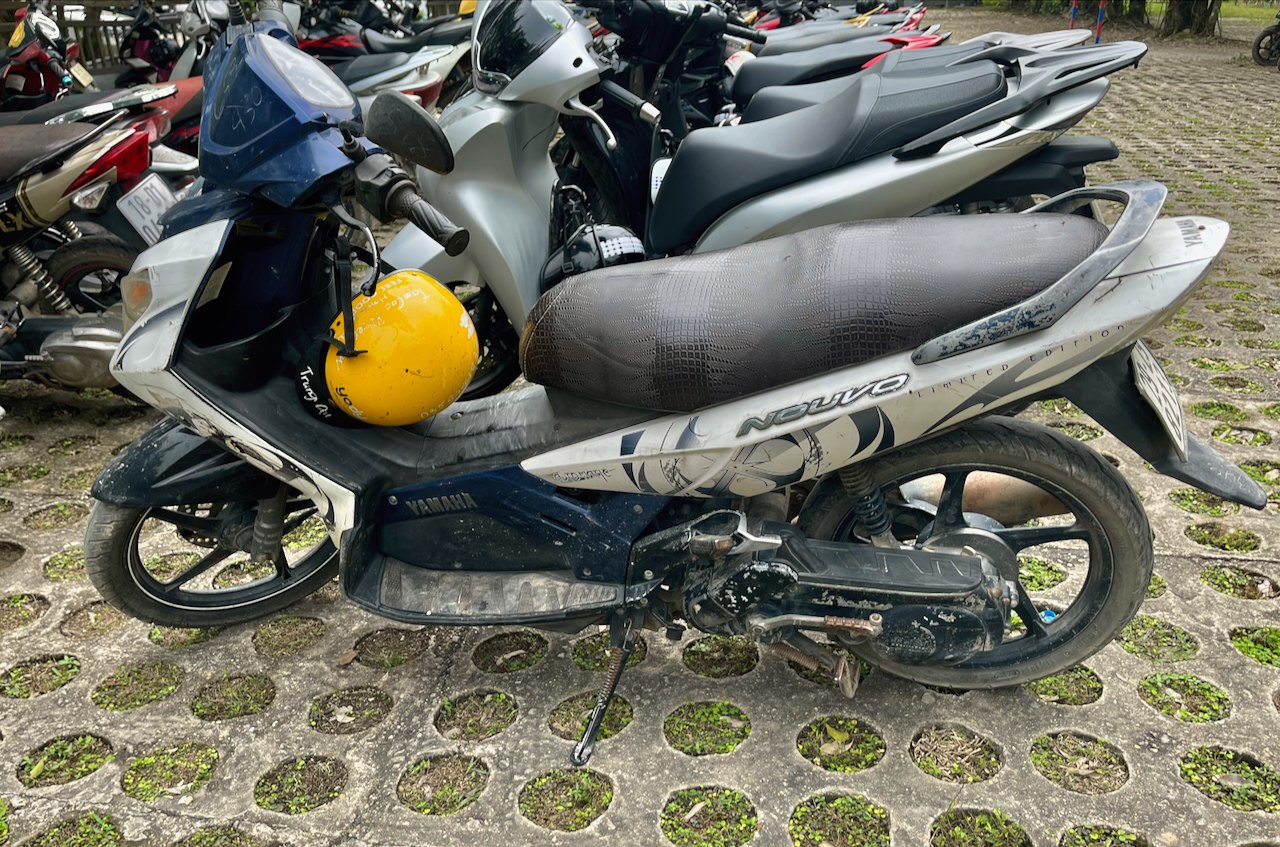
Many rides I booked through the hotel: a car from Da Nang to Hoi An for 290,000 dong (about $11), a car to the airport in Hué for $8, a driver waiting with a sign in Hanoi and on Phu Quoc. The minibuses to Ninh Binh and Ha Long picked me up at the hotel. In Hanoi a scooter even preceded the minibus to make sure the passengers were on time.
Trains and buses
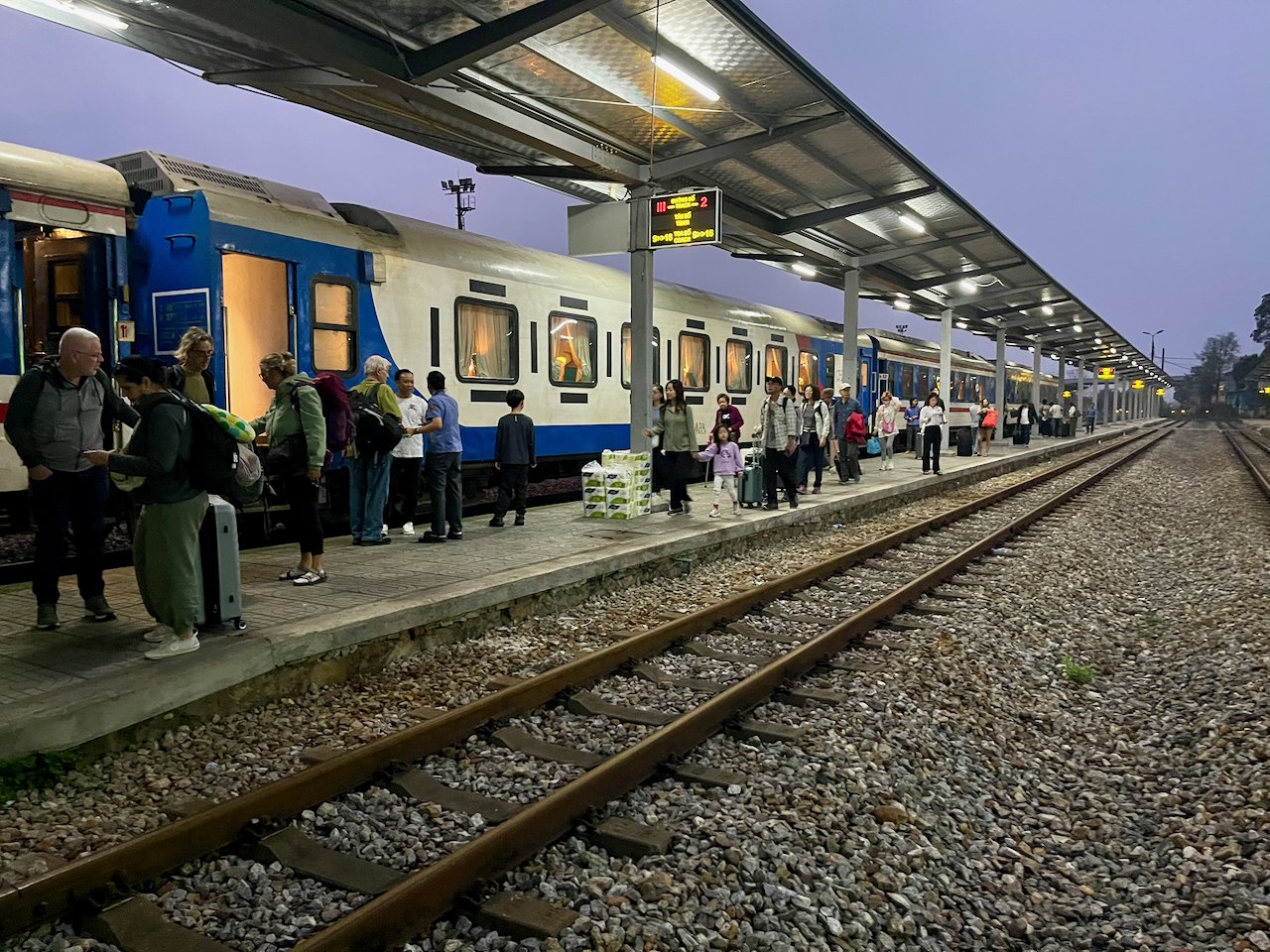
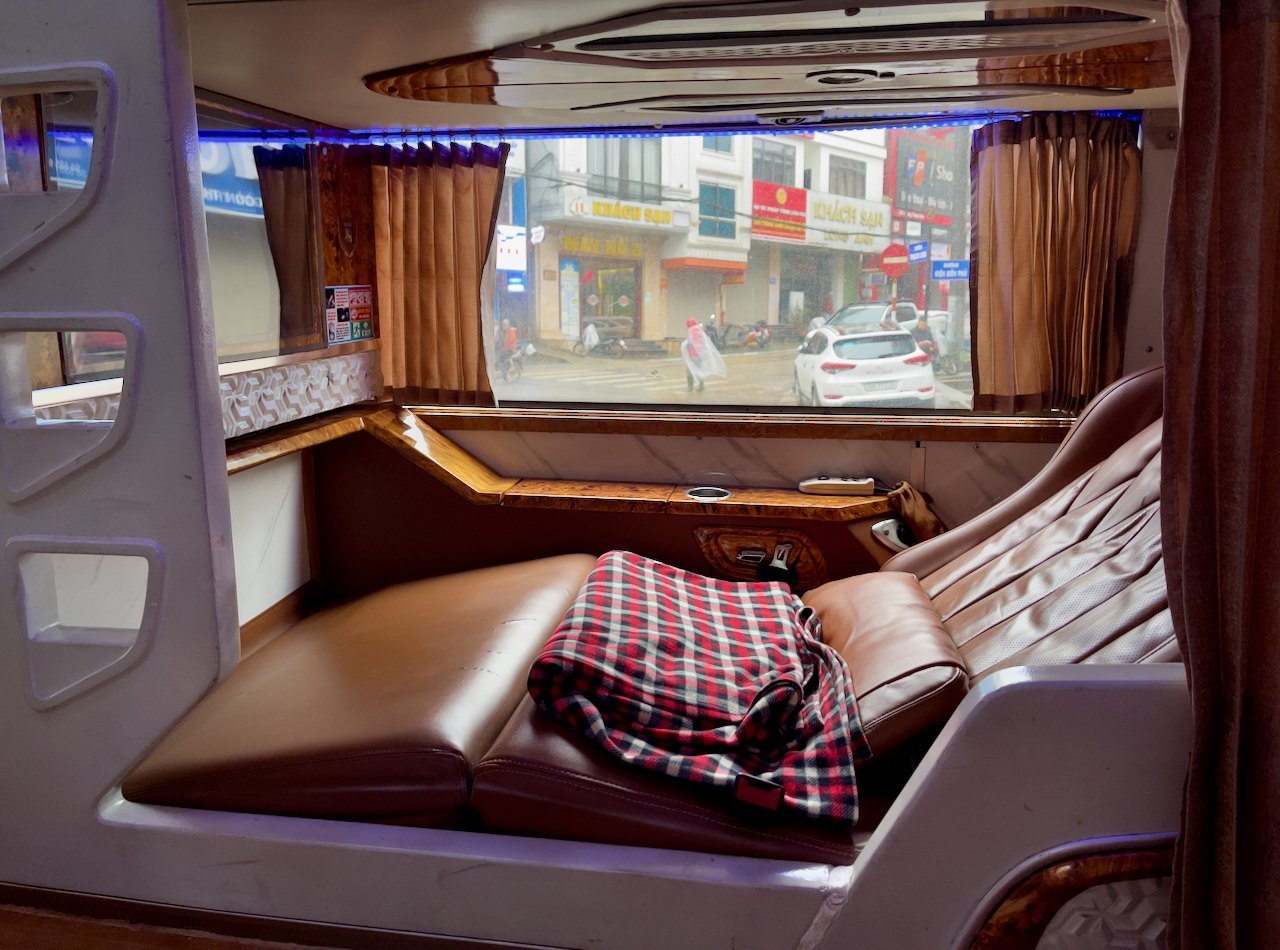
The train from Da Nang to Hué took 2.5 hours along the coast. The night train from Hanoi to Lao Cai was basic, and the train rocked hard from side to side. After the trek in Sapa a sleeper bus took me back to Hanoi.
Where the apps let me down
Both Apple Maps and Google Maps are very bad at ATMs. They show many, but none are really where they say they are. In Tam Coc, when I was sent off the minibus and told to walk, Apple Maps helped a little, but asking around helped more.
And on the last day in Saigon I tried to check in online for the Air China flight home. This again failed, horrible experience. In the end I checked in at the airport at 2 AM.
Getting around Vietnam, the practical stuff
- Which app for rides? — Grab, for cars and motorbike taxis, with a fixed price and card payment. Xanh SM for electric taxis.
- Should you fly? — For the long distances, yes. Saigon to Hanoi is about two hours by air and more than a day by train. Domestic flights are cheap and frequent, and VietJet’s app makes check-in easy.
- Train or bus? — Take the train where the scenery is the point, like Da Nang to Hué. For Sapa and Ninh Binh, buses and minibuses are faster and pick you up at the hotel.
- Booking through the hotel? — For transfers, minibuses and day tours it is easy and usually fair. The hotel staff also know where you will be dropped off.
- What about maps? — Fine for walking and driving. Not for ATMs, and not always for the last few hundred meters down an alley.
- How to book — Rides: Grab and Xanh SM. Flights: VietJet or Vietnam Airlines. Trains: Vietnam Railways. Trains and buses: 12Go.
Vietnam 2025 — all posts
- 1 — Beijing, a day between flights
- 2 — Saigon, an instant millionaire
- 3 — Cu Chi, “Not our problem, not our fault”
- 4 — The Mekong Delta, on a bike made for someone smaller
- 5 — Da Nang, marble caves and a fire-breathing dragon
- 6 — Da Nang, a rest day and AirPods for $9.80
- 7 — Hoi An, lanterns from a front-row table
- 8 — Hué, the train along the coast and the Imperial City in the rain
- 9 — Hanoi, the train street and a jacket for 400,000 dong
- 10 — Ninh Binh, back on a scooter
- 11 — Ha Long Bay, was it worth it?
- 12 — Sapa, Fansipan and two days on foot
- 13 — Phu Quoc, an island by scooter
- 14 — Money in Vietnam: ATMs, millions and bargaining
- 15 — Getting around Vietnam by app
- 16 — The North Face economy
- 17 — Saigon to Sapa in three and a half weeks: the route, and what I would change