

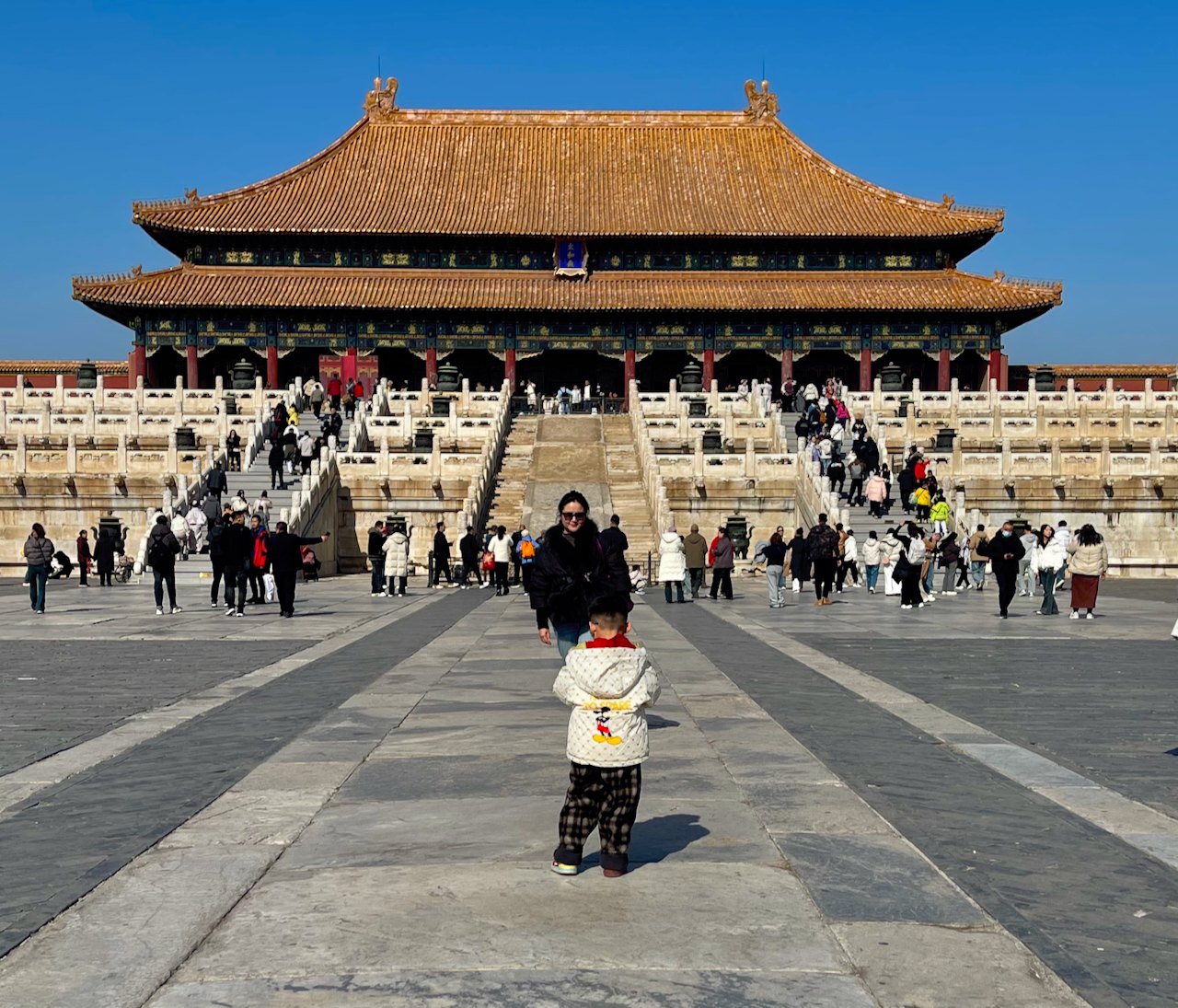
Beijing, a day between flights
/
Final assembly for the flight. Three bags: my Talon 22 in the stuff bag, my nylon daypack with a set of clothes, and my Tamrac camera bag. I checked the Talon 22 through to Saigon, so that I would have less to carry on my stopover in Beijing.
The Solna taxi came promptly at 3:30 PM, and the Air China check-in took only minutes, so I had some time to kill at Arlanda. The flight boarded on time, and we were off by 6:30 PM. Unfortunately in a middle seat, but in a fairly forward section over the wing of the Airbus A350. Legroom was OK, at least compared to Ryanair.
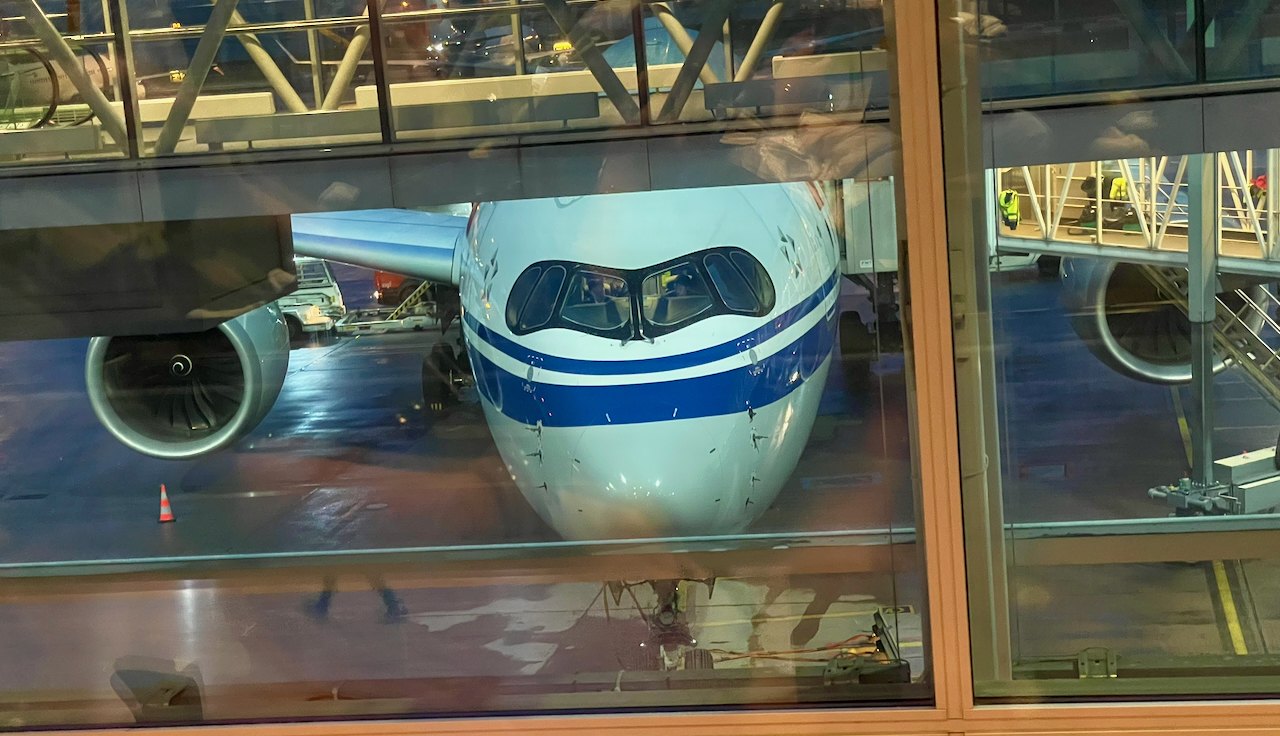
Arriving in Beijing
We arrived at 9:45 AM after an eight-hour flight with about three and a half hours of on and off sleep in my economy middle seat. Service on board Air China was good, with a nice kung pao chicken dinner and a noodle dish for breakfast. All good, nothing to complain about, especially for the price of $550 round trip to Saigon.
Immigration was pretty smooth. I found an ATM, got 200 yuan (about $28) in pocket money and proceeded to the airport train.
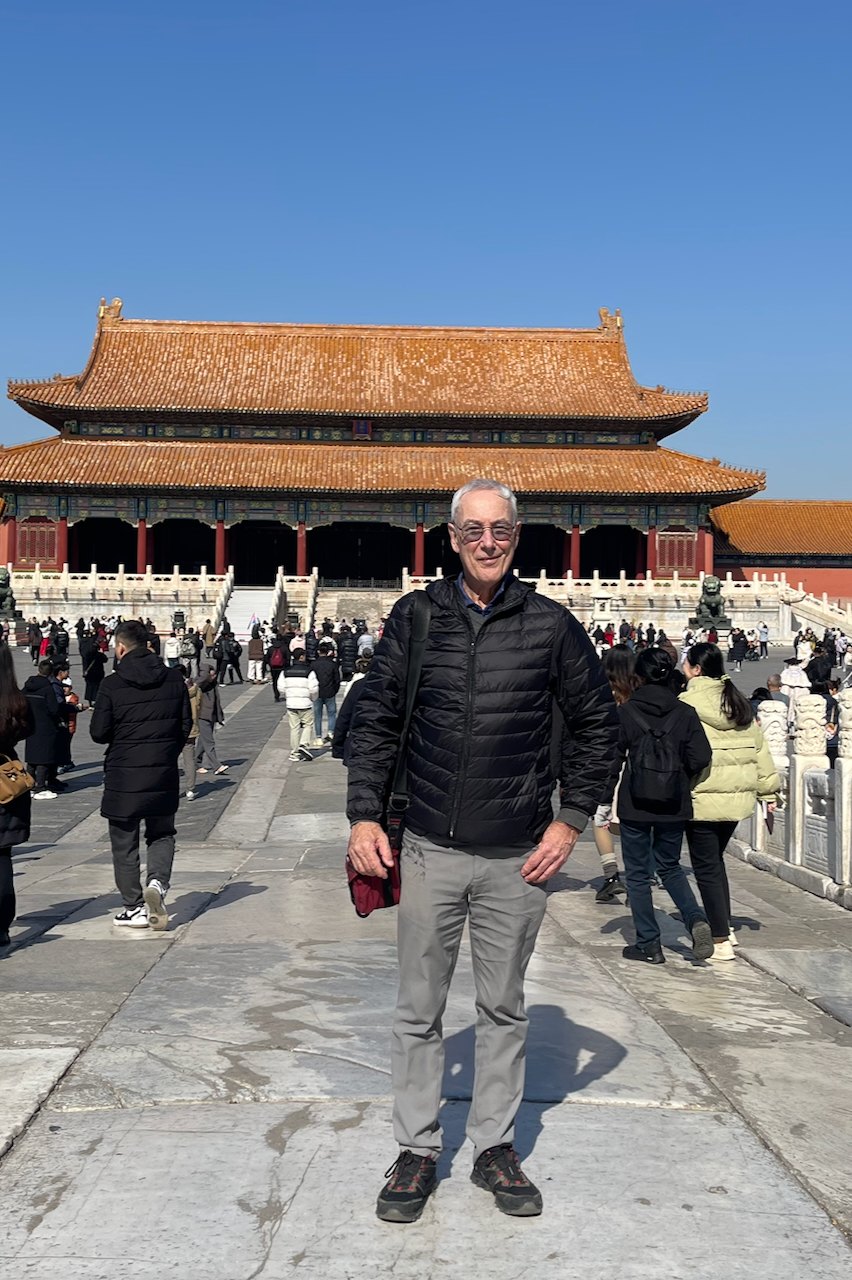
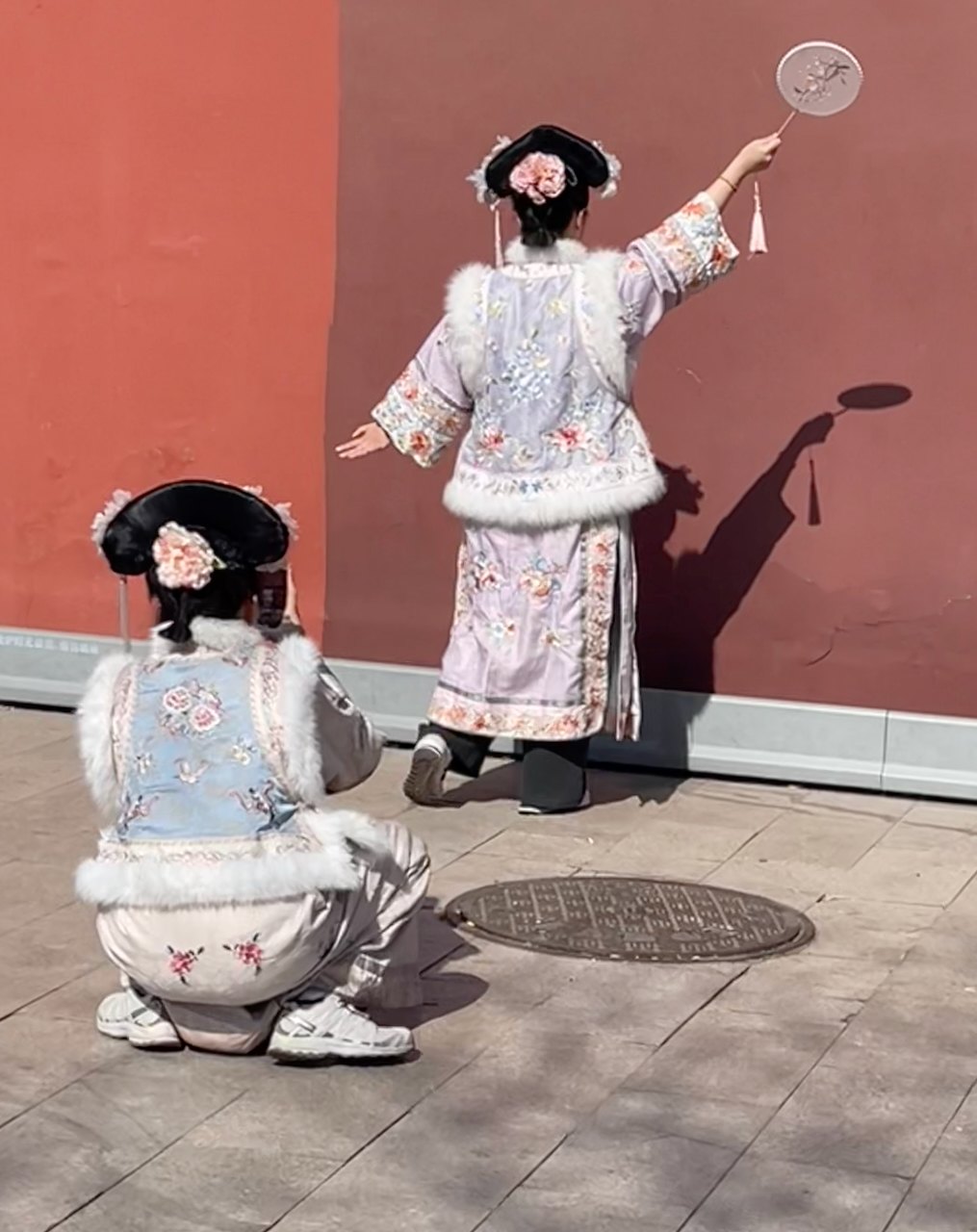
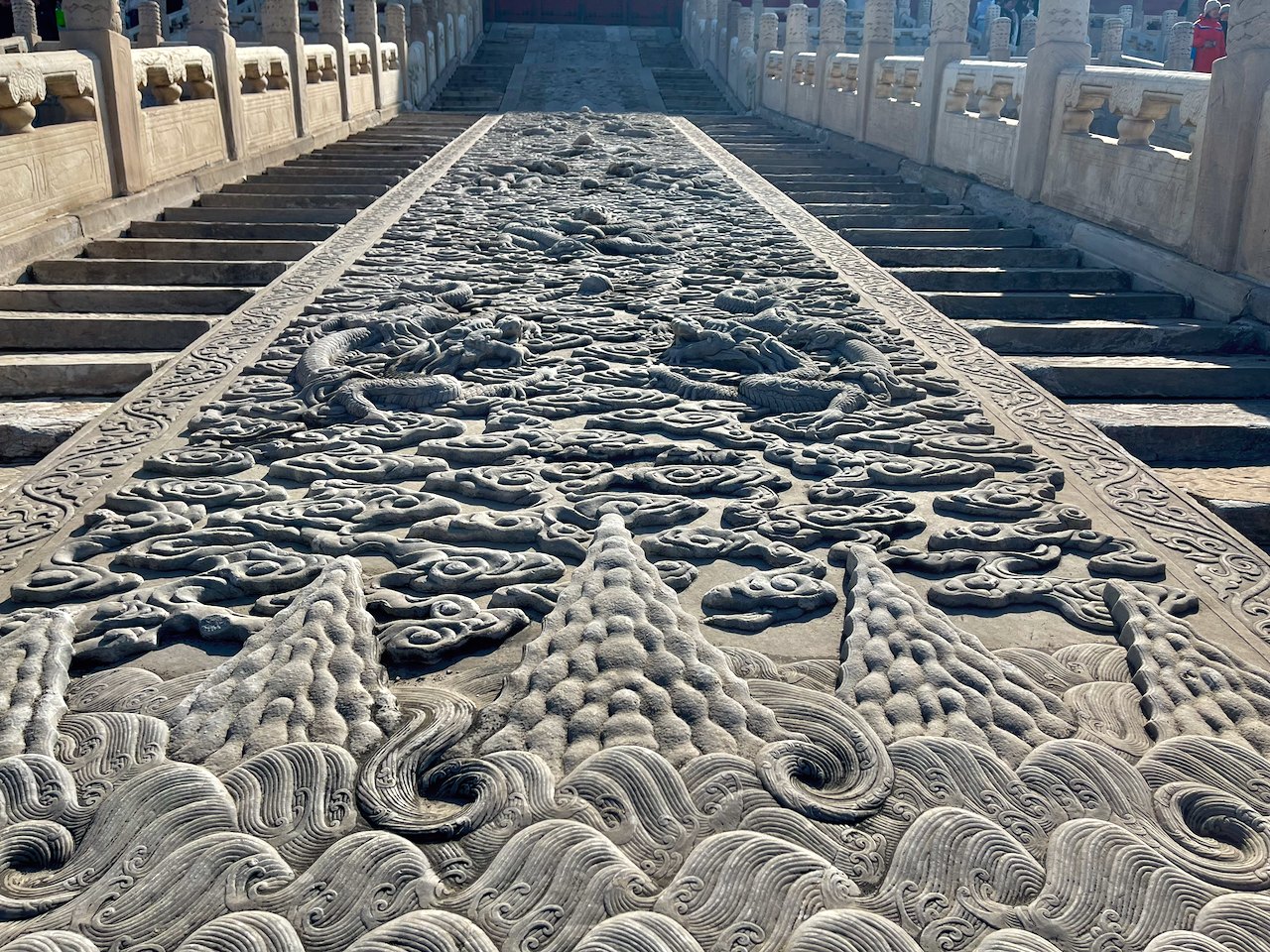
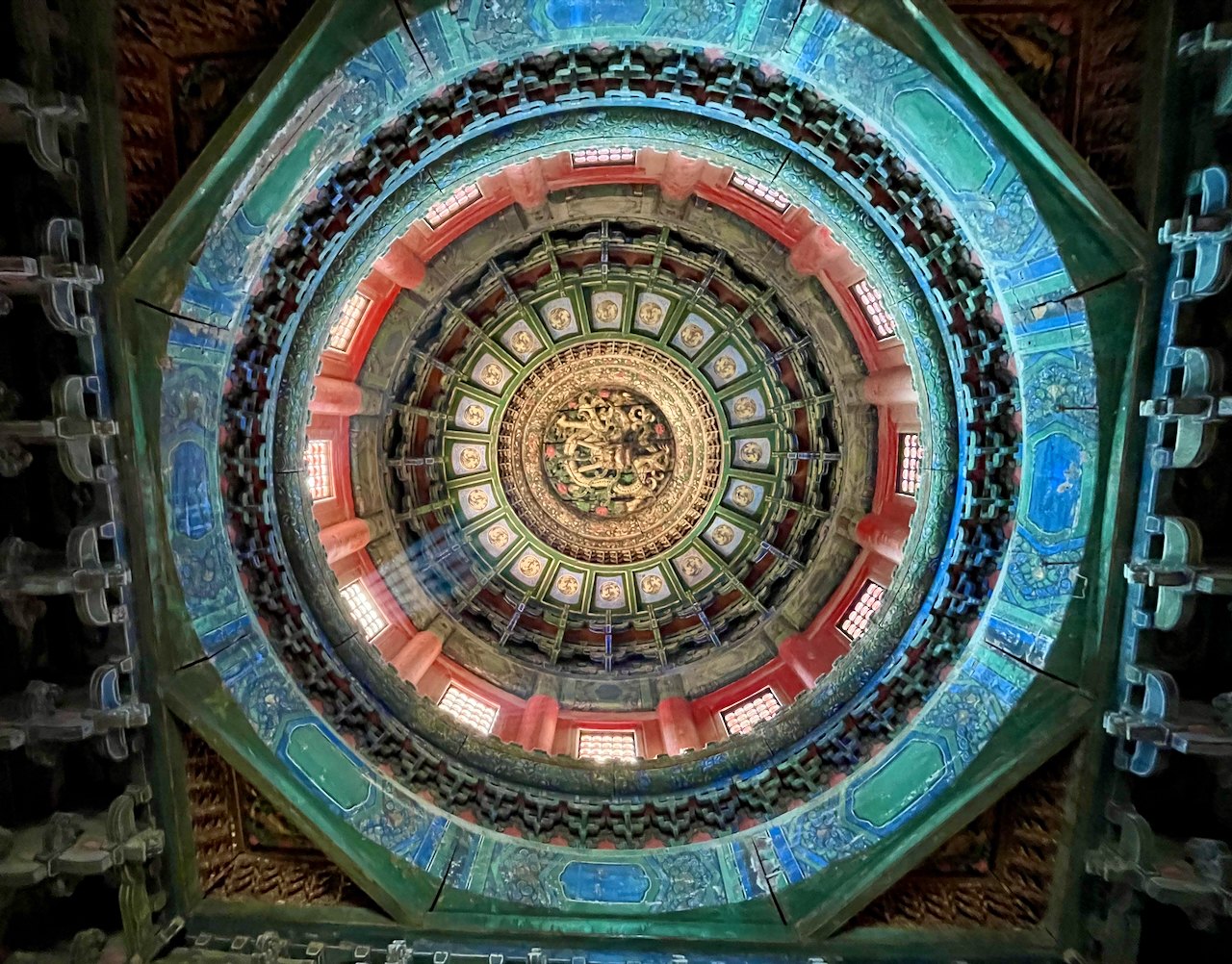
The Forbidden City
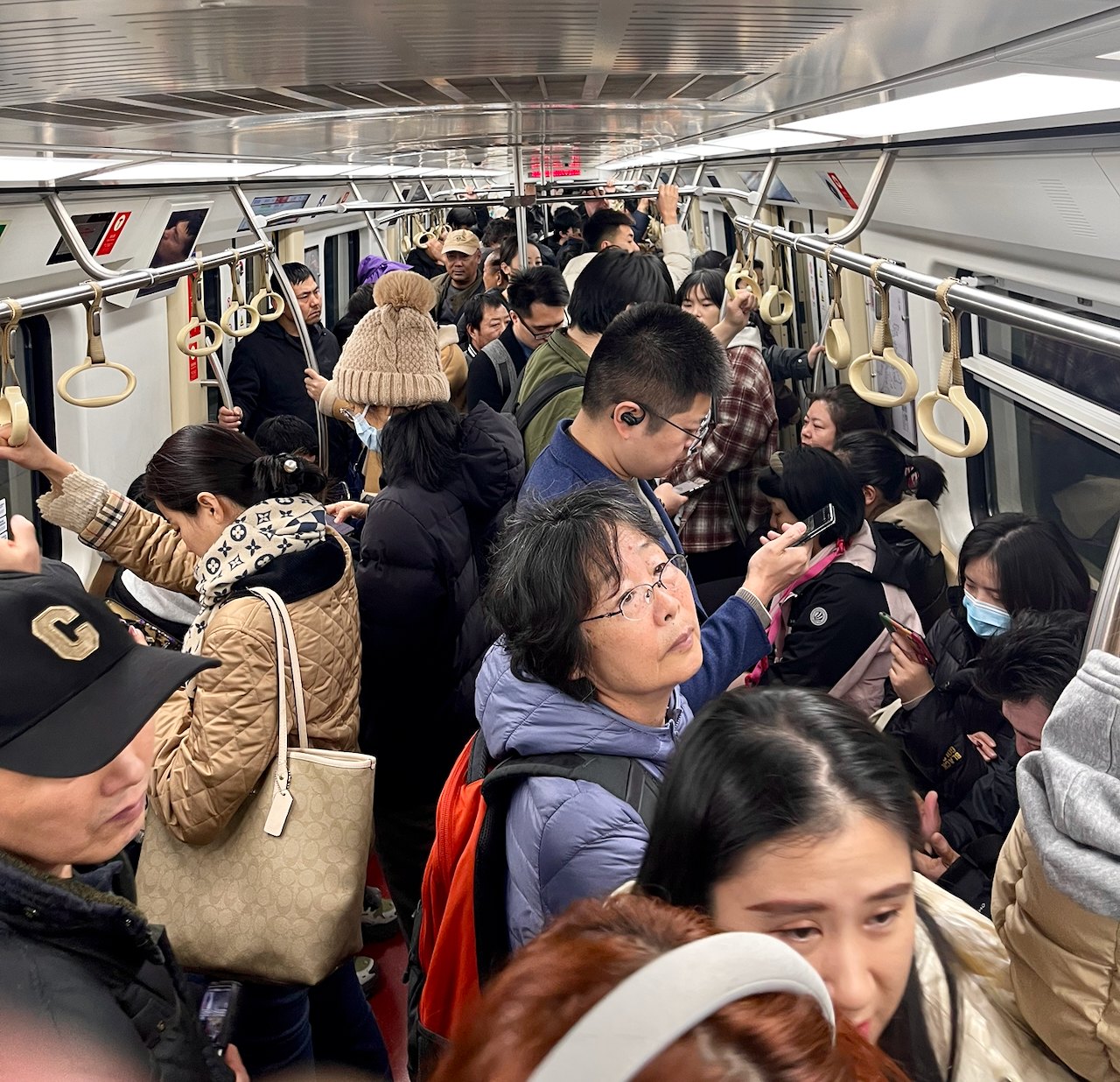
After switching trains twice I got close to the Forbidden City and walked to the gate, got through more security and was in, using my passport as my ticket, per instructions.
Jingshan Park
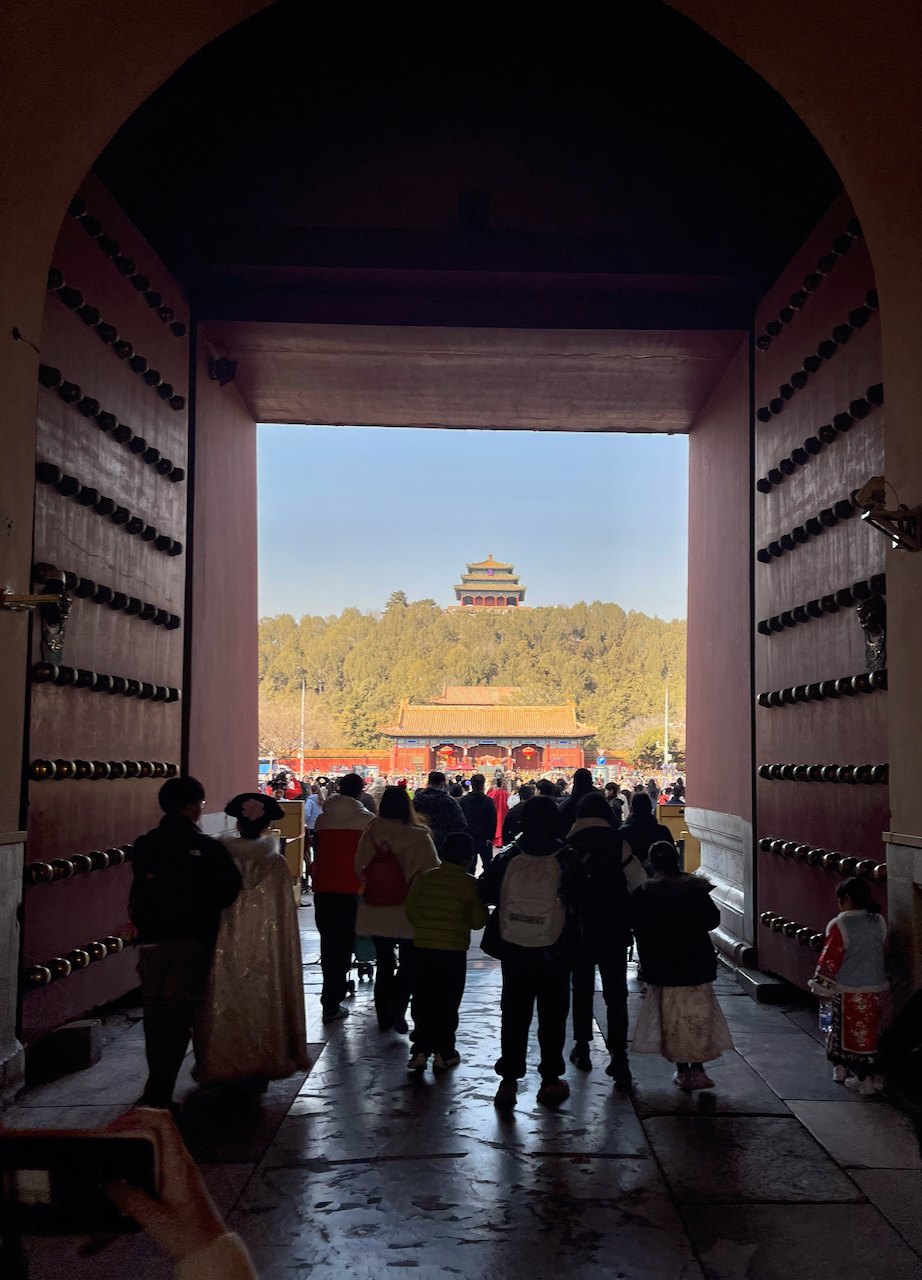
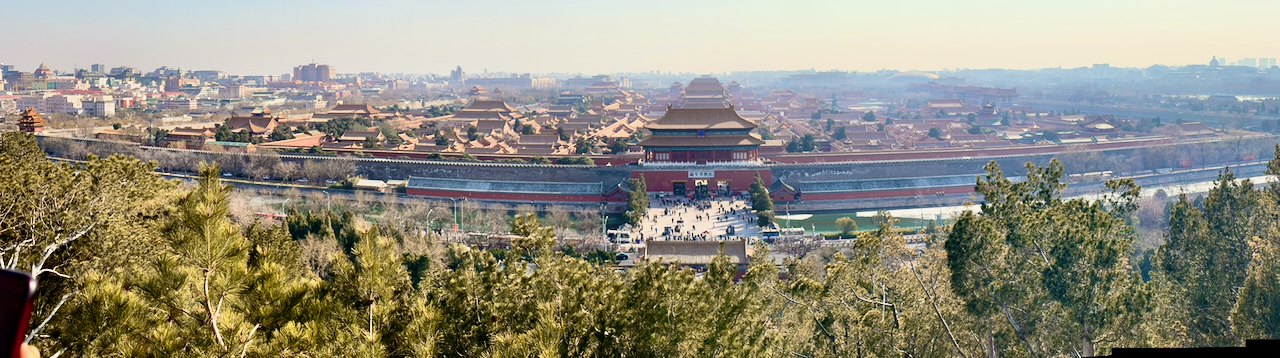
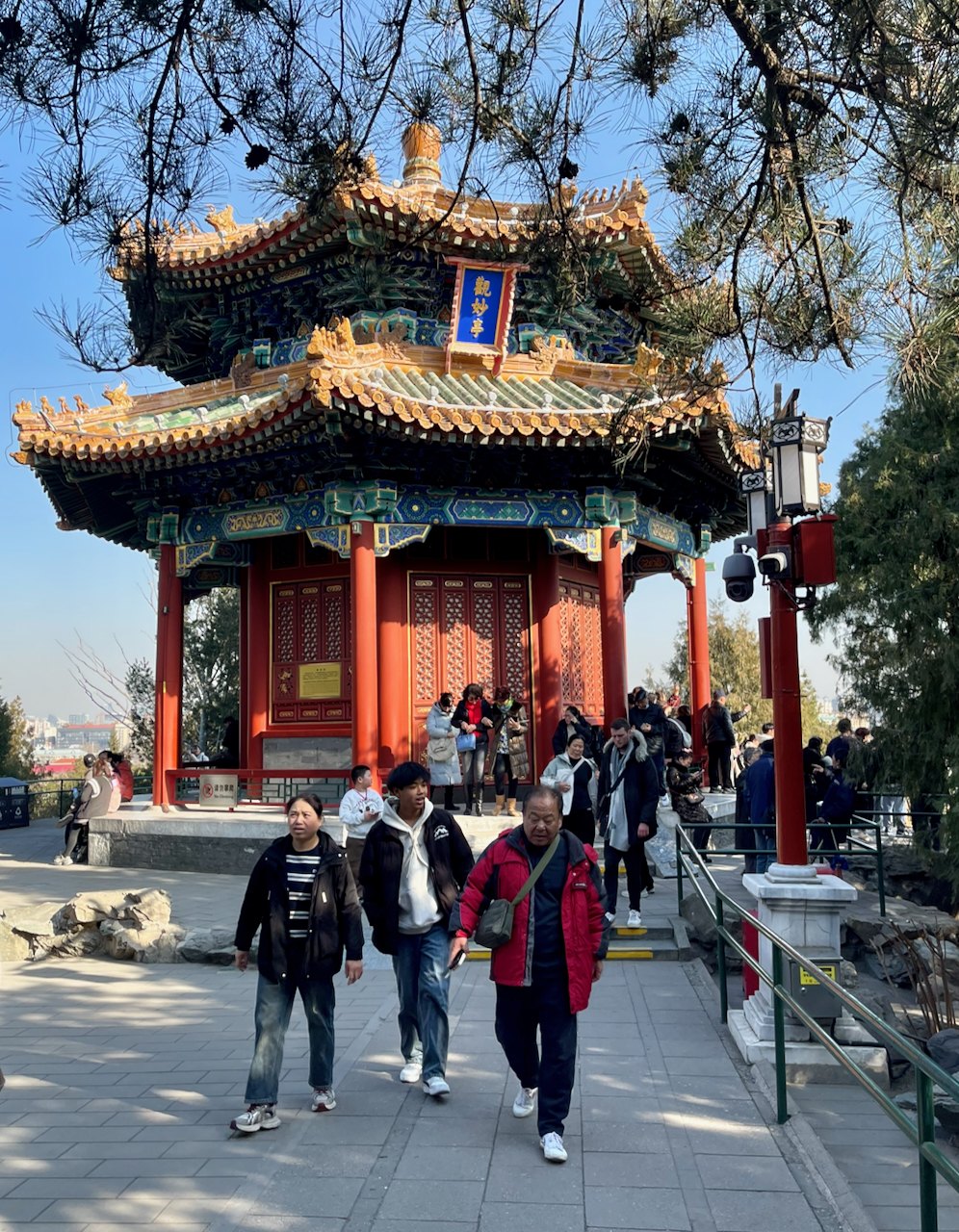
After the Forbidden City I left through the north gate and headed to Jingshan Park and climbed to the top. An impressive view over Beijing, unfortunately into the sun and smog.
Back to the airport
Back down I followed Apple Maps to another subway stop, having a sausage on a stick on the way. This line took me directly to the airport train, and after yet another security check I was back on the train. It was all so smooth that I was two hours early for my flight.
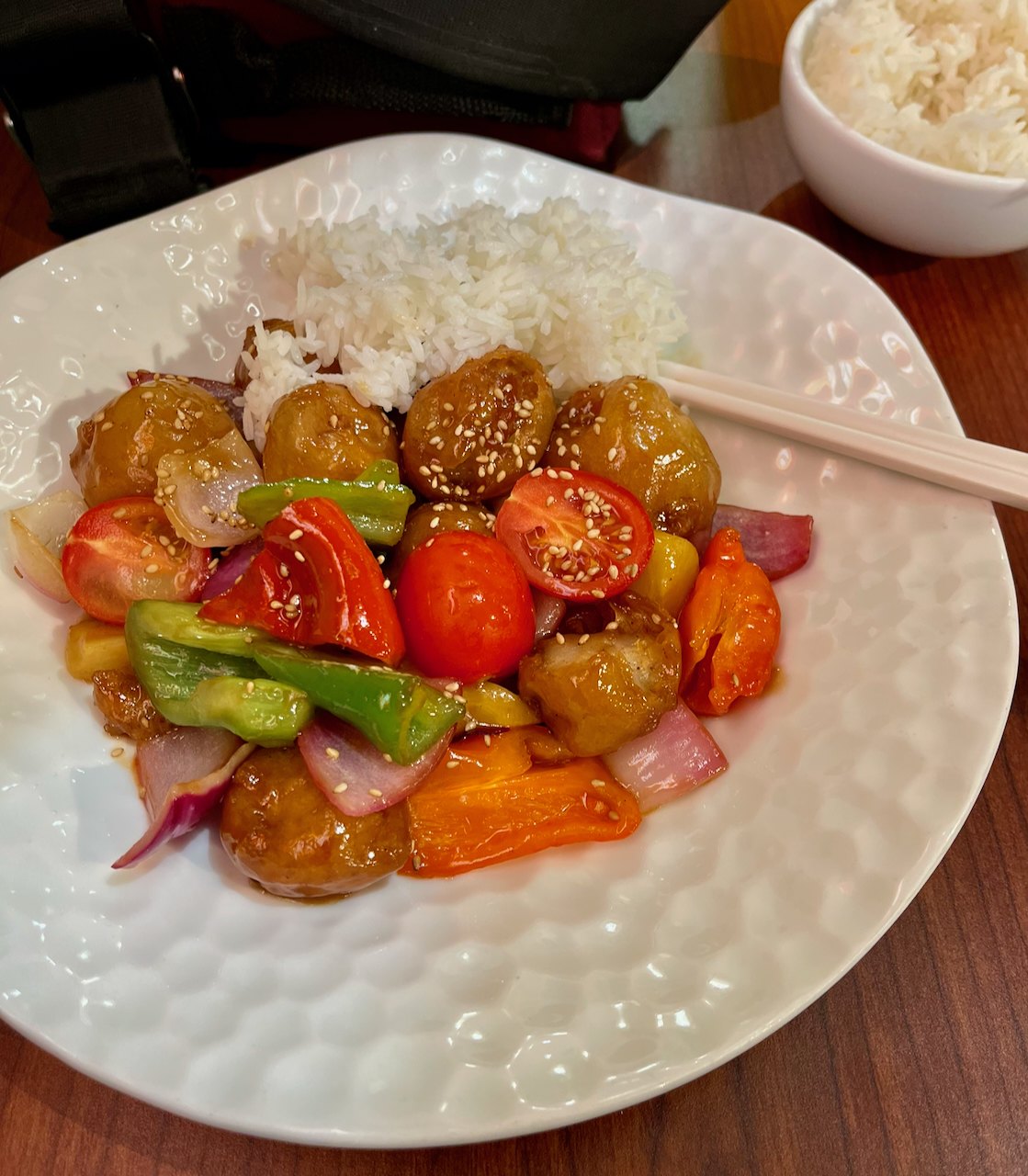
I had sweet and sour pork at a restaurant airside. When I first got to the airport I saw many food options, including KFC, but they all turned out to be in the domestic terminal. The international terminal was very upscale but barren. Mostly Louis Vuitton-style shops. But the restaurant I found served good Chinese food and I got full.
Even though I had seat 20L, it turned out to be a 737-800 for the flight to Saigon. Seats were A-B-C-J-K-L, very odd. The seat was uncomfortable, no empty middle seat, and the flight was much longer than expected. When I thought we must be close, we were still just over Hanoi.
A Beijing layover, the practical stuff
- Can you leave the airport on a layover? — For a Swedish passport, yes. In February 2025 I got a transit visa at the airport. Since November 10, 2025, Swedes can visit China for up to 30 days without a visa, a rule that runs to the end of 2026. Many other nationalities can use the 240-hour visa-free transit instead. Check the rules for your passport before you fly.
- How long a layover do you need? — At least eight hours. Count on an hour for immigration, an hour each way into the city and two hours back before the next flight. I had most of a day, and the Forbidden City and Jingshan fit easily.
- How do you get into the city? — The Capital Airport Express train to Dongzhimen, then the subway. Apple Maps worked well for the route.
- Do you need a Forbidden City ticket in advance? — Yes. There are no tickets at the gate. Book online with your passport number; tickets are released seven days ahead at 8 PM Beijing time and sell out on busy days. The passport is your ticket at the entrance.
- What does it cost? — 40 yuan (about $6) from November to March and 60 yuan (about $8) from April to October. Jingshan Park costs a few yuan more.
- When is it closed? — Every Monday, except national holidays.
- What about the bag? — Check it through to your final destination, so you only carry a daypack in Beijing.
- How to book — Flights: Air China. Forbidden City tickets: Palace Museum, official booking. Visa rules: National Immigration Administration. Trains and subway: the Beijing Subway and Apple Maps.
Vietnam 2025 — all posts
- 1 — Beijing, a day between flights
- 2 — Saigon, an instant millionaire
- 3 — Cu Chi, “Not our problem, not our fault”
- 4 — The Mekong Delta, on a bike made for someone smaller
- 5 — Da Nang, marble caves and a fire-breathing dragon
- 6 — Da Nang, a rest day and AirPods for $9.80
- 7 — Hoi An, lanterns from a front-row table
- 8 — Hué, the train along the coast and the Imperial City in the rain
- 9 — Hanoi, the train street and a jacket for 400,000 dong
- 10 — Ninh Binh, back on a scooter
- 11 — Ha Long Bay, was it worth it?
- 12 — Sapa, Fansipan and two days on foot
- 13 — Phu Quoc, an island by scooter
- 14 — Money in Vietnam: ATMs, millions and bargaining
- 15 — Getting around Vietnam by app
- 16 — The North Face economy
- 17 — Saigon to Sapa in three and a half weeks: the route, and what I would change