

Zhenyuan, the other Silk Road
/
The taxi drivers at Sansui wanted 160 yuan to run me up to Zhenyuan. There was no sign of a bus. I waved them off, opened DiDi, and got a quote of 70, which felt like a small victory until about a kilometer later, when the car stopped at the toll gate for the new highway and the driver turned around and asked for 100 more.
There is not much to be done at that point. I paid it. The fare then came out at 80 rather than the 70 advertised, for reasons nobody explained, so the ride cost 180 against the 150 the taxi man had been talking himself down to while I walked away. DiDi had said nothing about a toll, and I still do not know whether that is a gap in the app or a gap in my reading of it.
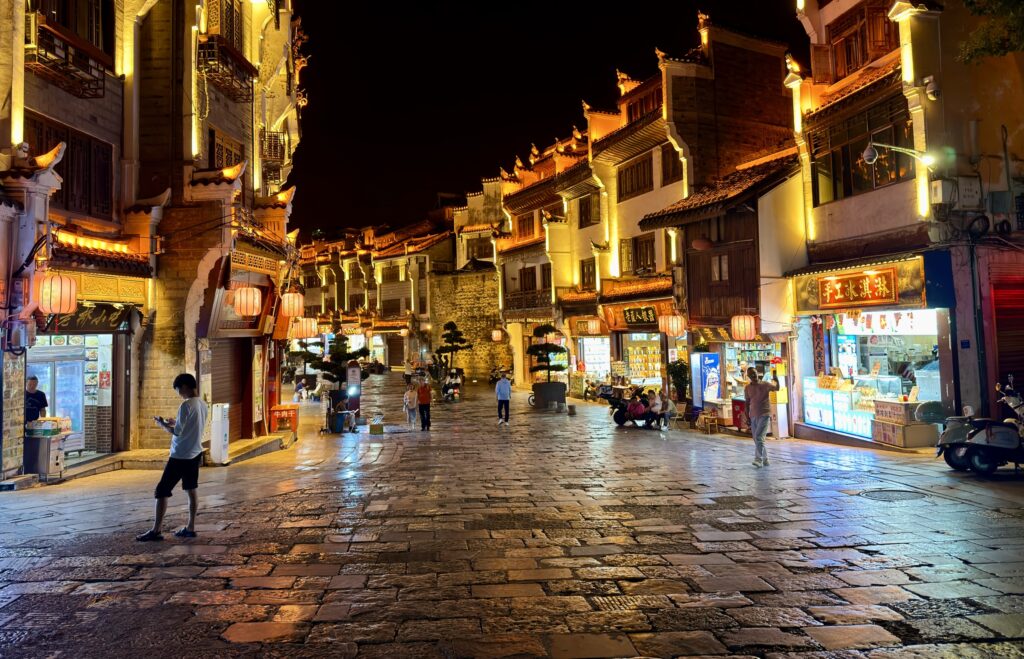
The driver put me down in the middle of town and I walked the last few hundred meters to the inn. Driving in Zhenyuan is very restricted, which is a good thing, the street that runs through town feels mostly like a walking street even though there is some traffic.
A town in an S-bend
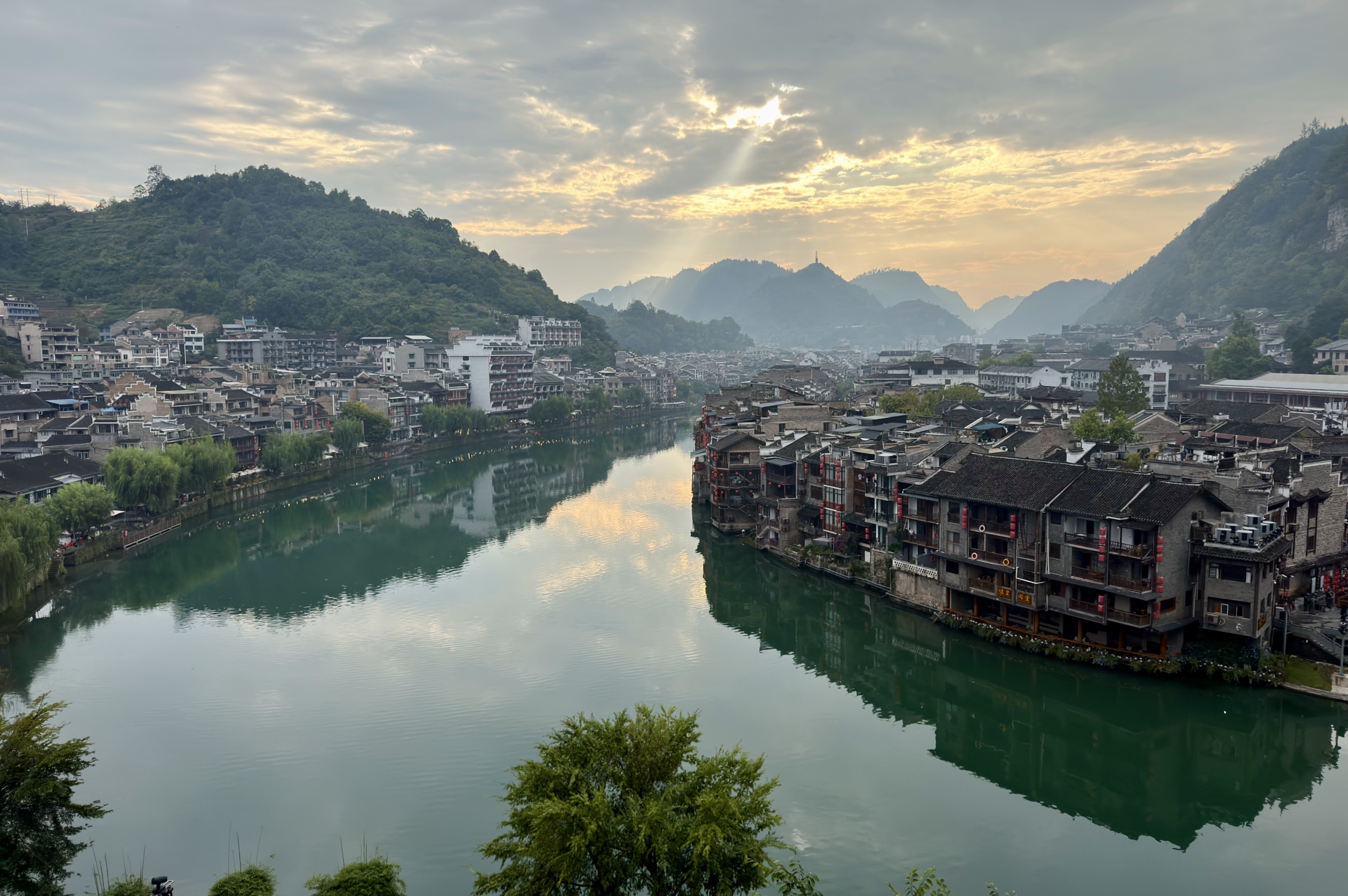
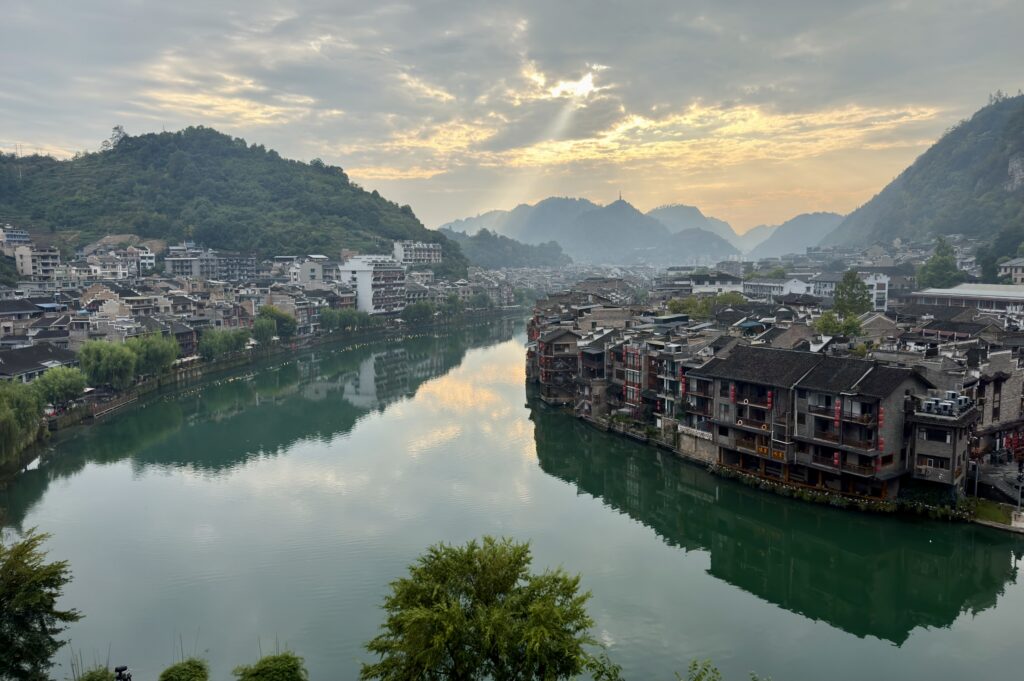
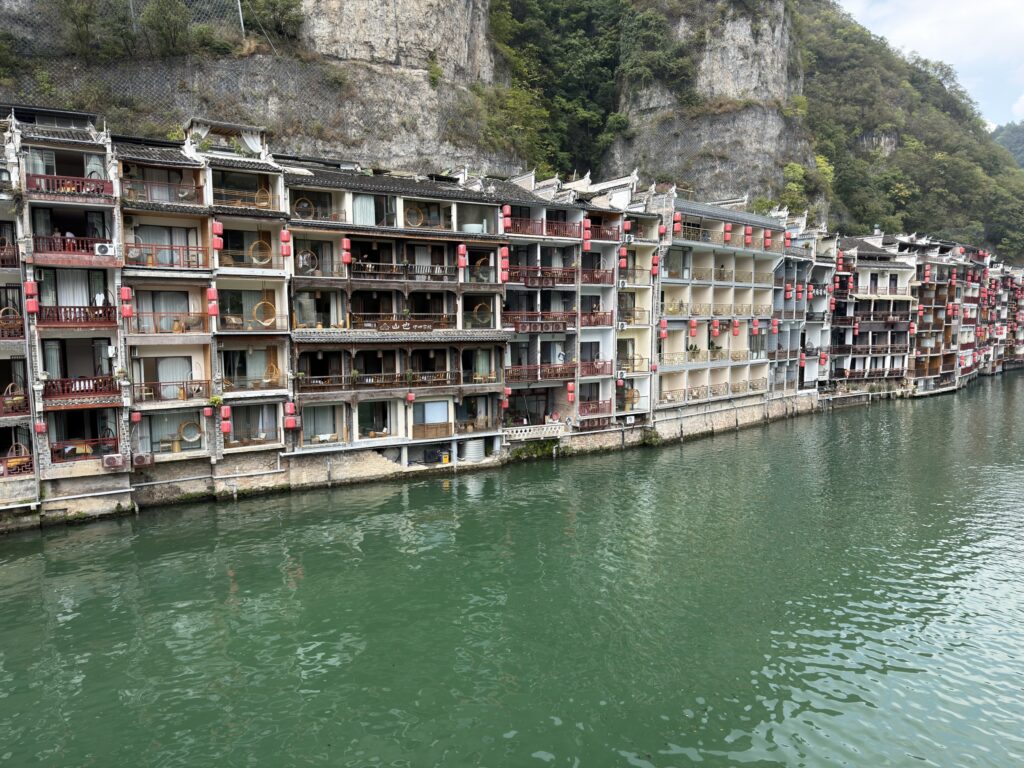
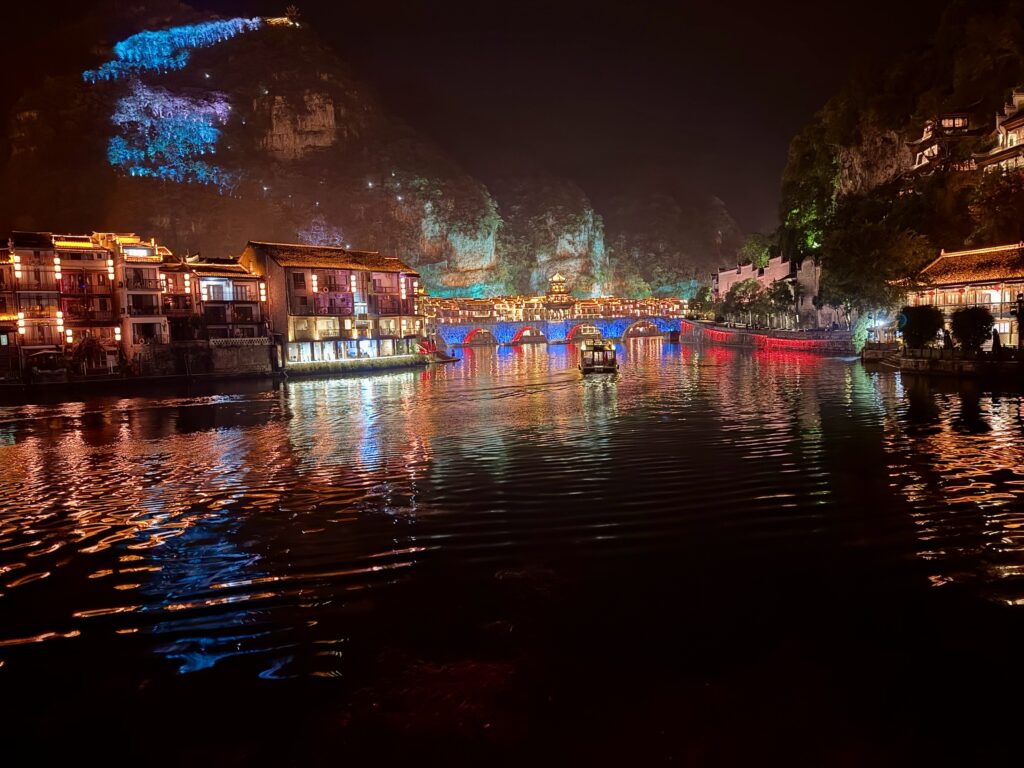
The Wuyang River comes through here in a tight double curve, and the town is wrapped into it on both banks, stone houses running along the water and then climbing straight up the hillsides behind. The guidebooks call it the Venice of the East, which I think is a generous label, Venice is hard to beat. What it actually resembles is a town that ran out of flat land in the year 200 BC and has been stacking itself upwards ever since.
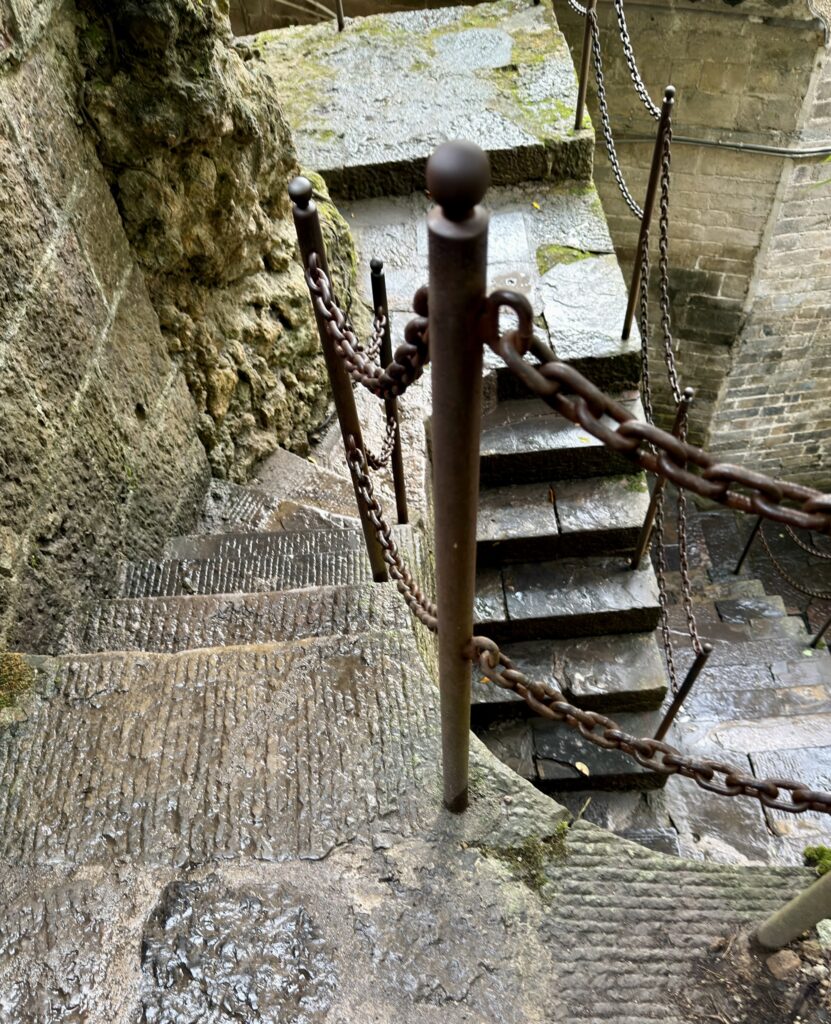
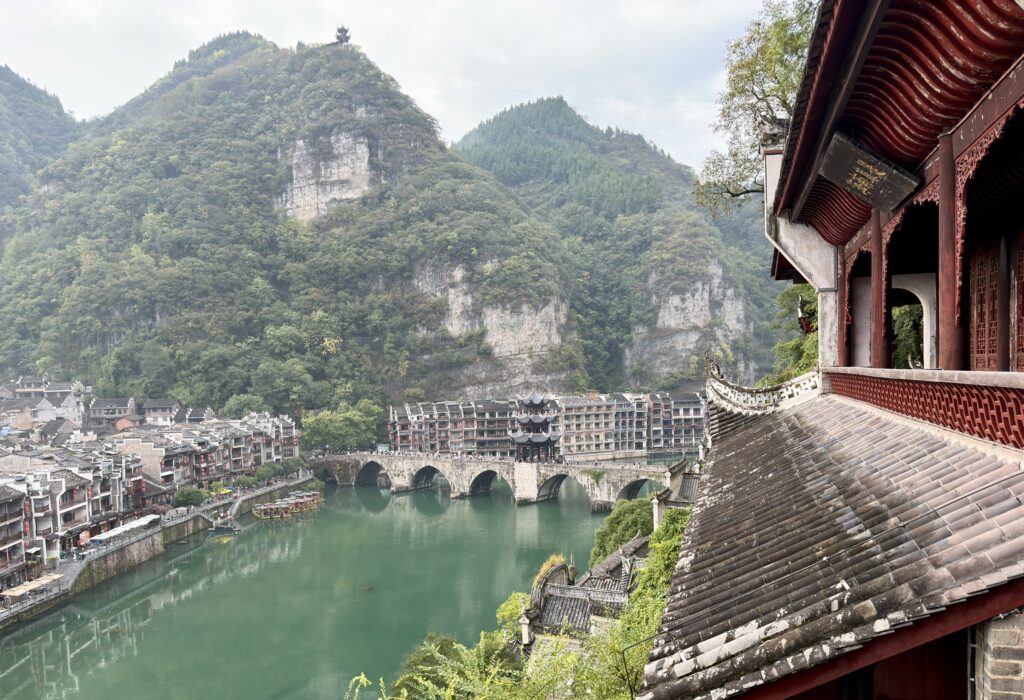
That means stairs. Another town full of stairs, after Chongqing. The alleys run uphill off the waterfront in narrow flights between walls, and the further up you go the quieter it gets, until you are in somebody’s yard and the tourist shops are three levels below you.
Why there is a town here at all
A place like this looks picturesque and is actually strategic. Zhenyuan is where the road into Guizhou had to pass, and everything about it follows from that.
There has been a county here since 202 BC, in the fifth year of the Han emperor Gaozu, which makes the town older than the name by some fourteen centuries. Zhenyuan itself was granted by a Song emperor in 1258, and it is not a gentle name: it means something close to pacifying the distant regions, which tells you exactly whose point of view the naming was done from.
What made it matter was traffic. This was the busiest courier station on what gets called the southern Silk Road, the route that ran from the central plains down onto the Yunnan-Guizhou plateau and onward west. Guizhou is mountains in every direction, the river is the only easy line through them, and Zhenyuan sits at the point where the practical water route gave out and goods had to change from boat to road. A town at that hinge collects everything passing in both directions, which is why a place this remote has merchant guild halls in it.
The Yuan and then the Ming made the military logic explicit, establishing prefectures and garrisons and stationing troops. By the Ming there were effectively two settlements facing each other across the water, the old government town on the north bank and the old fortification on the south. You can still read it in the layout: the administrative side and the military side, and the bridge between them.
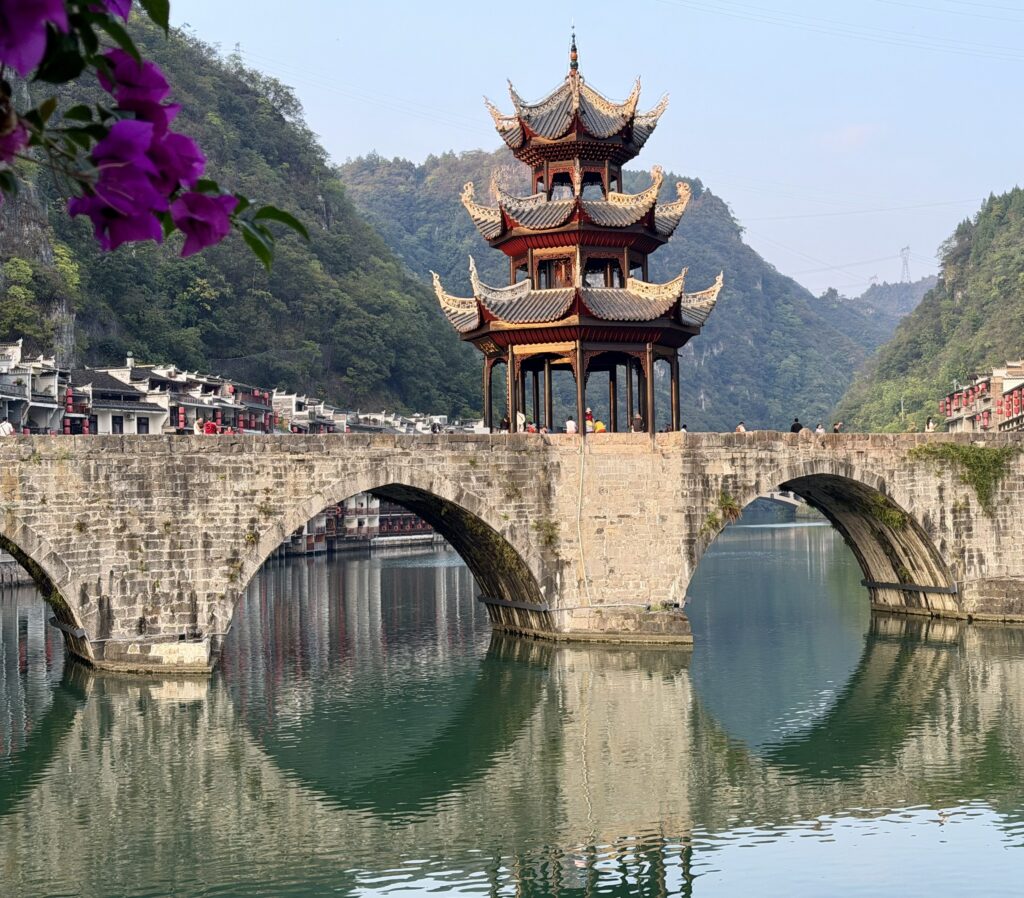
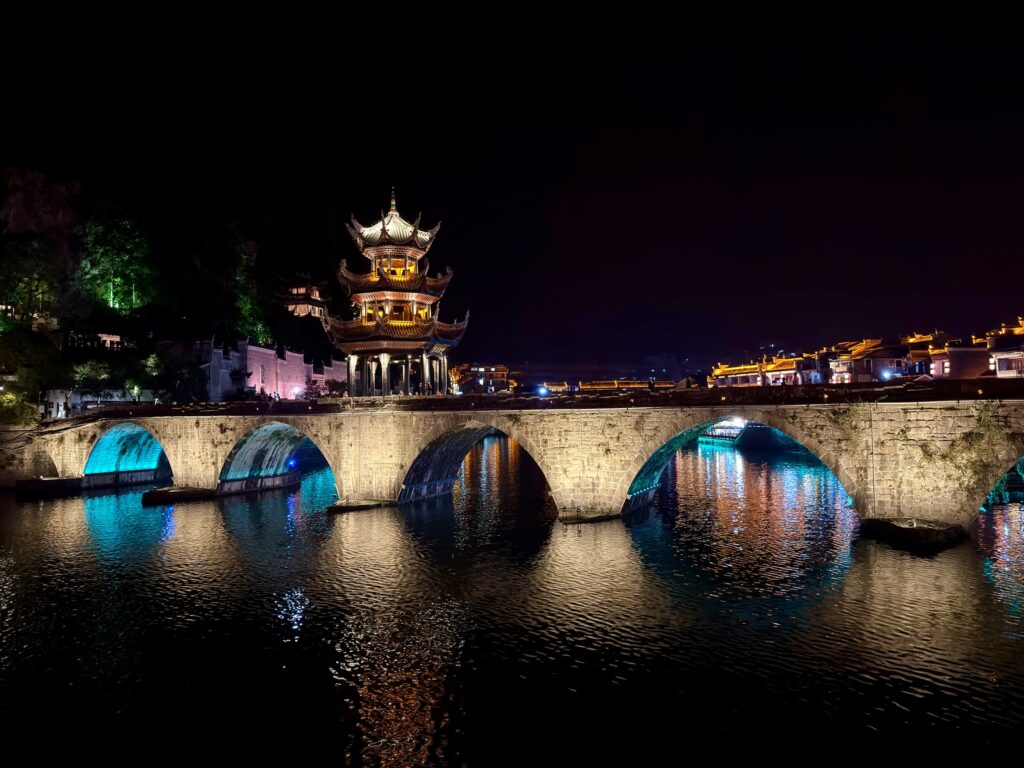
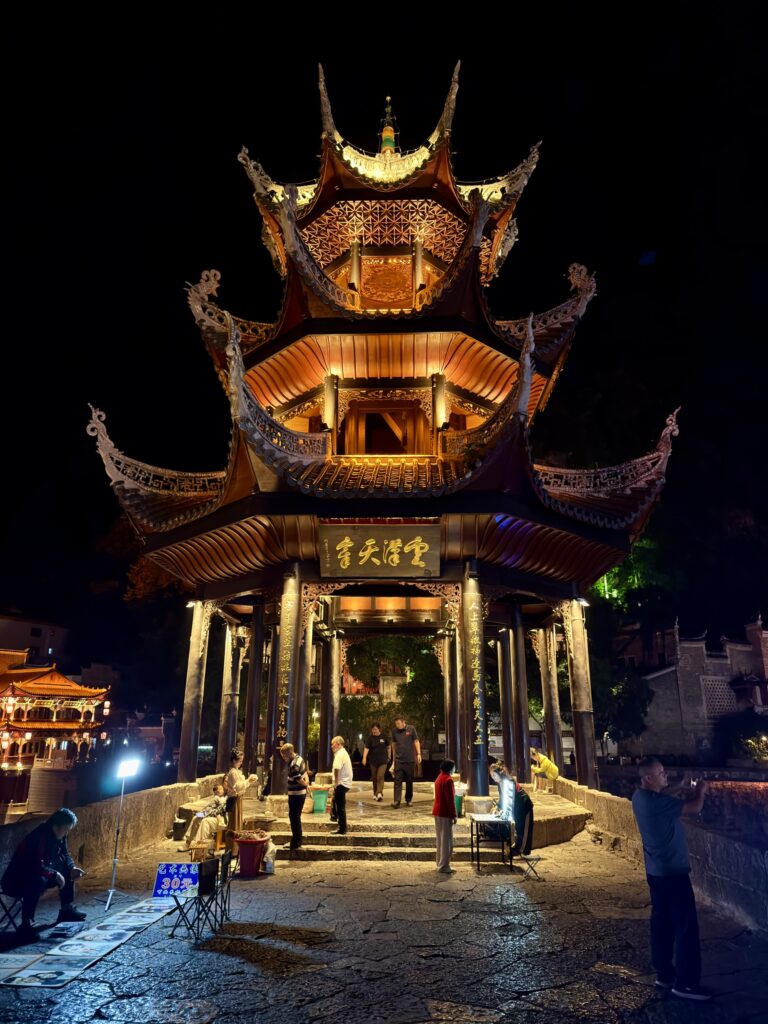
The bridge is the thing everyone photographs, and it has earned it. Zhusheng Bridge was first built in the Hongwu years at the end of the fourteenth century, when it was known simply as the stream bridge. The river kept washing it away. What stands now is the version finished in 1723, a seven-arched blue stone crossing a hundred and thirty-five meters long, with a pavilion sitting on top of it.
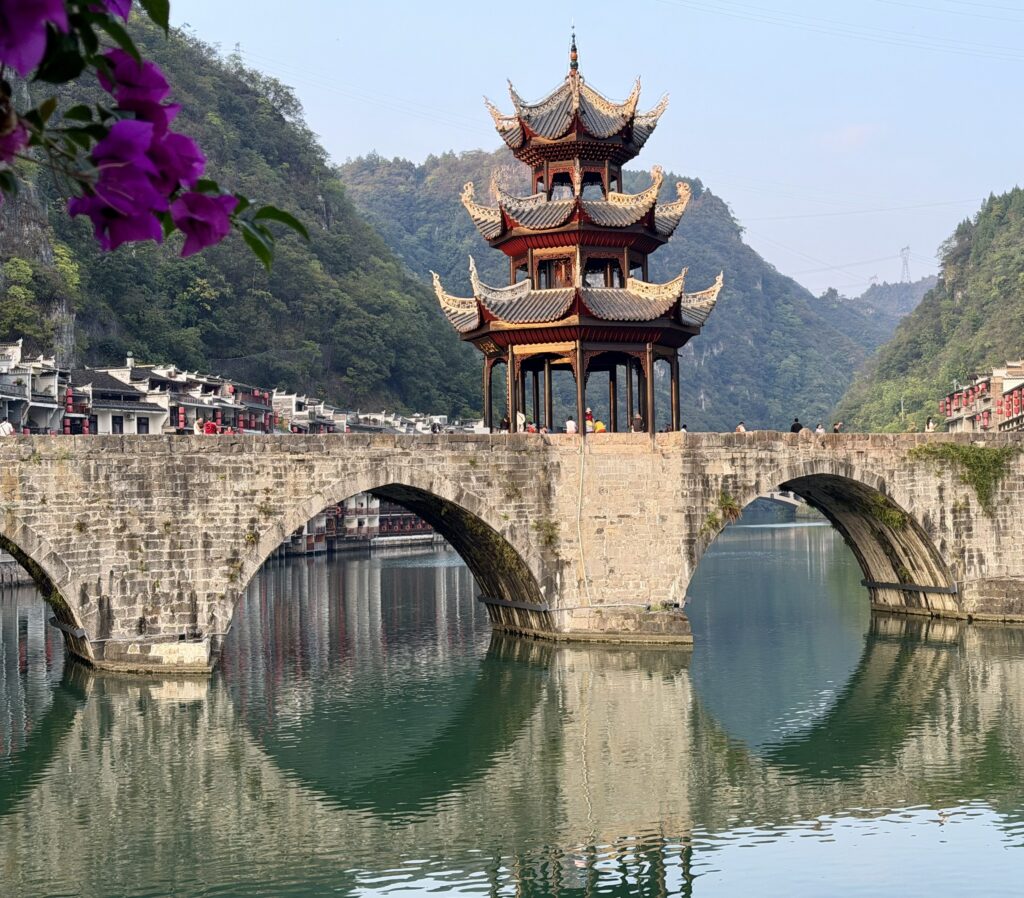
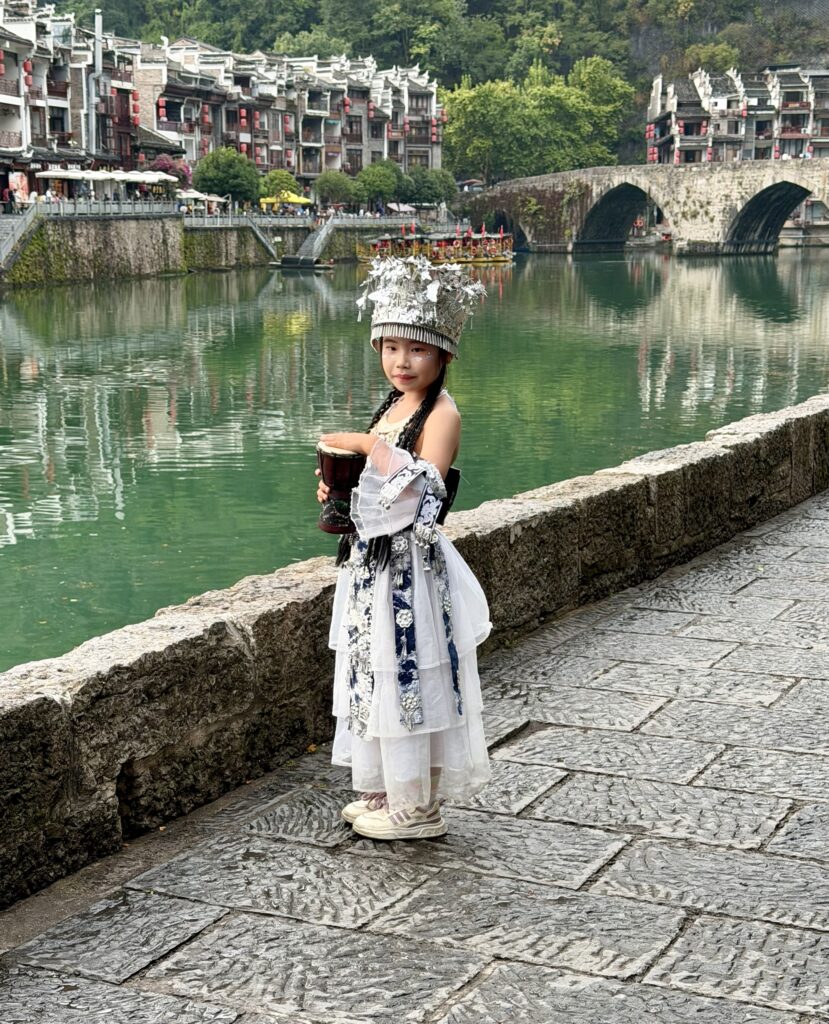
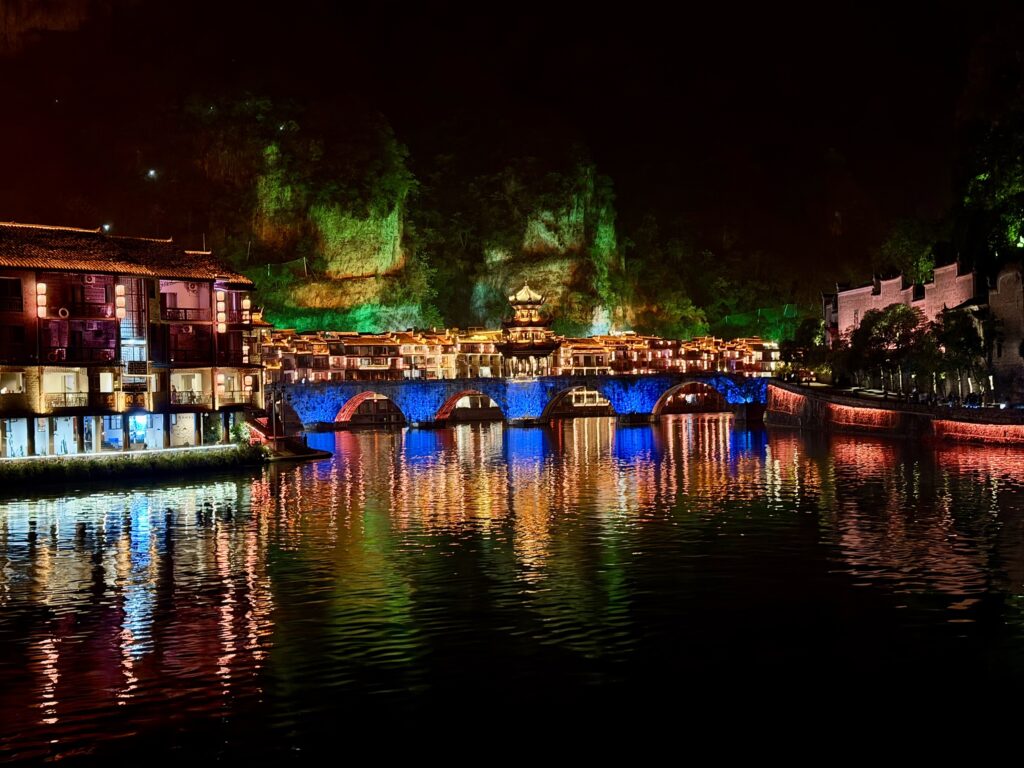
I spent the first evening on and around it as the light went. It photographs well from both banks and better from the south, and it is one of those structures that looks heavier and older the longer you stand in front of it. And my hotel room was right next to it, with a balcony, so I could stare at it while having my morning coffee, too.
The cliff with thirty-six buildings on it
The second afternoon I crossed over to Qinglongdong, the Green Dragon Cave, which is the other reason to come to Zhenyuan.
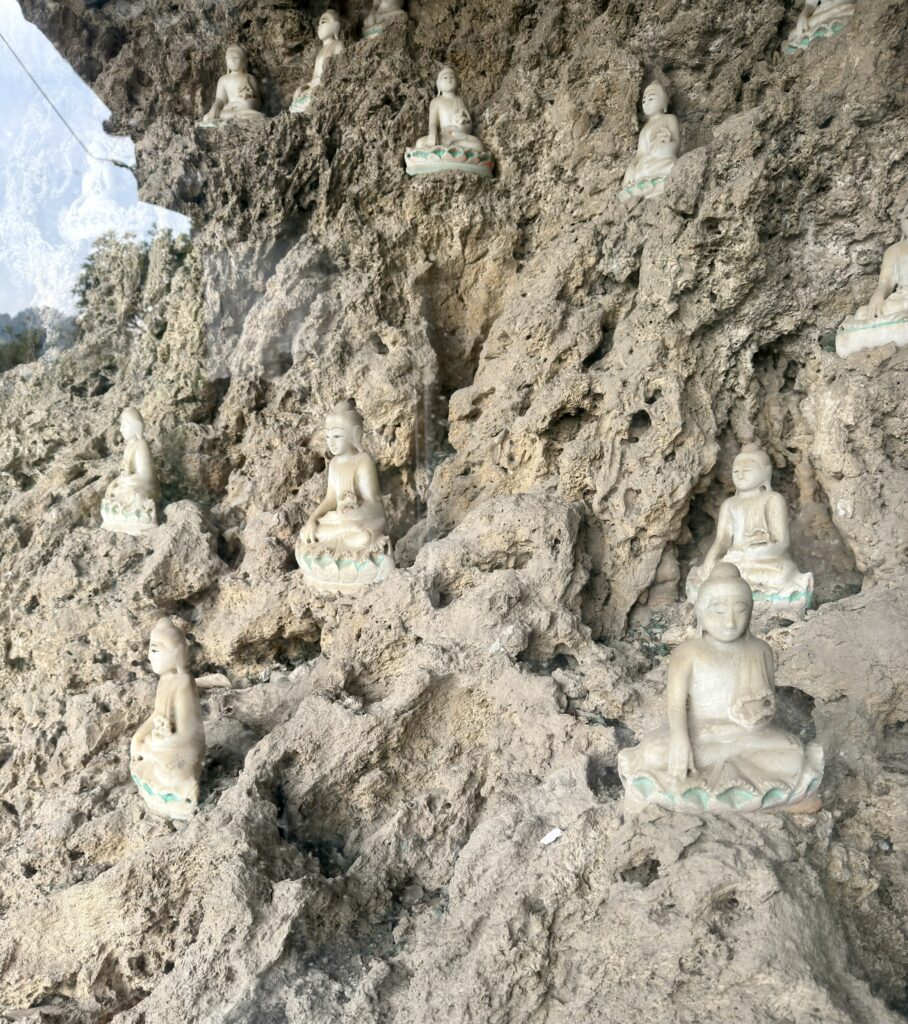
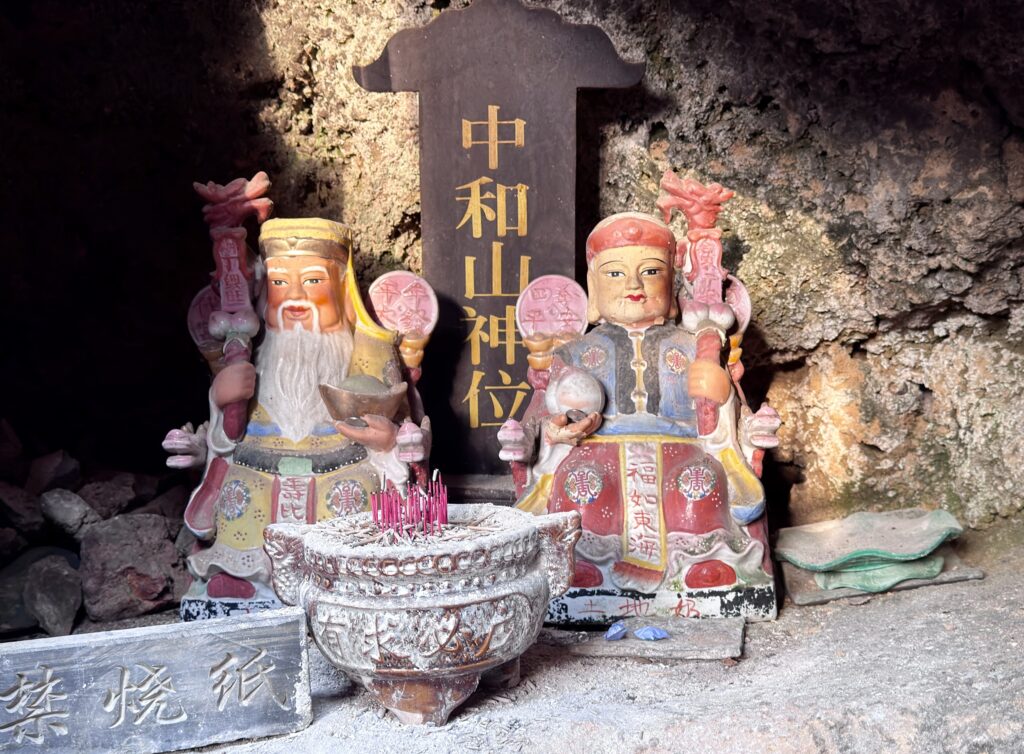
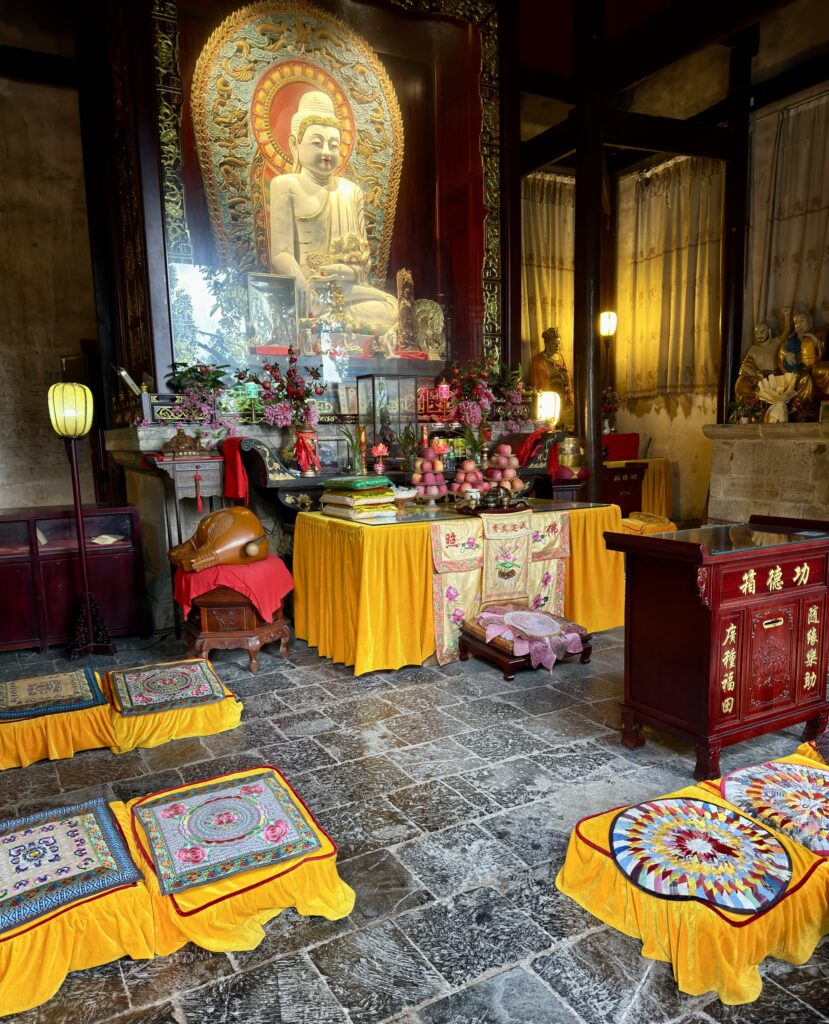
It is not really a cave, it is a religious complex built onto the face of Zhonghe Mountain, directly across the river from the old town: thirty-six structures distributed along roughly three hundred meters of cliff and eighty meters of height, using the natural caves and ledges as part of the architecture rather than leveling them away. Temples grow out of the rock. Walkways run along it. From the town side it reads as a single vertical thing hanging on the hillside, which is why it gets called the Southern Hanging Temple.
It had rained, so the steps were slick, and I went up slowly. That turns out to be the right speed. An hour and a half is about what it takes to do properly.
After dark
One of the most spectacular events in Zhenyuan is what happens at about eight in the evening, when darkness falls. I came out of a restaurant on the far bank the second night and the entire town had turned orange: lanterns strung along both waterfronts, the bridge lit, the cliff temples lit, and all of it doubled in the slow-moving river. I walked back the long way and got in around half past eight, having photographed considerably more of it than I needed to.
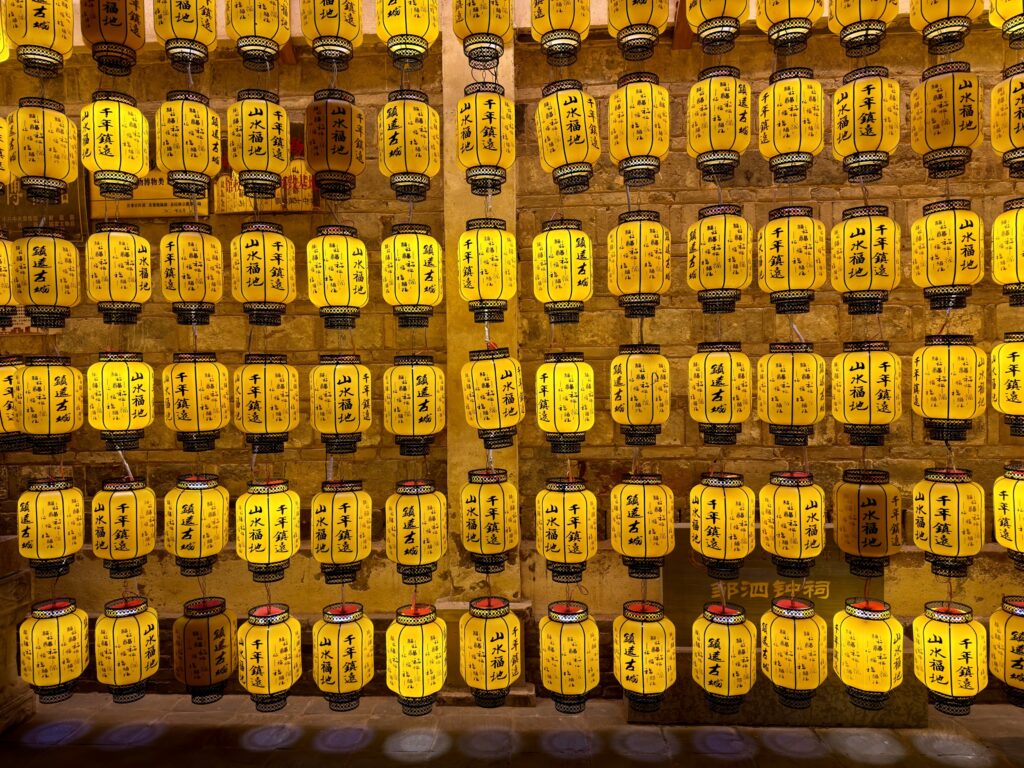
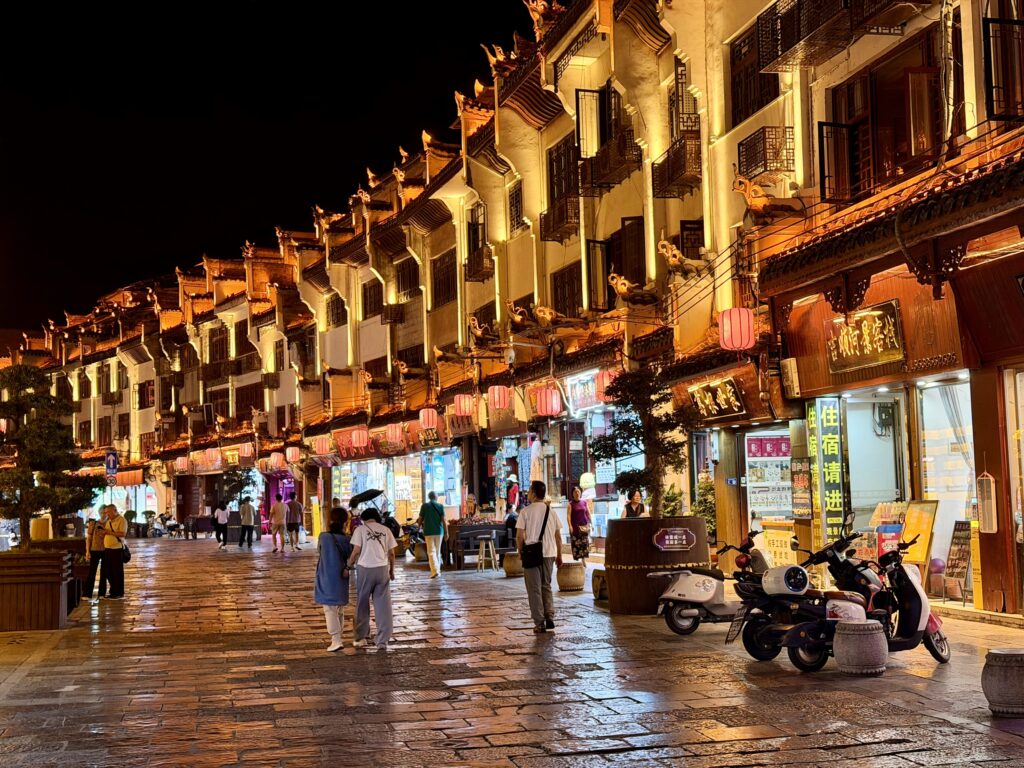
The food was good and unambitious both nights. The first evening I pointed at a recommendation and got pork with something I never identified, served with rice, and ate all of it. The second I did better, fried pork and vegetables and rice at a place along the south bank, sitting outside while the light faded.
Zhenyuan is a two-night town. One night is not enough for the cliff and the bridge both, and three would be one more than the place can fill.
Zhenyuan, the practical stuff
- How do you get to Zhenyuan ancient town? — High-speed train to Sansui, about 3 hours 30 minutes from Chongqing West, then about 40 km by road. There is no obvious bus from the station.
- How much is a taxi from Sansui station to Zhenyuan? — About 180 yuan (about US$27) all in. A DiDi quoted at 70 yuan stopped at the new highway’s toll gate, and the driver asked for 100 yuan (about US$15) more in cash, which the app does not warn you about. Station taxis negotiate down to about 150 yuan (about US$22). Agree the total up front.
- Can you drive into Zhenyuan old town? — No. Cars stop at the edge, and you walk the last few hundred meters with your bag, on cobbles.
- Is Zhenyuan hard to walk? — The waterfront is flat, and everything behind it is stairs. The alleys climbing the hillside are the best part and the steepest.
- How long do you need at Qinglongdong? — About 1.5 hours. The stone steps get slippery in rain.
- Where is the best view of Zhusheng Bridge? — From the south bank. The bridge is free, and sunset and the hour after are both worth staying out for.
- When is Zhenyuan at its best? — At dusk, when the lanterns come on across the whole town and the river goes still.
China 2026 — all posts
- 1 — Shanghaied
- 2 — Three days in Shanghai
- 3 — Xi’an, the beginning of the Silk Road
- 4 — Chengdu, panda town
- 5 — Chongqing, the world’s biggest city?
- 6 — Zhenyuan, the other Silk Road
- 7 — Xijiang, the village that is paid to look like itself
- 8 — Zhangjiajie, the mountain that was renamed after a film
- 9 — Yangshuo, the view on the twenty
- 10 — Shenzhen, from thirty thousand people
- 11 — Why China’s big cities are so quiet
- 12 — Hong Kong, nowhere to go but up
- 13 — Traveling through China’s holidays
- 14 — Taipei, four kilometers of gondola
- 15 — Alishan, the forest that left by train
- 16 — Tainan, where the gods answer yes or no
- 17 — Taiwan, a short history of a long question
- 18 — Why Uber in Taiwan sends you a taxi
- 19 — Hualien, a gorge you can only look at
- 20 — Jiufen, the gold you are allowed to touch
- 21 — Beware of Old Street
- 22 — Taipei, the crates that crossed the strait
- 23 — Shanghai again, through new glasses
- 24 — Train travel in China
- 25 — Paying for things in China, Hong Kong and Taiwan
- 26 — Getting online behind the Great Firewall
- 27 — China at 72
- 28 — Six weeks in China and Taiwan: the route, and what I would change
Before you go: Planning a trip to China · Essential apps for traveling in China