

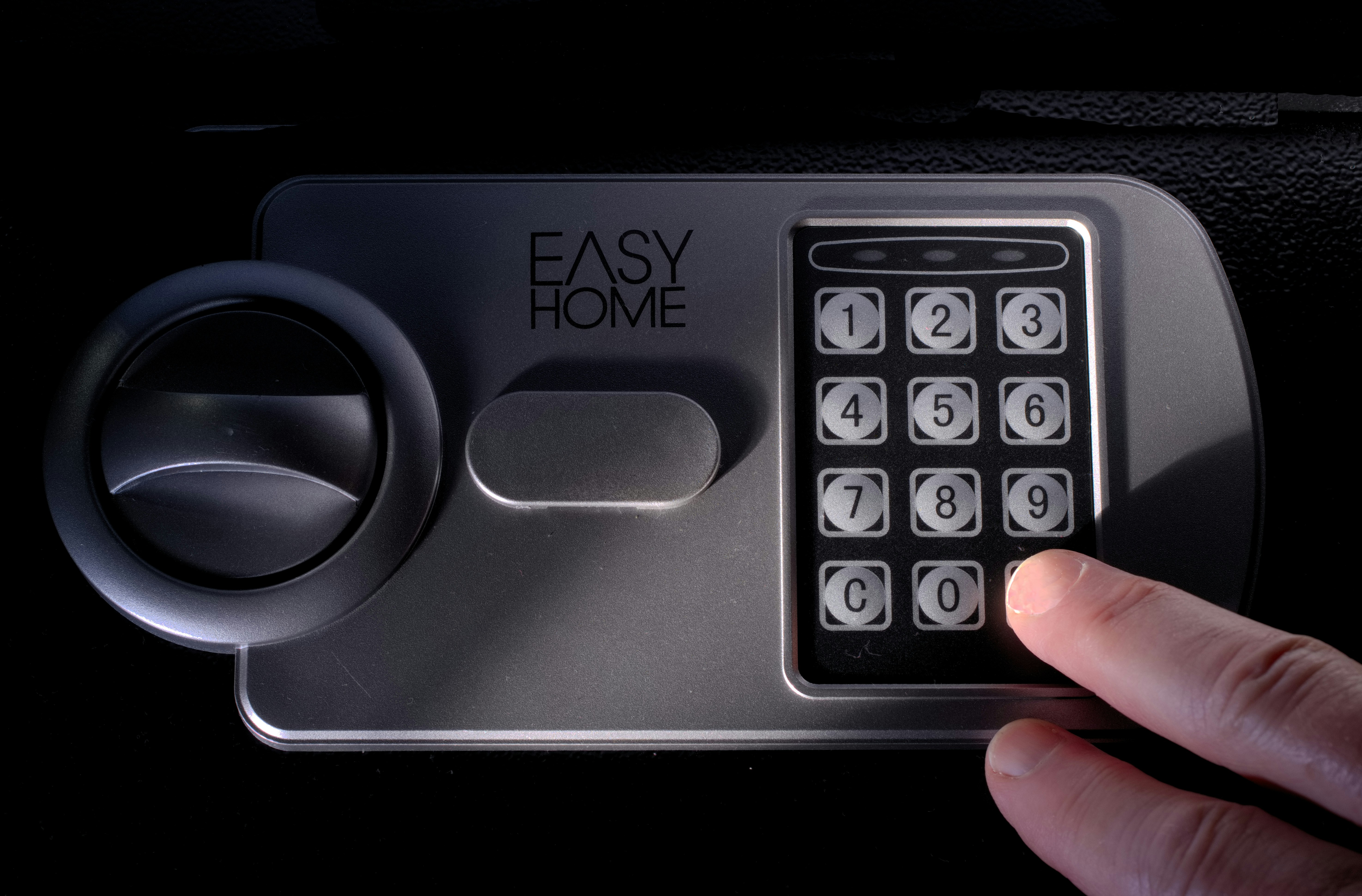

The safe in your hotel room looks reassuring. A steel box, a digital keypad, your own four-digit code. It feels like a vault. It is not.
Most in-room hotel safes are made by a handful of manufacturers and sold in bulk to hotel chains around the world. They all share one feature the manufacturer would prefer you not think about: a master override code. This is a fixed sequence, set at the factory, that opens the safe regardless of whatever code you have chosen. It exists so that maintenance staff can open the safe when a guest forgets their code or checks out without emptying it first.
The problem is that this master code is rarely changed, often printed in the manual that came with the safe, and in many cases published online. A motivated thief with fifteen seconds and a search result can open your safe without touching your code. And it is not only a motivated thief you need to worry about. The master code is known, to varying degrees, to housekeeping, maintenance, and hotel management. That is a lot of people with access to a box you thought only you could open.
In the video below The LockPickingLawyer, a YouTube channel that documents security vulnerabilities in locks and safes, demonstrates this vulnerability.
Then there is the physical reality. Most hotel room safes are not bolted to the wall or the floor. They sit on a shelf in a wardrobe, held in place by nothing more than their own weight. Someone who knows what they are doing can remove the safe, carry it out of the room, and open it at leisure elsewhere. The steel looks substantial. In most cases it is about four millimetres thick.
The electronic locking mechanism on budget safes has a further weakness. The latch that holds the door shut is spring-loaded, which means it can sometimes be defeated with a thin piece of stiff material worked into the gap around the door.
In the video below the Lockpickinglawyer shows how to open a SentrySafe hotel model, opening it in seconds by raking the lock physical backup lock. Just one of many such demonstrations.
What this adds up to is simple: the safe in your room provides reasonable protection against opportunistic petty theft by someone with no particular skills or knowledge. Against anyone with specific intent and a few minutes of preparation, it provides very little.
There is a better option for valuables you genuinely cannot carry. The front desk of most hotels will store items in a secure facility and issue a receipt. This introduces a paper trail, a signature, and a witness. That alone changes the risk profile considerably.
In practice, the cleanest approach is what I covered in my piece on travel security: carry your passport, one credit card, and your phone on your person at all times. Lock nothing of real value in a room you do not control. The safe is perfectly adequate for a paperback novel.