

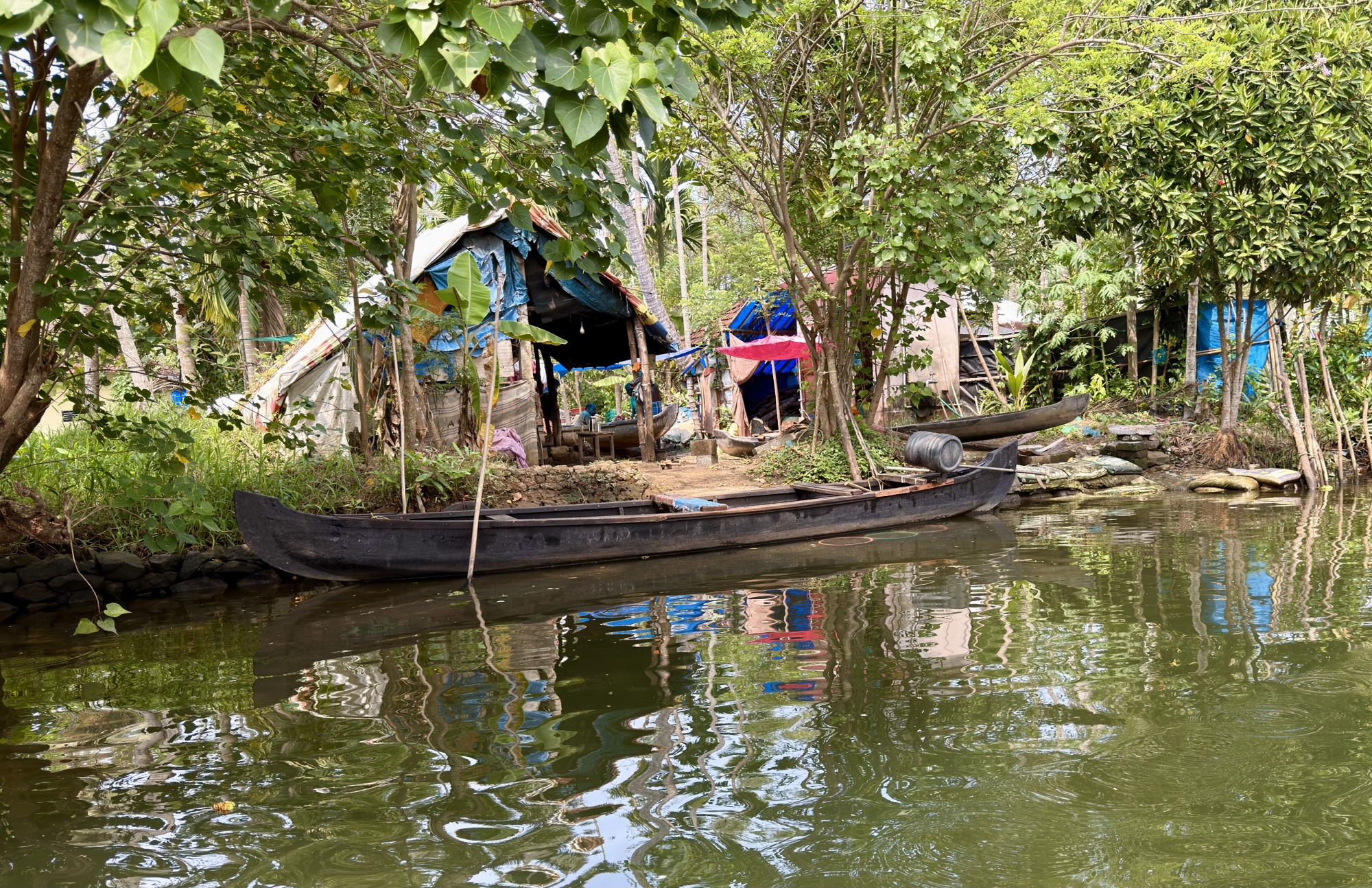

The departure point for the tour was two hundred meters from my homestay. That was not coincidence, I had done my research before pick a place to stay. Being in the right spot in a new city makes all the difference.
Wilson Tours runs a shared day trip to the Kerala backwaters. When I arrived at 8:30, the total headcount was three: me and two German guys. We fit in a Suzuki and set off through Kochi’s morning traffic. An hour later, with the city behind us, we were at the edge of the backwaters.
Kerala’s backwaters are a network of canals, rivers, and lakes running parallel to the Arabian Sea coast for roughly 900 kilometers. In places the strip of land between the water and the sea is barely wide enough for a road. Rice paddies and coconut palms cover most of it. The water connects the villages and carries the trade, and it has shaped the regional economy in ways that are still visible everywhere you look.
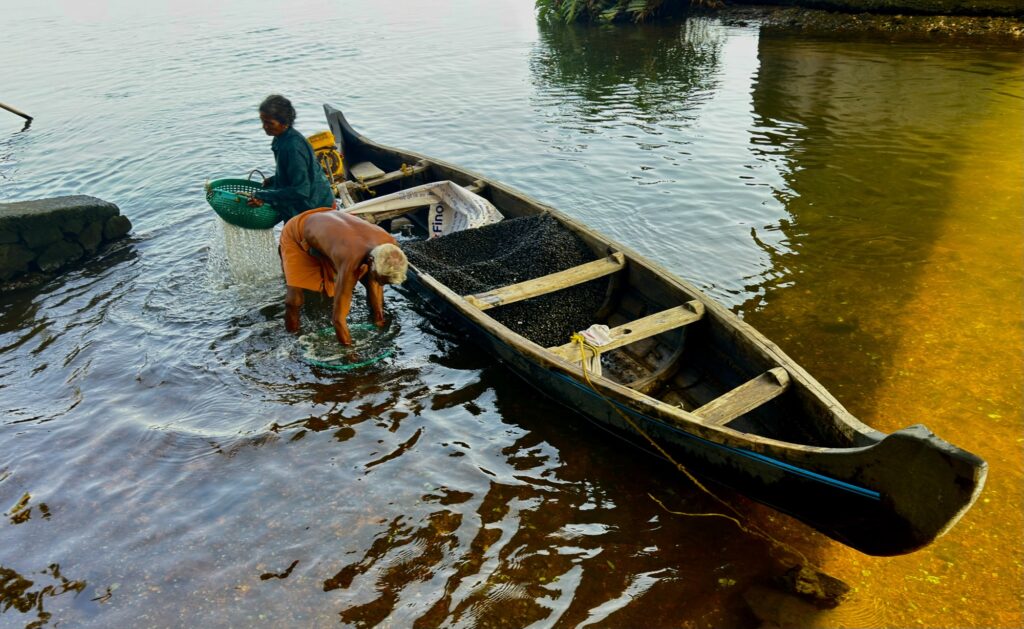
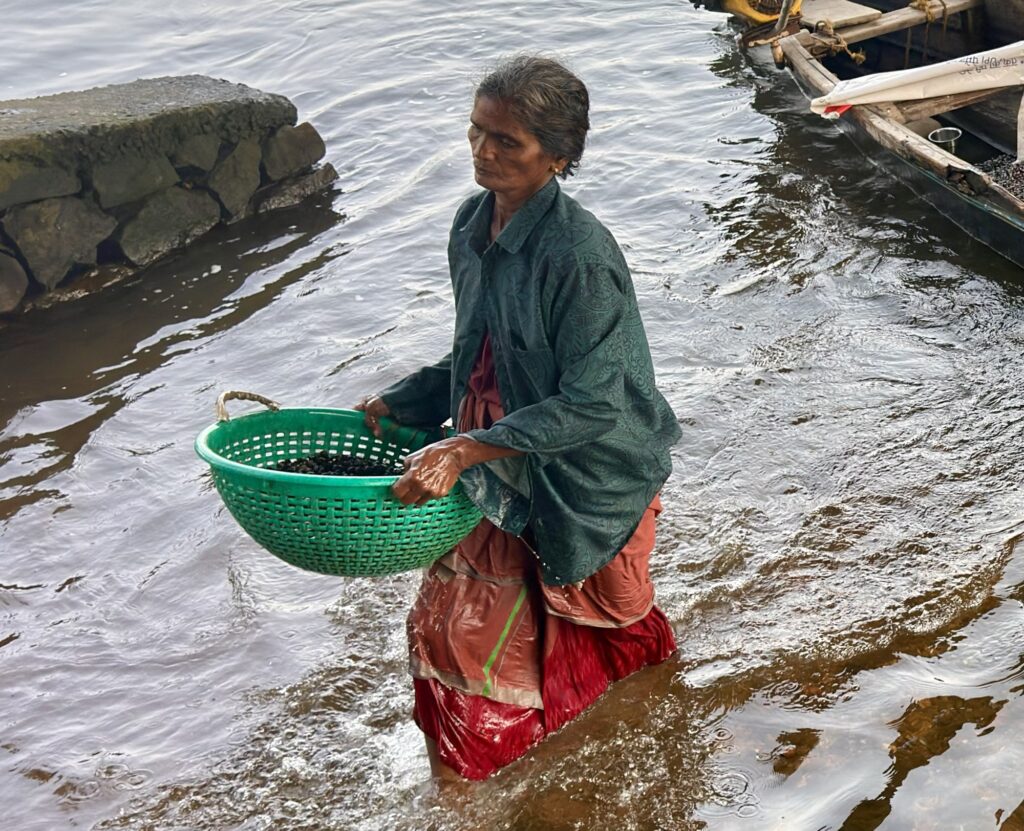
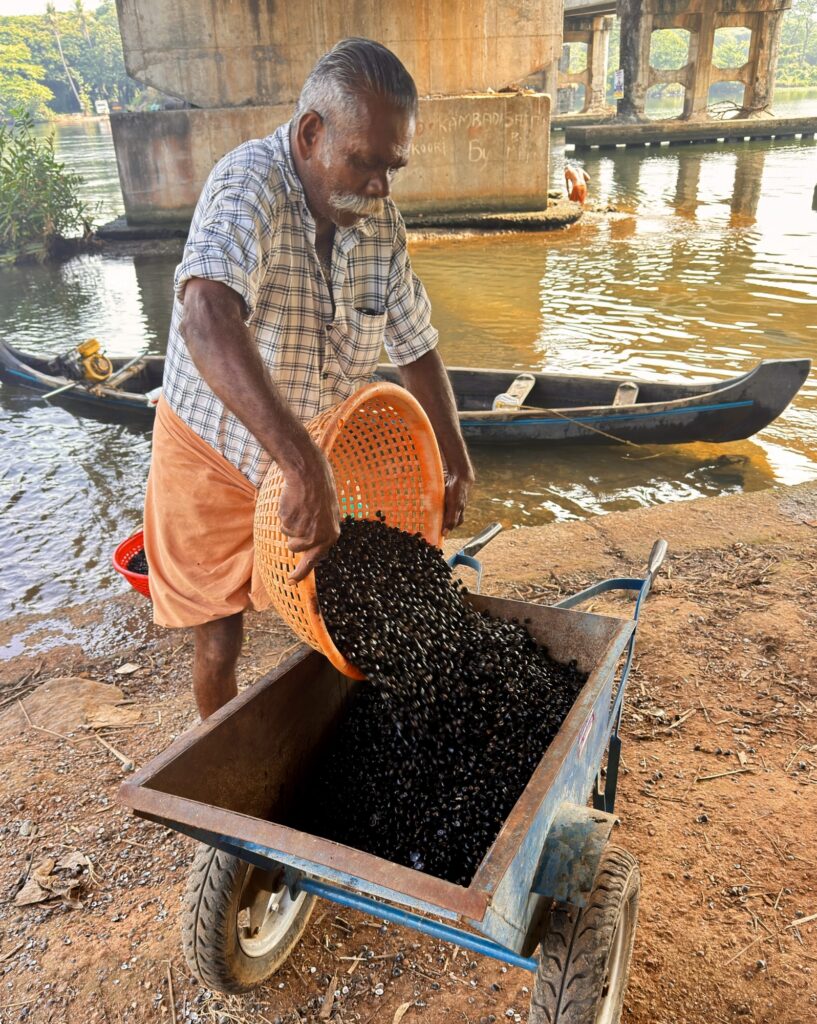
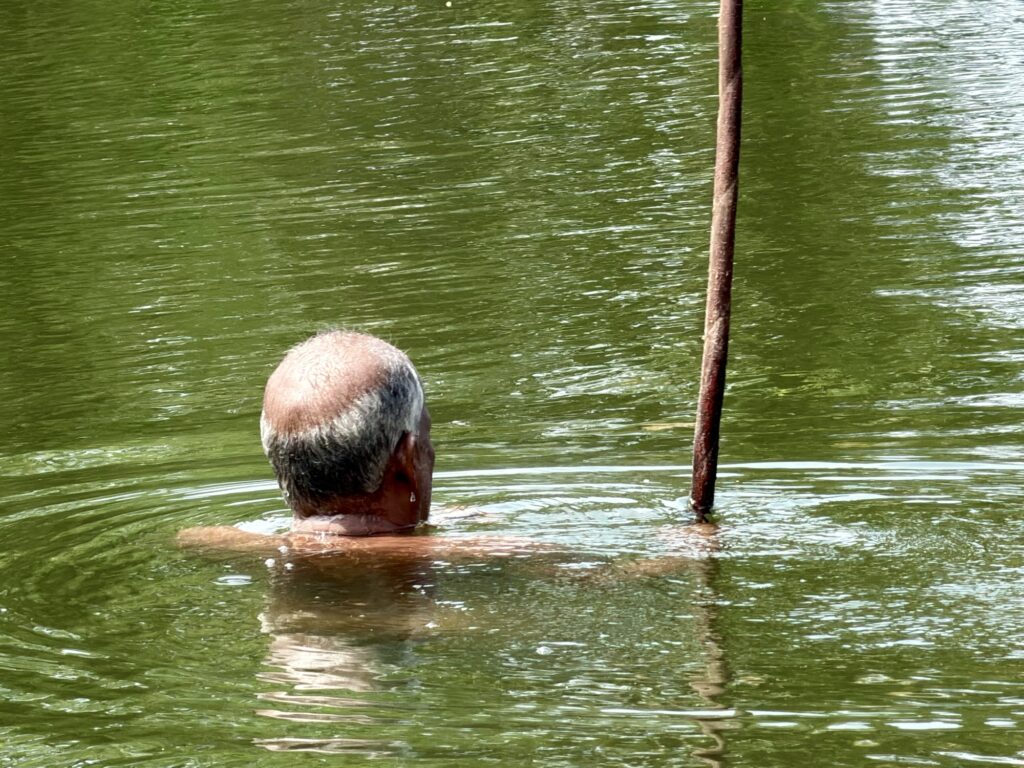
We had to wait a while for an Indian family coming in their own car. We spent it watching a mussel harvest being brought in and cleaned at the jetty. Several people, working from the early morning, for a total take of about 2,800 rupees. Thirty dollars. It is the kind of figure that recalibrates what you think you understand about the local economy.
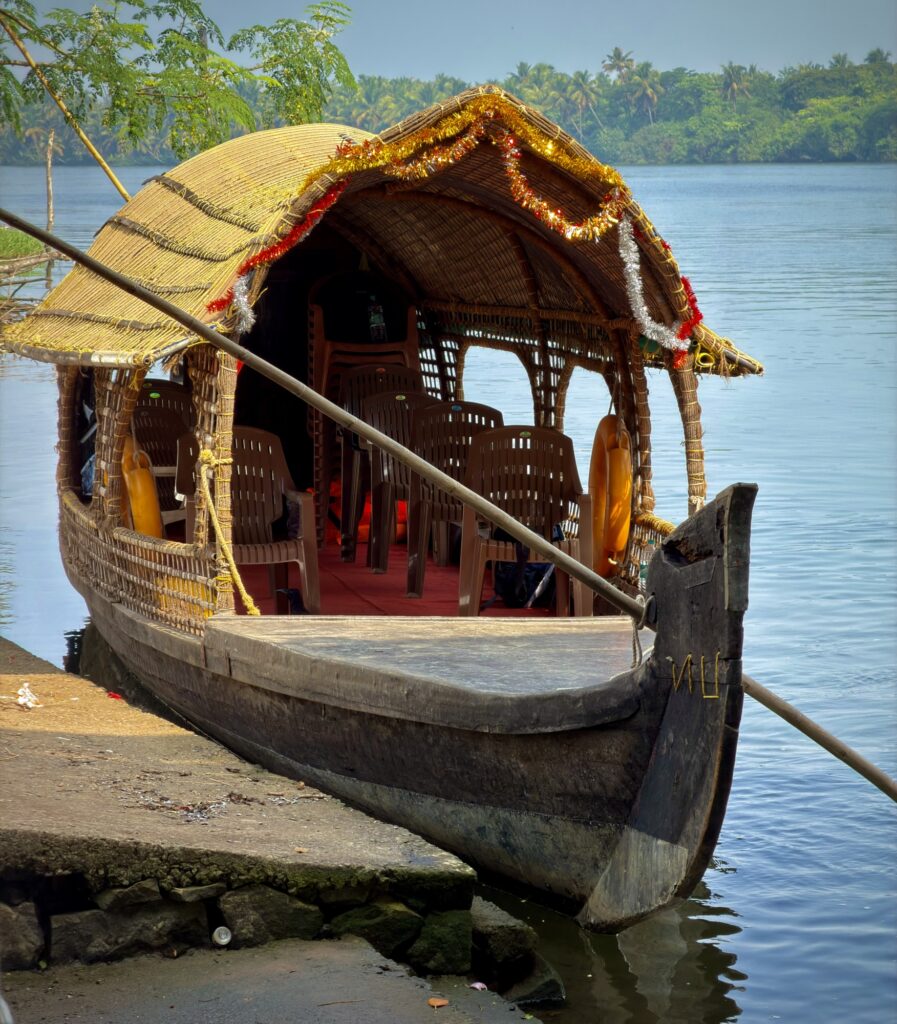
The boat had no engine. Two men, one at the bow and one at the stern, worked long poles against the riverbed. The pace was easy and the canal was quiet except for the sound of the poles and a few outboard engines passing in the other direction. When we reached the main river to cross, the poles could no longer touch bottom. The current made its presence felt and both men worked against it for a few minutes, angling the poles for whatever grip they could find. We got across without drama.
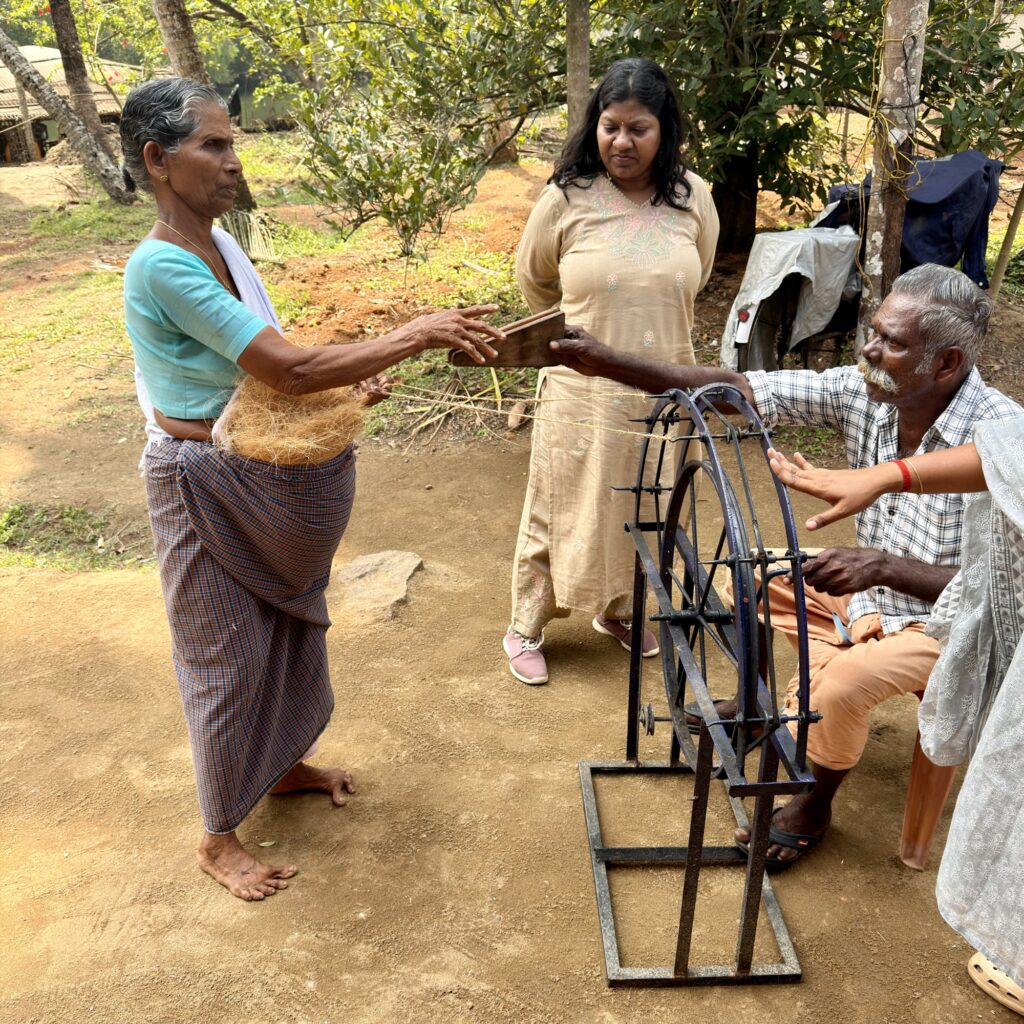
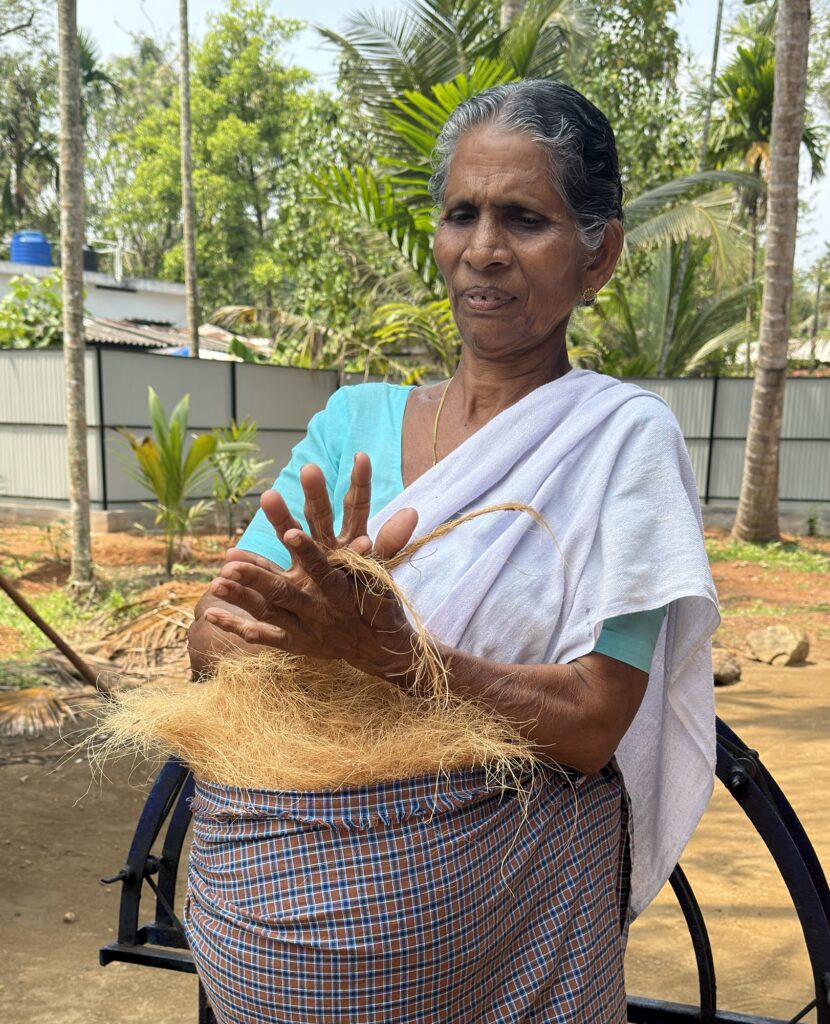
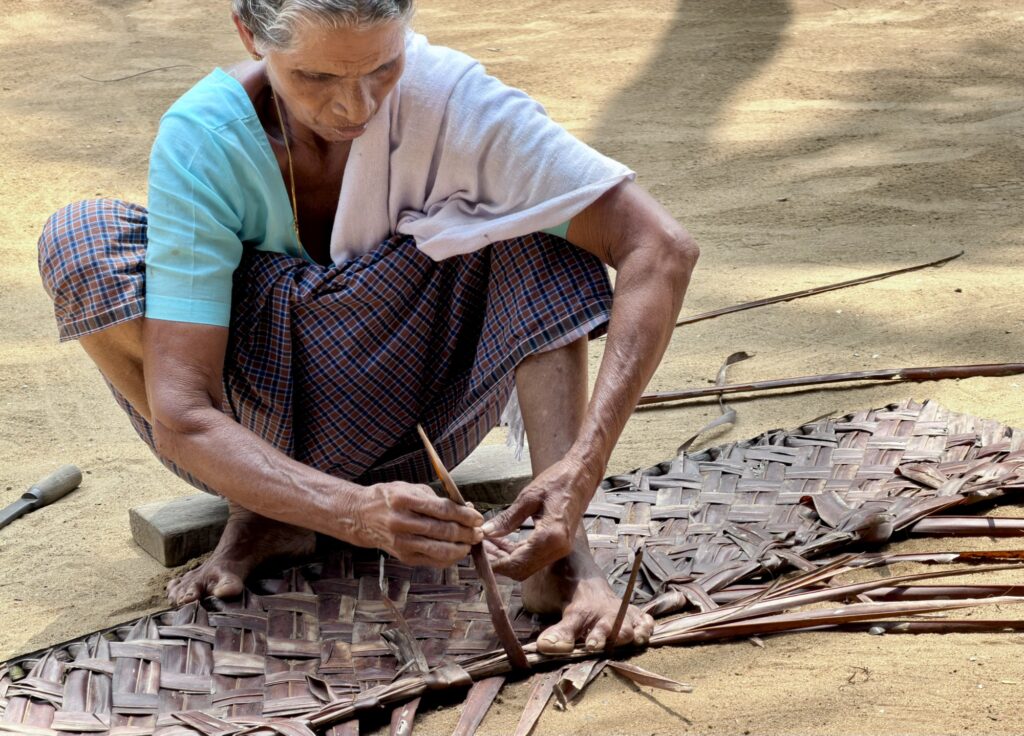
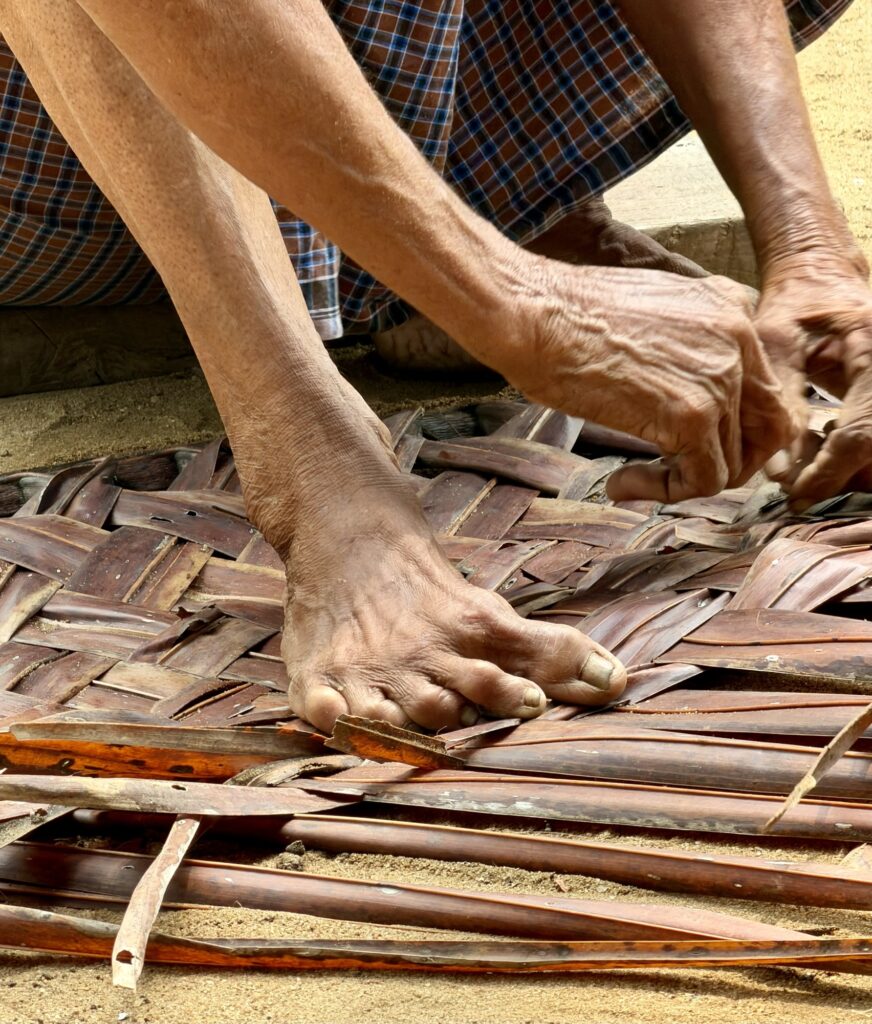
On the far bank we pulled ashore for demonstrations of the two crafts most associated with this coast. Palm leaf weaving, where dried strips are folded and interlocked into panels used for roofing. And coir, the natural fiber extracted from coconut husks that you encounter constantly in Kerala and rarely anywhere else.
Coir begins with patience. The coconut husks are submerged in the backwater and left to soak for six months. In that time the organic matter breaks down and releases the tough fibrous strands running through the husk. Pull them out, dry them, twist them together, and you have a fiber strong enough for rope, matting, and brush bristles. Kerala produces most of India’s coir and a large share of the world’s. The backwaters are not incidental to this: they are the production process.
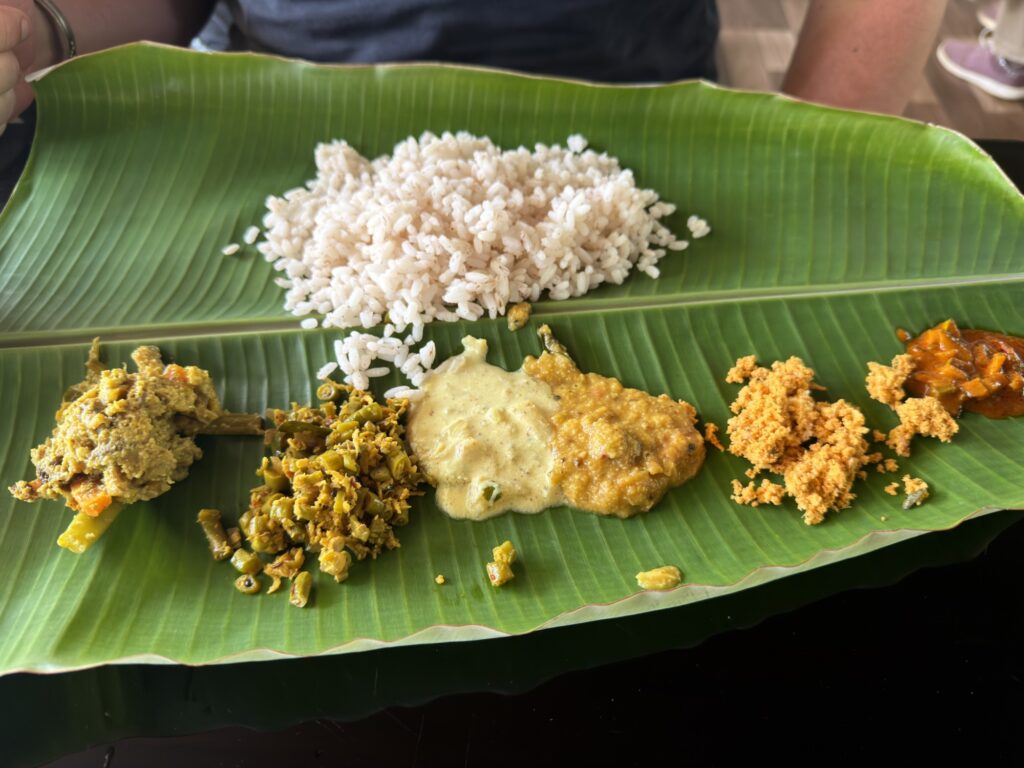
Lunch was served on banana leaves at a stop along the river. The menu ran from spicy to spicier to a third category I did not test. Rice was available in quantity, which helped. Ice cream for dessert was unexpected and welcome.
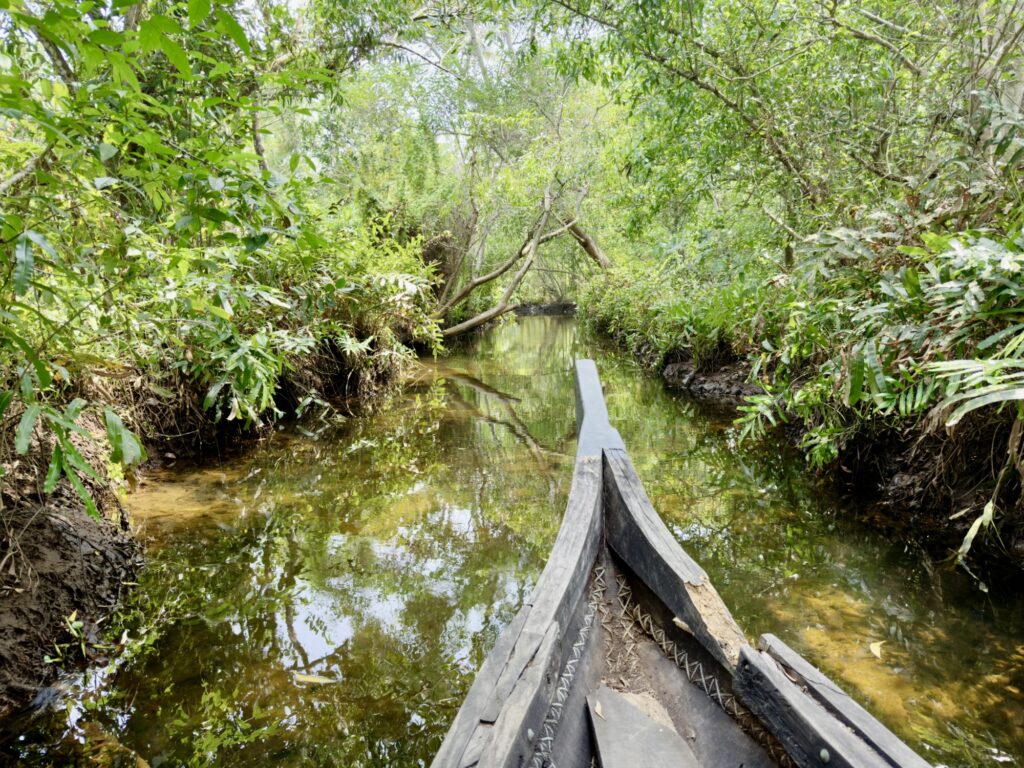
The afternoon took us into narrower water. We switched to a smaller canoe and punted up one of the natural canals running back from the river. One punter this time, working alone. Low tide had left the bottom inconveniently close to the surface, and we ran aground twice. Both times a combined effort from passengers and punter sorted it out. The canal was narrow enough that vegetation on either bank came together overhead.
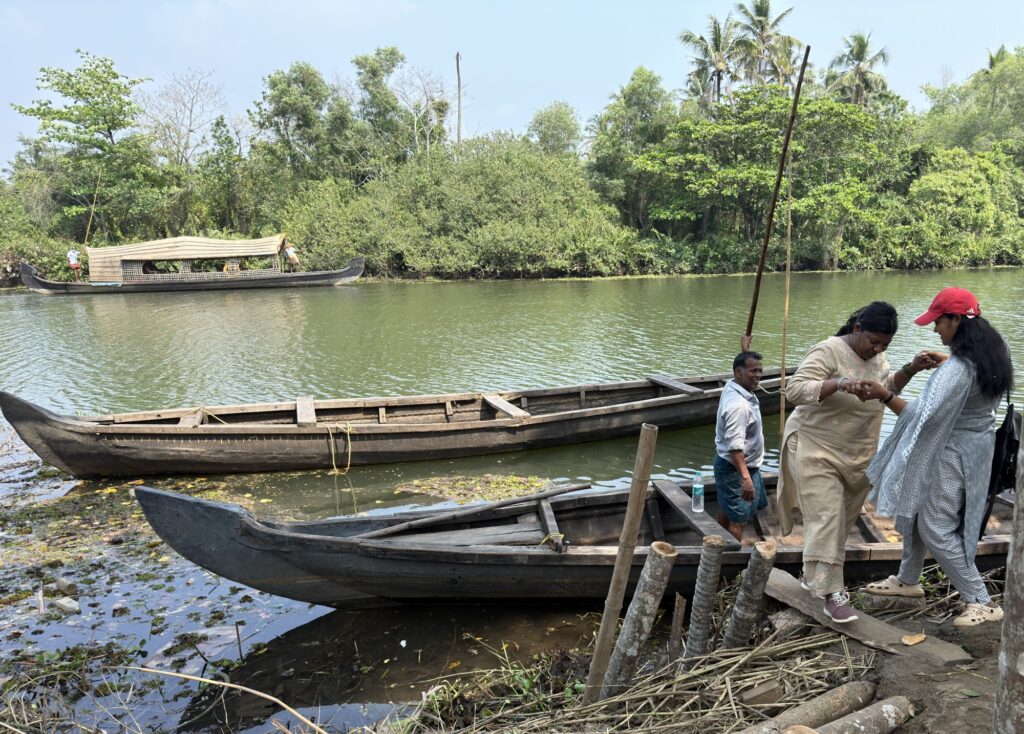
The tour ended with tea in a private home, which felt like a considered choice on someone’s part rather than an item added to a checklist.
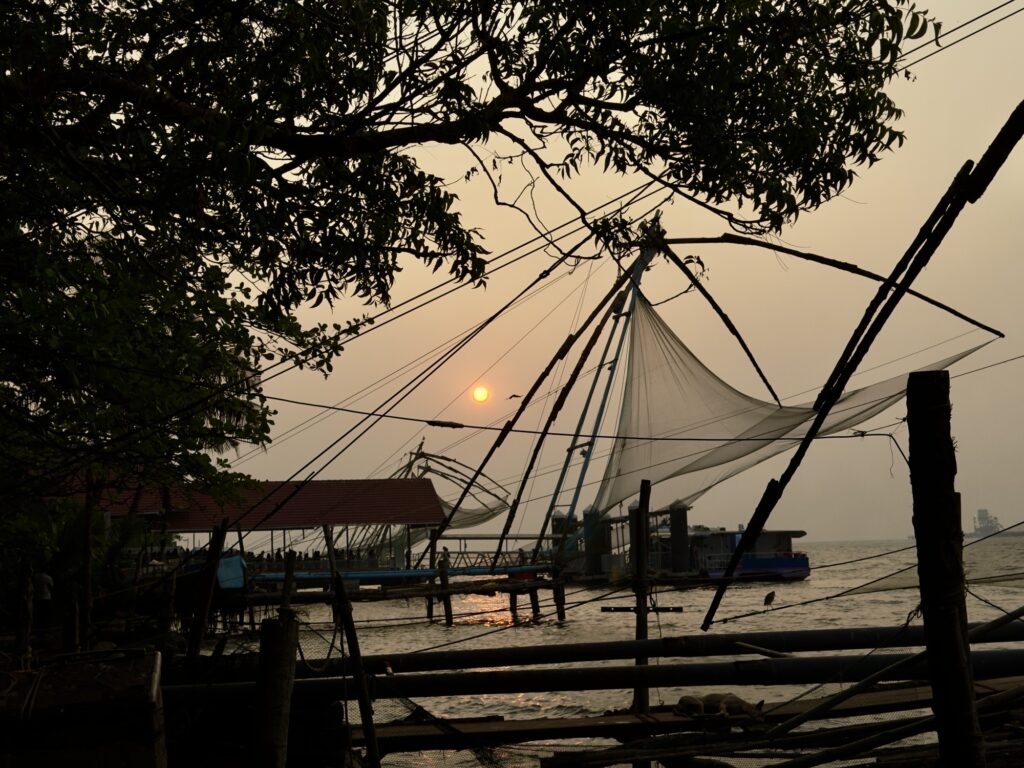
Back in Kochi in the late afternoon, I returned to the Chinese fishing nets for a second set of photos. I had been there the evening before as well. The light was quite different on the two days, in ways that are hard to anticipate. That’s what makes it interesting and worthwhile to go back to beautiful places.
Grilled calamari in a garlic sauce for dinner. Not too spicy. A perfect way to round off a long and interesting day.
When in Fort Kochi, the practical stuff:
- Stay in Fort Kochi, not the mainland — walkable to the waterfront and two minutes from the tour departure point. The ferry across to the mainland takes ten minutes and costs almost nothing.
- Wilson Tours runs a shared backwaters day trip departing around 8:30 AM, back in Kochi by mid-afternoon. Book a day ahead — your accommodation can arrange it.
- The afternoon section switches to a smaller canoe for the narrow canals. The main boat is easy to board; the canoe is lower and requires a bit more care if balance is any issue.
- The Chinese fishing nets are worth two visits — once in the evening and once the next morning. The light is completely different on the two days and you can’t predict which will be better.
- Coir and the backwaters are inseparable — coconut husks are soaked in the canals for six months before the fiber is extracted. What looks like floating debris is raw material.
India and Sri Lanka 2026 — all posts
- Day 1 — 24 Hours to Mumbai
- Day 2 — First Morning in Mumbai
- Day 3 — Exploring Mumbai
- Dhobi Ghat: Mumbai’s Laundromat
- Day 4 — Sightseeing in Colombo: One Day is Enough
- A Short History of Ceylon
- Day 5 — Kandy: Moving into the Mountains
- Day 6 — Moving on to Ella
- Day 7 — Hike and Sunstroke
- Tea in Sri Lanka: From a Blight in 1869 to Four Million Cups a Day
- Day 8 — Nine Arches Bridge
- Day 9 — Tuktuk Tour Around Ella
- Day 10 — Time to Leave Ella
- Orphans of Udawalawe: Inside Sri Lanka’s Elephant Transit Home
- Day 11 — Safari and Galle Fort
- Day 12 — Onwards to Negombo for the last day in Sri Lanka
- Day 13 — All the problems concentrated on a single day
- Royal Enfield: Why India Rides Different
- Day 14 — The Kerala Backwaters
- Day 15 — Local bus to Munnar
- Leyland, a familiar name from the past
- Buying a beer in Kerala: Local knowledge required
- Mahindra: The Jeep That Never Left