


The fever had broken by morning. Not dramatically, just quietly gone, the way these things go when the body has decided it has made its point. I took my temperature before getting up: 36.9. I had breakfast on the balcony and watched a troupe of gray langurs work their way along the railing, helping themselves to whatever had been left out. One of them sat close enough to study me with the detached curiosity of someone who has seen a great many tourists and found them uniformly unimpressive.
I was in no particular hurry. A recovery day needs to begin like one.
At noon I set out for Nine Arches Bridge. ChatGPT had described the route as an easy downhill hike, which was accurate in one direction and optimistic about the other. AI is improving rapidly, but it has a tendency to describe outward journeys without giving equal consideration to the return. I noted this and walked.
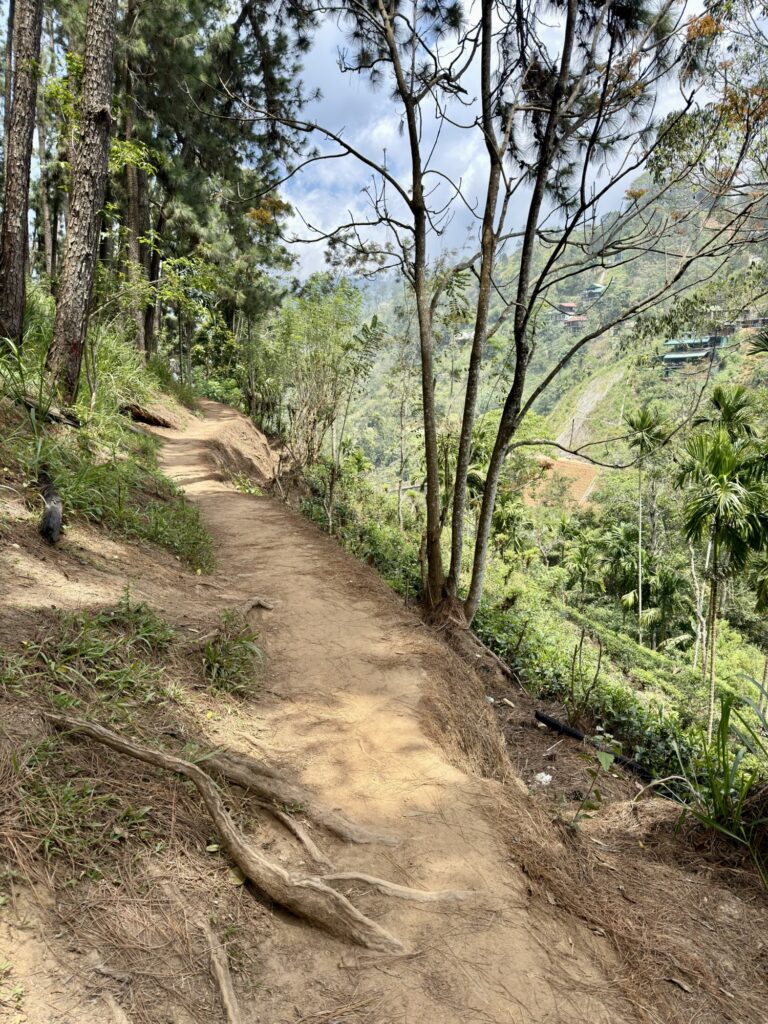
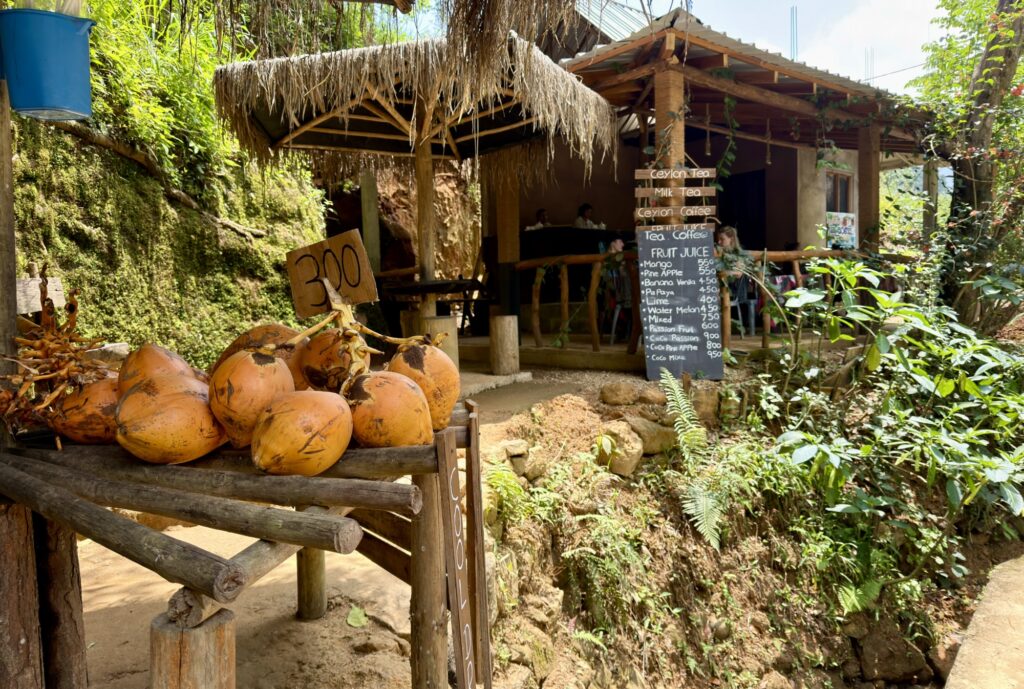
The path drops through dense forest, the canopy closing overhead within a few minutes of leaving the main road. It is genuinely pleasant walking: cool under the trees, the ground soft, the trail clear. Twenty minutes of easy descent brought me to the bridge.
The bridge itself
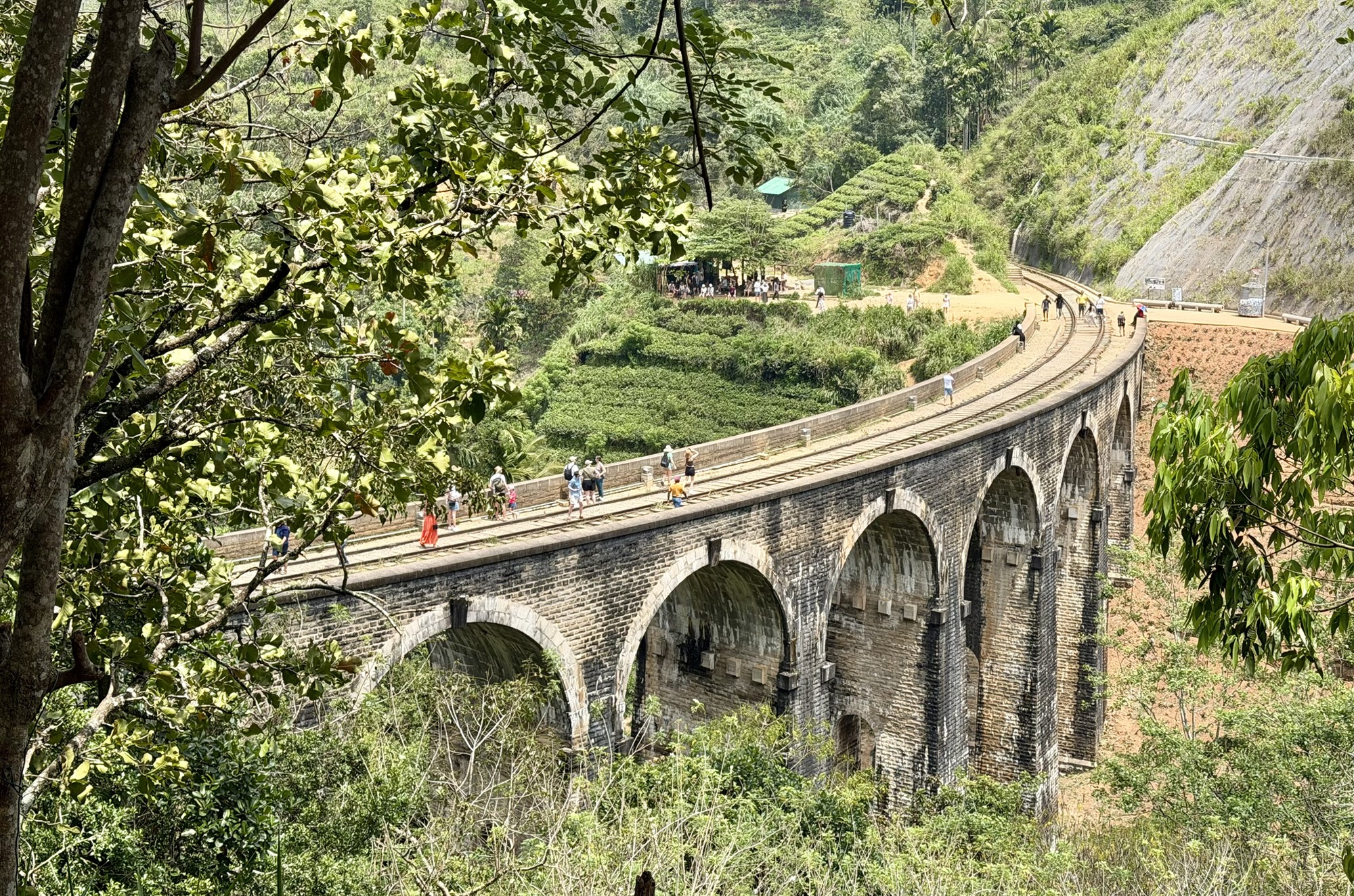
Nine Arches Bridge is one of the most photographed structures in Sri Lanka, and it earns the attention. Built entirely from brick, stone, and cement between 1919 and 1921, it spans a deep jungle valley on nine arches, each around 24 meters high. The structure is 91 meters long. No steel was used in the construction, which is the detail most guides lead with, and it is a reasonable thing to lead with: the bridge carries fully loaded trains across a valley in the Sri Lankan hill country and has been doing so for over a century.
The railway it carries is the Kandy to Ella line, or more precisely the section of the Badulla line that winds through the central highlands from Kandy through Nanuoya, Nuwara Eliya, Haputale, and Ella before continuing to Badulla. It is widely described as one of the most scenic train journeys in the world, and the section from Kandy to Ella, roughly six hours in a slow train through tea country and cloud forest, has earned that reputation fairly. The line was built by the British between 1864 and 1924 to service the tea estates: the economics of hauling tea down from the highlands required a railway, and so a railway was built, through terrain that made it extraordinarily difficult to build. The nine arches at Ella were among the last sections completed.
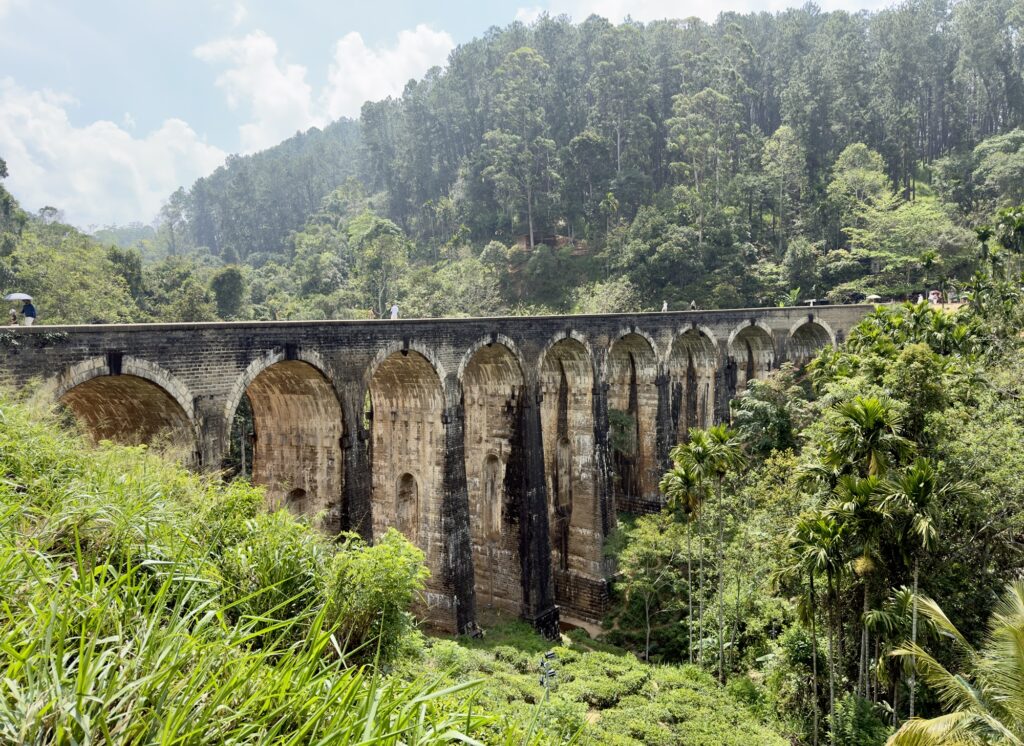
The best view of the bridge is from above, on a rocky outcrop reached by a short scramble that brings you level with the top of the arches. From there the structure frames itself against the valley below and the forest behind. I took the standard photographs. Everyone does. The bridge invites it.
I found a cafe near the viewing point, sat down, and ordered a cappuccino. Trains were sparse. The line has been operating at reduced frequency since a series of landslides and track collapses in recent years damaged sections between Ella and Haputale, and the repair work has been slow. A train would have been useful for a photograph. None came.
After a while I stopped waiting for one. The bridge is worth seeing with or without a train on it.
The walk back up to the main road was, as anticipated, uphill. Not strenuous by any objective measure, but noticeable after the previous day. I found a restaurant on the main street and sat down for teriyaki chicken, which bore no particular relation to teriyaki as I understand it but was hot and good. A satisfactory lunch.
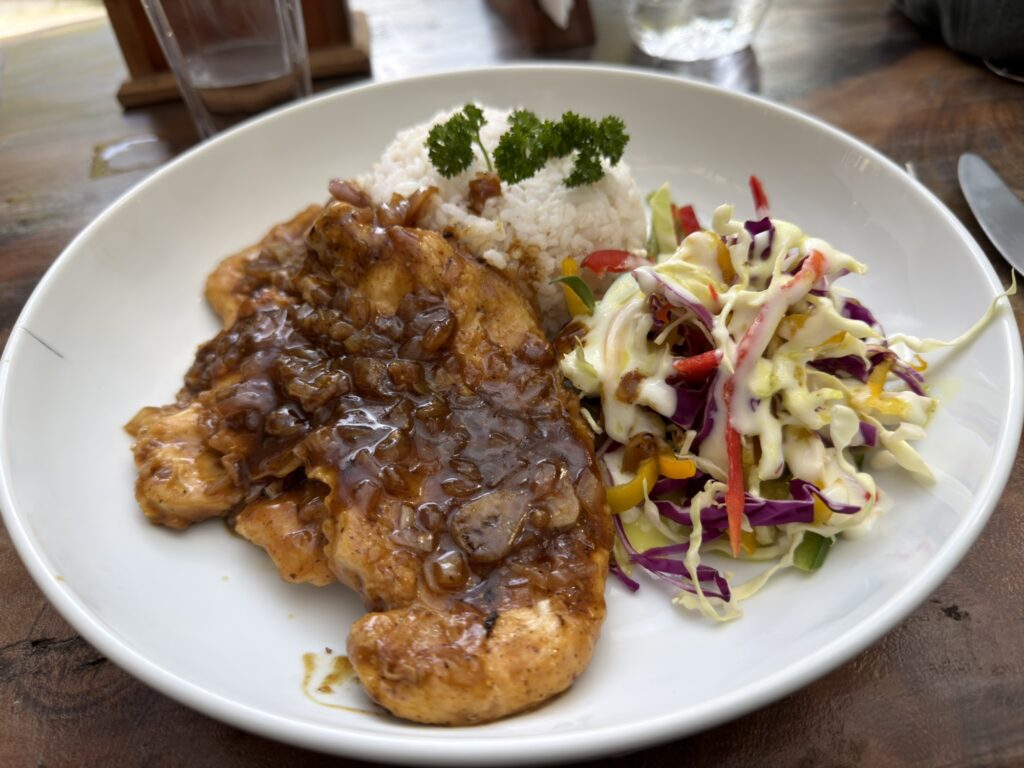
The afternoon I spent at the hotel, reading and not doing very much. A late dinner, an early night.
Some days on a long trip exist mainly to let the previous ones settle. This was one of those days. The bridge was worth the walk. The monkeys were good company at breakfast. The cappuccino by the valley was better than it needed to be.
India and Sri Lanka 2026 — all posts
- Day 1 — 24 Hours to Mumbai
- Day 2 — First Morning in Mumbai
- Day 3 — Exploring Mumbai
- Dhobi Ghat: Mumbai’s Laundromat
- Day 4 — Sightseeing in Colombo: One Day is Enough
- A Short History of Ceylon
- Day 5 — Kandy: Moving into the Mountains
- Day 6 — Moving on to Ella
- Day 7 — Hike and Sunstroke
- Tea in Sri Lanka: From a Blight in 1869 to Four Million Cups a Day
- Day 8 — Nine Arches Bridge
- Day 9 — Tuktuk Tour Around Ella
- Day 10 — Time to Leave Ella
- Orphans of Udawalawe: Inside Sri Lanka’s Elephant Transit Home
- Day 11 — Safari and Galle Fort
- Day 12 — Onwards to Negombo for the last day in Sri Lanka
- Day 13 — All the problems concentrated on a single day
- Royal Enfield: Why India Rides Different
- Day 14 — The Kerala Backwaters
- Day 15 — Local bus to Munnar
- Leyland, a familiar name from the past
- Buying a beer in Kerala: Local knowledge required
- Mahindra: The Jeep That Never Left