

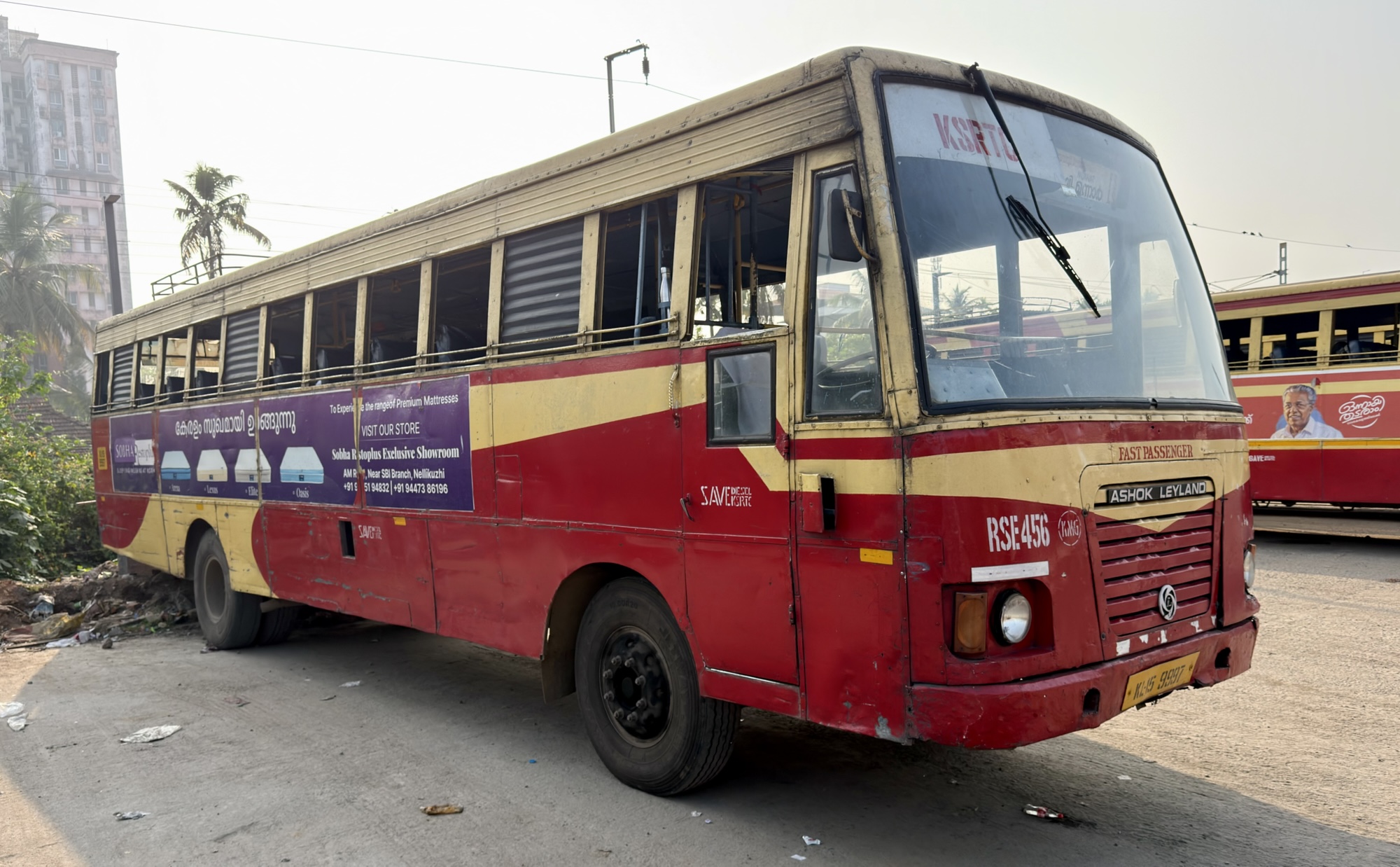

Seeing “Ashok Leyland” on the front of the bus that pulled into Kochi bus station this morning, I had a small flash of recognition. Leyland. I knew that name. Growing up, Leyland buses were a fixture of public transport back home, solid single-deckers in municipal livery that ground their way through the city in all weathers. British engineering, exported to Scandinavia. I had not thought about them in decades.
The Indian version has a different story, though the lineage is real.
Ashok Leyland was founded in Chennai in 1948, one year after Indian independence, originally as Ashok Motors. The plan was to assemble Austin cars. The pivot to commercial vehicles came quickly, and in 1954 the British parent, Leyland Motors, took a stake in the company. What followed was thirty years of transferring technology, building capacity, and supplying what the newly independent state needed most: buses and trucks, in large numbers, reliably, at a price that worked.
The timing was not accidental. India in the 1950s and 1960s was constructing its infrastructure from the ground up. State transport corporations, the government bus networks connecting towns and villages across every region, needed a domestic supplier they could count on. Ashok Leyland became that supplier. Military contracts followed. The Indian Army discovered what the state bus companies already knew: the vehicles were simple enough to maintain far from a workshop, and the parts were available everywhere.
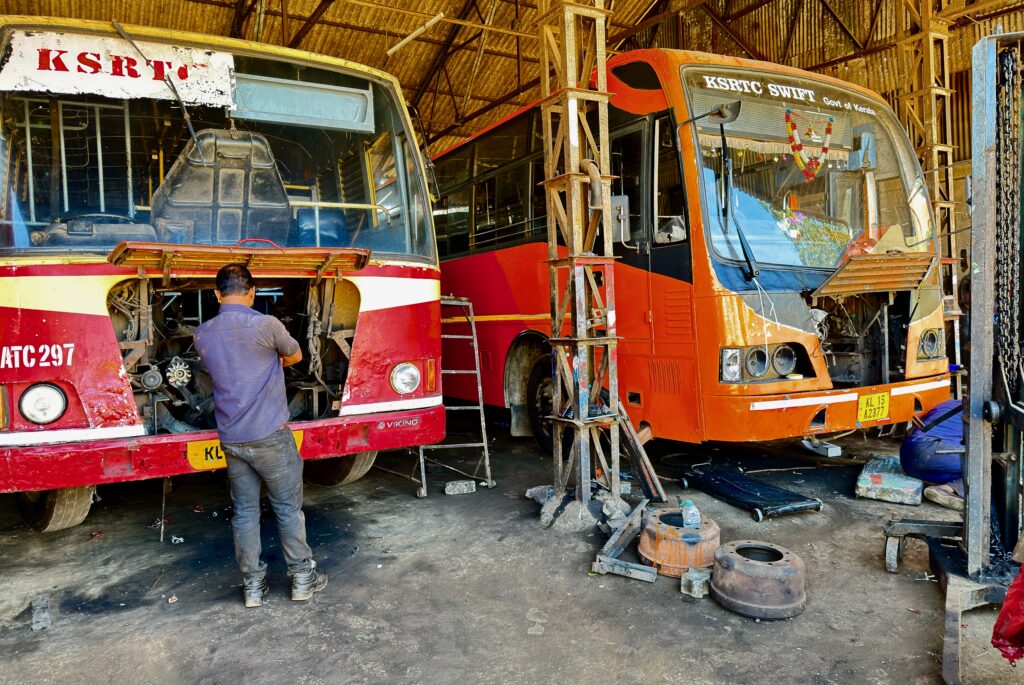
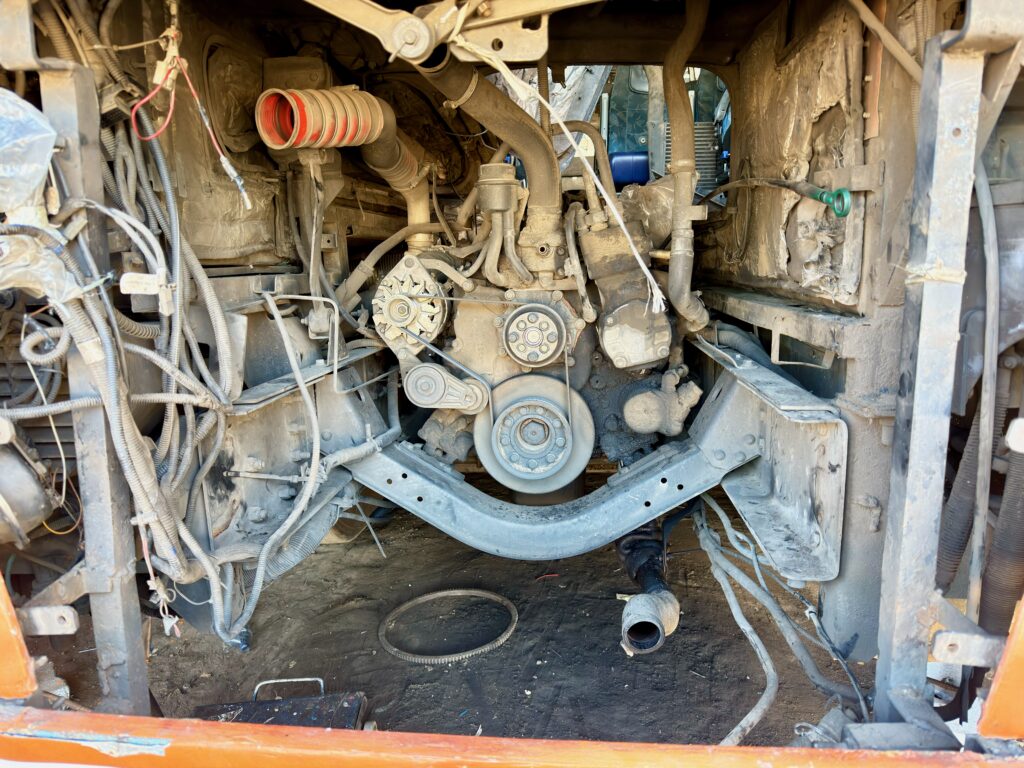
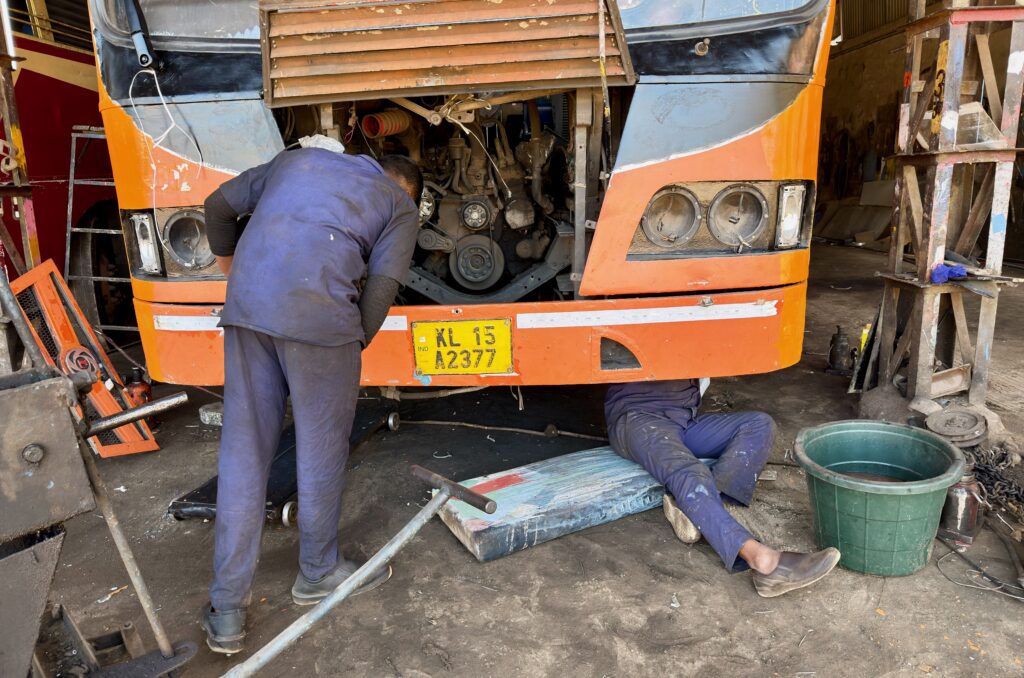
When Leyland’s British parent ran into serious trouble in the 1980s, British Leyland’s decline being its own long story, the Indian operation had long since outgrown its dependence on them. By then Ashok Leyland was the second-largest commercial vehicle manufacturer in India. Today it is one of the largest bus manufacturers in the world by volume. The buses carrying most of Kerala, Tamil Nadu, and much of South India belong to the same lineage as the ones I remembered from home, even if almost nothing else about them is the same.
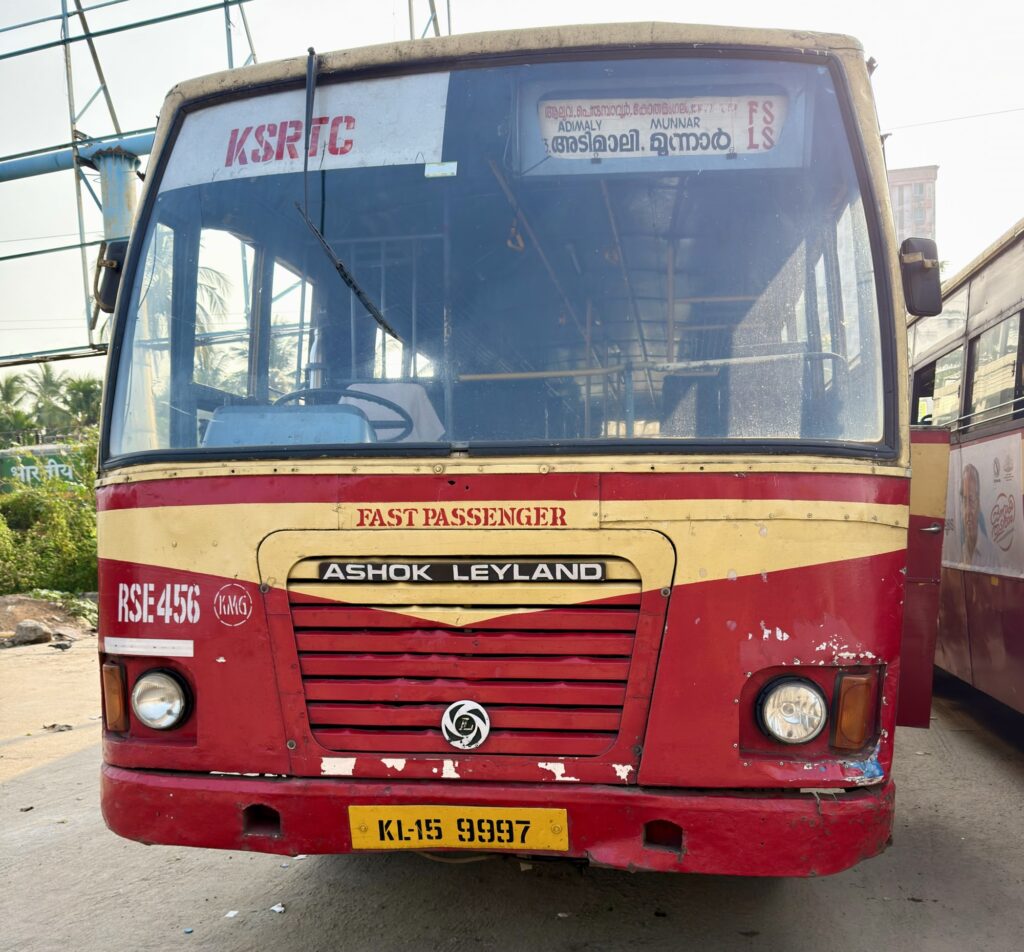
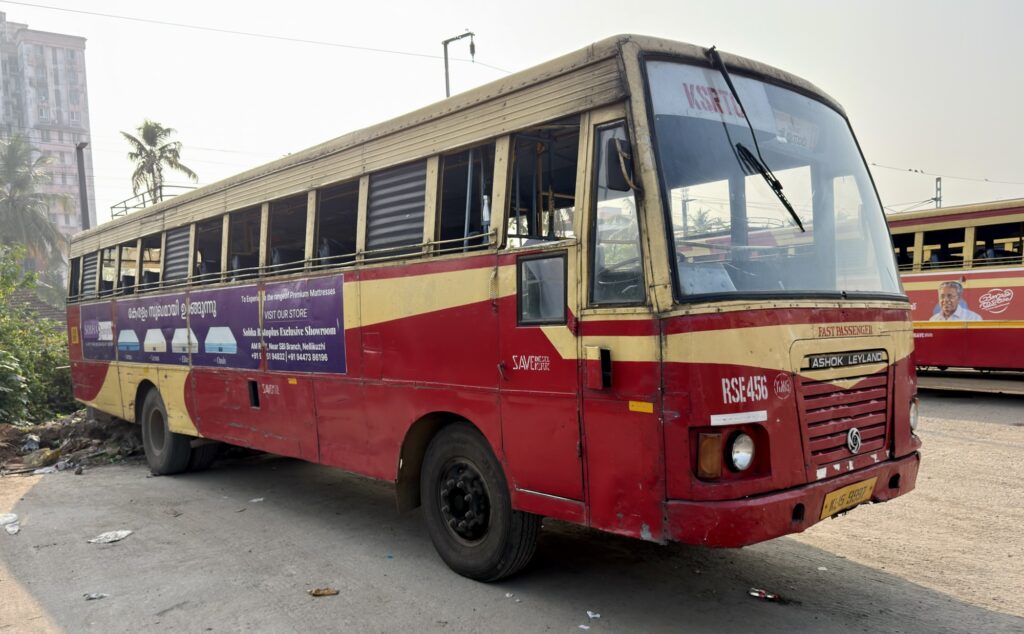
The bus I boarded this morning was almost certainly built on a platform in continuous production, with incremental updates, for a very long time. That is not a criticism. It is the same logic that kept the Royal Enfield Bullet on the road for seventy years: when a design works in specific conditions, and the mechanics know it cold, there is no compelling reason to replace it.
The no-glass-in-the-windows detail is standard specification for hot-climate route buses in India. Air conditioning would be pointless on a vehicle that opens and closes its doors every few minutes in traffic. The windows are the air conditioning.
India and Sri Lanka 2026 — all posts
- Day 1 — 24 Hours to Mumbai
- Day 2 — First Morning in Mumbai
- Day 3 — Exploring Mumbai
- Dhobi Ghat: Mumbai’s Laundromat
- Day 4 — Sightseeing in Colombo: One Day is Enough
- A Short History of Ceylon
- Day 5 — Kandy: Moving into the Mountains
- Day 6 — Moving on to Ella
- Day 7 — Hike and Sunstroke
- Tea in Sri Lanka: From a Blight in 1869 to Four Million Cups a Day
- Day 8 — Nine Arches Bridge
- Day 9 — Tuktuk Tour Around Ella
- Day 10 — Time to Leave Ella
- Orphans of Udawalawe: Inside Sri Lanka’s Elephant Transit Home
- Day 11 — Safari and Galle Fort
- Day 12 — Onwards to Negombo for the last day in Sri Lanka
- Day 13 — All the problems concentrated on a single day
- Royal Enfield: Why India Rides Different
- Day 14 — The Kerala Backwaters
- Day 15 — Local bus to Munnar
- Leyland, a familiar name from the past
- Buying a beer in Kerala: Local knowledge required
- Mahindra: The Jeep That Never Left