
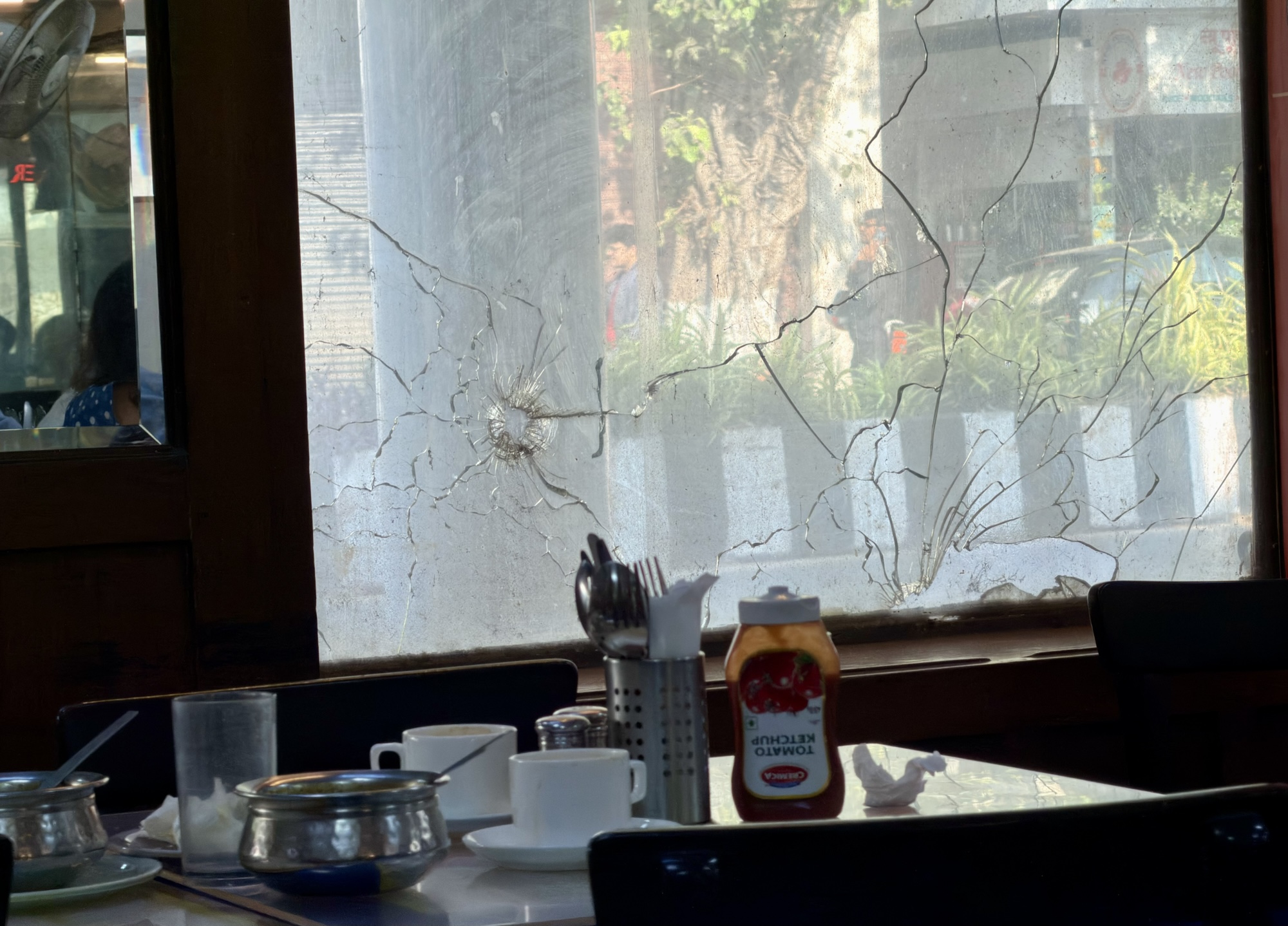

Leopold Cafe has been open since 1871. The ceiling fans turn slowly, the tables fill early, and the menu runs to everything from eggs to steak. On any given morning the clientele is a cross-section of Colaba regulars, travelers who discovered the place through Gregory David Roberts’s novel Shantaram, and people who simply want a good breakfast in a room that has seen a great deal of history. The place has the comfortable confidence of somewhere that has never needed to try very hard.
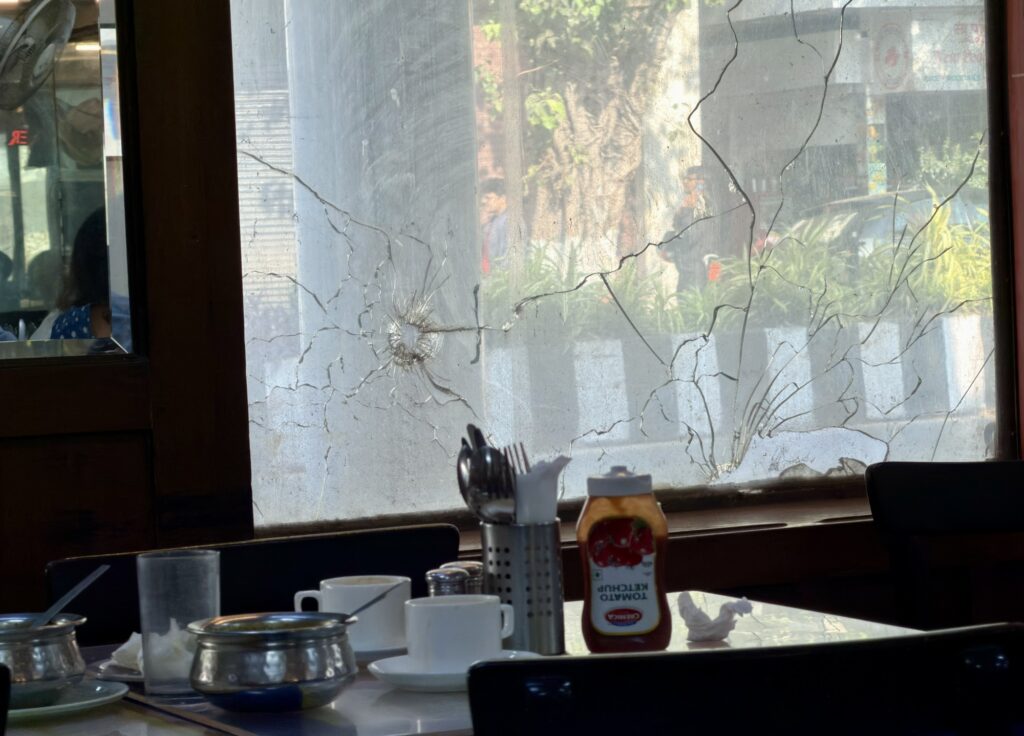
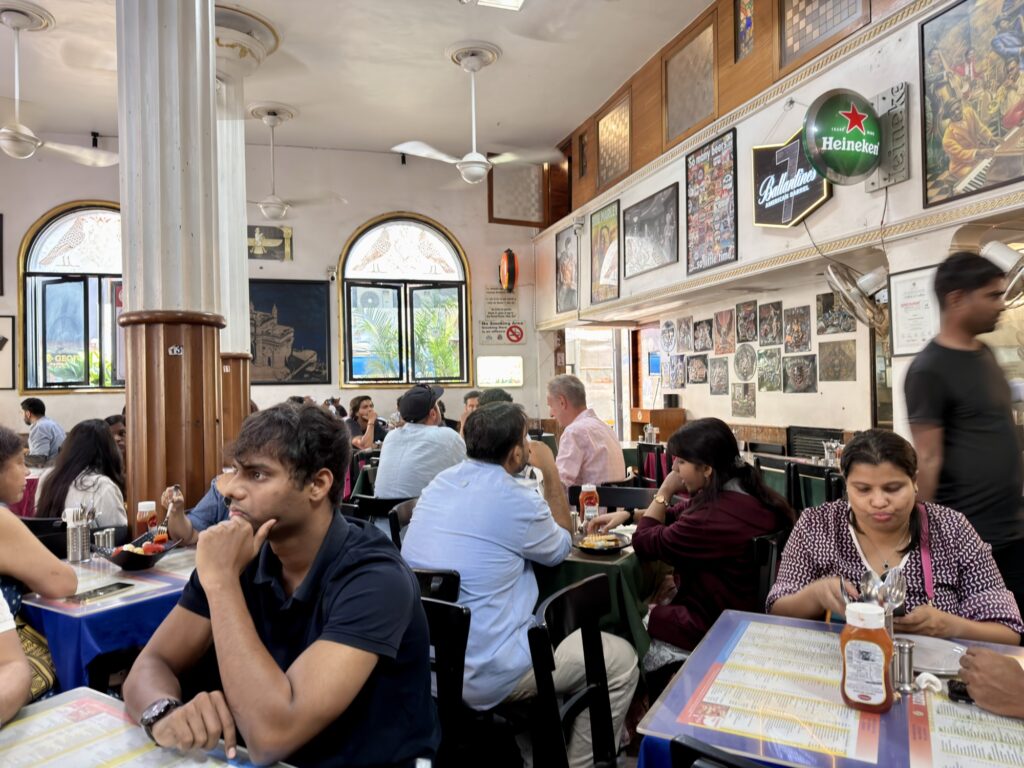
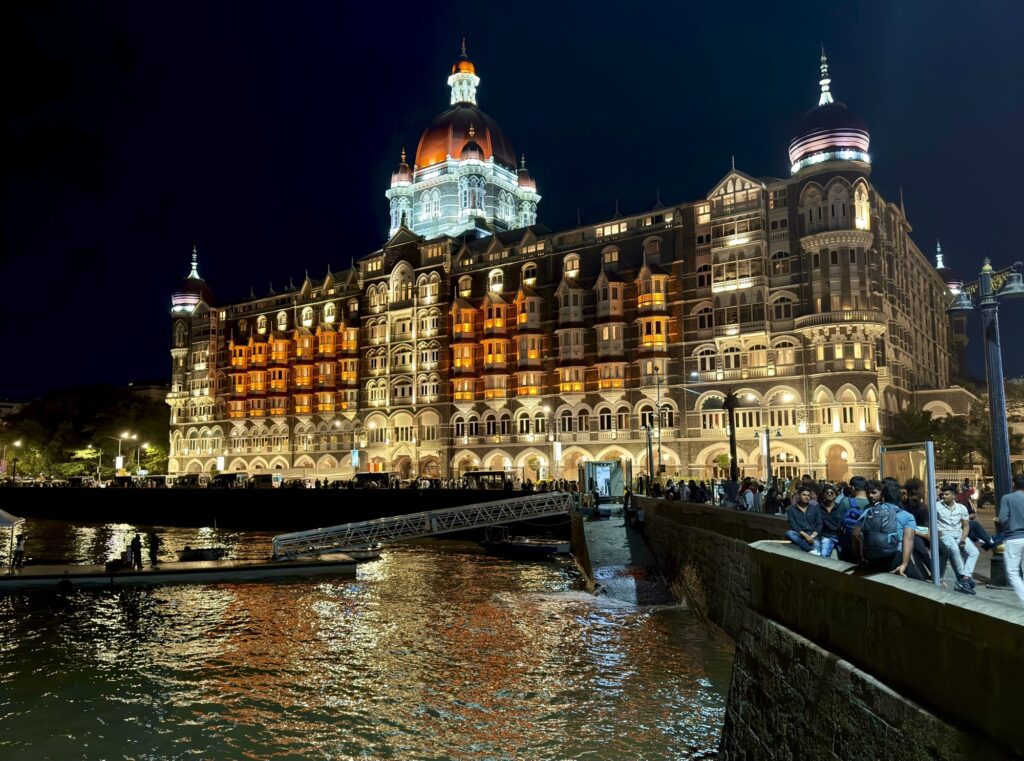
Some of that history is in the window frame. In November 2008, Leopold’s was the first target of the coordinated terrorist attack on Mumbai. Gunmen with AK-47s killed ten people in ninety seconds. The Taj Mahal Palace Hotel, a few hundred meters down the road, was next. The bullet holes are still there, preserved deliberately: small, dark, unremarkable until you know what they are, and then impossible to stop looking at. I had toast, coffee, and a fruit bowl the size of a small helmet, and looked at them for a while.
From Colaba I took a taxi north to Dhobi Ghat in the Mahalaxmi neighborhood. It has been operating since the 1890s and is still the largest open-air laundry in the world. Around 700 families live and work there in a dense grid of stone wash pens, cleaning laundry for hotels, hospitals, and private households across the city. Each pen belongs to a particular dhobi family, passed down through generations. The city sends its dirty linen here and gets it back clean, with a reliability that puts most modern logistics to shame.
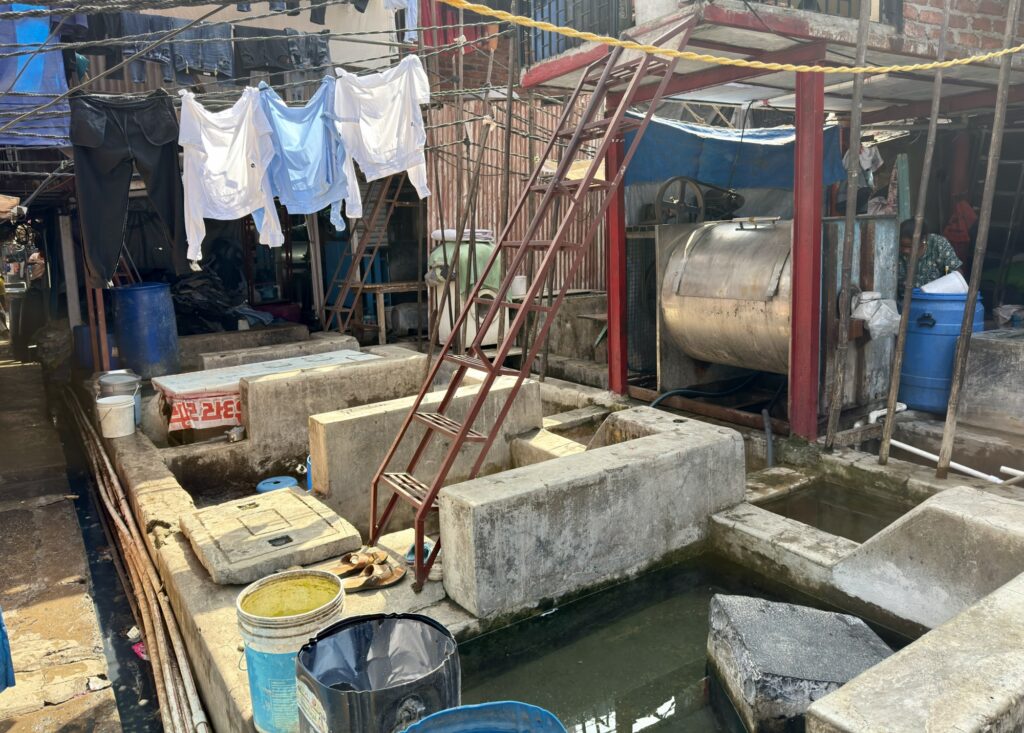
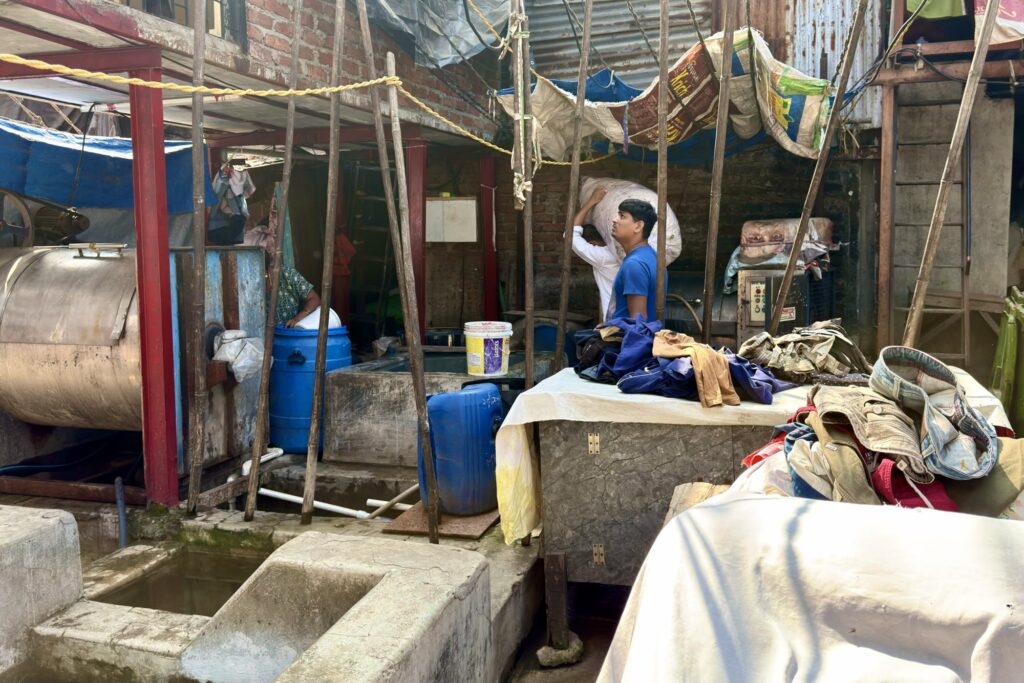
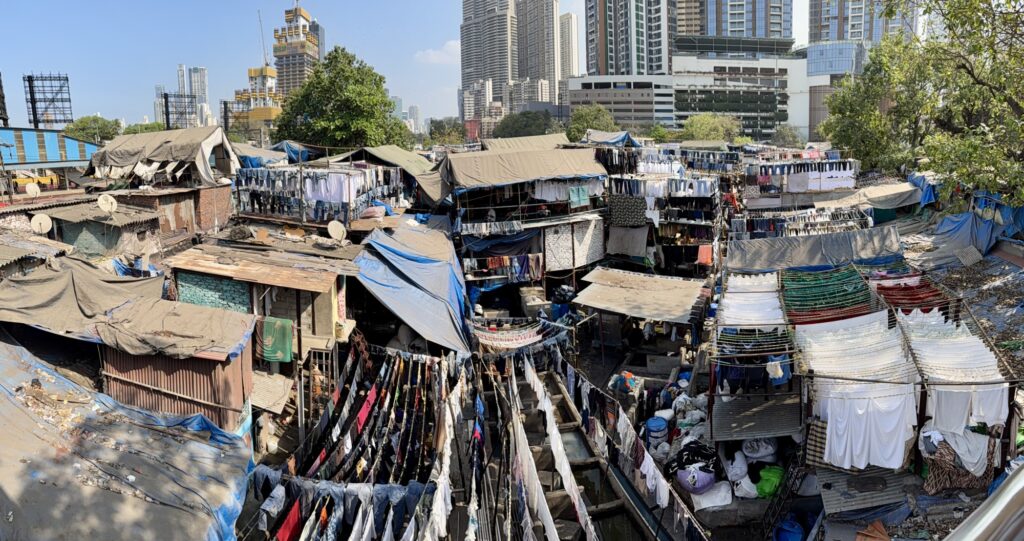
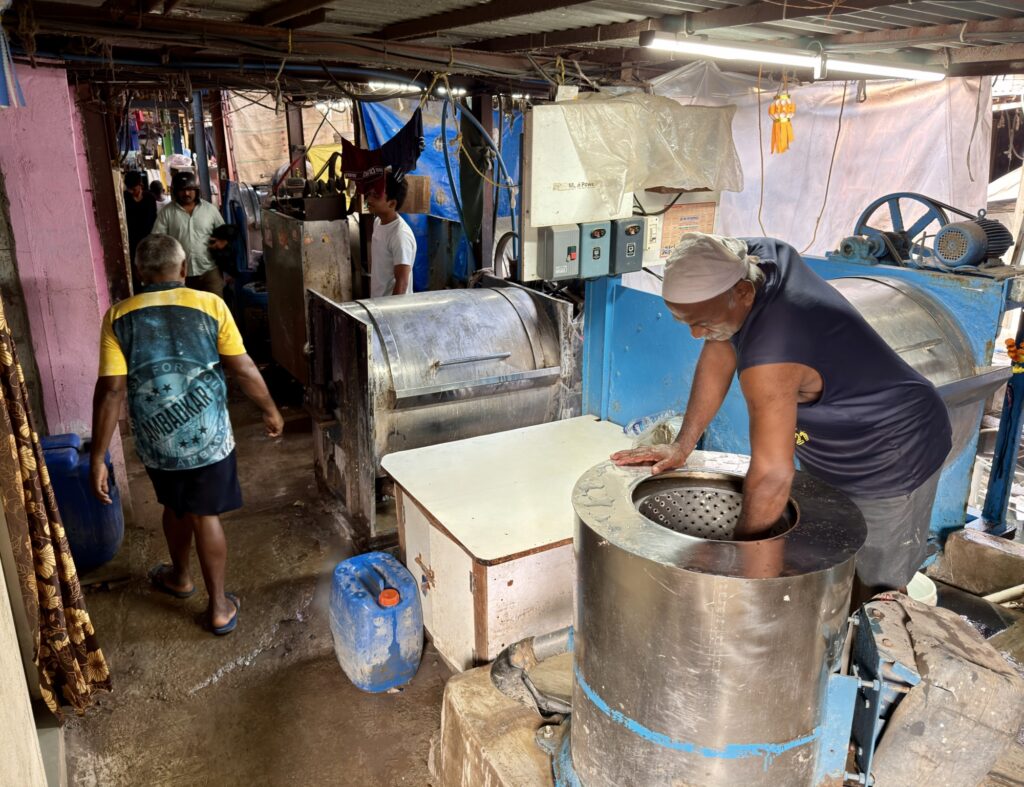
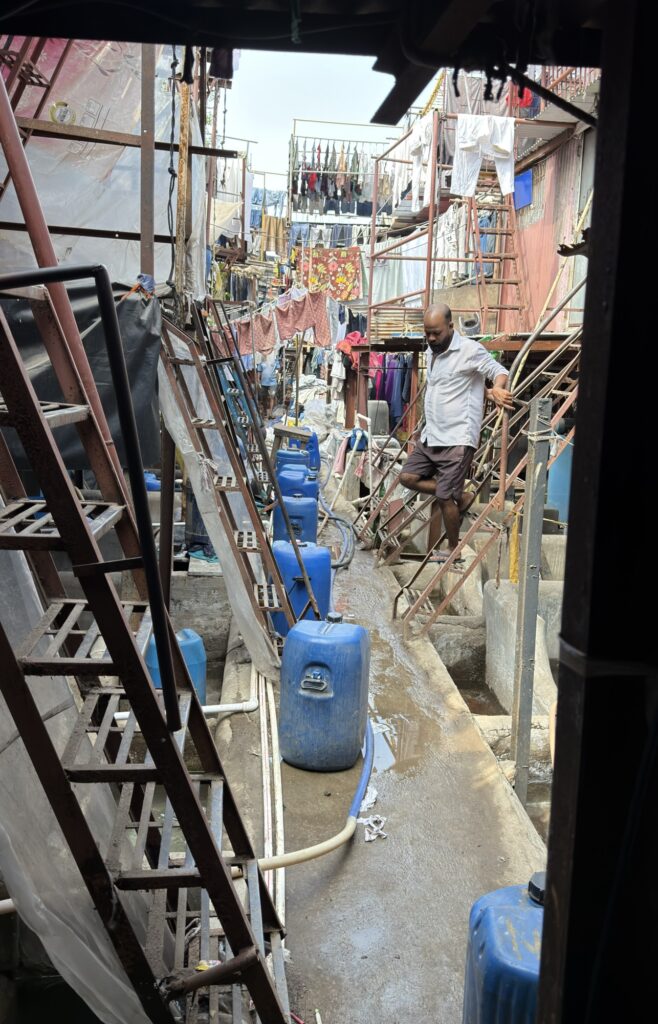
The standard tourist approach is the bridge viewpoint: stand above, photograph the rows of colored cloth hanging to dry, move on. I did that, then made my way down into the laundry itself. At ground level it’s a different place entirely. The pens are concrete troughs and the work is physical and repetitive, clothes beaten on stone and wrung by hand, the same motions repeated thousands of times a day. The smell is of soap and damp concrete and something harder to name, the accumulated effort of a working life compressed into a small space. The people working there were unbothered by a visitor with a camera who was clearly not causing any trouble. A hard life, organized into a system that has worked for over a century, and one that is slowly being displaced by commercial laundries as the city modernizes. At some point the economics will tip. They haven’t yet.
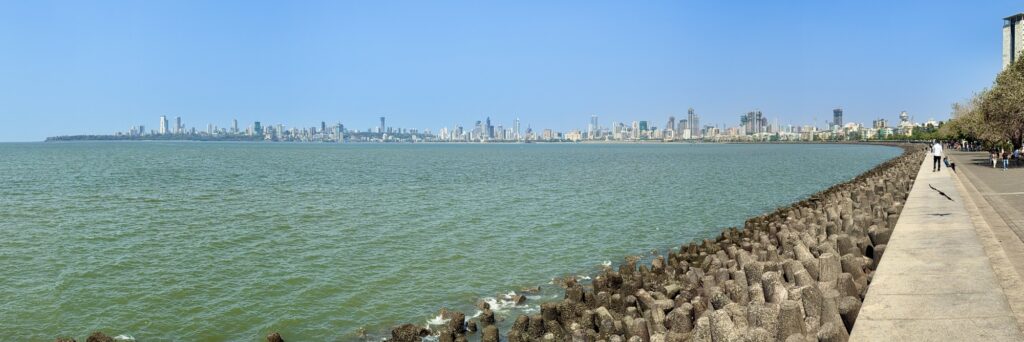
Back to the hotel by tuktuk, a rest, then out again to the Marine Drive seafront in the afternoon. Marine Drive runs for about three kilometers along Back Bay, the curving road and promenade that gives the city one of its best-known views. At night the streetlights along the curve earned it the nickname the Queen’s Necklace. In the afternoon heat it was pleasant enough for a walk and not much else, the kind of place that photographs better than it walks.
I found a restaurant that looked good, sat down, waited twenty minutes without anyone coming to take my order, and left. Around the corner I found a small place and had garlic chicken noodles for a tenth of the price. The noodles were better anyway. Mumbai has a habit of rewarding the decision to walk away from the obvious choice.
A few kilometers’ walk back to Leopold Cafe for cake. They had run out of coffee, which seemed improbable for an institution that has been serving it since 1871, but there it was, a shrug from the waiter, no further explanation offered. I ate the cake anyway. It was good. Then I picked up my bags from the hotel and waited outside for my driver. He could not find me. A few helpful Mumbai residents ended up talking him in over WhatsApp, relaying my location in real time with the cheerful efficiency of people who have done this before. It took about fifteen minutes and required no fewer than three intermediaries.
The flight left at 8.45 PM. Sri Lankan Airlines served chicken fried rice and a beer. We landed in Colombo on time, which felt like a good omen.
It wasn’t. At immigration I went straight to the regular desks and was second in line, quick enough, I thought. But the officer looked at my ETA reference number and sent me to the Chief Immigration Office to get it cleared. That room was a different matter: a crowd of travelers in the same situation, one officer working, and each case taking ten minutes or more. The air conditioning was fighting a losing battle. I sat and watched the queue barely move, and started doing the mental arithmetic on whether the taxi I had pre-booked would still be there when I finally got out.
It took a long time. By the time my ETA was stamped and I made it back to the main hall, two more flights had landed and the immigration queue was several hundred deep. I joined it at the back and worked my way through with the quiet resignation of someone who has accepted that the night is already lost. The taxi had waited. I got to the hotel at 2 AM.
When in Mumbai, don’t miss:
- Breakfast at Leopold Cafe in Colaba, open since 1871. The bullet holes preserved in the window frame are from the November 2008 terrorist attack — small and easy to miss until you know to look.
- The Gateway of India, a five-minute walk from Leopold Cafe on the Colaba waterfront. Free to enter and walk around.
- Dhobi Ghat in Mahalaxmi, in operation since the 1890s and still the world’s largest open-air laundry. Skip the organized tours — they don’t give you time to explore. Just take a taxi there independently and go at ground level, not just the bridge viewpoint above.
- Marine Drive along Back Bay — best in late afternoon or at night, when the curve of streetlights earns its nickname, the Queen’s Necklace.
- If a restaurant makes you wait too long, walk around the corner. Mumbai consistently rewards the decision to move on.
India and Sri Lanka 2026 — all posts
- Day 1 — 24 Hours to Mumbai
- Day 2 — First Morning in Mumbai
- Day 3 — Exploring Mumbai
- Dhobi Ghat: Mumbai’s Laundromat
- Day 4 — Sightseeing in Colombo: One Day is Enough
- A Short History of Ceylon
- Day 5 — Kandy: Moving into the Mountains
- Day 6 — Moving on to Ella
- Day 7 — Hike and Sunstroke
- Tea in Sri Lanka: From a Blight in 1869 to Four Million Cups a Day
- Day 8 — Nine Arches Bridge
- Day 9 — Tuktuk Tour Around Ella
- Day 10 — Time to Leave Ella
- Orphans of Udawalawe: Inside Sri Lanka’s Elephant Transit Home
- Day 11 — Safari and Galle Fort
- Day 12 — Onwards to Negombo for the last day in Sri Lanka
- Day 13 — All the problems concentrated on a single day
- Royal Enfield: Why India Rides Different
- Day 14 — The Kerala Backwaters
- Day 15 — Local bus to Munnar
- Leyland, a familiar name from the past
- Buying a beer in Kerala: Local knowledge required
- Mahindra: The Jeep That Never Left